


Tonic immobility doesn’t ask permission. Flip a lemon shark upside down in shallow water and the thrashing simply — stops. Body rigid. Eyes open. The animal suspended in a state that looks like death but isn’t, a neurological freeze so ancient it surfaces in reef sharks, barnyard chickens, and human beings caught in moments they can’t fight their way out of. That’s what we’re dealing with: not performance, not choice, not weakness. Biology.
When the Body Says Stop
Tonic immobility — sometimes called thanatosis, or more bluntly, “playing dead” — isn’t a performance. It’s an involuntary neurological event, a kind of emergency brake the nervous system pulls when fighting or fleeing has become impossible or too costly to attempt. The muscles lock. Movement stops. But the brain doesn’t switch off. It stays acutely alert, processing sensory input, waiting for the threat to pass.
Scientists describe it as a paradox: the body surrenders while the mind keeps vigil. That tension between physical stillness and mental hyperawareness is what makes tonic immobility so different from fainting or blacking out under stress.
Here’s the thing — it’s been documented across a range of species that should give anyone pause. Sharks. Rabbits. Opossums. Chickens. Frogs. Certain insects. Human beings. That spread alone tells researchers something important: this isn’t some quirk that evolved once in an obscure lineage. It’s ancient, conserved across hundreds of millions of years of evolution (biologists call this “deep homology,” and this matters more than it sounds). When a mechanism appears in creatures as different as a Caribbean reef shark and a barnyard hen, the tree of life has clearly decided to keep it. The question is why.

The Neuroscience of Freezing
What happens in the brain during tonic immobility is only partly mapped, and researchers will tell you that honestly if you ask them. When a threat overwhelms the fight-or-flight circuitry, something shifts in the autonomic nervous system — that vast, mostly unconscious network governing heartbeat, breathing, digestion. The parasympathetic branch, which is normally associated with rest and calm, appears to paradoxically take over in these extreme moments. Heart rate plummets. Breathing slows. The body assumes a rigid, often arched posture. In sharks, this state can be induced manually by inverting the animal. In prey species, it’s typically triggered by physical capture or a predator closing in too fast to outrun.
We know the brainstem is involved. We know serotonin plays a role. The precise molecular trigger? Still elusive. Studies on chickens — long a model organism for this research because the state is easy to induce and observe — show measurable brain activity throughout the episode. Their eyes track movement. Their pupils respond to light. If a predator moves away, they can snap out of the state in seconds. It’s a holding pattern, not a shutdown, and that distinction matters enormously for what it tells us about animal cognition. And for what it tells us about ourselves.
From Chickens to Sharks to Us
Why does this matter? Because the range of species that exhibit tonic immobility reads like an eccentric guest list — and the pattern across all of them points somewhere uncomfortable.
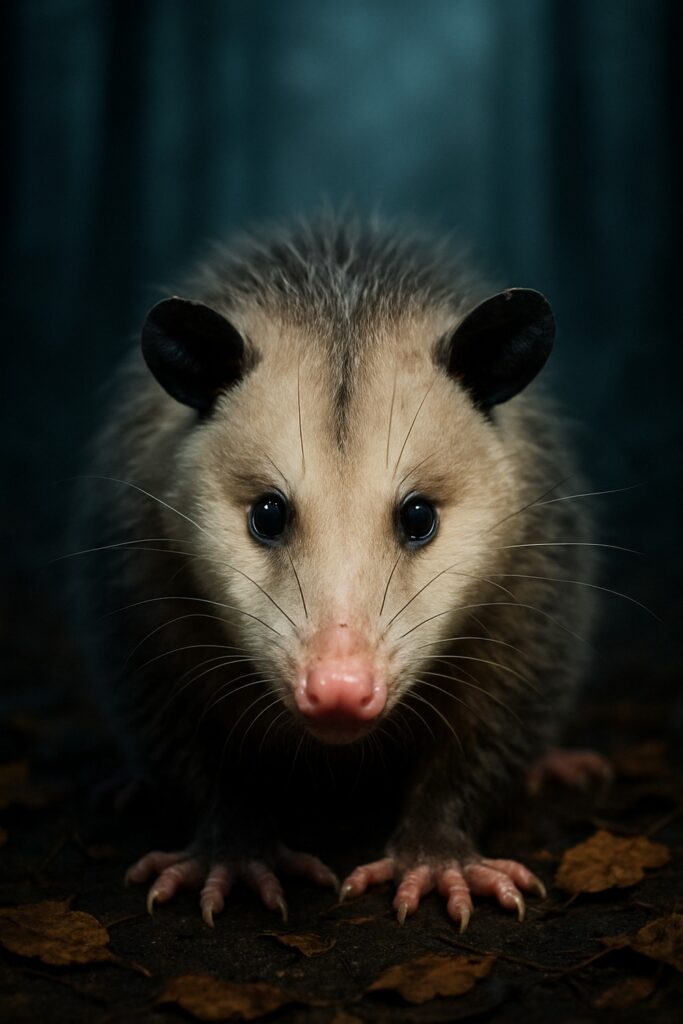
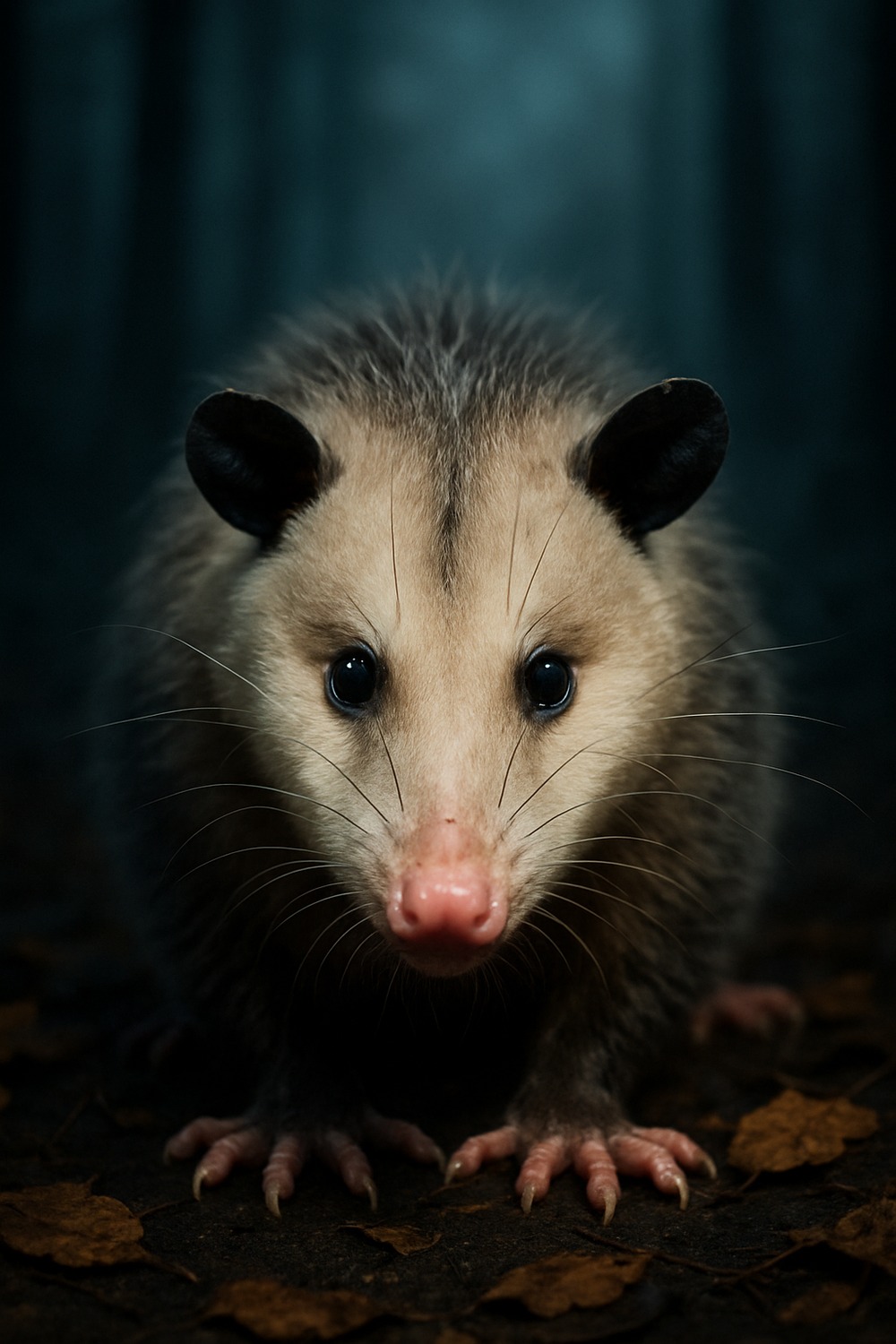
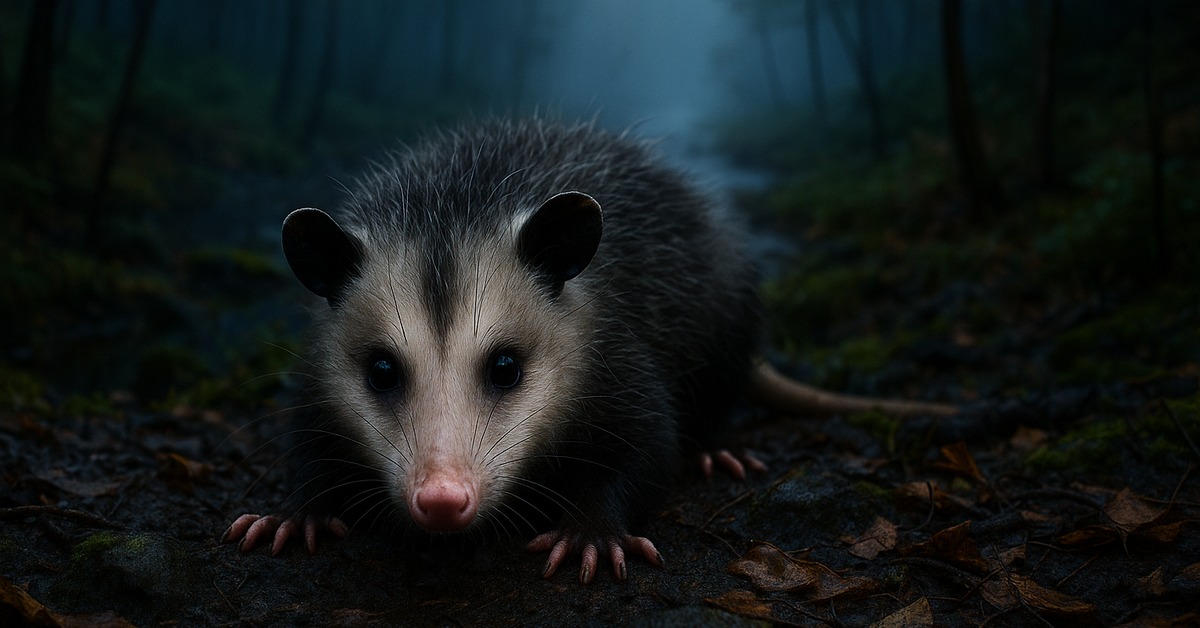
Opossums are probably the most culturally familiar. “Playing possum” has entered the language as a metaphor for feigning innocence, which is a little ironic because their stillness isn’t fake at all. When an opossum flops over, drooling slightly, eyes glazed, it’s experiencing a genuine physiological state that can last minutes to hours. Predators that rely on movement to detect prey may simply lose interest.
In the ocean, tonic immobility in sharks has become a tool for researchers and, more controversially, for certain divers who grab a shark’s pectoral fins and tip it over to demonstrate control. Ethicists have raised red flags about this — inducing involuntary paralysis in a wild animal for entertainment isn’t quite the harmless trick it appears, though it keeps showing up on dive tourism videos, which tells you something about how we process information when something looks cool enough.
And then there are humans. This is where tonic immobility moves from biology into territory that demands real sensitivity (and where, frankly, the science has been criminally underused in legal settings). Studies in trauma research have documented tonic immobility responses in people experiencing acute, overwhelming threat. Sexual assault survivors have described being unable to move, unable to call out — not because they chose paralysis, but because their nervous system imposed it. A landmark Swedish study published in 2017 found that among a cohort of sexual assault patients, nearly half experienced significant tonic immobility during the assault, and roughly a quarter experienced what researchers classified as extreme tonic immobility. The body’s response is not consent. It’s survival biology, written into the nervous system long before we had language for it.
Courts that treat frozen stillness as complicity are misreading the evidence at a biological level — and the people who pay for that misreading are survivors.

Why Evolution Kept This Response
So why has natural selection preserved something that looks, on the surface, so passive? Turns out the evolutionary logic is more ruthlessly practical than it first appears. Predators that rely on movement cues may overlook a still target, especially in environments where leaf litter or murky water already create visual noise. Some predators are also hard-wired to respond most aggressively to struggling prey — stillness disrupts that trigger. For animals that have already been physically seized, thrashing might cause worse injuries. Going limp reduces laceration. It buys time.
A predator that believes its prey is dead may relax its grip — and that creates a narrow window for escape. Not a plan the animal is consciously executing. Evolution doesn’t need conscious plans. It just needs outcomes that improve survival odds often enough to persist across generations.
But why some species rely on this mechanism so much more heavily than others remains genuinely puzzling. Sharks don’t use tonic immobility as prey animals — they’re apex predators. Their susceptibility to the induced state might be a byproduct of sensory system mechanics rather than an evolved survival strategy. Chickens and rabbits, quintessential prey animals, have tonic immobility responses that are robust and repeatable. Evolution tends to repurpose old hardware for new problems — tonic immobility might be one of the most dramatic examples of that principle we’ve found. The variation across species suggests that while the basic neural architecture is ancient and shared, the contexts in which it gets deployed have diversified wildly.
The Shark in the Room
Nobody predicted what researchers would see next.
Orca attacks on great white sharks off the coast of South Africa have been filmed multiple times, and the footage revealed something remarkable: after the orcas seized the sharks, the great whites entered tonic immobility — going completely still while the orcas extracted their livers with what can only be described as surgical precision. These are great white sharks. The animal that defined the word “predator” for an entire generation of moviegoers.
Whether the stillness helped the sharks is unclear. They didn’t survive the encounters. But it illustrated, in brutal detail, how pervasive this response is — even in animals we think of as immune to fear. No animal is beyond the reach of its own nervous system. Not even the one with the teeth.
How It Unfolded
- 1930s — Early laboratory observations of induced tonic immobility in chickens establish it as a measurable, repeatable physiological state, not mere behavioral quirk.
- 1970s — Research expands to sharks; scientists document that inverting a lemon shark manually triggers the freeze response, opening a new window into elasmobranch neurology.
- 2000s — Trauma researchers begin formally connecting human freeze responses in assault victims to the same underlying neural architecture observed in prey species.
- 2017 — A landmark Swedish study finds that nearly half of sexual assault patients experienced significant tonic immobility during the assault, reshaping clinical and legal frameworks for survivor testimony.
Frequently Asked Questions
Q: Can tonic immobility be dangerous for the animal experiencing it? In most cases, tonic immobility is brief and the animal recovers fully, but the state does carry real risks. While frozen, the animal is entirely vulnerable — it can’t flee if the predator doesn’t disengage. In domesticated or captive animals, prolonged induction of tonic immobility through human handling has been associated with measurable stress markers, suggesting the response is physiologically costly even when it ultimately protects.
Q: How is tonic immobility different from fainting or passing out? Fainting involves a loss of consciousness due to reduced blood flow to the brain. Tonic immobility is the opposite in a crucial way: the animal or person remains conscious and neurologically active throughout. The brain is alert even though the body can’t move. It’s an active, involuntary state — not a failure of circulation or brain function.
Q: Why is tonic immobility important for understanding human trauma? Tonic immobility helps explain why some trauma survivors are physically unable to resist or call for help during an attack — something that has historically been misunderstood in legal and clinical settings, often catastrophically so. Recognizing it as an involuntary neurological response rather than a behavioral choice is essential for accurate trauma care. Research in this area continues to reshape how psychologists, legal professionals, and first responders approach survivor testimony.
Editor’s Take — Alex Morgan
What stays with me isn’t the shark footage — it’s the Swedish study. Nearly half of survivors frozen solid, and for decades that stillness was treated as suspicious. The neuroscience wasn’t absent; it just wasn’t being read into courtrooms or clinical assessments with any urgency. Tonic immobility is one of those cases where the biology was always there, waiting to be useful, while the people who needed it most were left to explain something their own nervous systems did without asking them. That gap is closing. Not fast enough, but closing.
Tonic immobility keeps showing up wherever scientists look closely enough — in coral-lit water, in barnyard straw, in the testimonies of people who lived through the worst and couldn’t move. Survival doesn’t always look like resistance. Sometimes it looks like absolute stillness: a body locked in place, a mind burning bright behind frozen eyes, waiting for the moment to run. That moment is encoded somewhere deep in the nervous systems of sharks and chickens and human beings alike. We don’t fully understand it yet. But the more researchers look, the more they find it — and the harder it becomes to dismiss what that stillness means.


