


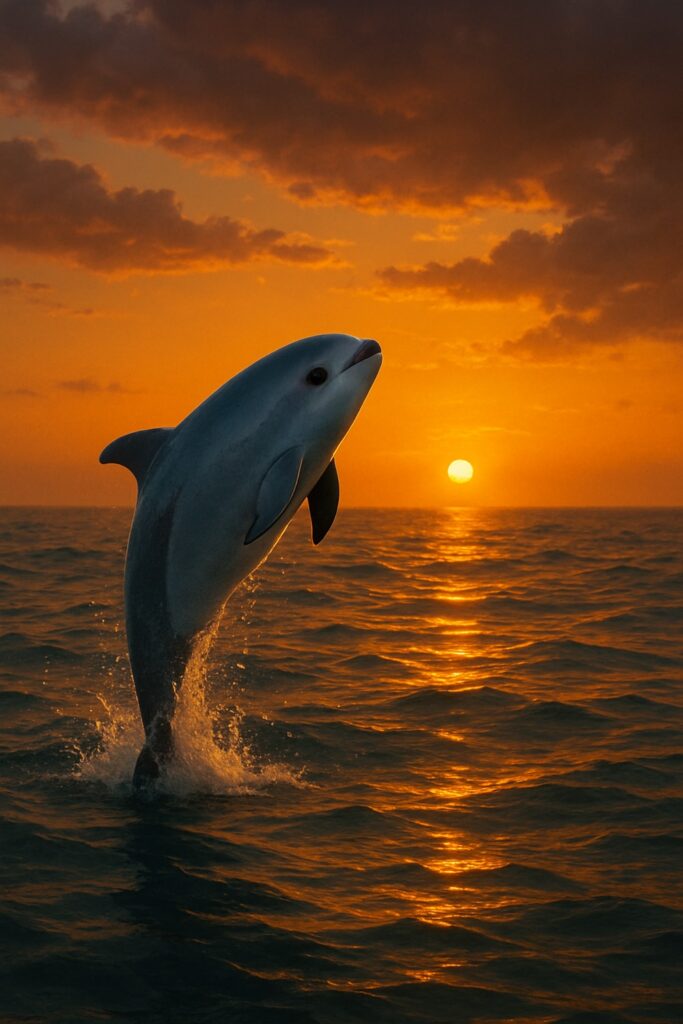
Nobody set out to find the vaquita. The first confirmed sighting was basically an accident — a dead one, washed ashore, unfamiliar enough that researchers had to figure out what they were even looking at. Now there are maybe ten left, and we know exactly what they are and exactly what’s killing them, and somehow that hasn’t been enough.
Ten animals. Possibly fewer. Living in one narrow stretch of warm water in the upper Gulf of California, surfacing quietly for a breath, gone again in seconds. No one’s fully certain the count is right because vaquitas are almost pathologically shy — they don’t bow-ride, they don’t leap, they don’t do anything that makes them easy to find. What scientists do know is that we’re watching a species disappear in real time, with enough data to have stopped it, and we mostly didn’t.
What the Vaquita Porpoise Crisis Actually Looks Like
The vaquita — Phocoena sinus — is the smallest cetacean that’s ever existed. Adults top out around five feet, weigh roughly 95 pounds, and they’ve lived in the northern Gulf of California for thousands of years. Their entire range covers less ocean than some cities cover land. According to Wikipedia’s documented population estimates, there were still around 600 vaquitas in 1997. By 2018 that number had collapsed to fewer than 20. Researcher Barbara Taylor of NOAA has spent decades tracking this and calls it “the fastest route to extinction ever documented in a marine mammal.”
Six hundred animals to fewer than ten in under thirty years. Not a virus. Not a volcanic eruption or a warming event. Fishing nets set illegally in the only place these animals have ever lived.
What does it say about us that we watched it happen with enough information to stop it?
Illegal Nets Are Killing the Wrong Fish
Here’s the actual mechanism: poachers in the upper Gulf set gillnets to catch totoaba, a large fish whose swim bladder fetches up to $50,000 per kilogram on Chinese black markets. It’s been called “the cocaine of the sea,” and that framing is accurate in at least one way — the profit margins make enforcement feel almost pointless. The vaquita porpoise isn’t the target. It’s the bystander. It tangles in the net, can’t surface to breathe, and drowns. Mexico banned gillnets in the vaquita’s range in 2015, but enforcement across remote ocean zones is brutally difficult when the people setting the nets have more financial incentive than the people trying to stop them.
Local fishermen in San Felipe — the small port closest to vaquita habitat — are caught in between. Many cooperate with conservation programs. Others are facing poverty and organized crime pressure that dwarfs whatever consequences enforcement can realistically threaten. You can’t pull the ecological crisis apart from the human one underneath it. They’re the same problem.
A Hydrophone in the Dark, Listening for Proof
Direct sightings have become genuinely extraordinary events. The main monitoring tool now is acoustic — hydrophones anchored in the shallows, passively recording the high-frequency clicks vaquitas use to echolocate through murky water. When researchers review recordings and find even one click train that matches a vaquita’s acoustic signature, that’s treated as cause for cautious celebration.
Scientists aren’t counting animals anymore. They’re counting sounds. And hoping the sounds keep coming.
In 2023, researchers confirmed multiple individuals, including what appeared to be calves. Young animals. The population, improbably, is still reproducing — and that fact kept me reading about this for another hour, because it changes the entire shape of the story. It means there’s still something left to save. That’s not a small thing. At this point in the vaquita porpoise extinction timeline, it’s everything.
The Math Gets Brutal Fast — But There’s a Twist
At ten individuals, most conservation biologists would call a species functionally extinct. Minimum viable population estimates generally run into the hundreds, sometimes thousands. With ten animals, you’re looking at genetic collapse even if you somehow eliminated every other threat overnight — inbreeding depression, loss of immune diversity, reproductive failure compounding slowly across generations. That’s the quiet second catastrophe sitting inside the first one, and it doesn’t make headlines the way a poaching bust does.
And yet. Genomic research published in 2022 found that vaquitas have survived previous population bottlenecks in their evolutionary past and came back. Their genome carries surprisingly low levels of harmful mutations — lower than most mammals studied to date — which suggests they’re more resilient to inbreeding than the standard models predict. Hope assembled from ancient DNA sequences. That’s genuinely where we are.

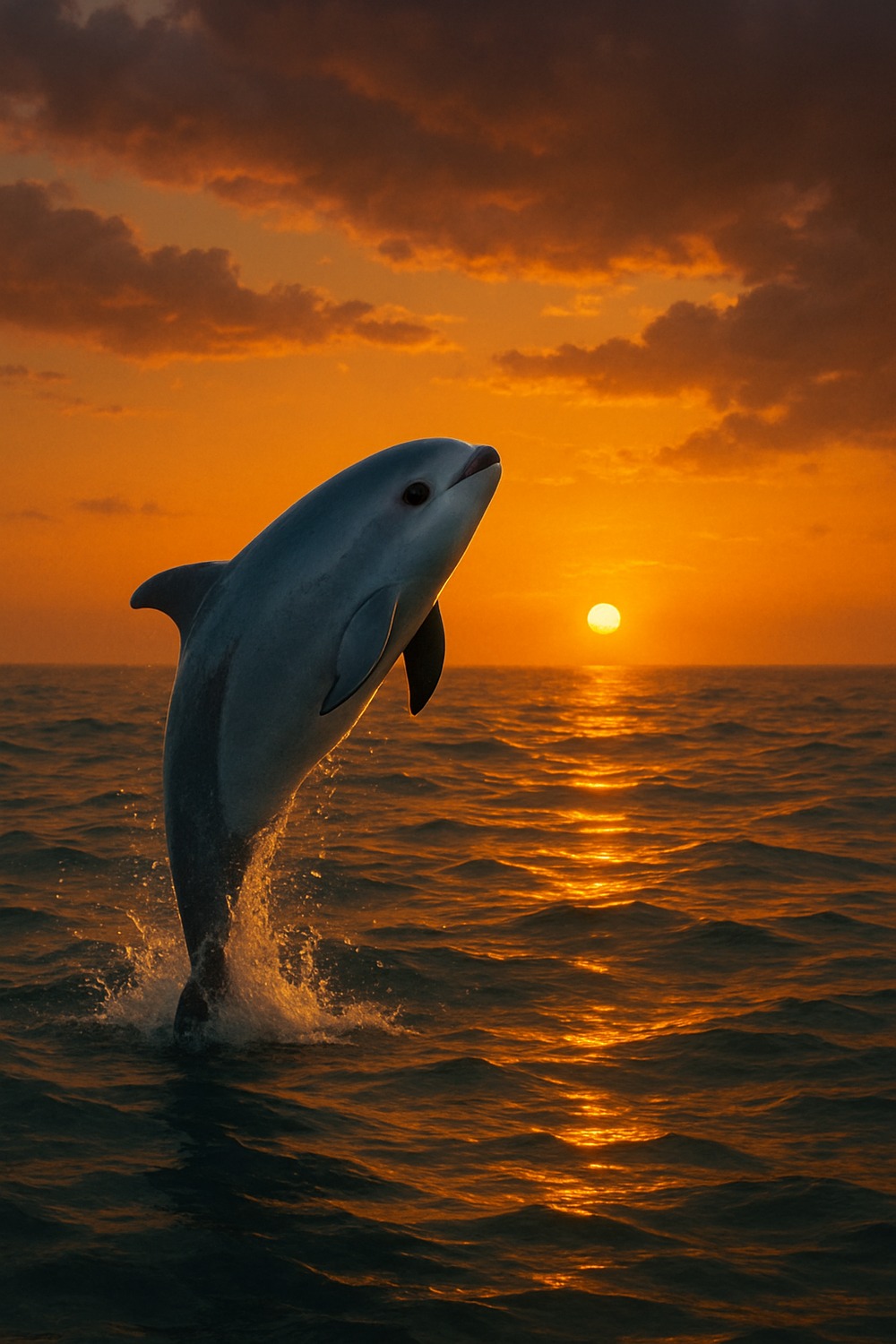
The Captive Breeding Option Failed — Then Changed Everything
The most dramatic rescue attempt in vaquita history ended within hours of beginning. In 2017, an international team tried to capture vaquitas and relocate them to a protected sea sanctuary where nets couldn’t reach them. The first animal captured — a female — showed signs of severe stress almost immediately and died. The program was abandoned on the spot.
Turns out you can’t take an animal that has never had any contact with humans, that has no behavioral experience of captivity, and expect it to adapt. The attempt was made in desperation, which is understandable. But desperation has a cost.
After that, the strategy got radically simpler: protect the water. Remove the nets — every net. Guard the habitat physically and continuously. Let the animals do what they’ve been doing for millennia, just without drowning in someone else’s fishing gear. Conservation organizations now run patrol vessels and deploy acoustic monitoring buoys instead. Less dramatic than a rescue operation. Possibly the only thing that actually works.
By the Numbers
- Estimated vaquita population in 1997: approximately 600 animals — by 2023, likely 10 or fewer (IUCN Red List, 2023)
- Totoaba swim bladders: up to $50,000 per kilogram on Chinese black markets, making it among the most valuable wildlife contraband by weight anywhere on Earth
- Total vaquita habitat range: roughly 2,235 square kilometers — smaller than Rhode Island
- Genomic analysis published in Science (2022) found vaquitas have survived bottlenecks before, with fewer harmful mutations per individual than expected

Field Notes
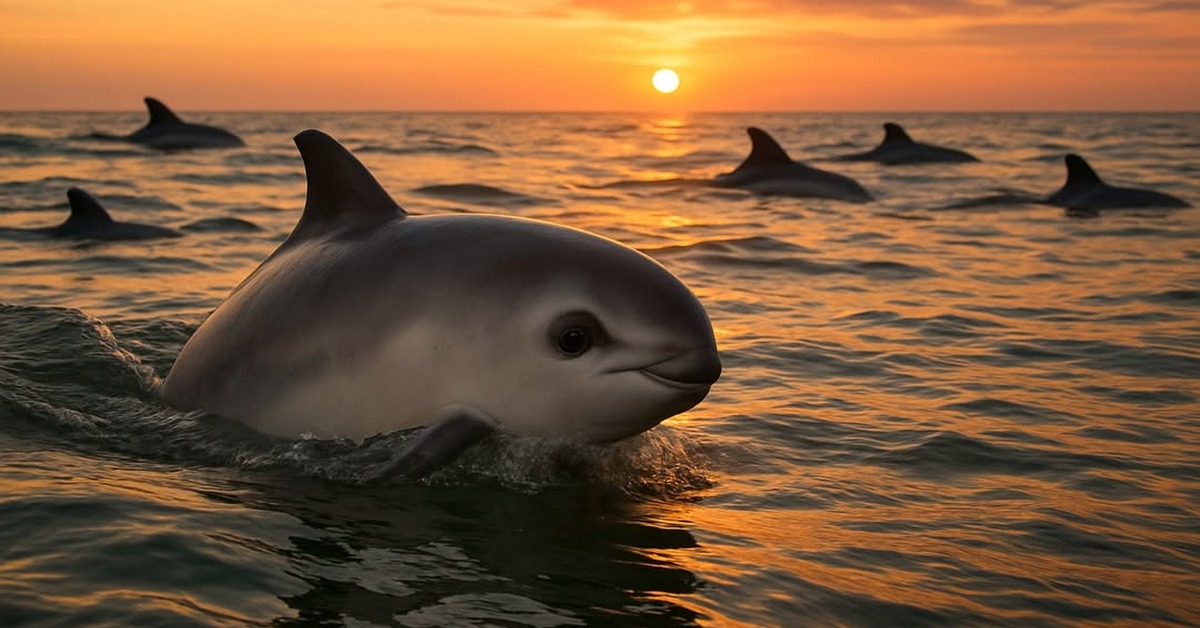
- They surface, breathe, and vanish within seconds — no leaping, no bow-riding, nothing that makes counting them easy.
- The dark patches around their eyes and the markings along their mouths are unique to each individual, which researchers use for photo-ID. The problem is that photo opportunities are increasingly rare, and every sighting now carries a weight it didn’t used to.
- “Vaquita” means “little cow” in Spanish — a name given by fishermen in Baja who used to see them grazing near shore. That casual familiarity is hard to read now without it feeling like something else entirely.
Why Ten Animals Is Everyone’s Problem
The vaquita porpoise extinction wouldn’t just mean losing one small, shy animal in one remote corner of Mexico. It would be a signal — clear and damning — that a documented, monitored, internationally funded conservation crisis can still fail completely when organized crime and economic desperation are working against it from the other direction. The vaquita lives inside a protected biosphere reserve. Mexico passed the right laws. The international community wrote the right statements. Researchers published the right papers. And still, ten animals.
That’s not a nature story.
It’s a story about governance and poverty and black markets and what international attention actually means at 3am on dark water when no patrol boat is close enough to matter. The vaquita is a referendum on how serious we actually are, versus how serious we say we are.
Old fishermen in San Felipe remember mornings when silver shapes would slip past the bow without a sound, like the sea was keeping a secret. That world is almost entirely gone. But not entirely. Not yet. Ten animals are still surfacing somewhere out there. Still breathing. Still clicking through the dark, completely unaware they’re the most watched, most counted, most quietly mourned creatures on the planet.
Saving the vaquita at this point means sustained, unglamorous, politically inconvenient work that won’t trend anywhere. Patrol boats. Prosecutions. Real economic alternatives for fishing communities. Years of it, probably. Whether that happens is still a choice, not an inevitability — which is the most important thing to understand about where this stands. Ten animals left, and the decision hasn’t been made yet. More stories like this one live at this-amazing-world.com, and some of them are even stranger than this.


