


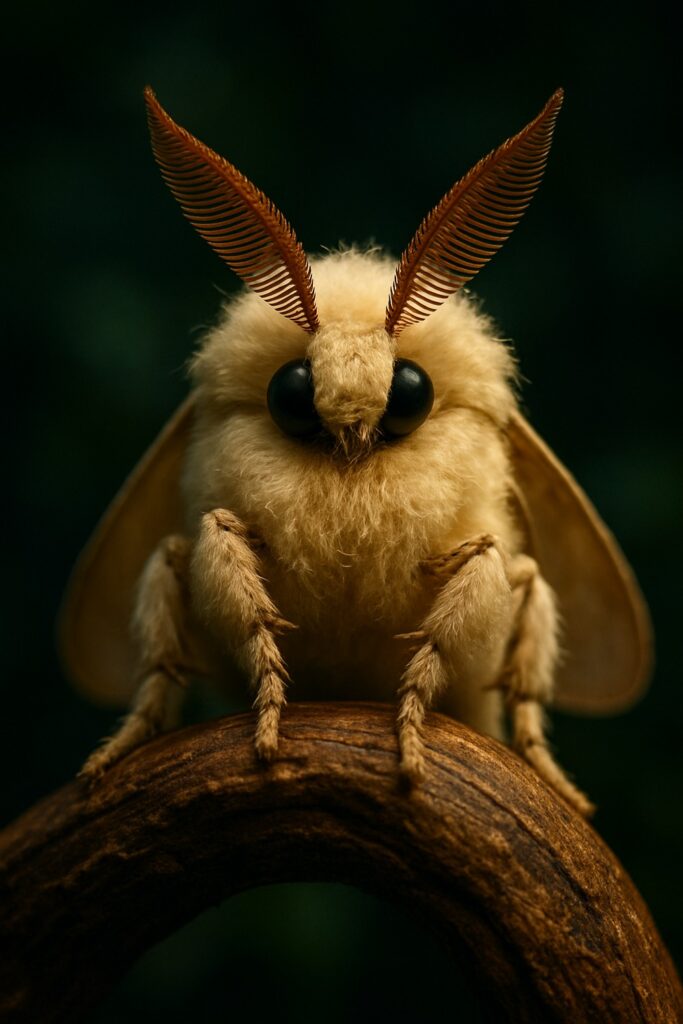
The poodle moth has no formal name. After fifteen years, no genus entry, no species description, no page in any taxonomic journal — just a single photograph taken in Venezuela’s Gran Sabana in 2009 that refused to stop circulating. A zoologist aimed his camera at a small, impossibly fluffy creature and, without intending to, handed the internet something it couldn’t explain away.

A Single Photograph That Shook the Scientific World
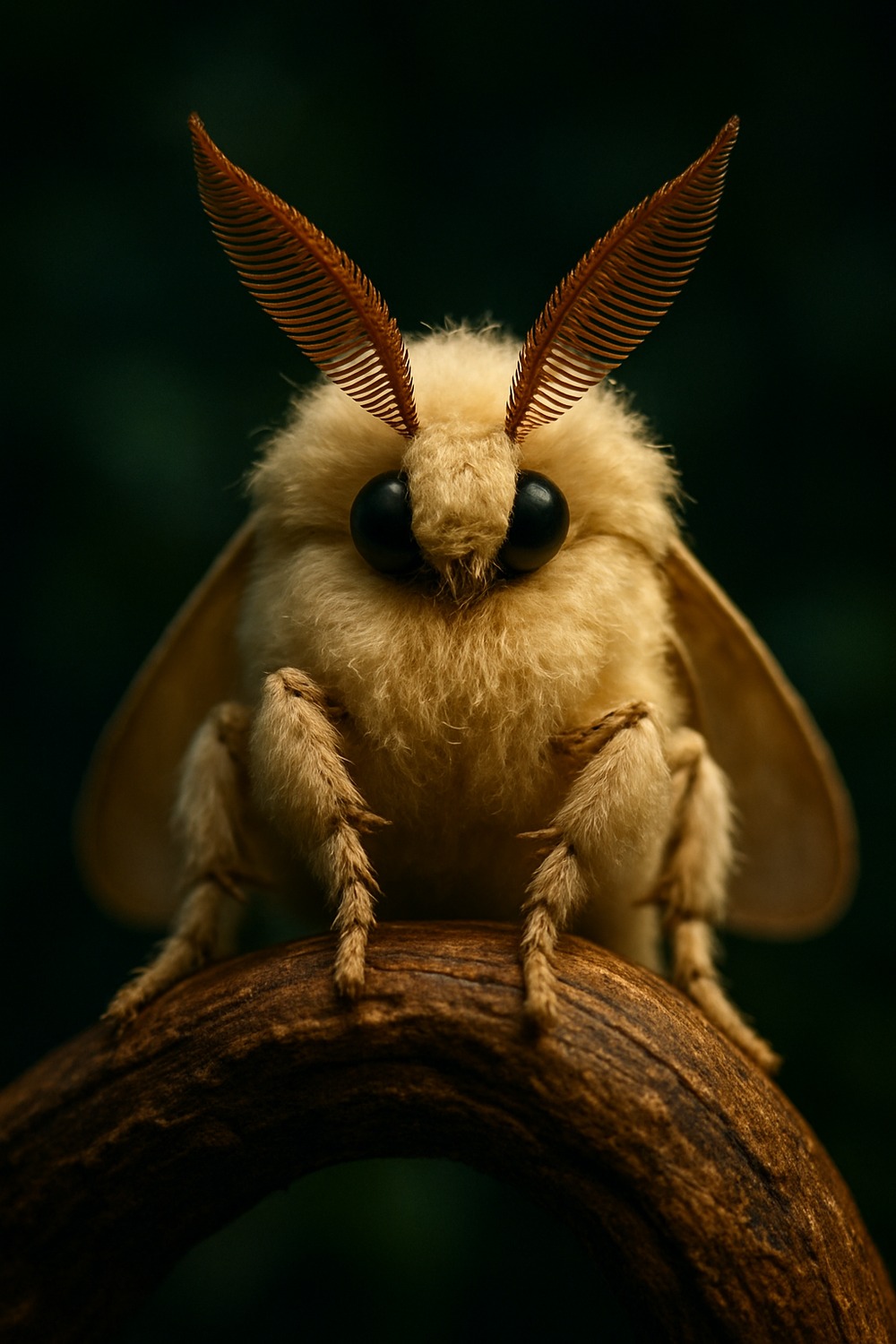
Arthur Anker, a zoologist and nature photographer, took the shot while working in Venezuela’s Gran Sabana — a plateau landscape of towering tepuis, open grasslands, and pockets of dense humid rainforest. He posted it online without fanfare, no press release, no dramatic announcement. The moth did the work. Its body was completely swathed in long, fluffy white scales, those same scales cascading across the wings, and two large dark eyes stared outward with an expression that could only be described as unsettlingly calm. Some suggested it might belong to the genus Artace, or something nearby within the family Megalopygidae — moths already known for their extravagant woolly coatings. Entomologists saw the image and felt two things simultaneously: excitement and frustration. But without a pinned specimen on a laboratory tray, that’s all it was. Speculation. The world had a picture and nothing more.
What makes this story genuinely remarkable isn’t the moth’s appearance — it’s the stubborn persistence of its mystery. We live in an era of DNA barcoding, satellite imaging, and global scientific networks that formally describe thousands of new species every year, pulled from ocean trenches and cloud forests alike. Yet this conspicuously fluffy, visually unforgettable moth, photographed by a credentialed scientist at a documented location, has never been caught, examined, or entered into the scientific record. It’s a ghost written in pixels — compelling, vivid, and by the rigorous standards of taxonomy, entirely insufficient.
The Science Behind the Fluff
Before dismissing those extraordinary scales as pure evolutionary excess, it helps to understand what moth scales actually do. They’re not like fish scales — rigid and smooth. They’re flattened, modified hairs called setae (researchers actually call this vestiture when the coverage reaches this density), and they earn their keep. In forest environments especially, dense scale coverings deliver remarkable camouflage. Settle a fluffy white moth against lichen-covered bark — which dominates the trunks of tropical trees — and that absurd silhouette suddenly makes sense. The outline dissolves. Any predator scanning for the clean profile of an insect body comes up empty.
Scale density may also provide thermal insulation during cool highland nights. And some researchers have suggested thick scales help moths escape spider webs, detaching and leaving the predator holding nothing but loose fibers — anyone who’s tried to grab a moth in the dark would find that last theory entirely plausible.
The Gran Sabana is, if anything, the perfect address for an animal with something to hide. Part of the Guiana Highlands in southeastern Venezuela, it’s one of the oldest geological formations on Earth. Its tepuis — flat-topped sandstone mountains rising sharply from surrounding savanna — have been isolated long enough to generate extraordinary levels of endemism. Species here exist nowhere else on the planet. Cloud forests, gallery forests, open grasslands, sheer cliff faces: the habitat mosaic creates a vast array of ecological niches where organisms can quietly specialize and evolve for millennia without a human ever noticing.
If any landscape on Earth was purpose-built to conceal a moth this peculiar, the Gran Sabana made a strong case.
Known Species or Something Entirely New?
Why does this still matter? Because the answer changes what we think we know about tropical biodiversity — and how much of it we’re already losing.
Specialists in Neotropical Lepidoptera have cautiously suggested the poodle moth might belong to an already-documented genus — Artace and Diaphora come up most often in informal scientific conversations. But even granting that possibility, the density and uniformity of its fur appear exceptional within those already famously woolly groups. It may belong to a known genus and still represent a species science has never formally seen. Without a physical specimen — body, wings, antennae, genitalia all available for microscopic examination — nobody can say for certain. Here’s the thing: taxonomy doesn’t run on photographs. The poodle moth’s identity remains officially unresolved, suspended between categories, which is precisely the kind of situation that keeps entomologists awake at night.
A creature this photogenic going unclassified for fifteen years isn’t a charming anomaly — it’s a quiet indictment of how much we still don’t know about what lives in these forests.
What the Poodle Moth Tells Us About Ourselves
Maybe the most interesting lesson here isn’t scientific at all. It’s the speed with which that single image spread — pulling in people who’d never spent a conscious second thinking about tropical entomology — that reveals something worth sitting with. Strangeness delights us. Scientists estimate millions of species remain undescribed on Earth, the overwhelming majority of them insects tucked into tropical ecosystems that are simultaneously the most biodiverse and the most threatened environments on the planet. A creature that refuses easy categorization reminds us the natural world is stranger and richer than our best databases suggest. Every year, habitat destruction wipes out species before anyone’s had a chance to name them. We don’t know what we’re losing because we never knew it was there.
How It Unfolded
- 2009 — Arthur Anker photographs an unidentified fluffy moth in Venezuela’s Gran Sabana and posts the image online; it spreads rapidly across blogs and forums
- 2012 — Cryptozoologist Karl Shuker formally coins the name “Venezuelan poodle moth” in a widely shared blog post, cementing the creature’s popular identity
- 2013–2018 — Repeated attempts by entomologists to locate a physical specimen in the Gran Sabana region yield no confirmed capture
- 2024 — The moth remains formally undescribed; no genus assignment, no species name, no entry in any peer-reviewed taxonomic record
By the Numbers
- 1 — number of confirmed photographs of the Venezuelan poodle moth in existence
- 15+ — years since the photograph was taken, with no formal scientific classification
- ~400,000 — estimated number of described moth and butterfly species worldwide (Lepidoptera)
- Millions — estimated undescribed insect species globally, the majority in tropical ecosystems
- ~2,900 m — elevation range of the Gran Sabana tepuis, contributing to high species isolation and endemism
Field Notes
- The family Megalopygidae, which may include the poodle moth, is known for caterpillars with urticating hairs capable of causing significant skin irritation
- Venezuela’s Gran Sabana falls within the Guiana Highlands, a region recognized for ancient geology and extreme biodiversity
- DNA barcoding — comparing short genetic sequences against reference databases — could resolve the poodle moth’s classification instantly, if a specimen were ever collected
- See also: moths that look like something else entirely — a recurring theme in Lepidoptera evolution
Frequently Asked Questions
- Is the Venezuelan poodle moth real? — Yes. The photograph was taken by Arthur Anker, a credentialed zoologist. The creature itself is real; what remains unresolved is its formal scientific classification.
- Why hasn’t it been formally named? — Naming a species requires a physical specimen. Without a collected individual available for morphological and genetic examination, no taxonomic description can be published.
- What family does it probably belong to? — Most entomologists who have commented informally suggest Megalopygidae — a family already known for dense, woolly scale coverage — with Artace as a possible genus.
- Could it be extinct already? — Possible, though unverifiable. Given the rate of habitat loss in tropical Venezuela, a localized species with a small range could disappear before science ever records it properly.
- Can the public help find it? — Citizen science platforms like iNaturalist actively accept insect observations from the Gran Sabana region. A quality photograph with GPS coordinates could reopen the search.
Editor’s Take — Alex Morgan
What stays with me about the poodle moth isn’t the photograph — it’s the silence that followed it. A visually unmistakable creature, shot by a working scientist in a documented location, and fifteen years later the taxonomic record still has nothing. Not a preliminary note, not a provisional placement. That silence says something real about the gap between what we can see and what we’re actually prepared to go find. The Gran Sabana isn’t accessible the way a temperate forest is, and funding for Neotropical fieldwork is thin. Strangeness catches the internet’s attention for a week. Sustained scientific effort is a different ask entirely.
The poodle moth is both a wonder and a warning. It hints at what’s still concealed in Earth’s remaining wild places, even as those places contract under deforestation, climate change, and relentless human pressure. If a creature this visually spectacular — this stubbornly, magnificently strange — can dodge scientific classification for fifteen years while living in a region researchers actually visit, imagine what quieter, smaller, less photogenic species are vanishing in complete silence. The Gran Sabana keeps its secrets well. And somewhere out there, on a lichen-covered branch in an ancient highland forest, a small fluffy moth may still be resting, unrecorded and entirely unbothered, waiting for the world to come find it.


