Viking Runes in an Ontario Forest Hide a 400-Year Secret
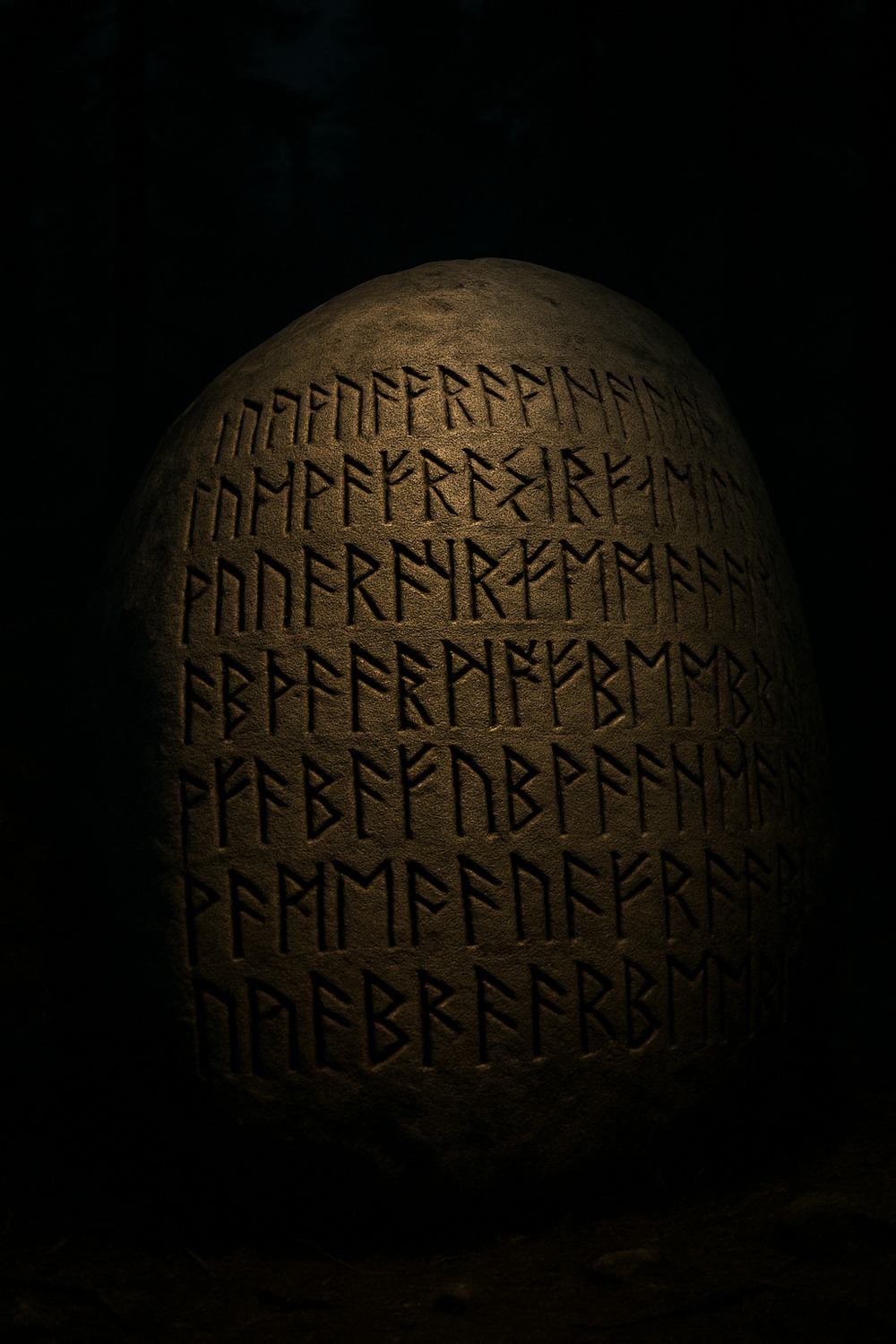
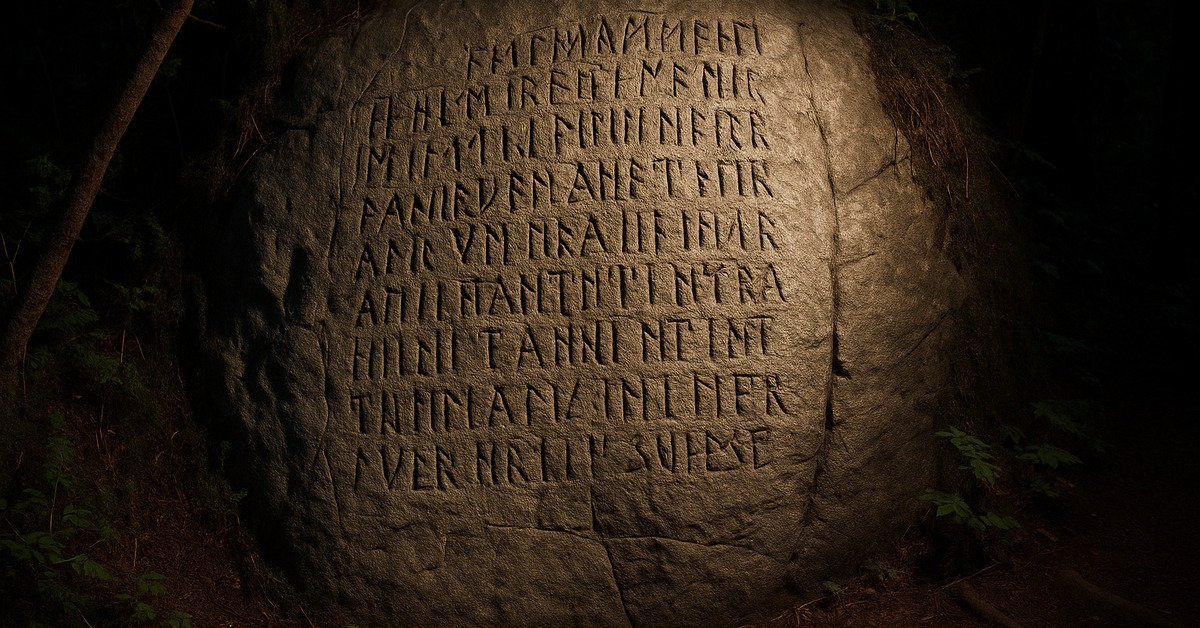
Viking runes don’t belong in an Ontario forest — and yet, carved into exposed bedrock with the patience of someone who meant every symbol, 255 of them wait in the Canadian wilderness, matching a 1611 Swedish Lord’s Prayer almost word for word. Nobody planted a flag here. Nobody wrote it into any official record. The stone just held it, quietly, for four centuries.
Somewhere in a quiet stretch of Canadian woodland, far from any Scandinavian coastline or Norse saga, someone once pressed themselves against a rock face and carved their faith into stone. Symbol by symbol. Rune by rune. Archaeologists found what they left behind, and it’s one of the most disorienting cultural artifacts ever pulled out of North American soil.
Viking Runes Ontario Researchers Found by Accident
It starts with 255 individual symbols etched into exposed Ontario bedrock with a precision that rules out anything casual. These aren’t scratches. They aren’t weathered accidents in stone. Specialists who examined the carvings identified them as Nordic runes — the writing system used across Scandinavia and parts of northern Europe for centuries. Linguist and runologist Dr. Richard Nielsen, who has spent decades decoding Norse inscriptions across North America, studied the markings closely. His conclusion: the text matches the 1611 Swedish version of The Lord’s Prayer, almost word for word.
So who carved it? And why here, in the Canadian wilderness, on a rock that wasn’t on anyone’s map?
That question doesn’t have a clean answer. What we do know is that whoever did this was literate, patient, and deliberate. They chose this rock. This prayer. They stayed long enough to finish all 255 symbols — which, if you’ve ever tried to carve anything into stone, you know is not a small commitment.
Decoding Ancient Symbols Took Rare Linguistic Skill
Reading runes isn’t like sounding out a modern alphabet. Each symbol carries a sound or letter, but the specific forms shift across time periods and regions — sometimes dramatically. Matching the Ontario carvings to a 17th-century Swedish religious text required a very specific overlap of knowledge: deep familiarity with Nordic writing systems AND early Reformation-era Christian liturgy. That combination is genuinely rare.
Researchers had to cross-reference the symbols against known runic manuscripts and prayer texts before they’d commit to any conclusion. For more on other extraordinary ancient inscriptions found across the world, this-amazing-world.com has been tracking discoveries just as strange as this one.
That last detail — the Reformation connection — keeps nagging. Because it means this wasn’t just a Viking wandering through the forest. Whoever carved this knew the 1611 Swedish Bible specifically. They were post-Reformation. Literate in a very particular, historically narrow way. And here’s the thing: that specificity is what makes this impossible to dismiss as coincidence or hoax — the text doesn’t merely resemble the prayer, it follows it.
Think about what carving 255 runes into solid rock actually demands. Not just physically. Mentally. This was labor. This was intention. This was someone saying: I was here, I believed this, and I want the stone to hold it after I’m gone.
Norse Explorers Reached Canada — But This Goes Further
Most people have heard the L’Anse aux Meadows story. Around 1000 AD, Norse explorers landed in Newfoundland — archaeological proof that Vikings reached Canadian shores five centuries before Columbus ever left port. That much is settled history. But the Viking runes Ontario discovery isn’t about a 10th-century exploration camp. It’s a 17th-century Swedish prayer.
Which means Scandinavian presence in North America didn’t just arrive at L’Anse aux Meadows and disappear. Something kept going. Something traveled inland. Something ended up on a rock face in Ontario woodland — in a form that historians haven’t fully accounted for, and probably should have started asking about sooner.
The gap between 1000 AD and 1611 is over 600 years.
What happened in between? Who kept crossing? How far did they actually go, and why didn’t they leave better records?
Runes Weren’t Just Letters — They Were Protection
In traditional Norse belief, runes weren’t just a writing system — turns out they were considered powerful. Magical. Tools for protection, healing, fate-shaping. Carving a runic inscription wasn’t a literary act so much as a ritual one. So when someone pressed a 17th-century Swedish prayer into Canadian bedrock using an ancient runic alphabet, they may have been doing two things simultaneously — recording their faith and constructing a spiritual shield.
A talisman. A permanent prayer embedded in the earth itself.
That reframes the whole inscription. It might be a guardian — a ward placed in the wilderness by someone who felt, perhaps desperately, that they needed one. Someone far from home, carving protection into the one thing that wouldn’t move, burn, or rot. The stone would hold it long after they were gone. It has. Four hundred years and counting. History has a way of preserving exactly what it was never asked to keep.
How It Unfolded
- c. 1000 AD — Norse explorers establish a settlement at L’Anse aux Meadows, Newfoundland; the first confirmed European presence in North America.
- 1611 — Sweden releases its landmark Bible translation, putting the Lord’s Prayer directly into the hands of ordinary Scandinavian readers for the first time — the exact text later found on Ontario bedrock.
- Post-1611 — An unknown Scandinavian carves 255 runic symbols into an Ontario rock face, referencing the newly circulated Swedish scripture; the site sits undiscovered for centuries.
- Modern era — Dr. Richard Nielsen, runologist, analyzes the carvings and confirms the match to the 1611 Swedish Lord’s Prayer, forcing a reassessment of how far Scandinavian presence extended into North America.
By the Numbers
- 255 individual runic symbols carved into Ontario bedrock — each one matching a specific character in the 1611 Swedish Lord’s Prayer translation, none of them apparently rushed or incomplete.
- L’Anse aux Meadows dates to approximately 1000 AD. That’s more than 600 years before the Swedish Bible translation these runes reference even existed.
- 1611: the same year England produced the King James Bible, Sweden released its own landmark scripture translation — the one that put religious text directly into the hands of ordinary Scandinavian readers for the first time.
- Norse runes weren’t uniform. The Elder Futhark had 24 symbols; later medieval variants expanded or contracted that set depending on region and era. Pinning down exactly which runic tradition was used in Ontario was, by itself, a significant piece of scholarly work.
Field Notes
- Remote — the site sits in Ontario forest with no proximity to any known historical trade route or settlement. Someone went well out of their way to carve this in a place that wasn’t on anyone’s map.
- Runestone hoaxes are common enough that they’ve made scholars deeply skeptical of North American discoveries — which is exactly why verification by specialists like Dr. Nielsen matters. The bar for confirmation is deliberately high.
- Some researchers believe Scandinavian fishermen and traders kept making Atlantic crossings for centuries after the initial Viking-age voyages, quietly working Canadian waters without leaving formal documentation. If that’s true, cultural artifacts like this may be the only traces they left at all — not records, not settlements. Just marks in stone.
What These Silent Stones Are Really Telling Us
Why does this matter? Because the Viking runes Ontario discovery doesn’t just shuffle a footnote in Canadian history — it opens a door that wasn’t supposed to be there.
If a 17th-century Swedish prayer is sitting in Ontario bedrock, the story of European presence in North America is messier, stranger, and far less linear than any clean timeline suggests. Someone who knew runic script AND post-Reformation Swedish Christianity was standing in that forest. Not passing through. Standing there long enough, and committed enough, to carve 255 symbols by hand into solid rock. That kind of act implies rootedness. Or at least a desperate, human need to feel rooted.
And yet no record names them. No ship’s log. No parish entry. Nothing.
Picture it: sometime in the 1600s, a person kneels alone in a Canadian forest, no church within reach, no one who speaks their language, possibly no one who even knows they’re there. So they make their own church — on a rock face that will outlast everything: the cold, the silence, the forgetting. They carve the one prayer they know all the way through, in the oldest alphabet they trust, and leave it for the stone to keep.
Editor’s Take — Sarah Blake
What stops me here isn’t the runes themselves — it’s the location. Nobody carves 255 symbols into a rock face in the middle of nowhere as a casual gesture. That kind of effort, in that kind of isolation, speaks to someone at the absolute edge of what they could endure. The prayer wasn’t decoration. It was armor. And the fact that the stone kept it intact while everything else — the name, the ship, the life — vanished entirely tells you something unsettling about which things history actually bothers to save.
We don’t know the name of the person who knelt in that Ontario forest. We don’t know if they found their way home. But the stone held their secret for 400 years, and now here we are, reading it. History hides in genuinely strange places — if that kind of discovery pulls at you, there’s more waiting at this-amazing-world.com. The next one is stranger still.