


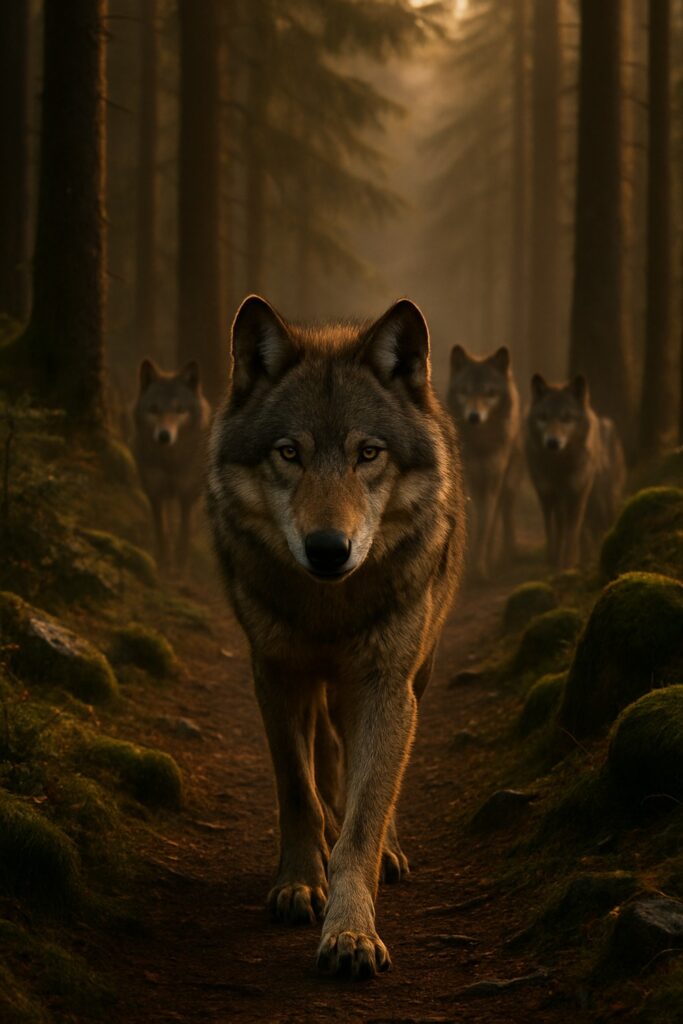
Nobody was looking for a river to move. That’s not what the researchers were tracking when they loaded 14 wolves into crates in Canada and drove them south into Yellowstone in January 1995. And yet.
What followed that reintroduction became one of the strangest, most documented chain reactions in the history of ecology. Not strange in a sensational way — strange in the way that makes you realize how much is quietly happening beneath the surface of a landscape you think you understand. Scientists still bring it up. Turns out, wolves don’t just hunt elk. They reorganize rivers.
How Yellowstone Lost Its Wolves — and Itself
By 1926, the last wolf in Yellowstone was dead.
It took about 25 years of government-sanctioned poisoning, trapping, and shooting to finish the job. Biologist Aldo Leopold — one of the first Americans to publicly mourn the wolf’s disappearance — described watching the “fierce green fire” fade from a dying wolf’s eyes in his 1949 book A Sand County Almanac. He called it the moment he understood that mountains, and ecosystems, needed wolves to survive. Leopold’s land ethic would shape conservation science for generations. But the wolves were already gone, and what happened next was slow and quiet and easy to miss if you weren’t paying attention.
Without predators, elk herds expanded and grazed wherever they felt like it — and they felt like the riverbanks. Willows stripped bare. Aspens, cottonwoods, gone. Beavers, which depend on willows to survive winter, disappeared along with them. And without beaver dams regulating water flow, the rivers began to shift. Not in any dramatic way. More like an old house losing its foundation — one silent crack, then another, over decades.
Fourteen Wolves Changed Everything Around Them
The Yellowstone wolf reintroduction happened in two waves: 14 wolves in January 1995, then 17 more in 1996. Researchers connected to the broader ecology of predator-prey dynamics had theorized about trophic cascades for years, but Yellowstone handed them a real-world laboratory at massive scale — something you can’t manufacture in a controlled study.
Within a few years, the elk weren’t just fewer in number. They were behaviorally different. They stopped lingering along riverbanks where wolves could corner them. They moved more. Stayed alert. Ecologists started calling it being “afraid of the landscape” — not afraid of a specific wolf, but afraid of the conditions where wolves had the advantage. It’s a subtle distinction that turns out to matter enormously.
That shift in elk behavior — not the wolves themselves — is what started rebuilding Yellowstone.
Grasses came back first. Then willows, shooting up six feet tall in valleys that had been bare dirt for decades. Songbirds returned because the shrubs returned. Beavers came back because the willows came back. And beaver dams — one of nature’s more underrated water management systems — began stabilizing stream banks that had been eroding for 70 years straight.
When Rivers Start Listening to Wolves
Here’s where the Yellowstone wolf reintroduction crosses from impressive into something that’s genuinely hard to sit with. The rivers changed course. Not because of rainfall or seismic activity or anything a hydrologist would have flagged. Because wolves were hunting elk, elk were avoiding riverbanks, vegetation had time to grow real root systems, and those roots held the soil in place long enough to redirect how water moved through the valley.
Ecologist William Ripple at Oregon State University published landmark research documenting exactly this — the technical term is a “trophic cascade,” but what it means in plain language is that one predator at the top of a food chain can reorganize an entire landscape from the inside out, without anyone touching a shovel.
Willow heights along northern Yellowstone streams increased by over 500% in some areas within a decade of the reintroduction. That last fact kept me reading for another hour. It’s not a rounding error. It’s not cherry-picked data from one good patch of riverbank. It’s a measurable, documented transformation of a landscape that had been quietly falling apart for seventy years.
Which raises a question that’s hard to put back once you’ve thought about it: how many other places look the way they do — eroded, emptied out, diminished — because we removed something we didn’t fully understand?

Wolves Don’t Actually Want to Fight You
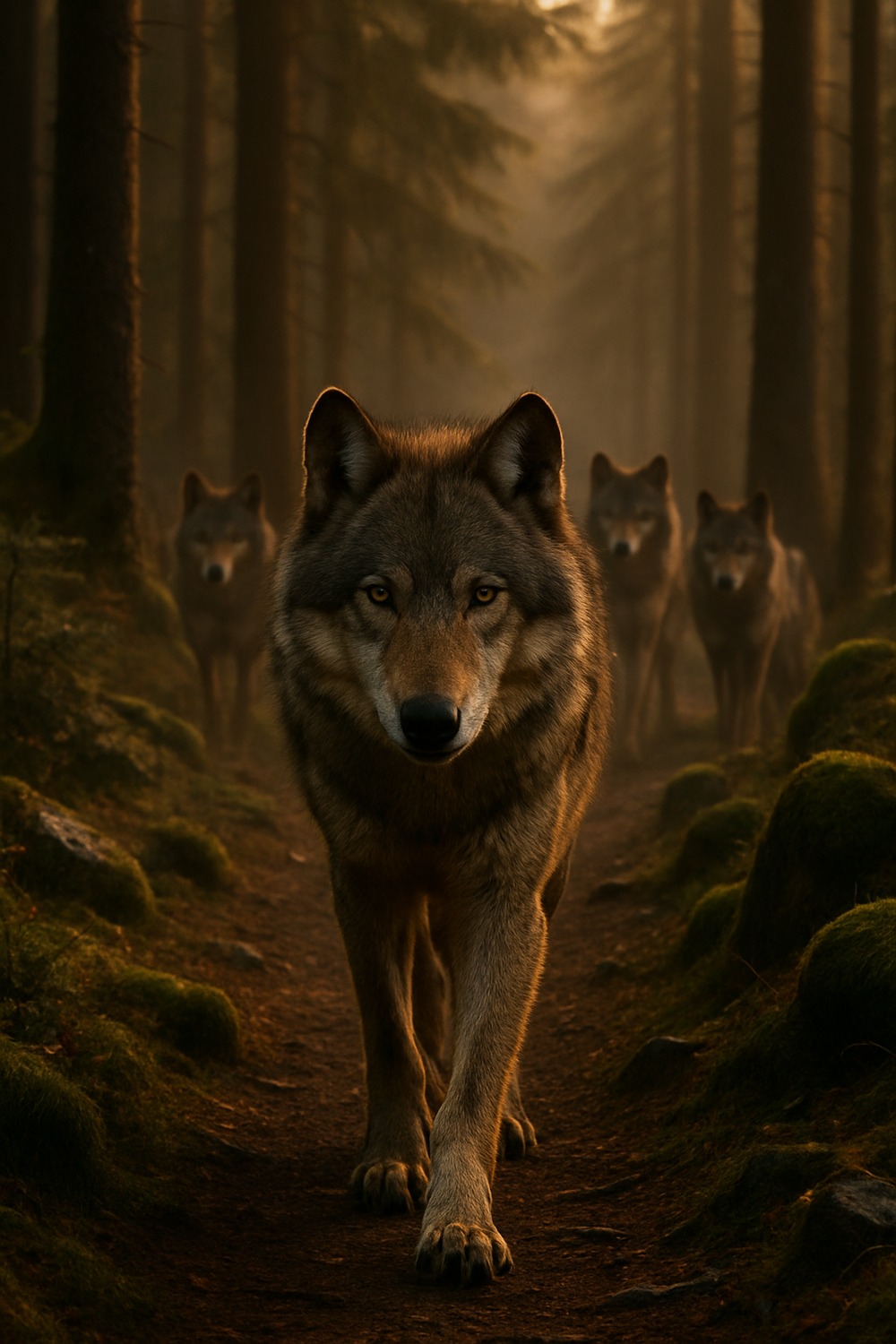
The animal we spent centuries writing into our nightmares is, in practice, deeply conflict-averse around humans. Given space, wolves avoid us. They’re not brave about it. They’re just not interested.
The mythology of the wolf as a lurking, human-hunting predator is almost entirely cultural — a story that made sense when we were competing with apex predators for the same deer and the same territory, and that we kept telling ourselves long after the competition was over. It’s not accurate now, and it probably wasn’t as accurate then as we made it sound.
Wolf pack structure is built around cooperation. A breeding pair, their pups from the current year, older offspring who stay on to help raise the next litter. They share food. They babysit. Wolves that lose a pack member have been documented behaving in ways that are uncomfortable to dismiss as simple animal instinct — extended searching, changes in behavior, things researchers describe carefully and then go quiet about. They’re not monsters from a fairy tale. They’re highly social animals trying to keep their family fed and their pups alive, same as most things.
By the Numbers
- By 1926, wolves were completely eradicated from Yellowstone after a 25-year federal extermination campaign. The U.S. government was still paying bounties on wolf kills in other states as late as the 1960s (U.S. Fish & Wildlife Service historical records).
- Willow canopy height: up over 500% in some study areas, 1998–2010.
- The Yellowstone wolf population peaked at approximately 174 individuals in 2003 — grown from just 31 reintroduced animals — which is what a habitat looks like when it can finally support the species that belongs in it (Ripple & Beschta, Oregon State University, 2012).
- Beaver colonies in Yellowstone increased to at least 9 documented colonies by 2011, compared to just one in 1996. One colony. That’s what the ecosystem had been running on (Yellowstone Wolf Project annual reports).

Field Notes
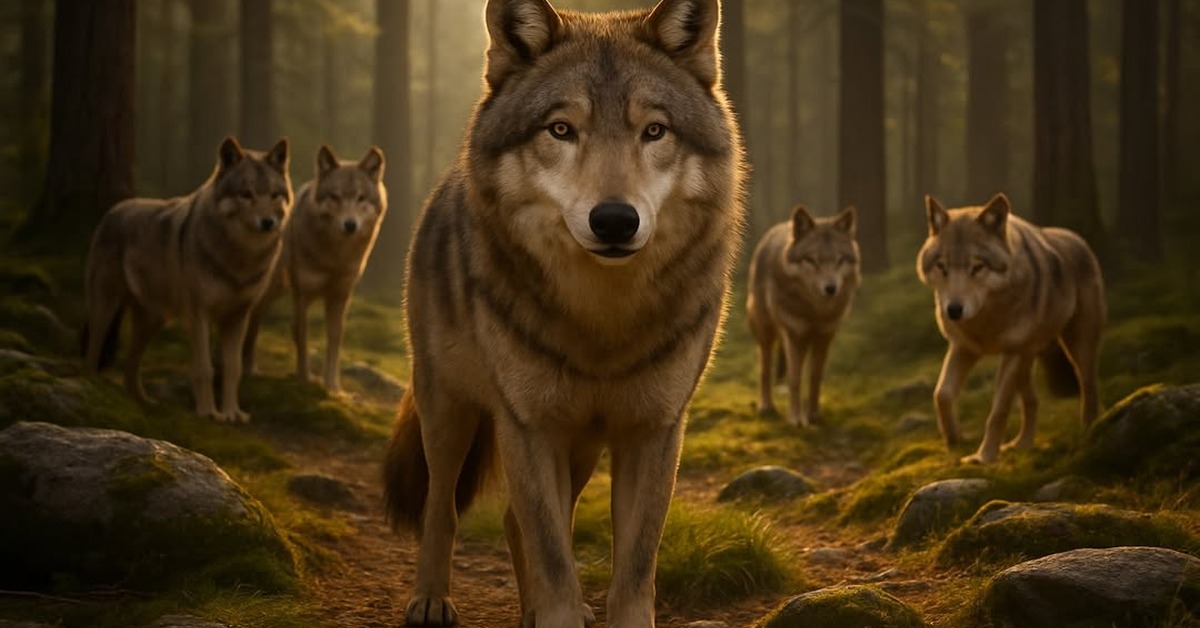
- Wolves can howl across up to 10 miles of open terrain, and each pack has a distinct vocal signature — essentially an accent — that other wolves recognize on contact.
- The Druid Peak Pack grew to 37 members at its peak, making it one of the largest documented gray wolf packs ever recorded. Researchers watched them for years from a ridge with spotting scopes, logging thousands of hours of behavioral data that’s still being analyzed.
- Elk in Yellowstone now run a continuous, real-time predator risk assessment based on wind direction and sightlines — before they graze, not after. The “landscape of fear” operates even when no wolves are physically nearby. The possibility of wolves is enough to change elk behavior entirely. That’s how deep the reintroduction went.
What One Species Tells Us About Everything Else
The Yellowstone wolf reintroduction isn’t just a conservation success story. It’s a kind of scientific reckoning. For most of the 20th century, wildlife management treated ecosystems like machines with interchangeable parts — pull a predator out here, adjust prey numbers there, manage the counts. Yellowstone demonstrated, in plain sight over 30 years, that ecosystems aren’t machines. They’re webs. Pull one thread and the whole thing shifts in ways you can’t predict until you’ve already done it — or undone it.
Apex predators have been removed from ecosystems all over the world. Sharks. Big cats. Large raptors. In many cases the downstream effects are still playing out, quietly, in ways that look like normal landscape degradation until you know what to look for.
We might be living inside trophic cascades right now without recognizing them.
Fourteen wolves. That’s all it took to start putting something right that we’d spent decades quietly breaking. The rivers moved. The beavers came back. The willows grew tall again in valleys that had been bare dirt since before most living people were born. It didn’t require massive intervention or new technology — just returning what belonged there. And if one predator can rebuild a river, it’s worth sitting with the honest question of what else we’ve unmade without noticing. There’s more at this-amazing-world.com, and some of it is stranger than this.


