The Swimmer Who Held 20 Strangers Alive in the Aegean
Twenty strangers on a sinking boat — that’s the setup. What makes the Yusra Mardini Aegean Sea refugee survival story something else entirely is what happened before anyone on shore knew to look. A seventeen-year-old swimmer from Damascus went over the side into open water, in the dark, without being asked, and held that dinghy up for three hours. Every single person on board walked out alive.
August 2015. The crossing from Turkey to the Greek island of Lesbos runs roughly eleven kilometres at its narrowest — a distance that sounds survivable until you factor in an overloaded inflatable, a dead engine, and water cold enough to strip effective muscle function within the hour. Yusra Mardini and her sister Sarah went in anyway. Two others followed. They pushed and kicked until the shore came to them. What happens to a person after that — and what do they do with it?
The Night the Engine Died on the Aegean
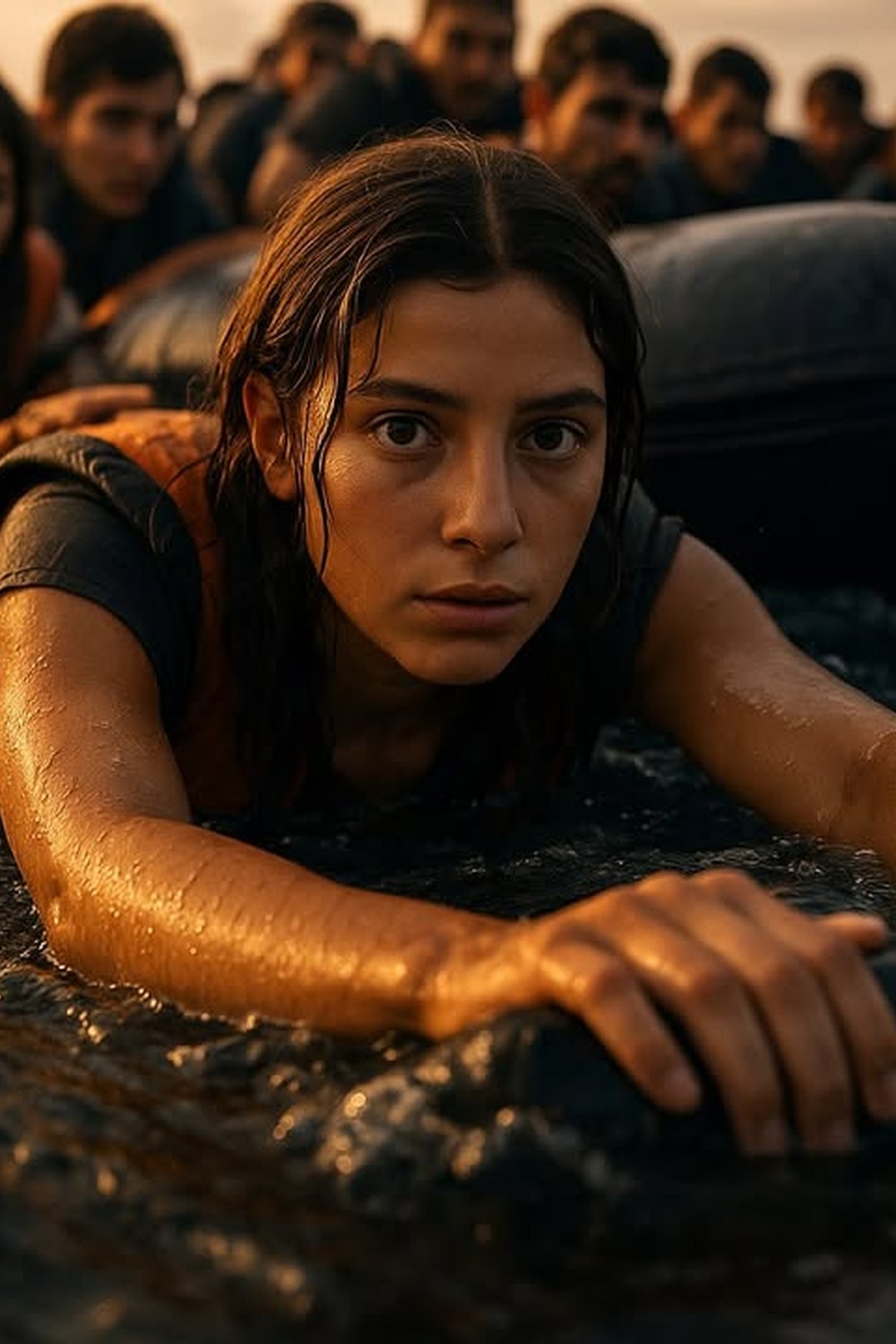
Near Ayvacık on the Turkish coast, the boat left carrying around twenty people — far more than the small inflatable dinghy was built to hold. Smuggling networks in 2015 were charging between $1,000 and $1,500 per person for passage on the Aegean refugee crossing route, on vessels designed for a fraction of that load. This was standard practice. Within minutes of departure, the engine cut out. The boat began taking on water.
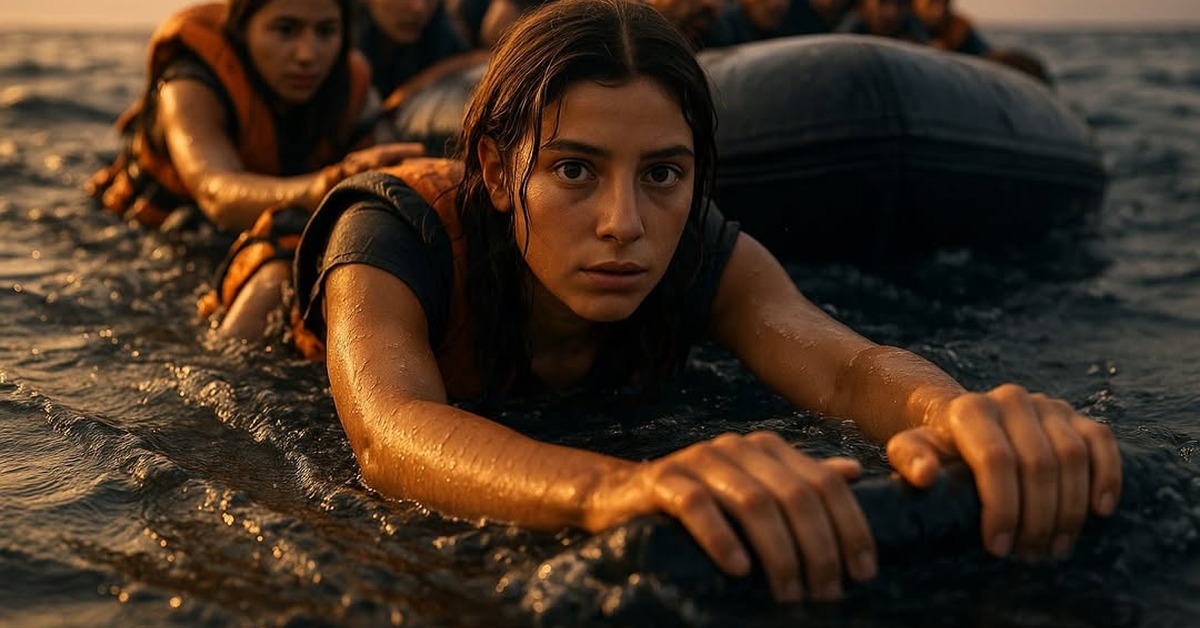
According to Mardini’s own account, documented in her 2018 memoir co-written with Josie Le Blond, the vessel was close to capsizing when she made the calculation that any competitive swimmer would recognize immediately: the boat was too heavy, and someone with the strength to stay in the water had to reduce that weight and provide propulsion. She went over the side without being asked. For three hours they kicked and pulled. The current ran against them. The shore appeared and disappeared depending on the swells. When the dinghy finally scraped onto a Lesbos beach, every single person on board walked out of the water alive. Mardini was one of the last to pull herself ashore.
The Aegean in August isn’t the Mediterranean of postcards. Surface temperatures in the straits between Turkey and Lesbos typically hover between 22 and 25 degrees Celsius — warm by northern European standards, cold enough to drain competitive swimmers after sustained effort. Mardini had trained for years at the Al-Assad Sports City complex in Damascus, reaching national team level by her mid-teens. She knew exactly what her body could do. She also knew it had limits. What she couldn’t fully calculate, treading water in the dark with strangers praying above her, was how close those limits were.
What Survival Actually Costs the Body and Mind
Here’s the thing about what Mardini’s body actually did that night: sustained cold-water swimming at high exertion — the kind required to propel a loaded dinghy against a current — accelerates heat loss far beyond what resting in cold water does. The human body loses heat in water roughly twenty-five times faster than in air at the same temperature. Researchers at the University of Portsmouth’s Extreme Environments Laboratory have studied cold-water immersion survival extensively, finding that even trained swimmers experience significant loss of fine motor control within thirty to sixty minutes in water below 25°C. Grip weakens. Kick strength diminishes. The brain begins prioritizing core organs over limbs. That Mardini maintained effective propulsion for three hours speaks to a training base and a degree of psychological override that most physiology textbooks would struggle to account for.
The decision to enter the water wasn’t just brave — it was a form of controlled self-sacrifice that demanded she spend her own body as currency for other people’s lives. And that instinct cuts against everything research in crisis psychology tells us we should expect. In acute emergencies, bystander paralysis is common; active intervention is rare — not because people are cowardly but because the human nervous system under extreme threat defaults to freeze responses. That Mardini moved toward the danger rather than away from it places her in a genuinely unusual category.
Stories like that of Lynlee Hope, the baby operated on before she was even born, remind us that survival often depends on someone else choosing to act against every comfortable instinct — a surgeon’s hands, or a swimmer’s legs, going where they don’t have to go.
Mardini has spoken in interviews about the aftermath — the nightmares, the hypervigilance, the difficulty of processing what her body went through while her mind was focused entirely on other people. Survival, she’s made clear, doesn’t end when the shore appears. It just changes shape.
The Crossing in Context: Scale of the Aegean Crisis
Why does the scale of 2015 matter here? Because without it, Mardini’s crossing risks reading as an anomaly — a dramatic exception in otherwise manageable waters. It wasn’t. UNHCR recorded over 856,000 sea arrivals in Greece between January and December of that year, the overwhelming majority crossing the same stretch of water she navigated. At the peak of the crisis, boats were arriving on Lesbos’s northern beaches every few minutes around the clock. The infrastructure of rescue was almost entirely absent. Greek coast guard vessels were overwhelmed. International naval assets were not yet deployed in significant numbers. Volunteer organizations like the Spanish lifeguard collective Proem-Aid were operating on shoestrings, pulling people from the water with equipment they’d funded themselves.
The sea was claiming lives daily, and the boats kept coming.
The Yusra Mardini Aegean Sea refugee survival story stands out from thousands of others not because her crossing was more dangerous — many were worse — but because she had the specific skill to alter its outcome. Most of the people in those dinghies had no such advantage. Families, elderly passengers, children who couldn’t swim at all — they were entirely at the mercy of overloaded vessels and the competence of whoever happened to be on board. The crossing that killed over 800 people in that single year killed them not through storms or military action but through the fundamental incompatibility of desperate need and criminally inadequate transport. When survival depends entirely on who happens to be in the boat with you, that’s not a refugee crisis — that’s a policy failure wearing a humanitarian mask.
Eleven kilometres, in calm conditions, is something a recreational swimmer can manage in a few hours. That’s the most chilling comparison available — the route is shorter than a standard open-water swim competition. The difference is that competition swimmers aren’t sharing the water with overloaded dinghies, hypothermia, and darkness. Context makes distance irrelevant.
Yusra Mardini’s Aegean Sea Crossing Leads to Rio
Thirteen months after the Aegean crossing, Yusra Mardini walked into the Maracanã Stadium in Rio de Janeiro as part of the first-ever Refugee Olympic Team. Formed under IOC President Thomas Bach, the team’s creation in March 2016 recognized the estimated 65 million forcibly displaced people worldwide at that time — many of them athletes whose national federations could no longer support them. Ten athletes carried a flag that hadn’t existed a year earlier, into a stadium of 78,000 people, broadcast to hundreds of millions. Mardini competed in the 100-metre butterfly and 100-metre freestyle. She didn’t medal. She wasn’t expected to — she’d been training in a German club pool for barely a year after a journey that would have ended most athletic careers permanently. She finished her heats. She stood on the block. She swam.
Sports institutions rarely produce symbols that earn their meaning cleanly, through documented and verifiable events rather than manufactured narrative. This was one of those times. Mardini hadn’t been selected for inspiration value alone — she was a legitimate competitive swimmer at national level before Syria’s civil war forced her family’s displacement. Her times were real. Her training was real. What the Refugee Olympic Team did was restore a context in which those real things could exist again, when her country of origin no longer could.
Since Rio, Mardini has worked as a UNHCR Goodwill Ambassador, testified before the European Parliament, and continued speaking publicly about the conditions that produce crossings like the one she survived. She’s been transparent about the tension in that role — the gap between the symbolism the world wants from her story and the ongoing, grinding reality of displacement that most refugee stories never reach.
What Courage Leaves Behind in a Person
Dr. Richard Tedeschi at the University of North Carolina at Charlotte spent decades developing the framework of post-traumatic growth (researchers actually call this PTG), first formalized in a landmark 1996 paper co-authored with Dr. Lawrence Calhoun. That paper documented how some survivors of severe trauma emerge with measurably expanded psychological capacities: deeper relationships, stronger sense of personal strength, altered priorities, and what Tedeschi called a greater appreciation for life’s possibilities. Researchers at King’s College London applied this framework to refugee populations specifically in a 2019 study, finding that post-traumatic growth and post-traumatic stress disorder are not mutually exclusive. People can carry both simultaneously, sometimes for the rest of their lives.
Mardini’s public life reflects that duality with unusual clarity. She’s described panic attacks triggered by unexpected sounds. She’s also described the specific feeling of certainty she experienced in the water — that she knew what to do, that her body had a purpose, that years of training had been, in the most literal possible sense, preparation for this. That’s not resolution. That’s two truths living in the same person. The Yusra Mardini Aegean Sea refugee survival experience didn’t produce a simplified hero. It produced a person carrying the full weight of what happened, and choosing, day after day, to carry it toward something useful.
But there’s a distinction worth holding onto. Mardini didn’t decide to be brave. She decided to act. The bravery was a property of the action, not a quality she summoned beforehand. That matters — because it means the same capacity exists in anyone who moves toward the thing that needs doing, regardless of whether they feel ready.
How It Unfolded
- 2015 (August) — Yusra Mardini, her sister Sarah, and two others enter the Aegean Sea to push a failing dinghy carrying approximately twenty refugees toward Lesbos; all passengers survive.
- 2015 (September) — The Mardini sisters reach Berlin and begin training at Wasserfreunde Spandau 04, a German swimming club that provides Yusra a path back to competitive sport.
- 2016 (March) — The International Olympic Committee announces the formation of the first-ever Refugee Olympic Team; Mardini is selected to compete in swimming at the Rio Games.
- 2016 (August) — Mardini competes at Rio 2016, becoming one of the most recognized faces of the Refugee Olympic Team’s debut; she is subsequently appointed UNHCR Goodwill Ambassador.
- 2018 — Mardini’s memoir, Butterfly: From Refugee to Olympian, My Story of Rescue, Hope and Triumph, is published, providing the fullest documented account of the Aegean crossing and its aftermath.
By the Numbers
- 856,723 — sea arrivals recorded in Greece in 2015 alone, the majority crossing the Aegean from Turkey (UNHCR, 2016)
- ~11 km — the width of the Aegean at its narrowest point between Turkey and Lesbos, the stretch Mardini’s group crossed
- 3 hours — the duration Mardini and three others spent in the water pushing the dinghy; water temperature approximately 22–24°C
- 3,771 — people confirmed dead or missing in the Mediterranean during 2015, the deadliest year on record at that time (UNHCR)
- 10 — athletes on the inaugural Refugee Olympic Team at Rio 2016, representing an estimated 65 million displaced people worldwide (IOC)
Field Notes
- The Mardini sisters were initially reluctant to identify themselves as strong swimmers to the others on the boat — they were afraid it would create expectations or conflict before the crossing began. Yusra only went over the side once it was clear the dinghy would capsize if nothing changed.
- Mardini’s event at Rio — the 100-metre butterfly — is considered one of the most physically demanding strokes in competitive swimming, requiring sustained power from the upper body throughout. The fact that her training stroke aligned with what her body needed to do in the Aegean is a coincidence she’s acknowledged publicly.
- In 2018, Mardini and her sister Sarah were arrested in Lesbos and charged with espionage, illegal entry, and people-smuggling by Greek authorities — allegations connected to their volunteer work with an emergency response NGO on the island. The charges drew widespread international condemnation and were widely described by human rights organizations as politically motivated.
- Researchers still can’t fully explain what Tedeschi calls the “seismic” quality of certain traumatic experiences — why some events produce growth and others produce only damage, even in people with similar backgrounds and trauma severity. The determining factors remain genuinely unclear, and Mardini’s case doesn’t resolve that uncertainty.
Frequently Asked Questions
Q: What exactly happened during Yusra Mardini’s Aegean Sea refugee crossing in 2015?
In August 2015, Mardini was among approximately twenty people attempting to cross from Turkey to Lesbos, Greece, in an overloaded inflatable dinghy. When the engine failed and the boat began sinking, Mardini, her sister Sarah, and two others entered the water and pushed the vessel for roughly three hours until it reached shore. Every passenger survived. Mardini was seventeen years old at the time and a trained competitive swimmer with Syria’s national squad.
Q: How did Mardini end up competing in the 2016 Rio Olympics after the crossing?
After reaching Germany, Mardini joined Wasserfreunde Spandau 04 in Berlin and resumed serious training within months of the crossing. When the International Olympic Committee announced the formation of the first Refugee Olympic Team in March 2016, Mardini was selected based on her documented competitive history with Syrian swimming. She competed in the 100-metre butterfly and 100-metre freestyle at Rio — less than thirteen months after the Aegean crossing. Her selection was based on genuine athletic qualification, not symbolic inclusion alone.
Q: Is it accurate to call Mardini’s action in the Aegean a rescue?
This is a fair question, and the language matters. Mardini didn’t rescue people from the water — she entered the water herself to prevent them from entering it. The more precise description is that she stabilized a sinking vessel through sustained physical effort. The distinction is important because it reframes what she did: not a dramatic pull-from-the-waves moment, but three hours of grinding muscular work in cold, dark water, with no certainty it would succeed. That’s arguably more demanding than a conventional rescue, not less.
Editor’s Take — Sarah Blake
What stays with me isn’t the courage — it’s the competence. Mardini went into the water because she’d spent years becoming someone whose body could do that specific thing. We talk about heroism as though it arrives from nowhere, some moral reserve that activates in extremity. But she had trained for thousands of hours before that night. The Aegean didn’t create what she did. It revealed it. That’s a different and more demanding idea — that readiness, not impulse, is what actually saves people.
More than 800,000 people crossed the Aegean in 2015. Most of their names aren’t known. The ones who didn’t make it left behind families, languages, futures — everything compressed into a few hours on cold water. Mardini’s story reached the world because she had a swimmer’s legs and a journalist-friendly arc: Damascus to the Aegean to Rio. But the crossing itself was ordinary in every terrible way that mattered. Twenty people in a boat that shouldn’t have been on the water. The question that outlasts the headlines is the one she can’t answer either: what do we owe the crossings we’ll never hear about?