


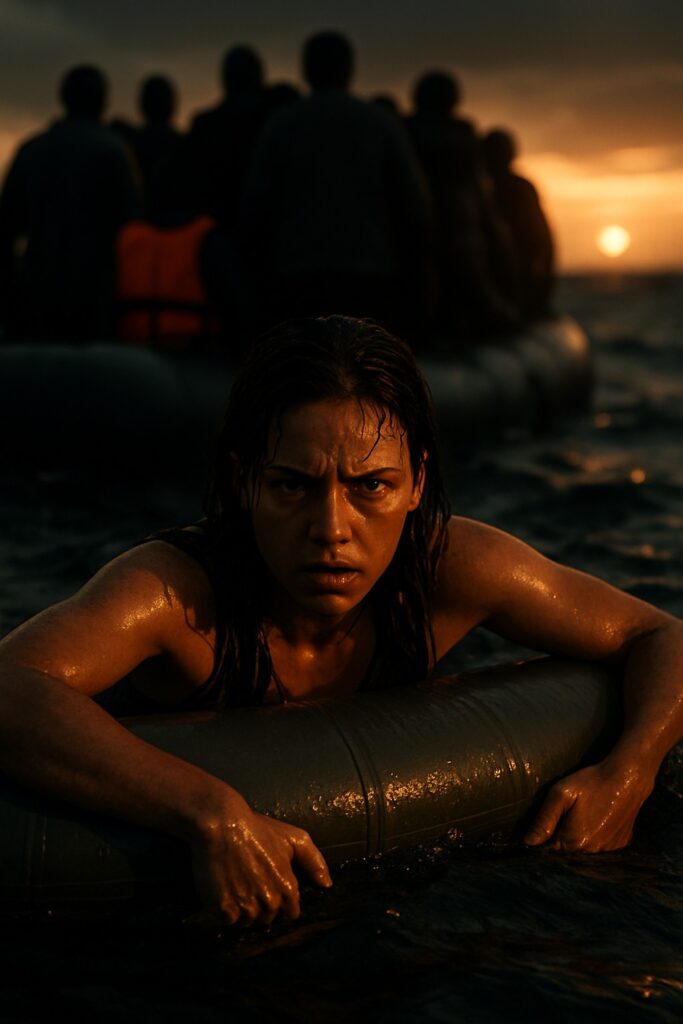
The engine dies somewhere in the middle of the Aegean. Twenty people on a rubber dinghy, twice its rated capacity, starting to take on water. And a seventeen-year-old swimmer from Damascus slips over the side — not in panic, but on purpose.
She goes in voluntarily. That’s the part that stops you cold. Yusra Mardini doesn’t cling to the hull. She doesn’t freeze. She gets into the dark water and starts pushing. Her sister Sarah goes in too. Two other people follow. For three hours, they kick. The boat makes it. Every single person on it reaches the Greek island of Lesbos alive. Less than a year later, Yusra walks into Maracanã Stadium at the Rio Olympics.
How Yusra Mardini Survived the Aegean Crossing
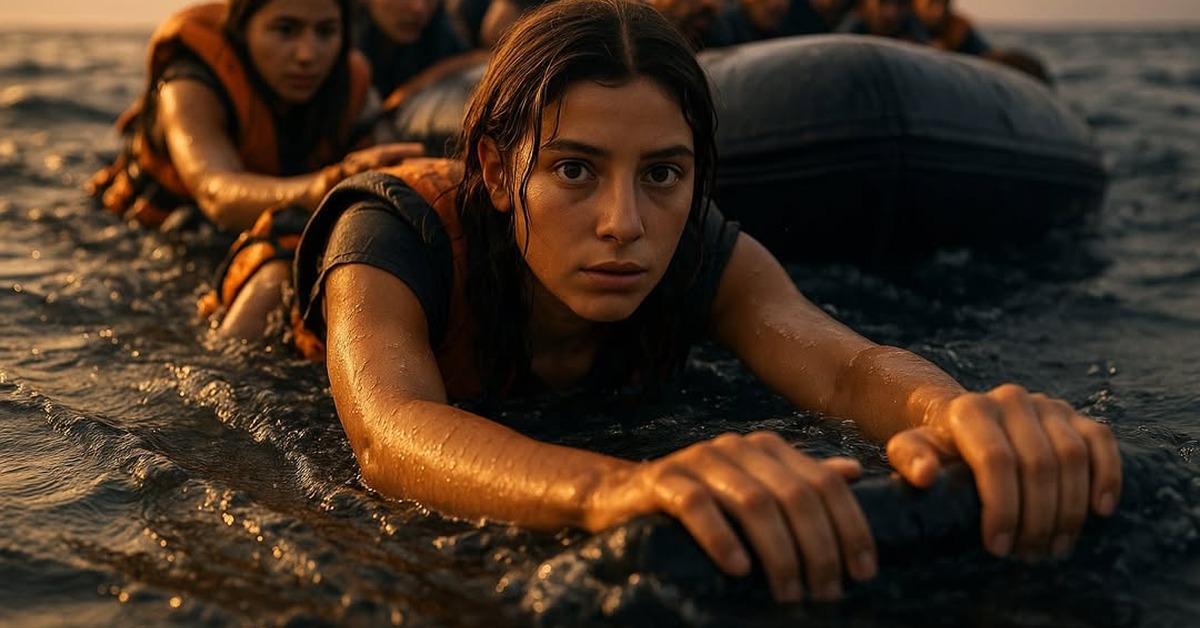
It’s August 2015. Yusra and Sarah have boarded an inflatable dinghy in Turkey with roughly 20 other people, all of them trying to reach Lesbos. The crossing is about 8 miles. Should take an hour. The engine fails almost immediately, and the boat — rated for maybe 6 to 8 people, carrying more than 20 — begins shipping water. According to the UNHCR’s documentation of her story, Yusra, Sarah, and two others go over the side voluntarily. Not to escape. To reduce the weight and push the hull toward shore.
Most people on that boat couldn’t swim. Yusra knew that.
She also knew the water temperature in the northern Aegean in August sits around 24°C — warm enough to survive, cold enough to destroy your muscles over a long effort. Migration scholar Hein de Haas has written about how rarely individual agency gets credited in mass-migration narratives, how people in these crossings tend to get flattened into a single collective story. Here, one teenager’s decision changed the outcome for an entire boat. Which raises a question that’s hard to shake: how many other acts like this happened that summer and were simply never recorded?
She Trained to Compete. She Ended Up Saving Lives.
Yusra had been swimming competitively since childhood in Damascus — training under Syria’s national program, posting times that in any normal context would’ve had coaches paying close attention. Then the war escalated. A bomb hit her family’s home. She’s described the shelling getting closer each day, the pools shutting down one by one, the city she’d grown up in becoming something she didn’t recognize anymore.
She didn’t leave because she gave up. She left because she wanted to live long enough to chase what she’d been building toward.
That distinction matters more than it might seem. You can read about other moments where ordinary people in genuinely impossible situations found something they didn’t know they had over at this-amazing-world.com — Yusra’s story fits into a long and remarkable lineage of exactly that.
The Refugee Crisis Context That Makes This Even Harder to Absorb
The night Yusra pushed that boat wasn’t unusual for 2015. That’s the part that’s genuinely difficult to sit with.
That year, more than 800,000 people attempted the Aegean crossing. The International Organization for Migration recorded over 3,700 migrants who died or went missing in the Mediterranean that year alone. The boats they crossed in were inflatable. Designed for calm lakes. Not rated for open-sea night crossings with double their maximum capacity packed in, salt water sloshing over the sides. Yusra Mardini, the refugee swimmer, was one of the lucky ones — lucky, and also extraordinarily capable, which isn’t a combination that appears in these stories very often.
Every person on her boat made it.
Not most of them. Every one. That outcome was the exception, not the norm, and it happened because two sisters decided their own fear was less important than everyone else’s survival. That last fact is the one that kept me reading about this story for another hour after I first encountered it.

Then She Made the Olympic Team. Here’s How That Happened.
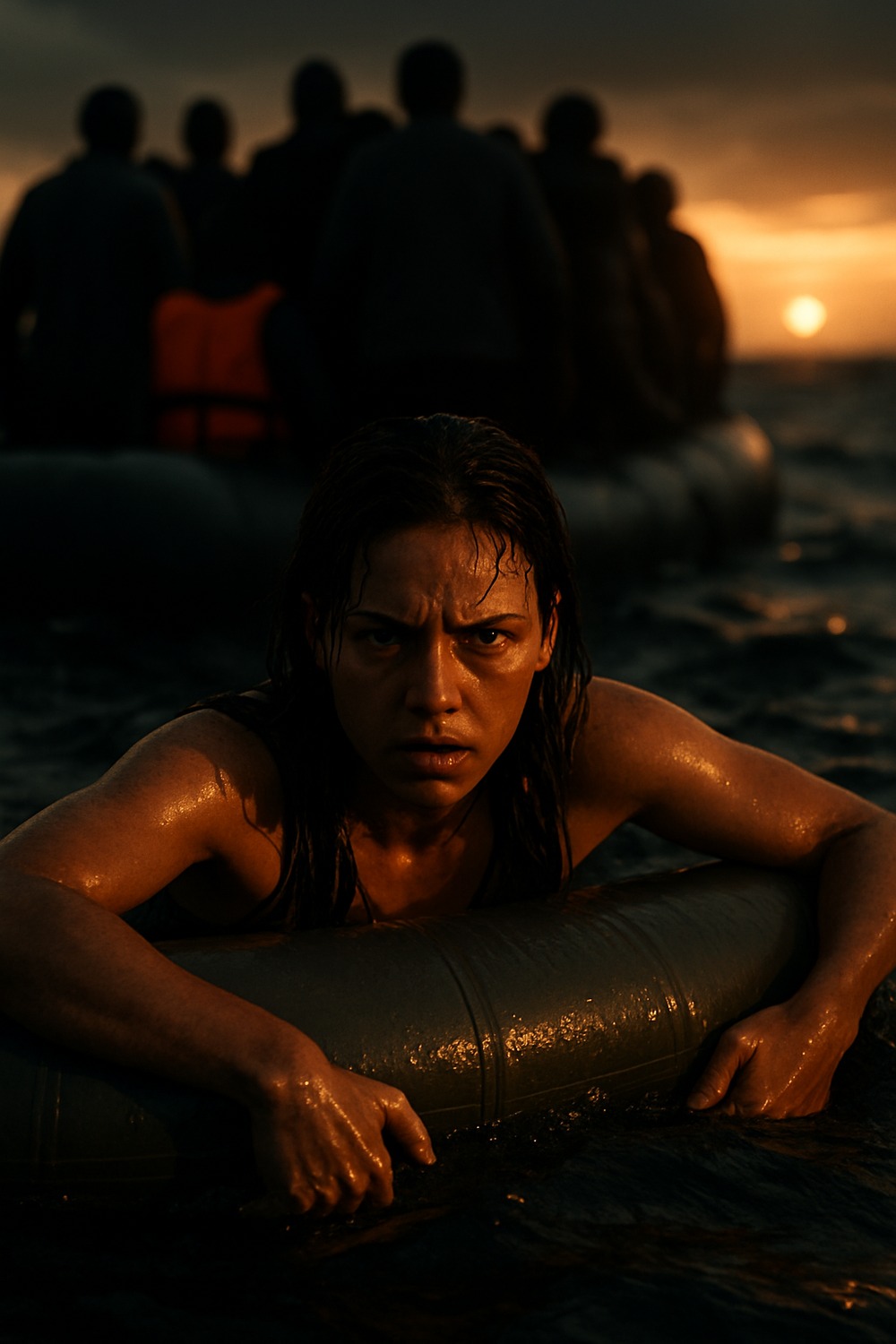
The 2016 Rio Olympics introduced something that had genuinely never existed in the 120-year history of the modern Games: a Refugee Olympic Team. Ten athletes from four countries, competing under the Olympic flag rather than any national banner. Yusra was one of them. She swam the 100m butterfly and 100m freestyle. She didn’t advance past the heats, but that framing slightly misses the point — the IOC created this team to signal, explicitly, that displacement doesn’t revoke your membership in the world. “A message of hope to all the refugees in our world,” is how IOC President Thomas Bach put it at the time.
Yusra walked into Maracanã Stadium carrying a flag that had never been raised before. Seventy-eight thousand people in the seats.
She was 18. She’d been a refugee for under a year. And she’d earned her spot in a way that most athletes simply never have to — not just through training, but through surviving something that would have quietly ended the ambitions of almost anyone else.
By the Numbers
- 800,000+ people attempted the Aegean crossing in 2015 — the largest single-year surge ever recorded on that route (UNHCR 2015 annual report)
- The dinghy carried more than 20 people; it was rated for 6 to 8
- Yusra spent roughly 3 hours in open water pushing the boat, covering approximately 3.5 miles
- The 2016 Refugee Olympic Team was the first in the modern Games’ 120-year history — 10 athletes, no national flags, one shared story about belonging to the world anyway

Field Notes
- Sarah Mardini — Yusra’s sister, who also went into the water that night — later became a humanitarian aid worker and was arrested in Greece in 2018 on smuggling charges related to their crossing. Human rights organizations called the charges politically motivated. The same act of survival, reframed as a crime depending on who controls the narrative.
- Named UNHCR Goodwill Ambassador at 18
- Yusra has used that platform specifically to advocate for refugee children’s access to sport and education — not abstract humanitarian language, but those two concrete things.
- The Refugee Olympic Team has competed at every Summer Olympics since Rio. Tokyo 2020 fielded 29 athletes. Paris 2024 expanded the team further. It’s now a permanent fixture, not the one-time gesture it could have been.
Why Yusra Mardini’s Story Still Refuses to Let Go
Stories about refugees almost always get told in passive voice. People are displaced. Families are separated. Borders are closed. Something is done to them, and they receive it. What Yusra Mardini’s story keeps insisting on, at every turn, is active voice. She pushed the boat. She trained. She competed. She chose, at each step, to be the subject of her own life rather than an object in someone else’s account of it.
Yusra Mardini, the refugee swimmer who became an Olympian, isn’t really a symbol of what refugees can achieve if they’re exceptional enough. She’s a reminder of what disappears every time someone doesn’t make it across.
Most of the 800,000 people who crossed in 2015 didn’t have Olympic-level swimming ability in reserve. They had the same desperate hope and the same indifferent sea. Yusra’s survival was skill, decision, and luck in combination — and she’s never pretended any one of those three was sufficient on its own.
Three hours in the Aegean. Less than a year to the Olympics. A life that could have been absorbed into a statistic instead became a story the world actually stopped to hear. Yusra Mardini didn’t ask for any of it. She got into the water, and she pushed. And when she finally got out, she found a pool and kept going. More stories like this — the ones that don’t quite fit any easy category — are at this-amazing-world.com.


