


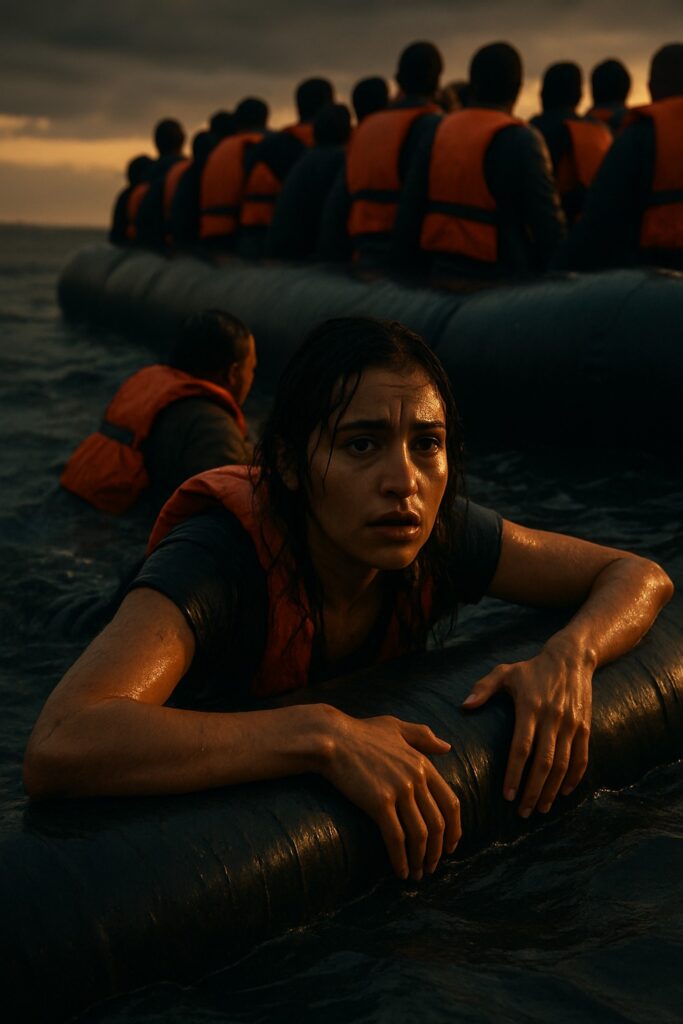
The engine died first. Then the boat started taking on water, and Yusra Mardini — seventeen years old, competitive swimmer, Syrian refugee — went over the side into the Aegean without waiting for anyone to ask her to.
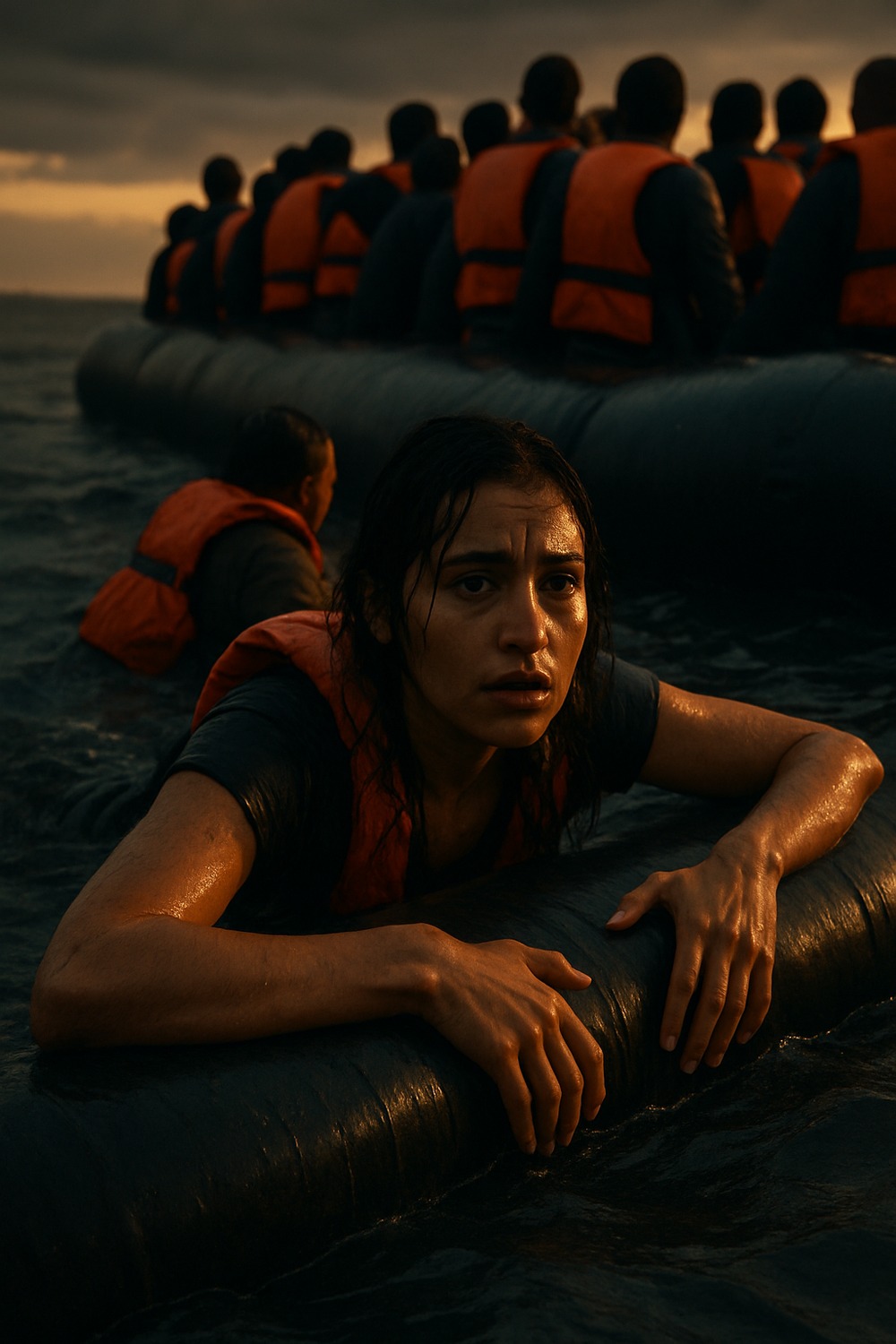
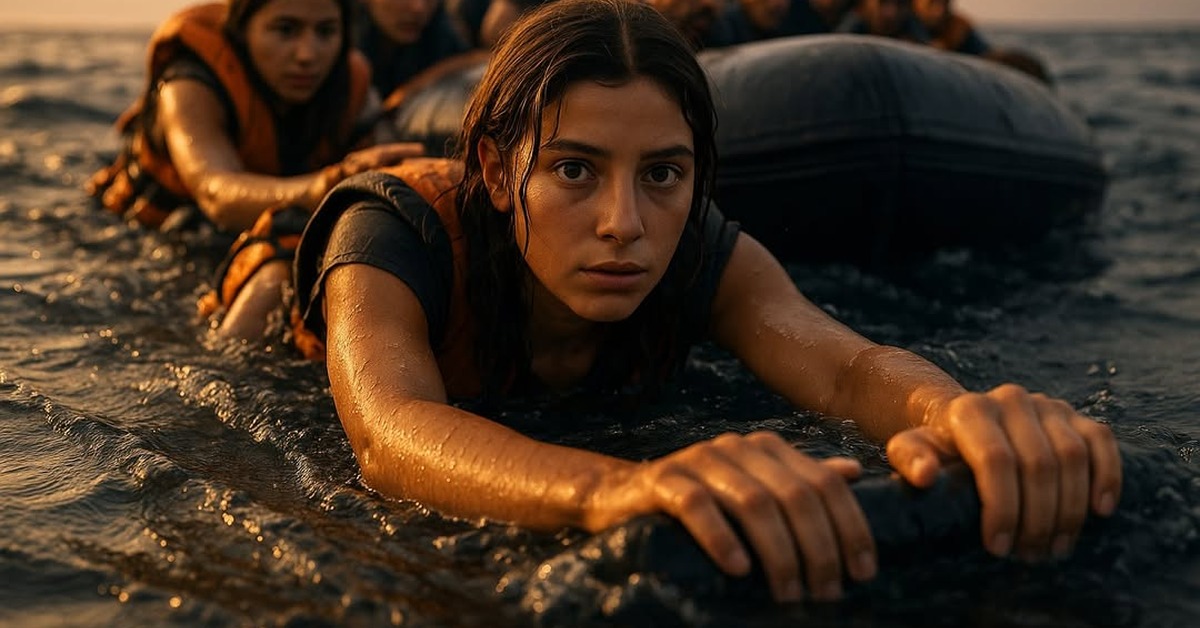
It was August 2015. A rubber dinghy built for maybe ten people is carrying twenty. The water is cold enough to cause muscle failure in an untrained adult within thirty minutes, and there is no rescue vessel coming. Yusra’s sister Sarah goes over the side with her. Two other swimmers follow. And then the four of them are in the dark water, gripping the hull from outside, kicking against the current, pushing that boat toward Lesbos by hand.
How Yusra Mardini Held a Boat Together with Her Hands
Three hours. That’s how long they lasted in those conditions.
According to documented fatality records from the Aegean crossing, cold water immersion at those temperatures typically incapacitates an untrained adult in under thirty minutes. Yusra and Sarah weren’t untrained — they’d both been swimming competitively since childhood in Damascus — but training for butterfly stroke in a pool is not exactly preparation for this. What kept them going wasn’t purely physical. At some point it becomes a choice you keep making, over and over, minute by minute, not to stop.
Every single person on that boat survived.
Twenty strangers went home to their families because a teenager decided her fear wasn’t the most important thing in the water that night. That last detail kept me reading about this for another hour. It’s the kind of fact that sits in you.
The War That Sent Her Into the Sea
Yusra had been training in Damascus pools since she was a child — butterfly stroke, competition times, a future that was supposed to involve Olympic trials, not rubber dinghies. Then the Syrian civil war escalated and the city she’d grown up in started disappearing around her. Shells hit her swimming club. Friends left. By 2015, staying felt more dangerous than crossing one of the deadliest stretches of water on earth.
That’s the calculation a lot of people had to make that year. And it tells you something about what was happening inside Syria that so many of them chose the water. You can read more about extraordinary human survival decisions at this-amazing-world.com.
She wasn’t fleeing because she gave up. She was fleeing because she refused to.
There’s a difference, and it matters more than the story usually gets credit for.
The Aegean Crossing Was Deadlier Than Most People Knew
The year Yusra Mardini made her crossing, more than 800,000 people attempted the Aegean route between Turkey and Greece. It’s a stretch of water that looks manageable on a map — in places just seven to twelve kilometers wide, close enough to see land on both sides. The boats used were inflatable dinghies, the kind sold as leisure craft, not rated for open-water sea use. Smugglers routinely loaded them to double or triple capacity. The UNHCR recorded over 3,700 deaths on Mediterranean and Aegean routes in 2015 alone. Roughly ten people a day.
The engine failed early. The boat was overcrowded. It was night.
And then she went over the side anyway.

Less Than a Year Later, She Walked Into the Olympics
The story doesn’t end in the water. It barely starts there.
Less than twelve months after pushing that boat to shore, Yusra Mardini stood at the opening ceremony of the 2016 Rio Olympics as part of the first-ever Refugee Olympic Team. Ten athletes. No country. A flag that had never existed before. The International Olympic Committee created the team specifically to give displaced athletes a path to compete — and Yusra was one of its most visible members, a swimmer who’d used those exact skills to survive the crossing that made her a refugee in the first place.
The crowd in Rio didn’t know all of it. But the people watching from refugee camps and transit centers? They knew exactly what that flag meant. It meant you could still exist on a world stage even when your country had tried to erase you.
By the Numbers
- 800,000+ people attempted the Aegean crossing in 2015 — the highest single-year total on record (UNHCR, 2016)
- 3,771 people died or went missing on Mediterranean and Aegean migration routes that same year, averaging roughly ten deaths per day
- The crossing between Turkey and Lesbos spans just 7–12 kilometers — short enough to see land from the water, which makes the death toll stranger and harder to sit with
- The 2016 Refugee Olympic Team fielded 10 athletes across 5 sports; by Tokyo 2020, that number had grown to 29 athletes competing across 12 sports

Field Notes
- Sarah Mardini also entered the water that night. Both sisters trained together in Damascus, and it was their shared competitive swimming background that made the rescue physically possible at all — without both of them, the outcome almost certainly changes.
- The rubber dinghies used on this route are sold as leisure craft.
- Not rated for open sea. Routinely packed to double or triple their stated capacity by smugglers who charged per person and then didn’t get in the boat.
- Yusra later became a UNHCR Goodwill Ambassador and has spoken at the United Nations — the same international body that classified her crossing as part of the largest refugee crisis since World War II.
Why This Story Still Demands to Be Told
Yusra Mardini’s story gets called inspiring so often that it risks losing its edges. Strip away the Olympic arc and what you’re left with is this: a teenager in freezing dark water, no rescue coming, twenty people depending on whether she could keep moving. That’s not a metaphor. That’s not inspiration formatted for a headline. That’s a pressure test for everything a human being is made of, applied to a seventeen-year-old in the middle of the worst refugee crisis in a generation.
The Aegean crossing wasn’t a turning point in her story. It was Tuesday. It was survival. And she chose, in that moment, to make it survival for everyone around her — and that choice cost her three hours of her body in cold water and bought twenty strangers the rest of their lives.
Think about that math for a second.
Some stories ask you to feel something. This one asks something harder — what would you do in the dark, in cold water, with nothing left to give and twenty lives depending on your answer. Yusra Mardini already answered. She went over the side. If this kind of story keeps you up at night, there’s more waiting at this-amazing-world.com — and the next one is even stranger.


