He Met Her at a Laundromat. Then Changed Her Life.
Most friendships have a plausible origin story. The Zach Galifianakis and Mimi friendship does not — or rather, it has one so mundane it shouldn’t have produced anything at all: a Santa Monica laundromat, early 2000s, a not-yet-famous comedian dropping off dirty clothes, and a woman named Elizabeth Haist — Mimi to everyone who knows her — folding strangers’ laundry for tips.
He keeps coming back. That’s the part worth noticing. Not the first visit, not the polite small talk you exchange with someone while waiting for a spin cycle to finish. He comes back. And again. Until somewhere in the fluorescent hum of that Santa Monica laundromat, something locks into place between two people who have absolutely no business becoming friends — and one of the quieter, stranger friendship stories Hollywood has ever accidentally produced begins.
How Zach Galifianakis and Mimi’s Friendship Actually Began
Zach isn’t famous yet. He’s grinding open mics, collecting small gigs, doing the particular kind of early-career humbling that strips away any remaining performance. So when he sits across from Mimi and they start talking, there’s no star power to navigate around. Just two people killing time. Laughing, probably. Ray Oldenburg — the sociologist who spent decades mapping what he called “third places” — argued that laundromats, diners, and corner barbershops produce some of the most genuinely unguarded human connections precisely because nobody goes there to impress anyone. You go because you have dirty laundry. You stay because someone made you laugh.
Which raises the obvious question — what was it about Mimi specifically? That part hasn’t been made entirely public. Zach has kept most of it close. But from what’s surfaced over the years: she was warm, funny, and completely herself in a way that apparently made the place worth returning to. Sometimes that’s all it takes.
The Moment He Learned She Was Homeless
At some point — gradually, the way these things usually surface — Zach learns that Mimi isn’t just working at the laundromat. She’s surviving around it. She’s homeless.
And this is where the story stops being a pleasant anecdote and starts being something that actually deserves to be written down. Because Zach doesn’t offer a sympathetic nod and move on. He doesn’t post about it. He just acts. You can read more about how quiet generosity reshapes lives over at this-amazing-world.com, where stories like this one surface with some regularity — but even there, this one stands out.
He helps her get a one-bedroom apartment. Covers rent. Covers utilities. Month after month, quietly, with no paperwork attached and no interview scheduled for later. Not as charity — as a friend taking care of a friend. That distinction matters more than it sounds (and it sounds like it matters quite a lot already). The how of generosity is almost always where the real information lives.
What the Zach Galifianakis Mimi Story Reveals About Fame
Then The Hangover comes out. It’s 2009. Zach goes from “struggling comedian” to “person strangers recognize at airports” in roughly the span of one summer. The red carpets arrive. The premieres. The whole spectacle of it.
What changed? Everything — and Mimi came with it.
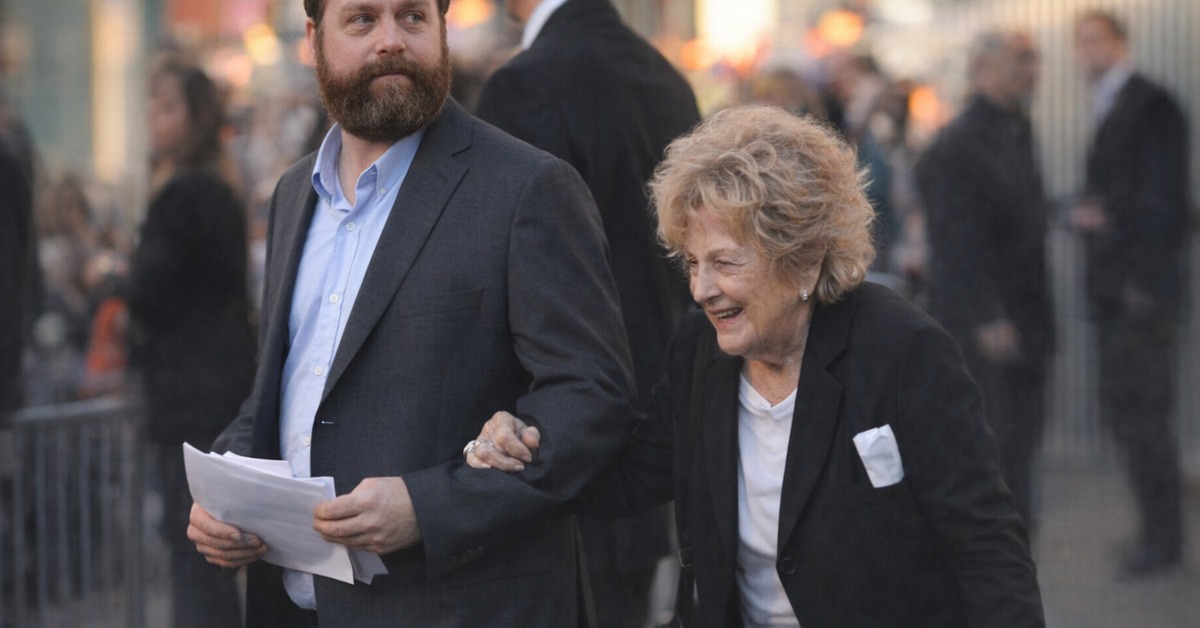
When he walks those carpets — for The Hangover series, for The Campaign — she walks them too. Sit with that for a second. A woman who’d been folding strangers’ laundry for tips is now standing at Hollywood premieres, dressed up, photographed, there — not as a prop, not as a carefully staged PR moment, but as a genuine guest of her genuine friend.
Fame usually works the other way. It tends to compress a person’s world down to handlers, publicists, and people who want something from them. Zach’s world got bigger, and he brought someone with him into it. Sociologists studying pro-social behavior have noted that sustained private generosity — the kind with no audience — is statistically far rarer than the public, one-time gesture. Most people feel moved once. Most people donate once. What Zach did was maintain. Year after year. That’s the genuinely hard part.
History has a way of treating the people who ignored this kind of evidence unkindly — the evidence that who you remain, after the cameras arrive, is the only biographical fact that really counts.
And it gets more layered than that.
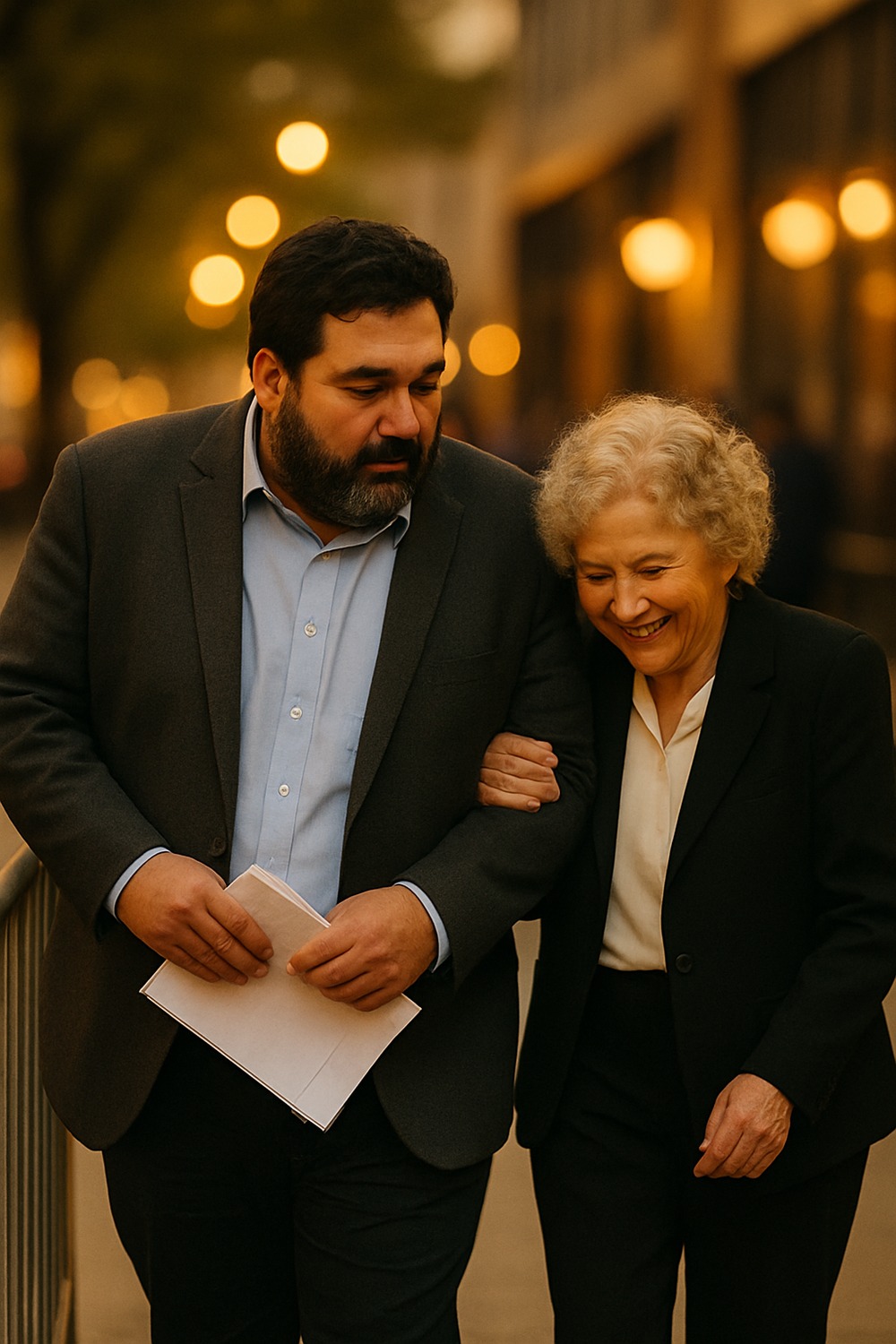
Queen Mimi: The Documentary That Changed Everything
Sometime after the red carpets, after the apartment, after years of a friendship that has already quietly rewritten both their lives — director Phillipe Diaz starts filming.
The result is Queen Mimi. It isn’t really about Zach at all. It’s about Mimi — her humor, her warmth, the full and specific personality she’d carried long before any comedian wandered into her laundromat. The film places her in front of audiences who’d never otherwise have encountered her story, not as a supporting character in someone else’s arc, but as the actual subject. The Wikipedia page for Queen Mimi describes it as a story about “the power of friendship and human connection” — which sounds simple until you realize how few stories actually earn that description honestly.
Beyond housing and security, the documentary gave Mimi something harder to quantify: a name. Visibility. A narrative told on her own terms rather than as a footnote to someone else’s. Audiences responded — not because it was dramatic or built around a twist, but because it was real in the specific, unpolished way that most content, filtered and optimized for engagement, simply isn’t anymore.
How It Unfolded
- Early 2000s — Zach Galifianakis, then an unknown stand-up comedian, begins regularly visiting a Santa Monica laundromat where Mimi Haist works folding laundry for tips.
- Mid-2000s — Zach learns Mimi is homeless and begins covering rent and utilities on a one-bedroom apartment for her, without public announcement.
- 2009 — The Hangover is released; Zach becomes internationally famous. Mimi attends the premiere as his guest — the beginning of several years of red carpet appearances together.
- 2015 — Queen Mimi, directed by Phillipe Diaz, is released, placing Mimi at the center of her own story for the first time and bringing the friendship to wider public attention.
By the Numbers
- Over 650,000 people in the U.S. experience homelessness on any given night, according to HUD’s 2023 Annual Homeless Assessment Report — a number that makes Mimi’s situation statistically unremarkable, even if what happened next wasn’t.
- Homeless adults are up to 3x more likely to experience severe loneliness than housed populations, according to social isolation research — which means consistent friendship, not just a roof, is what actually moves the needle on long-term wellbeing.
- The Hangover grossed over $467 million worldwide. One of the highest-grossing R-rated comedies ever made. The same premiere Mimi attended as Zach’s guest.
- Brigham Young University researchers found that strong social relationships improve survival odds by 50%. So the friendship wasn’t just emotionally meaningful — statistically speaking, it mattered for Mimi’s health in a very literal way.
Field Notes
- Turns out Zach has kept almost all of this out of interviews — no press cycles, no foundation announcements, no carefully timed magazine profiles. In an era when celebrities routinely mine their private lives for content, the silence itself says something.
- Mimi attended multiple premieres over several years. Not one. Multiple. That continuity is what separates a single charitable gesture from an actual ongoing relationship — and it’s the detail most retellings of this story gloss over.
- “Third place” friendships — connections formed outside home and work (researchers actually call this category “informal public life”) — are increasingly studied as one of the most undervalued sources of genuine belonging. Connections formed in laundromats, coffee shops, and community spaces frequently outperform professional and even family networks in emotional depth. Nobody really knows why. Maybe because no one’s performing there.
Why This Friendship Story Still Matters Today
No dramatic rescue moment staged for cameras. No foundation with a logo. No announcement. The Zach Galifianakis and Mimi friendship doesn’t fit the usual template for heartwarming celebrity stories, and that’s precisely why it keeps circulating — it refuses to behave like a PR product because it never was one.
Just a man who kept showing up for someone who needed showing up for — privately, consistently, across years — while becoming one of the most recognizable comedic faces in Hollywood. It also quietly challenges the assumption that success inevitably creates distance between a person and the life they came from. Some people get famous and the laundromat years shrink into a story they tell at dinner parties. Zach carried those years forward, literally, in the form of a person he refused to leave behind.
Editor’s Take — Sarah Blake
What stays with me isn’t the apartment or the red carpet appearances, remarkable as both are. It’s the years between them — the invisible middle, when no one was writing about this and Zach was paying rent for a woman most of the world had never heard of. That sustained, undocumented commitment is the kind of thing that only surfaces accidentally, which is exactly how it surfaced here. Most generosity evaporates the moment the audience leaves. This one didn’t need an audience to continue existing. That’s the rarest thing in this story, and probably the most worth remembering.
There’s a version of this story that happens all the time — every day, in laundromats everywhere — where Zach finishes his laundry, exchanges a few friendly words with the woman folding shirts in the corner, and walks out into a life that never intersects with hers again. That version is the default. It’s what usually happens. The fact that this one didn’t is, on reflection, a strange and specific thing to sit with. Small choices. Real consequences. Actual lives changed by nothing more remarkable than someone deciding to come back. There’s more like this at this-amazing-world.com — and some of them are even harder to explain.