


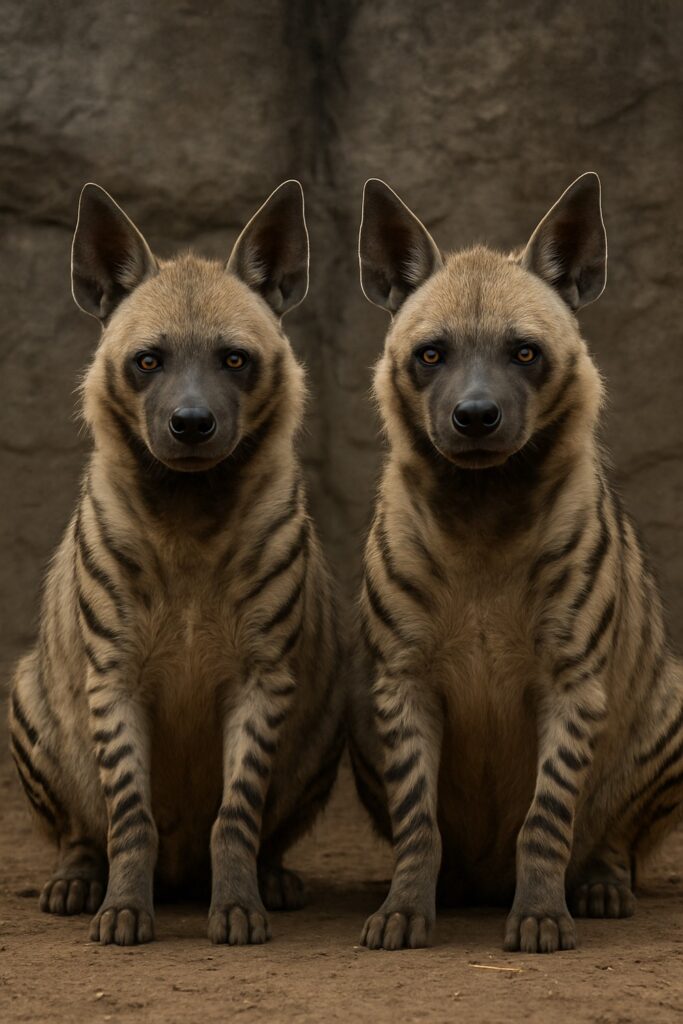
For four years, the staff at Maruyama Zoo in Sapporo quietly logged their observations, adjusted the diet, calibrated the lighting, and waited. The breeding pair never bred. Then the DNA results came back, and everyone went very quiet.
Both hyenas were male. Had been the whole time. Kamutori and Kamutori II — named, documented, and monitored as a potential breeding pair — were just two guys sharing an enclosure while keepers reverse-engineered Tanzanian grassland conditions around them. Adjusted temperatures. Detailed behavioral logs. Four years of careful, professional, completely misdirected effort.
Why Striped Hyena Sex Identification Defeats Even Experts
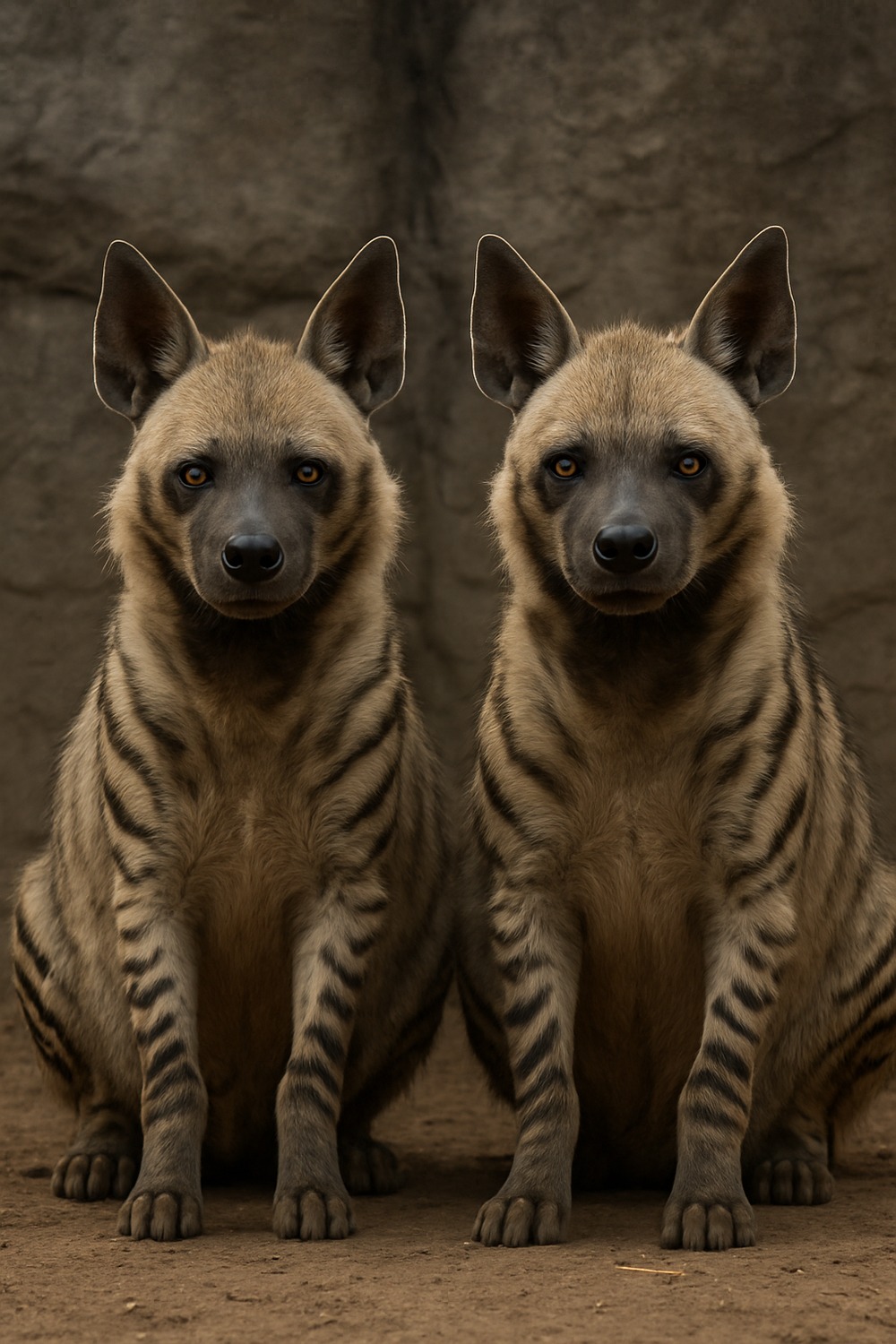
Here’s the thing about striped hyenas — Hyaena hyaena — that most people don’t know: visual sex identification in this species is genuinely, stubbornly unreliable. Not “tricky for beginners.” Unreliable for trained professionals with clipboards and time on their hands. Females develop external anatomy so anatomically similar to males that hormonal or genetic testing is often the only way to be certain.
Biologist Kay Holekamp has spent decades studying hyena biology at Michigan State University and has documented how deep this misidentification problem runs across the entire hyena family. Which raises the obvious question — how many wild individuals have been miscategorized in field surveys that didn’t have access to a DNA lab?
This wasn’t carelessness. Four experienced keepers observed these animals every single day. They still couldn’t crack it. That’s not a zoo problem. That’s biology refusing to cooperate.
Japan Laughed, But the Story Runs Deeper
When the story broke in Japan, it went viral almost immediately — and honestly, fair enough, it’s pretty funny. But there’s a more interesting thread worth pulling here.
Zoos aren’t just tourist attractions. They’re conservation hubs, genetic databases, and active partners in wild population management. A four-year misidentification at one facility is a story. Systematic misidentification quietly happening across dozens of facilities would be a conservation problem hiding in the paperwork. Nobody’s laughing at that version.
Kamutori and Kamutori II are reportedly doing fine, by the way. Bachelor life in Sapporo. No cubs. No drama. Probably unbothered by all of this in a way that only hyenas can manage.
The Animal That Science Still Can’t Fully Read
Striped hyenas range across a corridor stretching from North Africa through the Middle East and deep into South Asia — over 10 million square kilometers. That’s an enormous territory for one of the most consistently misunderstood carnivores on the planet to quietly inhabit.
And yet precise population counts remain elusive. The striped hyena sex identification problem compounds this directly: if you can’t reliably determine the sex of an animal in a controlled zoo setting with dedicated staff and unlimited observation time, your field estimates for wild populations become significantly less reliable. The IUCN lists the species as Near Threatened, with population trends declining — and that count is already acknowledged to be imprecise.
They’re nocturnal. Solitary. Extraordinarily shy. A striped hyena can disappear into terrain that stops most researchers cold. They’re not hiding from us on purpose. They’re just very good at existing quietly while we try to figure out who they are.

Here’s the Thing About Hyena Anatomy
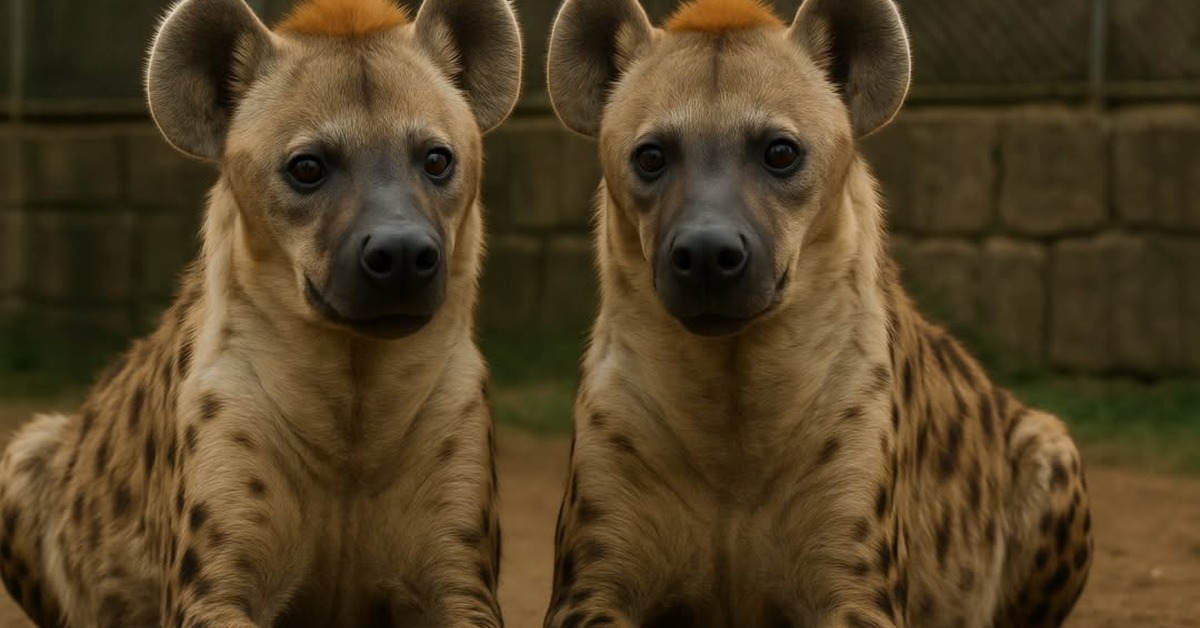
Striped hyenas are a striking case, but they’re not alone in this. In spotted hyenas (Crocuta crocuta), females develop a pseudo-penis so anatomically convincing that the species was historically assumed to be hermaphroditic. Ancient writers genuinely believed hyenas changed sex every year. That mythology held for centuries — not because people were stupid, but because the animal is genuinely confusing.
That last fact kept me reading for another hour. The spotted hyena’s unusual reproductive anatomy is now one of the most-studied examples of convergent anatomy in zoology, but it took modern science an embarrassingly long time to catch up to what the animal had always been doing.
The implication isn’t subtle. If trained observers, behavioral cues, and physical examination can fail this completely in controlled environments, the gaps in our wild population data must be significant. How many breeding programs have been designed around sex ratios that turned out to be wrong? How many field surveys miscounted?
We genuinely don’t know.
By the Numbers
- Fewer than 10,000 mature striped hyenas are estimated to remain globally — a number the IUCN considers imprecise due to survey difficulty, and likely declining.
- Spotted hyena females give birth through their pseudo-penis. The first-birth cub mortality rate sits around 60% — one of the most biologically costly reproductive arrangements in the entire mammal world, and the direct result of anatomy that evolved for a completely different reason.
- Range: 10 million square kilometers.
- In several studied regions across African ecosystems, hyenas actually make more successful large-mammal kills than lions do. Lions consistently get the credit anyway.

Field Notes
- Striped hyenas will convincingly play dead when confronted — a behavior so rarely observed that researchers initially doubted it was real.
- Unlike spotted hyenas, striped hyenas aren’t social in any meaningful way. Typically solitary or in small family units, which makes population monitoring significantly harder — no large trackable groups, no obvious aggregation points, no easy headcounts.
- The Maruyama Zoo incident isn’t the first same-sex pairing to produce zero cubs in a captive breeding program. It’s just one of the more thoroughly documented cases, partly because the identification window stretched across four full years before anyone ran a DNA test.
What Four Years and Two Male Hyenas Actually Teach Us
The Maruyama story is funny on its surface. Underneath that, it points at something genuinely uncomfortable: our tools for understanding animal biology still have significant blind spots, and those blind spots have consequences. Striped hyena sex identification remains one of the clearest examples of a case where biology outpaces observation — and if this is happening in a zoo, with controlled conditions and dedicated staff and all the time in the world, it’s almost certainly more common in the field, where encounters are brief, conditions are chaotic, and resources are stretched.
Conservation decisions get made on population data. Breeding programs are built around sex ratios. Management plans depend on knowing, with reasonable confidence, who the animals actually are.
Four years at one zoo is a cautionary tale. Scaled across global wildlife monitoring, it starts to look like an invitation to take measurement uncertainty a lot more seriously than we currently do.
Kamutori and Kamutori II are presumably out there in Sapporo right now, sleeping, completely indifferent to having become the accidental faces of a conversation about scientific humility. Which is, honestly, a very hyena way to end up. The world is full of species quietly making our best assumptions look shaky. There’s more at this-amazing-world.com — and the next one is stranger than this.


