A Zoo Spent 4 Years Breeding Hyenas — Both Were Male
Striped hyena sex identification stumped trained zoologists for four full years. Both animals were male the entire time.
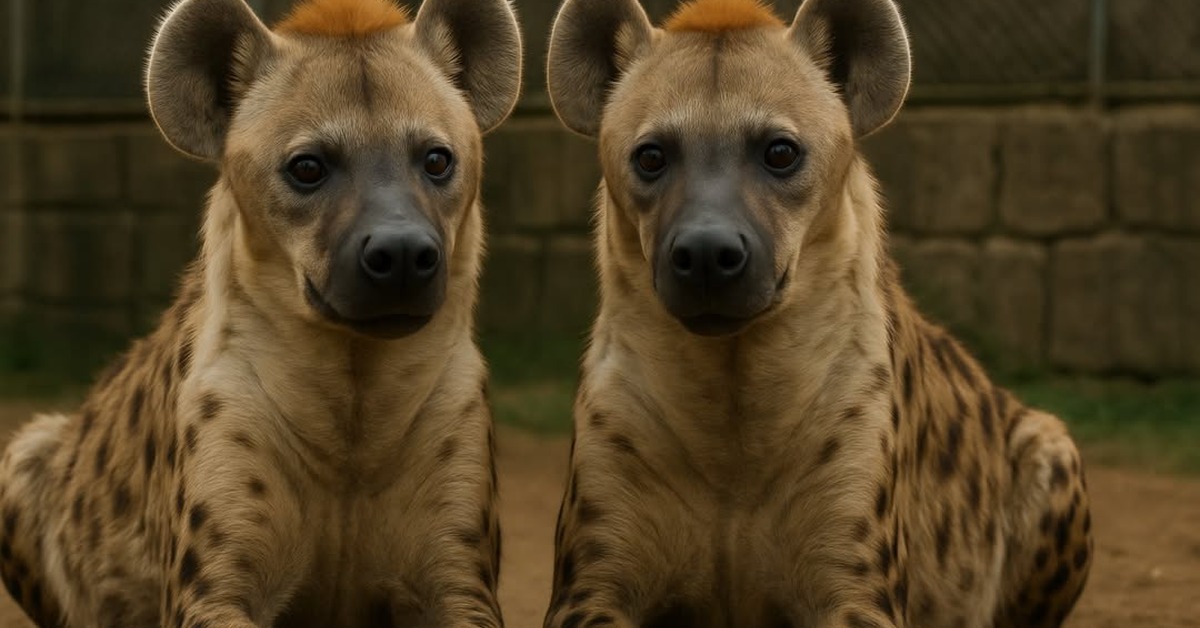
At Maruyama Zoo in Sapporo, Japan, keepers had everything dialed in. The diet. The temperature. The lighting designed to mimic Tanzanian grasslands. They were building the perfect conditions for two striped hyenas named Kamutori and Kamutori II to breed. The only thing missing? A female hyena.
Why Striped Hyena Sex Identification Defeated the Experts
Striped hyenas — Hyaena hyaena — are one of a small handful of mammals on Earth where even trained specialists can’t reliably determine sex through visual examination alone. Biologist Kay Holekamp, who has spent decades studying hyena behavior and biology, has long documented how female hyenas in several species develop anatomy so structurally similar to males that external observation is essentially useless. Confirming sex requires hormonal analysis or genetic testing. So how did four years go by?
This wasn’t a case of carelessness. The keepers were watching closely. They were logging observations. They were doing everything right. Biology just didn’t cooperate. And that distinction matters more than the punchline.
Japan Laughed — But the Science Deserves Attention
When the story broke, Japan found it genuinely funny. Social media ran with it. And honestly, fair enough — there’s something undeniably absurd about four years of meticulous habitat optimization for two male animals who had absolutely zero interest in each other romantically. But buried under the humor is a real question that researchers at institutions like the wildlife conservation programs covered here keep circling back to: what does it mean when our best tools still can’t crack basic biological facts about an animal we’re actively trying to protect?
The keepers adjusted seasonal lighting cycles. They fine-tuned protein ratios in the diet. They gave the pair space and time. All of it was correct procedure. All of it was aimed at two animals who shared exactly zero reproductive chemistry. Four years. Not four weeks.
The Anatomy That Keeps Scientists Guessing
Here’s where it gets genuinely strange. In spotted hyenas, the female’s anatomy has been documented so extensively that it’s become a textbook case in zoology — females develop a pseudo-penis and pseudo-scrotum that are nearly indistinguishable from male anatomy. Striped hyenas don’t present quite as dramatically, but the overlap is still enough to fool experienced eyes. Striped hyena sex identification in the field or even in captivity without lab testing remains one of the more stubborn puzzles in mammal biology.
No visible external difference you can trust. No behavioral shortcut that’s reliable. Just two animals living their lives, indifferent to the confusion they’re causing.
And that’s before you even get to what’s happening in the wild.
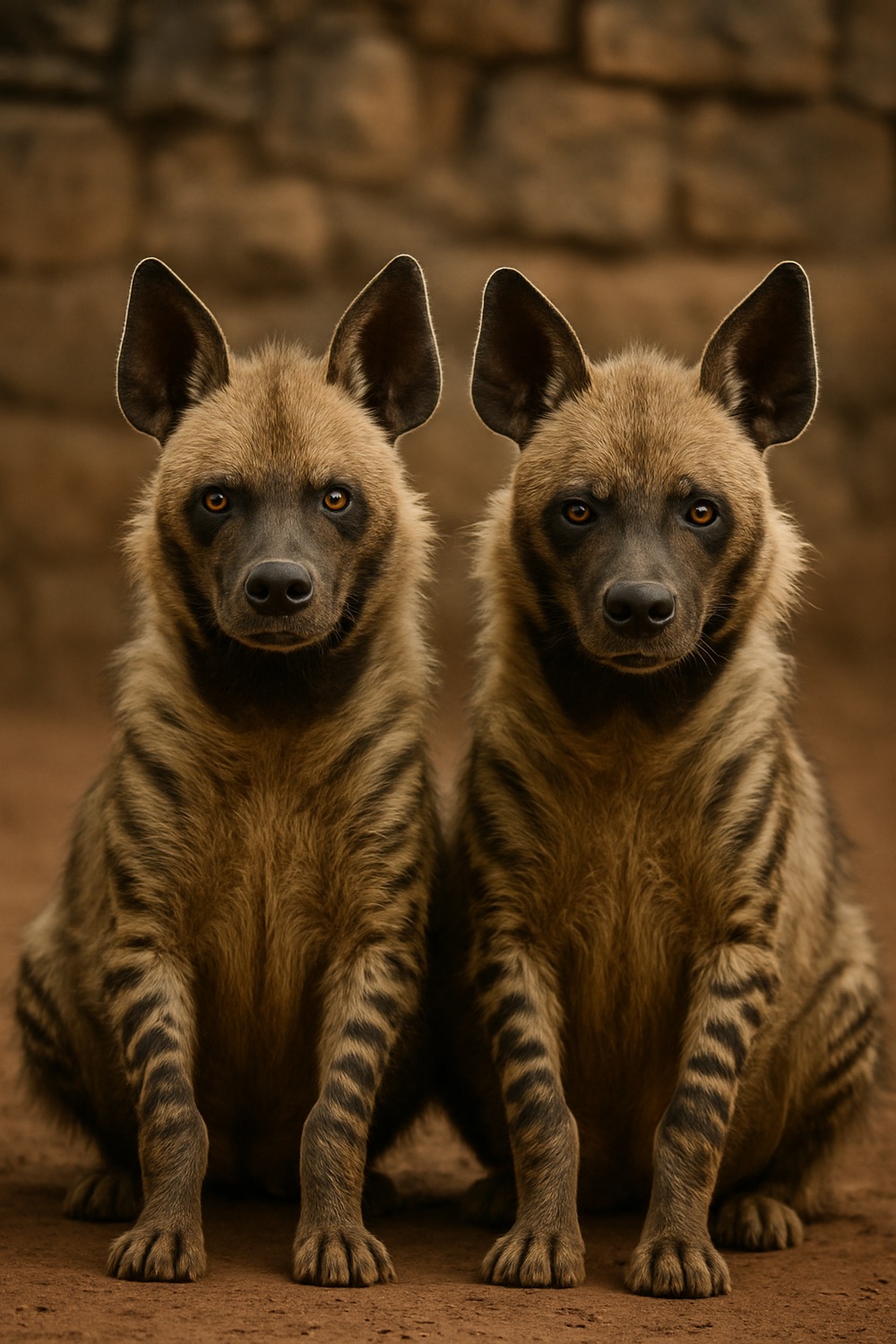
Wild Populations Are Hiding Secrets We Can’t Decode
Here’s the thing — striped hyenas range across one of the widest corridors of any carnivore on the planet. From North Africa through the Middle East and into South Asia, they occupy terrain that’s difficult, remote, and often politically complicated to study. According to the IUCN Red List assessment for striped hyenas, the global population is estimated to be fewer than 10,000 mature individuals and is considered declining — but those numbers carry significant uncertainty because the animal itself is nocturnal, solitary, and extraordinarily shy around humans and cameras alike.
If experienced keepers watching two animals daily in a controlled enclosure couldn’t determine their sex for four years, researchers in the field working with camera traps and occasional scat samples are working at an even steeper disadvantage. Population counts, sex ratios, reproductive rates — all of it becomes harder to trust when the foundational data is this difficult to collect.
By the Numbers
- Fewer than 10,000 mature striped hyenas are estimated to remain in the wild as of the IUCN’s most recent assessment — a number flagged as uncertain due to the species’ elusive behavior and vast range.
- The striped hyena’s range once covered an estimated 40+ countries across Africa, the Middle East, and South Asia; current viable populations are significantly fragmented, with some regional subpopulations considered functionally extinct.
- Four years — approximately 1,460 days of daily keeper observation — passed at Maruyama Zoo before a DNA test confirmed what no amount of watching could have revealed.
- Spotted hyena females give birth through a pseudo-penis birth canal averaging just 2.5 cm in diameter — the anatomy that makes hyena sex identification so notoriously difficult begins at birth, and the confusion it creates scales all the way up to captive breeding programs.
Field Notes
- Striped hyenas are one of the few large carnivores documented to carry food back to their dens not just for cubs, but for injured or elderly pack members — a behavior that researchers didn’t expect to find given the species’ reputation as a solitary scavenger.
- Unlike their spotted relatives, striped hyenas can raise their mane along the spine when threatened, increasing their apparent size by up to 38% — it’s one of the most effective visual bluffing mechanisms documented in any carnivore, and it works on lions.
- The word “hyena” carries associations with cowardice and scavenging across dozens of cultures, but striped hyenas are active hunters capable of taking prey significantly larger than themselves, and their jaw pressure is strong enough to crush bone that other predators abandon entirely.
What This Story Actually Tells Us About Conservation
The Maruyama Zoo story went viral because it’s funny. Two bachelor hyenas, four years, one clipboard’s worth of useless data. But the reason it’s worth sitting with longer than a laugh is what it reveals about the limits of our knowledge when it comes to animals we’re actively trying to save. Striped hyena sex identification isn’t just a zoo problem — it’s a field research problem, a population modeling problem, and ultimately a conservation funding problem. You can’t allocate resources to protect a population you can’t accurately count or characterize.
Every time a species surprises us this fundamentally, it’s a reminder that our models are only as good as our data. And our data, with animals like these, is still full of gaps that four years of careful watching won’t necessarily close.
Kamutori and Kamutori II are fine, for the record. Still living in Sapporo. Still doing absolutely nothing reproductive. They’ve got food, space, and keepers who now know considerably more about hyena biology than they did in 2019. There are worse outcomes.
The wild is full of animals that are actively difficult to understand — not because we’re not looking, but because the biology doesn’t cooperate with our categories. Two hyenas in Japan became a punchline, but they also became a case study in how much we’re still learning about creatures we’ve watched for centuries. Sometimes the joke is the lesson. If this kind of story keeps you up at night, there’s more at this-amazing-world.com — and the next one is even stranger.