


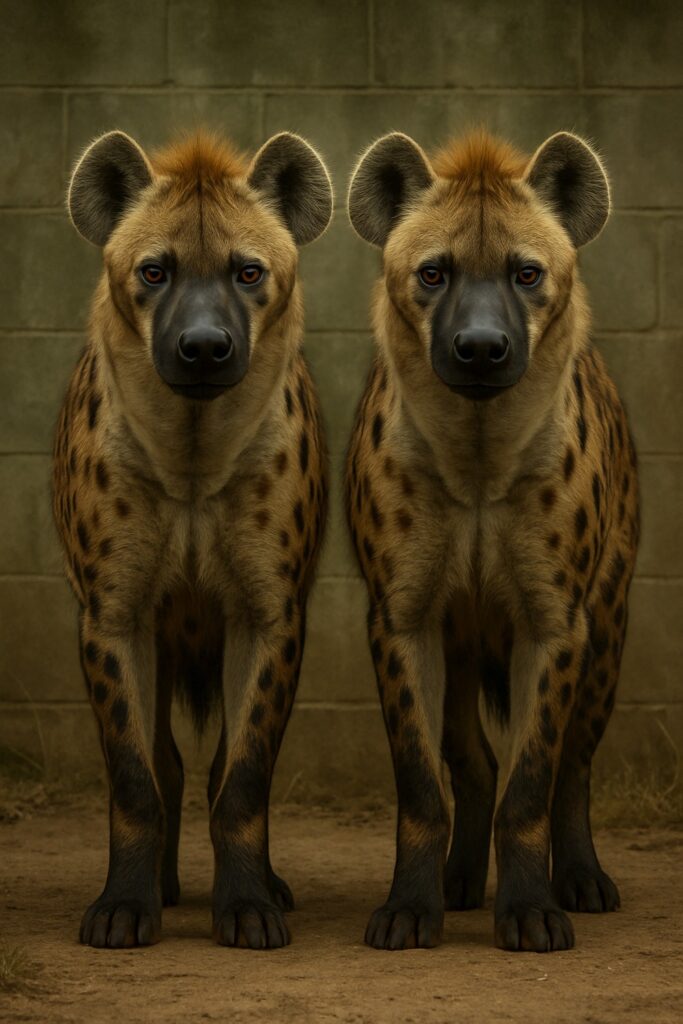
Nobody flagged it for four years. Two male striped hyenas. One zoo in Sapporo. Hundreds of logged observation hours. And then a DNA test showed up and completely dismantled the whole program.
Maruyama Zoo had done everything by the book. Kamutori and Kamutori II were paired as an official breeding couple, and keepers spent years adjusting their diet, tweaking lighting conditions, and calibrating temperature to approximate Tanzanian grassland conditions. They were waiting on cubs. The DNA result didn’t just delay that — it explained why it was never going to happen. Both animals were male. The entire time.
Why Striped Hyena Sex Identification Breaks Every Rule
Striped hyenas — Hyaena hyaena — sit in a genuinely strange corner of mammal biology. Even highly trained zoologists can’t reliably determine sex through visual examination alone. Kay Holekamp, a zoologist at Michigan State University who has spent decades studying hyena biology, has noted that females in several hyena species develop external anatomy so structurally similar to males that hormonal or genetic testing is often the only way to be sure. It’s an edge case that keeps catching experts off guard, not because they’re careless, but because the animal genuinely doesn’t advertise the information.
Not visually. Not behaviorally. Not easily.
Four experienced keepers. Daily observation. Four years. Still completely wrong. Let that sit for a second.
Japan Laughed. But the Science Runs Deep.
When the story broke in Japan, the internet found it immediately hilarious — and honestly, fair enough. There’s something objectively funny about four years of clipboard-level zoological dedication producing zero cubs and one very awkward lab result. But the laughter moved fast enough that most people skipped past the part that’s actually interesting. Stranger animal biology stories are hiding in plain sight, and this one opens a door worth walking through.
The keepers weren’t undertrained. They weren’t cutting corners. They were following established protocol, monitoring behavioral cues, doing everything the field asks of them. The biology just didn’t cooperate. And that gap — between what we expect careful science to deliver and what nature actually offers — is where things get genuinely weird.
That last fact kept me reading for another hour.
The Animal That Hides Even When You’re Watching
Striped hyenas range across one of the widest corridors of any carnivore alive — North Africa through the Middle East and into South Asia. Their wild population has declined significantly over recent decades, but precise numbers stay stubbornly out of reach. Striped hyena sex identification in field conditions is even harder than in captivity, because you can’t schedule a DNA appointment with an animal that’s nocturnal, solitary, and genuinely suspicious of humans. Population assessments end up working from incomplete data almost by default.
They move at night. They avoid people. The terrain they prefer is hard to survey systematically. Their biology offers no visual shortcuts. It’s not one obstacle — it’s four of them stacked on top of each other.
Which raises the uncomfortable question: how many wild populations are we miscounting right now, for exactly this reason?

Here’s the Thing About Hyena Anatomy
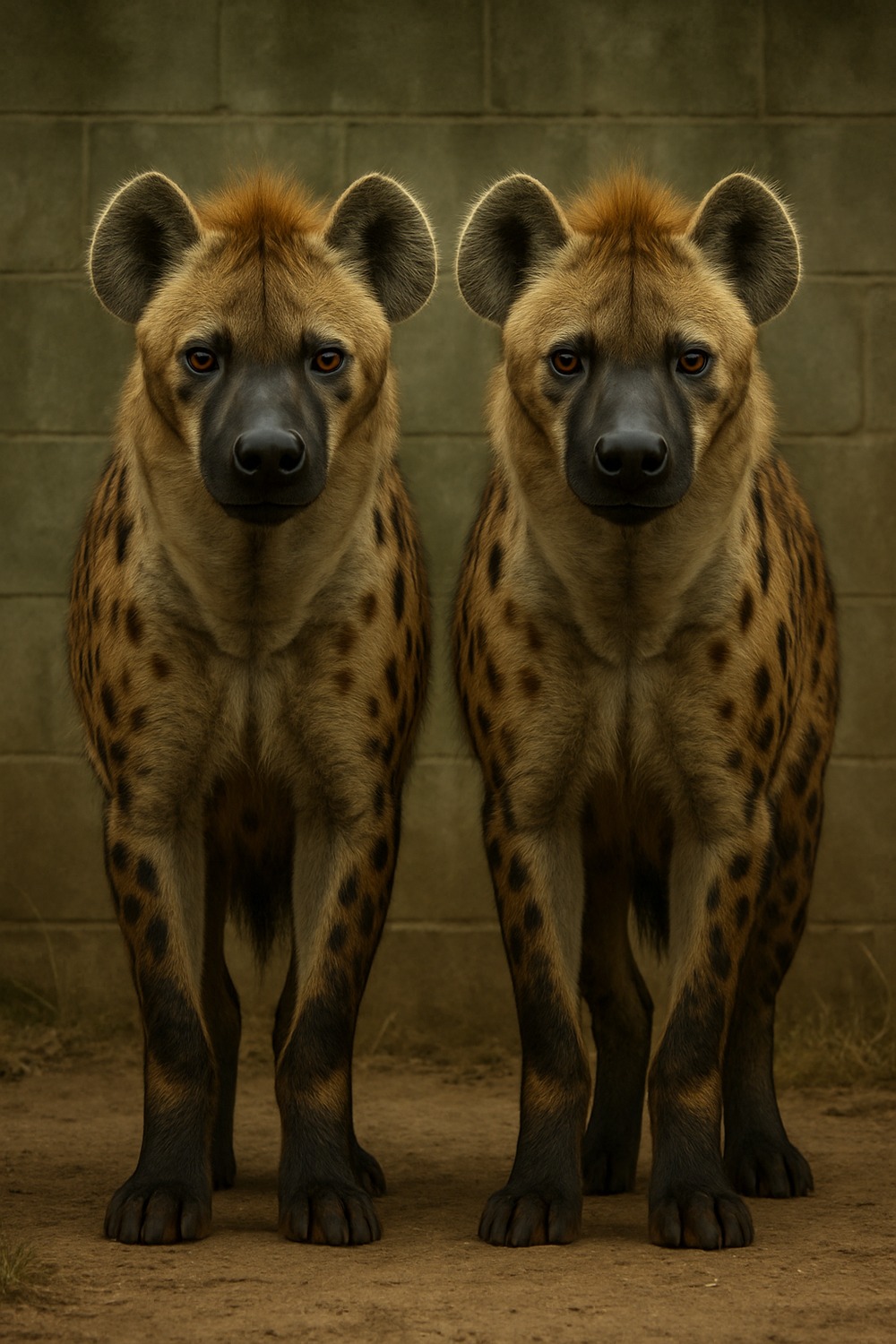
This phenomenon is most extreme in spotted hyenas (Crocuta crocuta), not striped ones — but the family resemblance is real. Female spotted hyenas develop what biologists call pseudo-male genitalia, so structurally complete that ancient cultures assumed the species was hermaphroditic for centuries. Aristotle wrote about it. Medieval bestiaries treated it as established fact. It took modern endocrinology to work out that high androgen levels drive the development, and that it’s directly connected to the spotted hyena’s famously matriarchal social structure. Striped hyenas share some of this biological complexity — just in a less extreme form.
The implication isn’t small. If ancient scholars, medieval naturalists, and 21st-century zoo professionals have all been tripped up by hyena biology, this stops being a story about human error pretty quickly. It becomes a story about an animal that has spent millions of years evolving in ways that actively resist easy categorization.
That’s not a flaw in our observation. That’s a feature of theirs.
By the Numbers
- The IUCN Red List (2014) puts the mature striped hyena population at fewer than 10,000 individuals worldwide — and researchers think even that estimate is probably optimistic, given how difficult the species is to survey systematically.
- Fewer than 10,000 left. Likely declining.
- Female spotted hyenas give birth through a pseudo-penis canal roughly the same length as a male’s — a biological arrangement that makes maternal mortality during first births significantly higher than in most mammals.
- Kamutori and Kamutori II: approximately 1,460 days as an official breeding pair before one DNA test resolved what years of expert observation couldn’t.
- A single striped hyena’s home range can exceed 70 square kilometers — which makes systematic field study dramatically harder than for more social or territorial species.

Field Notes
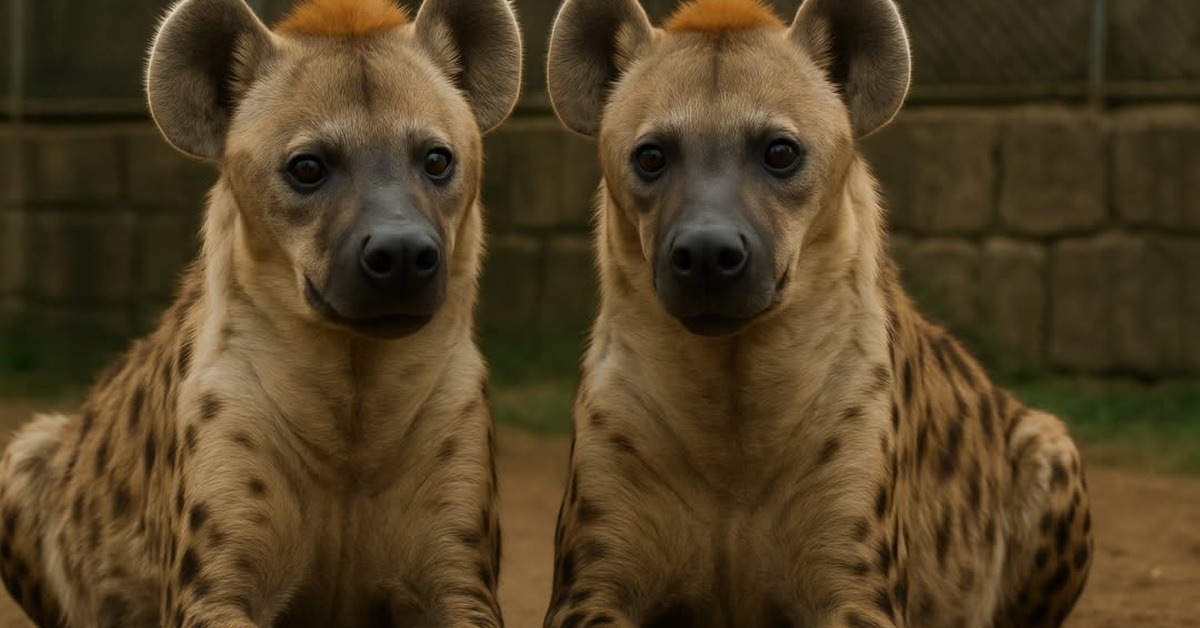
- Striped hyenas are largely solitary — no clans, no group dynamics to read. Behavior that looks typical for one individual tells you almost nothing about the species as a whole.
- Despite their reputation in folklore, striped hyenas are primarily scavengers and deeply shy around humans. Camera trap footage of them remains relatively rare even in regions where they’re confirmed to live — which should probably tell us something about how much we’re missing.
- Misidentified breeding pairs aren’t unique to Maruyama Zoo. Similar cases have occurred with birds, reptiles, and fish — species where visual sex determination without specialist testing is, turns out, considerably less reliable than the field has historically assumed.
What Kamutori Taught Us About Knowing Things
The comedic headline isn’t the real story. The real story is what striped hyena sex identification actually demands — and how completely it defeated patience, protocol, and genuine expertise all at once. These two animals spent four years in one of the most observation-rich environments a wild animal can occupy, watched by trained professionals with access to modern zoological resources. The truth still required a lab.
That reframes what wildlife conservation actually has to reckon with. If captive populations can be mischaracterized this easily, the data driving management decisions for wild ones carries the same uncertainty baked in. For a species already under pressure from habitat loss, persecution, and declining prey, getting the baseline biology wrong has consequences that aren’t abstract.
Kamutori and Kamutori II are reportedly doing fine, by the way. Living their best bachelor lives in Sapporo, entirely unbothered by the international attention they briefly generated. And somewhere out in the dark, striped hyenas are moving through terrain we can barely survey, keeping their secrets the way they always have.
Some things don’t resolve with a clipboard. They resolve with a lot more humility than the field usually budgets for. If this kind of story keeps pulling you in, there’s more at this-amazing-world.com — and the next one is even stranger.


