A Zoo Spent 4 Years Breeding Two Hyenas — Both Were Male
Nobody flagged it for four years. Two striped hyenas, one carefully managed breeding program, zero cubs — and the answer, when it finally arrived via DNA test, was almost embarrassingly simple. Both animals were male.
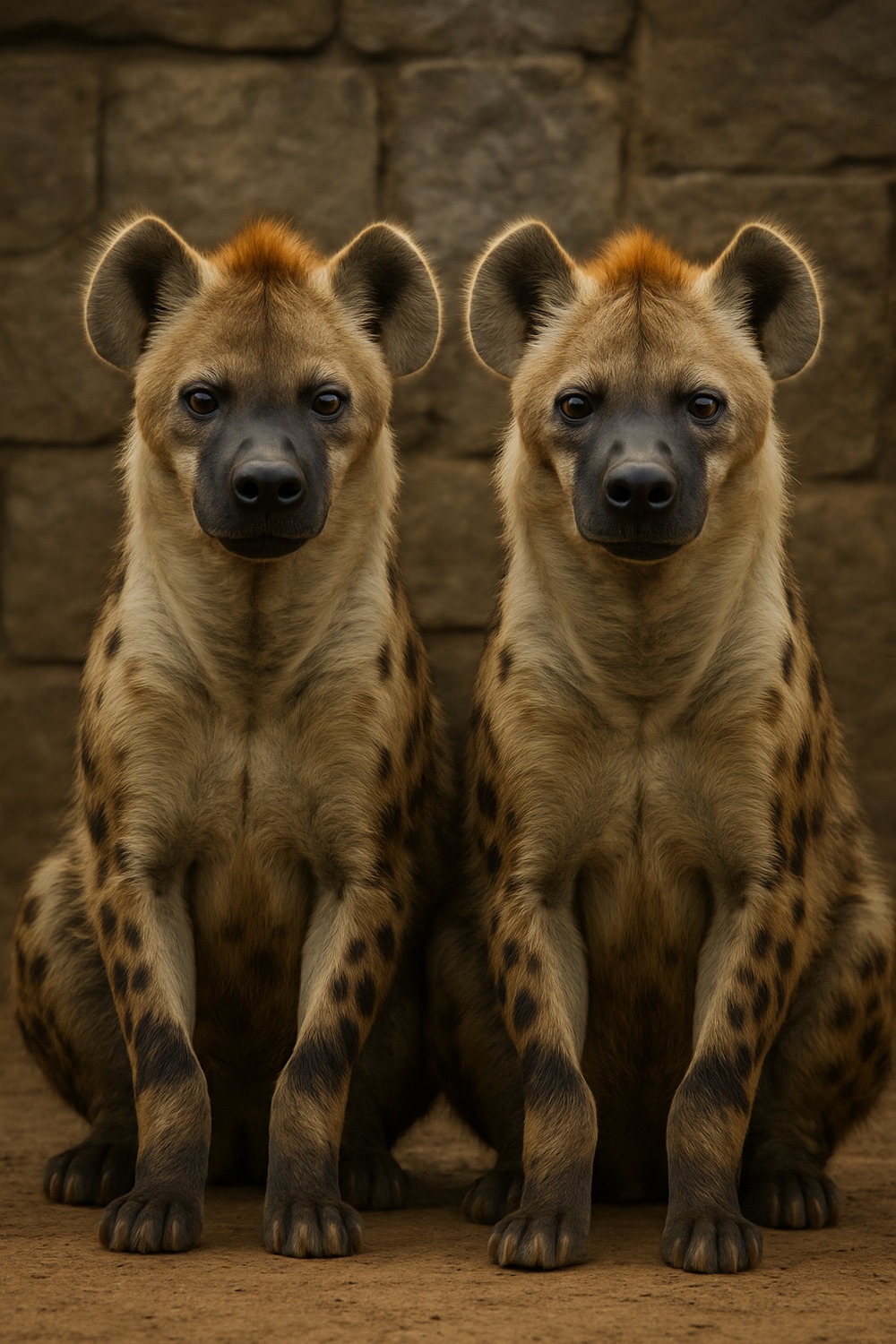
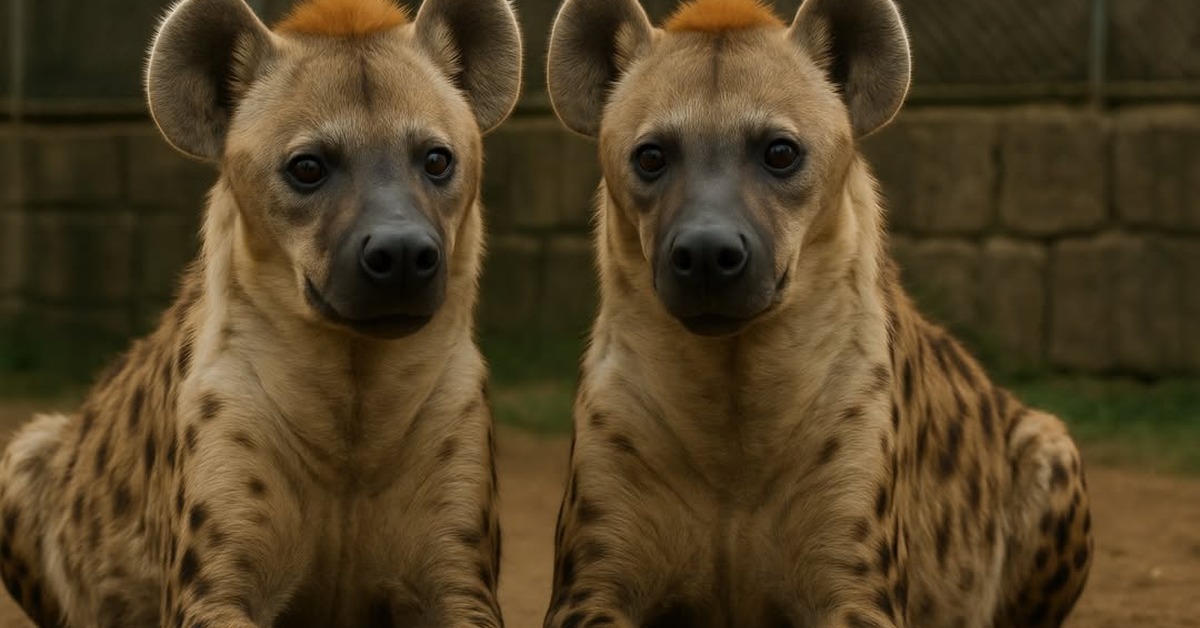
At Maruyama Zoo in Sapporo, Japan, Kamutori and Kamutori II had been living side by side while keepers engineered what should have been ideal conditions for breeding. Diet adjusted. Lighting calibrated. Temperature modeled after Tanzanian grasslands. Daily observation logs, four years deep. Then a DNA test landed and rewrote the whole story in about ten minutes.
Why Striped Hyena Sex Identification Breaks Expert Brains
Striped hyenas (Hyaena hyaena) sit in a genuinely strange corner of mammalian biology — one where visual sex determination isn’t just difficult, it’s biologically unreliable in ways that trip up even trained professionals. Females in several hyena species develop external anatomy so structurally similar to males that hormonal or genetic testing is often the only way to be certain. Zoologist Kay Holekamp, who’s spent decades studying hyena social systems, has documented just how profoundly unusual hyena reproductive anatomy is compared to virtually any other mammal. So how does an animal evolve to be this unreadable?
It’s not a zoo problem. It’s not a training problem.
It’s a biology problem baked in over millions of years of evolution. And the Maruyama keepers aren’t embarrassed outliers — they’re just the ones whose situation eventually got a DNA test.
Four Years, Two Males, Zero Cubs
What makes this land so hard isn’t the mistake itself. It’s the effort. The keepers weren’t passive observers waiting to see what happened. They were meticulous. They adjusted feeding schedules, modeled environmental conditions after the hyenas’ native range across North Africa and the Middle East, and documented everything — finding more examples of animals completely outsmarting human assumptions than anyone going in would have predicted. Genuinely committed, professionally serious conservation work.
And none of it could overcome the fact that Kamutori and Kamutori II had exactly zero reproductive interest in each other. Which, in retrospect, makes complete sense. Two bachelor males in a carefully curated romantic setting isn’t a breeding program. It’s an extremely well-funded roommate situation.
The Biology Behind the World’s Most Confusing Mammals
The striped hyena sits inside one of nature’s most anatomically surprising families. Its spotted cousin takes this further than almost any other mammal on Earth — spotted hyena females are so physiologically masculinized that they give birth through what is functionally a pseudo-penis, making them one of the most studied cases of androgen-driven development in any known species. Striped hyenas are less extreme, but the core problem remains: without hormonal analysis or genetic testing, certainty is genuinely elusive. Researchers estimate this ambiguity has likely affected captive breeding programs at multiple institutions. Not just Sapporo.
That last fact kept me reading for another hour.
Multiple zoos. Multiple programs. The same quiet confusion, just without the DNA test moment that eventually forces a reckoning.
Wild Hyenas Are Keeping Even Bigger Secrets
Here’s the thing — the zoo story is funny, but the wild story is genuinely unsettling. Striped hyenas range across a vast corridor from North Africa through the Middle East into South Asia, covering some of the most remote terrain on the planet. The IUCN currently lists the species as Near Threatened, with estimates suggesting fewer than 10,000 mature individuals remain in the wild.
But those numbers carry enormous uncertainty.
The animal is nocturnal. Solitary. It avoids human contact in ways that make camera traps and field surveys maddeningly incomplete. We might be losing them faster than we know — or populations could be more resilient than the data suggests. We genuinely don’t know, because the animal won’t stay still long enough to let us find out.
By the Numbers
- Fewer than 10,000 mature striped hyenas estimated in the wild — a figure researchers themselves describe as carrying “high uncertainty.”
- The species has lost an estimated 10–20% of its range over the last three generations, driven primarily by habitat fragmentation and human-wildlife conflict in agricultural zones across its range.
- Home range: up to 72 square kilometers per individual. Which is part of why systematic population surveys across their full territory remain nearly impossible with current field methods.
- Spotted hyena females possess a pseudo-penis reaching up to 90% of the length of the male equivalent — one of the most extreme examples of sexual mimicry documented in any mammal species, and the biological backdrop against which the striped hyena’s own ambiguities make a lot more sense.
Field Notes
- Striped hyenas play dead when confronted by predators. Not metaphorically — documented in the wild, though researchers still don’t fully understand why an apex-adjacent carnivore would default to a possum strategy.
- They’re also effective hunters in certain regions, taking prey as large as small ungulates, which consistently surprises zoologists more familiar with their spotted relatives.
- Hyena jaws generate one of the highest bite-force-to-body-weight ratios of any living carnivore — capable of crushing bones that defeat most other predators. And yet the striped hyena is among the shyest large mammals documented across its entire range. The combination is strange enough that it bears repeating: bone-crushing jaws, profound shyness.
What This Story Actually Tells Us About Wildlife Science
The Maruyama story went viral in Japan because it’s funny, and fair enough. But sit with it a moment longer. Four experienced professionals, observing two animals every single day for four years, couldn’t determine a fundamental biological fact about their subjects. That’s not a failure of competence. That’s a window into how much remains unknown about the animals we share this planet with.
Striped hyena sex identification is one small square on a much larger map of biological unknowns — unknowns that directly shape conservation strategy, captive breeding programs, and our ability to act before a species tips past the point of recovery. Every assumption we make about an animal is only as reliable as the data we can actually gather. And for nocturnal, solitary, anatomically confusing animals living across some of the world’s least-surveyed terrain, those gaps are large enough to lose things in.
Turns out the animal we thought we understood is still surprising the people who’ve spent careers watching it.
Kamutori and Kamutori II are doing fine, for what it’s worth. Living their best bachelor lives in Sapporo, requiring no romantic coordination whatsoever. But their four-year story quietly asks something worth sitting with: how many other species are keeping secrets we haven’t even thought to test for yet? There’s more at this-amazing-world.com — and the next one is stranger than this one.