Posts written

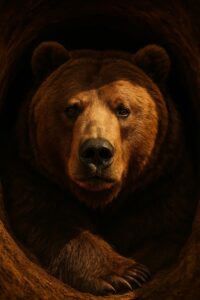
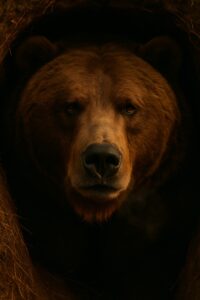
A grizzly bear resting peacefully inside a dark earthen den, facing the camera

How a Grizzly Bear Survives 5 Months Without Food or Water

Five months. No food, no water, no bathroom breaks — yet a 700-pound grizzly walks out of winter ready to outrun a horse. This isn't endurance. It's precision biochemistry: recycled urea, self-generated water, and muscle-preservation mechanisms that have stunned researchers and could one day treat human diseases.

Read More
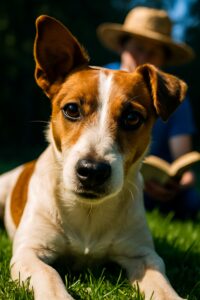
Person in cobalt hat reads open book to attentive Jack Russell Terrier on green lawn

Why Children Read Better to Dogs Than to Adults

In Finnish classrooms, a quiet revolution is unfolding — one wagging tail at a time. Therapy dogs are being paired with struggling young readers, and the science explains why it works: animals don't judge, don't sigh, don't correct. Cortisol drops. Words flow. Over 100 Finnish schools and programs in 20 countries are proving that sometimes, the best reading teacher has four legs.

Read More
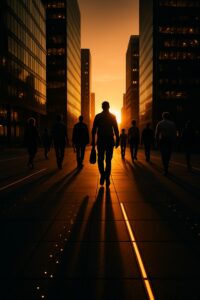
Silhouetted commuters walking over glowing kinetic pavement tiles at golden hour

London’s Floor Turns 80 Million Footsteps Into Power

Beneath the floors of London's Victoria Station, something unusual happens with every footstep. Kinetic tiles built on a 190-year-old physics principle convert the simple pressure of a commuter's stride into electricity. One step powers an LED for a few seconds. Multiply that by 80 million steps a year, and a very small idea starts doing something surprisingly large.

Read More
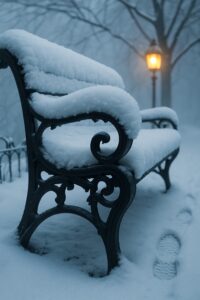
Snow-covered Victorian park bench and glowing lamp post in silent winter storm

Why Fresh Snow Silences the World: The Physics of Quiet

Stand outside after a heavy snowfall and you'll notice something strange — the world goes quiet. That hush isn't an illusion. Fresh snow is a precision acoustic material, its microscopic lattice of ice crystals and air pockets capable of absorbing up to 60% of ambient sound. The physics behind winter's silence is as elegant as the snowflake itself.

Read More
A grizzly bear resting calmly inside a dark fibrous den, facing the camera

How a Grizzly Bear Survives Five Months Without Food or Water

For five months, a grizzly bear neither eats, drinks, nor urinates — yet emerges from its den in spring with muscles largely intact and capable of sprinting at 35 miles per hour. The secret lies in a biochemical toolkit millions of years in the making, one that researchers believe could one day unlock treatments for human muscle-wasting diseases.

Read More
Close-up of a nurse's hands holding a stethoscope in a hospital corridor at dusk

Fake Nurse Treated 4,486 Patients Before Anyone Checked

For seven months, Autumn Bardisa moved through the corridors of a Florida hospital like any other nurse — administering medications, relaying diagnoses, earning patient trust. She was never licensed. Not once. A colleague's routine credential check during a promotion review unraveled everything. By then, 4,486 patients had already been in her care.

Read More
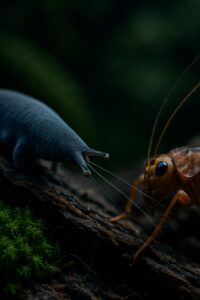
Velvet worm firing adhesive slime strands at a brown cricket on mossy forest floor

Velvet Worms: 500-Million-Year-Old Slime Hunters

Before the cricket takes another step, it's already over. A velvet worm — unchanged since the Cambrian, half a billion years ago — fires twin jets of hardening slime, pinning its prey to the forest floor in milliseconds. What happens next is less a hunt than a chemistry lesson. Meet one of Earth's oldest, strangest, and most overlooked predators.

Read More
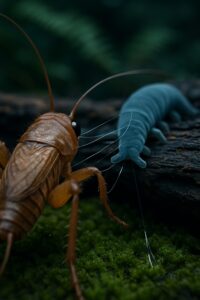
Velvet worm shooting adhesive slime threads at a cricket on mossy log

Velvet Worms: The 500-Million-Year-Old Slime Hunters

Half a billion years ago, before anything walked on land, the velvet worm had already perfected its hunt. It fires adhesive slime from twin nozzles, glues prey to the forest floor in milliseconds, then injects digestive enzymes to liquefy the body before drinking it. One of Earth's oldest predators hasn't needed to change a thing.

Read More
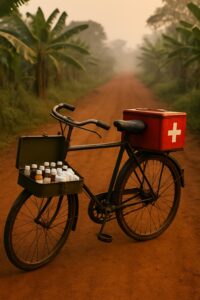
Weathered black bicycle loaded with medicines and red first-aid box on a rural African dirt path

The $200 Bicycle Reaching Patients No Hospital Can

Uganda has roughly one doctor for every 25,000 people. In the most remote regions, the nearest hospital sits 50 kilometers away across terrain that stops cars cold. So communities found another way — a $200 modified bicycle loaded with vaccines, malaria kits, and blood pressure cuffs, rolling through red mud before the sun comes up. It shouldn't work this well. It does.

Read More
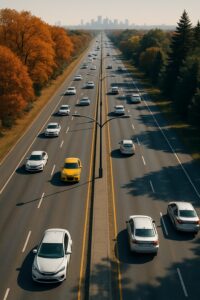
Aerial view of busy autumn highway with warm golden foliage and city skyline ahead

How Google Maps Knows You’ll Be Stuck Before You Are

Every red line on Google Maps is hiding a secret. It's not just watching your city's traffic right now — it's remembering years of it. Trillions of data points, 220 countries, and a silent AI that's learned the difference between a rainy Tuesday in November and a sunny June morning. Here's how a digital map got smarter than the road itself.

Read More
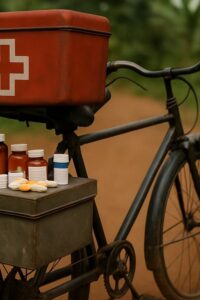
Weathered utility bicycle loaded with red medical box and medicine bottles on a rural Uganda dirt road

A Bicycle Is Saving Lives Where Hospitals Never Arrived

Uganda has roughly one doctor for every 25,000 people. In the remote Karamoja region, that statistic becomes something far darker. But before sunrise each morning, a bicycle loaded with vaccines and diagnostic tools rolls out to close a gap that billions in government spending never could. What's actually happening out there will change how you think about healthcare — and progress.

Read More
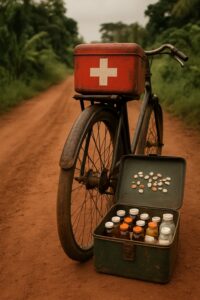
Weathered medical bicycle with red first-aid box and open medicine case on a rural Uganda dirt path

Uganda’s Bicycle Medics Are Closing a 25,000-to-1 Gap

Uganda has roughly one doctor for every 25,000 people. In its most remote districts, the nearest hospital can be 50 kilometers away across terrain no vehicle can reliably cross. What stepped into that void wasn't a government program or a Silicon Valley fix. It was a bicycle — and the remarkable women riding them into the mud before sunrise.

Read More