Baby Squirrel Climbs You? Here’s What to Do Right Now
Here’s the thing about a baby squirrel approaching humans — it’s not boldness. It’s arithmetic. The animal has run out of warm options, and you’re the last one standing. Eastern gray squirrels can’t regulate their own body temperature until six weeks of age, which means that tiny creature vibrating against your ankle isn’t being friendly. It’s solving a physics problem. What you do in the next sixty seconds is part of the answer.
Wildlife rehabilitators across North America receive thousands of calls each spring from bewildered backyard visitors who’ve suddenly become a tree. The question isn’t whether this is unusual — it happens constantly, especially after storms. The question is why it happens, what the animal actually needs, and whether the instinct to shake it off is the worst thing you can do.
It is.
Why Baby Squirrels Seek Out Warm Human Bodies
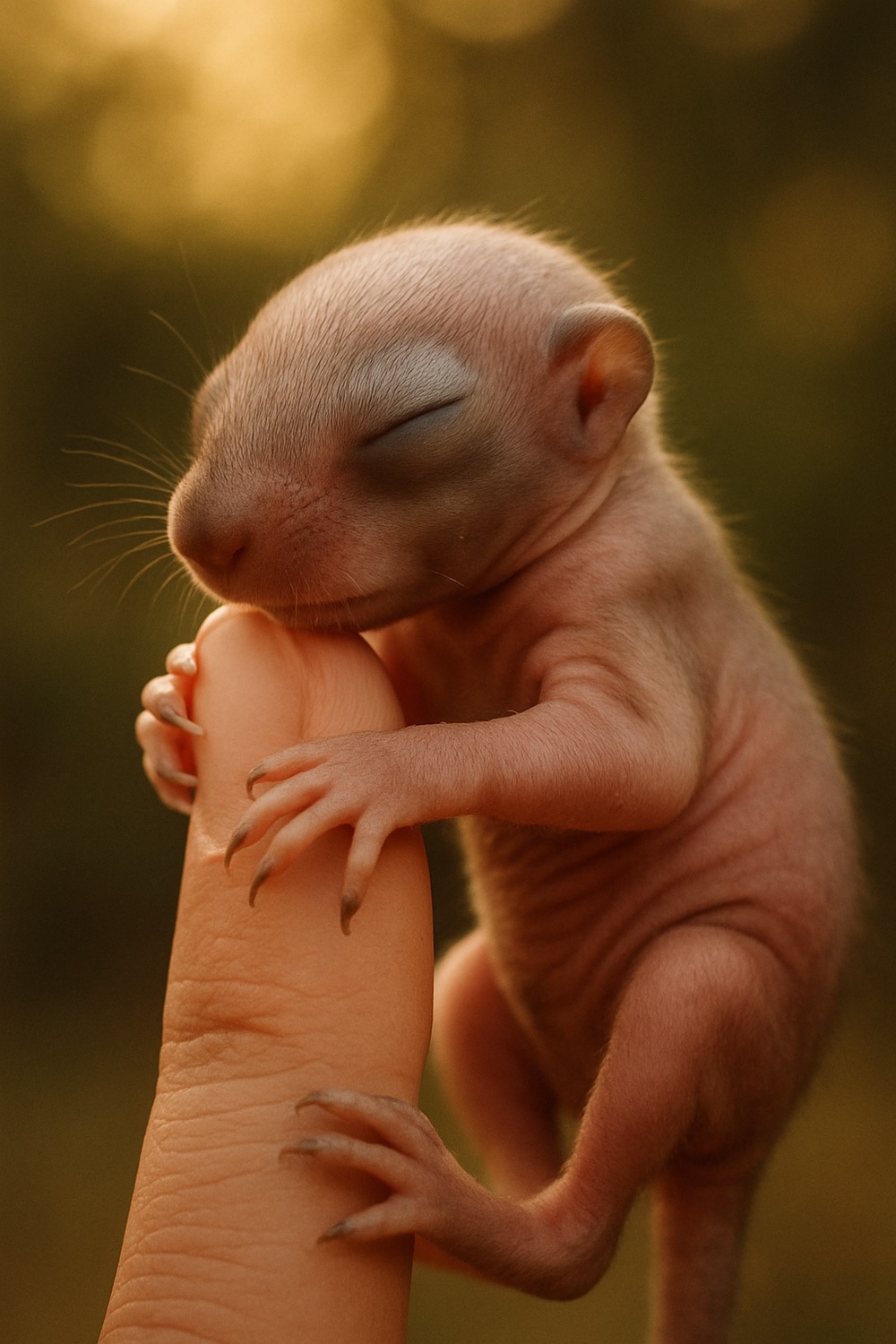
Eastern gray squirrels — Sciurus carolinensis, the species most North Americans encounter — are altricial mammals, meaning they’re born in a state of profound helplessness. Eyes sealed shut. No fur. No thermoregulation whatsoever. Researchers at the University of Georgia’s Warnell School of Forestry and Natural Resources documented in 2019 that eastern gray squirrel kittens — yes, that’s the correct term for baby squirrels — cannot regulate their own body temperature until approximately six weeks of age. Before that threshold, they rely entirely on maternal body heat and a shared nest of chewed bark and leaves.
A nest that falls from thirty feet in a windstorm doesn’t give the kittens inside much warning. When a nest is destroyed or a mother fails to return — hit by a car, taken by a hawk, killed by a domestic cat — the surviving kittens do the only thing evolution has programmed into them. They seek heat. They seek contact. In the wild, that means climbing toward the warmth of a sibling or a returned mother. In a suburban backyard, it means climbing toward you. The behavior isn’t aggression, and it’s emphatically not a sign of rabies. It’s thermal attraction at its most raw and urgent.
That’s the part most people don’t expect. A wild animal approaching a human reads as wrong — threatening, diseased, something to recoil from. But a baby squirrel approaching humans is doing the opposite of what a sick adult animal does. It’s not a rabies flag. It’s a distress flare. The confusion between those two signals costs lives every season.
The Instinct Behind the Climb — And What It Shares With Other Young Animals
Attachment behavior in young mammals is one of the most well-documented phenomena in behavioral biology. What looks like boldness in a baby squirrel that climbs your shoe is, neurologically, the same drive that makes a newborn monkey grip a caretaker with both hands. The 1958 Harlow experiments at the University of Wisconsin–Madison established that contact comfort — the physical sensation of warmth and texture — is a more powerful survival motivator in young primates than even food. Later research extended similar findings to rodents, where skin-to-skin contact suppresses stress hormones and slows the dangerous metabolic spiral of hypothermia. A baby squirrel approaching humans and clinging is, at the neurochemical level, doing exactly what its nervous system demands: buying time. It’s the same impulse explored in the remarkable story of why a baby monkey clings to a stuffed toy for years — the need for contact isn’t learned. It’s written into the blueprint.
Why does this matter? Because a kitten weighing 40 grams — roughly the mass of eight nickels — has a surface-area-to-volume ratio that bleeds warmth at a rate that would alarm a trauma physician. In 2021, researchers at the University of Florida’s Department of Wildlife Ecology found that baby squirrels separated from their nests in ambient temperatures below 70°F (21°C) could develop life-threatening hypothermia in under two hours. That timeline shrinks sharply if the animal is wet. A single rainstorm that dislodges a nest can create a medical emergency before the puddles have dried.
By the time a kitten climbs your leg, it has almost certainly been alone for hours. The clinging isn’t cute. It’s critical. You are, quite literally, its last warm thing in the world.
What to Do — Step by Step, Right Now
The National Wildlife Rehabilitators Association, which has trained and certified wildlife care professionals across the United States and Canada since 1982, is unambiguous on the first priority: warmth before food, warmth before transport, warmth before anything else. Do not attempt to feed a cold squirrel. A hypothermic digestive system cannot absorb nutrition safely, and well-meaning humans kill more baby squirrels with warm cow’s milk and good intentions than almost any other single cause. The Smithsonian’s National Zoo wildlife care team maintains detailed guidance on native squirrel species that echoes this: rewarming is the first intervention, always. Place the animal in a small box lined with a soft cloth — a clean T-shirt works perfectly. Put a heat source beneath half the box: a heating pad on its lowest setting, or a zip-lock bag filled with warm (not hot) water wrapped in a towel. The animal must be able to move away from the heat if it becomes too warm.
A baby squirrel approaching humans and clinging is showing you it’s cold, not that it wants to be your pet. Once it’s contained and warming, your next call is to a licensed wildlife rehabilitator — not a vet, not animal control, not your neighbor who once raised a guinea pig. Wildlife rehabilitation requires specific permits, species-specific knowledge, and formula designed for squirrels (and this matters more than it sounds), which has an entirely different nutritional profile than anything sold for domestic animals. In the United States, the National Wildlife Rehabilitators Association maintains a searchable directory at nwrawildlife.org. In Canada, contact your provincial wildlife authority. The call takes three minutes. It could be the difference between a released animal and a dead one.
Don’t wear gloves to handle it — your bare skin is warmer and the animal needs that heat transfer. Do wash your hands thoroughly afterward. Wild squirrels can carry external parasites like fleas and ticks, though the direct disease transmission risk to humans from a healthy baby is extremely low. Keep children and pets away from the box. And resist the urge to keep it — it will bond to you, and that bond will ruin it for the wild.
When a Baby Squirrel Approaching Humans Is Actually Fine
Turns out, not every baby squirrel on the ground is an orphan — and wildlife rehabilitators want you to understand this before you intervene. Mother squirrels are intensely dedicated parents, and they will retrieve fallen or displaced kittens if given the chance. A 2017 study published by researchers at the University of Exeter found that female gray squirrels actively monitor their nest sites during and after storms, and will relocate entire litters to backup nest cavities within hours. The mother may be watching you from a branch twelve feet up, waiting for you to move away before she descends. If the kitten is fully furred, has an open bushy tail, and is moving around confidently — it may be a juvenile, not a kitten, and may simply be learning to forage independently. That animal doesn’t need rescue. It needs space.
The true distress signals are specific. A baby squirrel approaching humans repeatedly, with a thin or absent tail, sealed eyes, pink or sparsely furred skin, visible ribs, or a hunched posture is in crisis. Crying — a thin, persistent chittering — is another alarm. An animal that’s shivering visibly, or that goes limp when handled, is hypothermic and needs intervention immediately. Age matters too: a kitten with eyes still sealed is almost certainly too young to survive without a rehabilitator’s care. One with fully open eyes and a fluffy tail may be weeks away from independence.
Assuming the animal “must have been abandoned” is the most dangerous instinct — and the most common. In reality, a mother squirrel’s first instinct is retrieval, not abandonment. Give her two to four hours. Keep the kitten warm and contained. Watch from a distance. If she doesn’t come, then the call to a rehabilitator is not just appropriate — it’s essential.
An animal built to survive thirty-foot falls shouldn’t be undone by a single well-intentioned human who moved too fast.
Where to See This
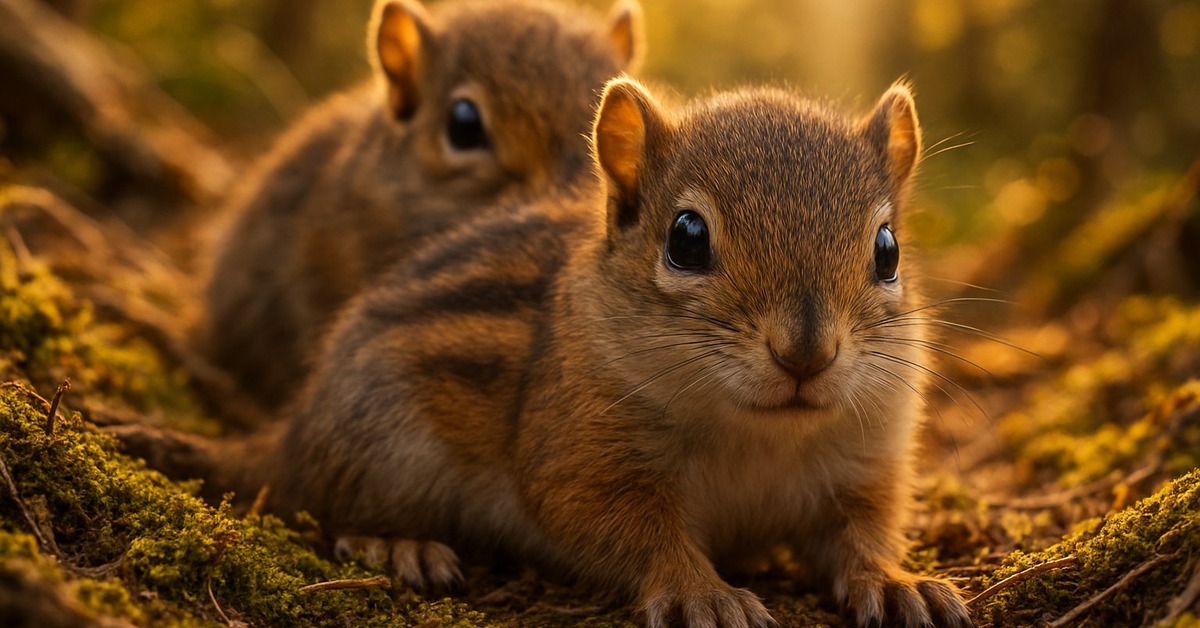
- Eastern North America — from the Atlantic coast to the Great Plains — is the primary range of the eastern gray squirrel, with peak kitten season running April through August and a second, smaller cohort born in late winter. Urban parks in cities like Washington D.C., Toronto, and Atlanta are hotspots for human-squirrel encounters during nesting season.
- The National Wildlife Rehabilitators Association (nwrawildlife.org) maintains a searchable directory of licensed rehabilitators across the U.S. and publishes free species-specific care guides for members of the public who find animals before help arrives.
- If you want to be prepared before the season starts, the Squirrel Refuge and Education Network (SIREN) offers free online training for people who want to provide temporary emergency care for displaced wildlife — look for their webinar series, which runs every spring.
By the Numbers
- Eastern gray squirrels produce two litters per year, averaging 2–4 kittens each, with peak births in March–April and July–August across most of North America (University of Georgia, 2019).
- Newborn squirrel kittens weigh between 13 and 18 grams — lighter than a AAA battery — and remain blind for the first four to five weeks of life.
- Licensed wildlife rehabilitators in the U.S. handle an estimated 4 million wild animals annually, with squirrels consistently ranking among the top three most-admitted species (NWRA, 2022).
- Baby squirrels can lose a fatal amount of body heat in under two hours at ambient temperatures below 70°F — roughly three times faster than a comparably sized domestic kitten (University of Florida, 2021).
- A mother gray squirrel maintains up to five separate nest cavities simultaneously, enabling rapid relocation of kittens within 24 hours of a nest disturbance (University of Exeter, 2017).
Field Notes
- In 2020, a wildlife rehabilitator in Austin, Texas documented a mother eastern gray squirrel retrieving four kittens from a fallen nest over the course of ninety minutes — completing four separate trips up a 25-foot oak trunk while a family watched from their deck. The kittens were never touched, and all four were released healthy the following fall.
- Baby squirrels raised in captivity without proper socialization with other squirrels often lose the ability to recognize and respond to squirrel alarm calls — a critical survival skill that, once lost, cannot be reliably retaught. This is one reason rehabilitators house kittens together whenever possible.
- Gray squirrels are one of the few wild mammals that can survive a fall from almost any height. Their low body mass and ability to spread their limbs create enough drag that terminal velocity doesn’t generate lethal impact force — a physics quirk that likely evolved alongside their arboreal lifestyle.
- Researchers still can’t fully explain why some individual squirrel kittens, separated under identical conditions, survive hypothermia while genetically similar siblings don’t. Metabolic variance within litters appears to play a role, but the exact threshold between recoverable and fatal cold exposure in neonatal squirrels remains poorly quantified.
Frequently Asked Questions
Q: Is a baby squirrel approaching humans a sign of rabies?
No — and this is one of the most important misconceptions to correct. Rabies in squirrels is extraordinarily rare. The Centers for Disease Control and Prevention notes that small rodents like squirrels almost never carry or transmit rabies to humans, and there are no documented cases of squirrel-to-human rabies transmission in the United States. A baby squirrel approaching humans is driven by thermal instinct, not disease. Aggressive behavior in adult squirrels warrants more caution, but a clinging kitten is not a red flag.
Q: What should I feed a baby squirrel I’ve found?
Nothing — until you’ve spoken to a rehabilitator. This isn’t overcaution. A cold or dehydrated baby squirrel cannot properly absorb food, and the wrong formula can cause fatal diarrhea within hours. Cow’s milk, almond milk, and human infant formula are all dangerous to squirrel kittens. If the animal is alert and warm and help is still hours away, a rehabilitator may advise a tiny amount of Pedialyte (unflavored) via syringe — but only after warming. Warmth always comes first.
Q: How long should I wait to see if the mother returns?
Two to four hours is the standard guideline from the National Wildlife Rehabilitators Association — but only if the animal is warm and safe in a contained box near where it was found. Don’t leave it on open ground where predators can reach it. Don’t leave it in direct sun. If the kitten’s eyes are sealed, it’s pink-skinned, or it’s shivering, the waiting period shrinks: get professional help faster. A mother that hasn’t retrieved her young after four hours in favorable conditions is very likely gone.
Editor’s Take — Alex Morgan
What strikes me every time I report on wildlife encounters is how much the gut reaction — pull away, shake it off, call it dangerous — is exactly backwards. A baby squirrel climbing your leg is one of the purest distress signals in nature. It has no other move. It picked you because you’re warm, not because it trusts you. There’s something quietly humbling about that: an animal with no options left choosing the giant primate in the garden. The least we can do is not flinch.
Every spring, millions of squirrel kittens are born in trees above our heads — in parks, in backyards, in the elms lining suburban streets — and most of them make it to independence without anyone ever knowing they existed. The ones that find their way onto a human’s sleeve are the exceptions, the ones whose margin collapsed. What they find there — warmth, stillness, a call to a rehabilitator — determines whether the margin closes for good. The next time a tiny animal chooses you as its last best option, what kind of tree do you want to be?