


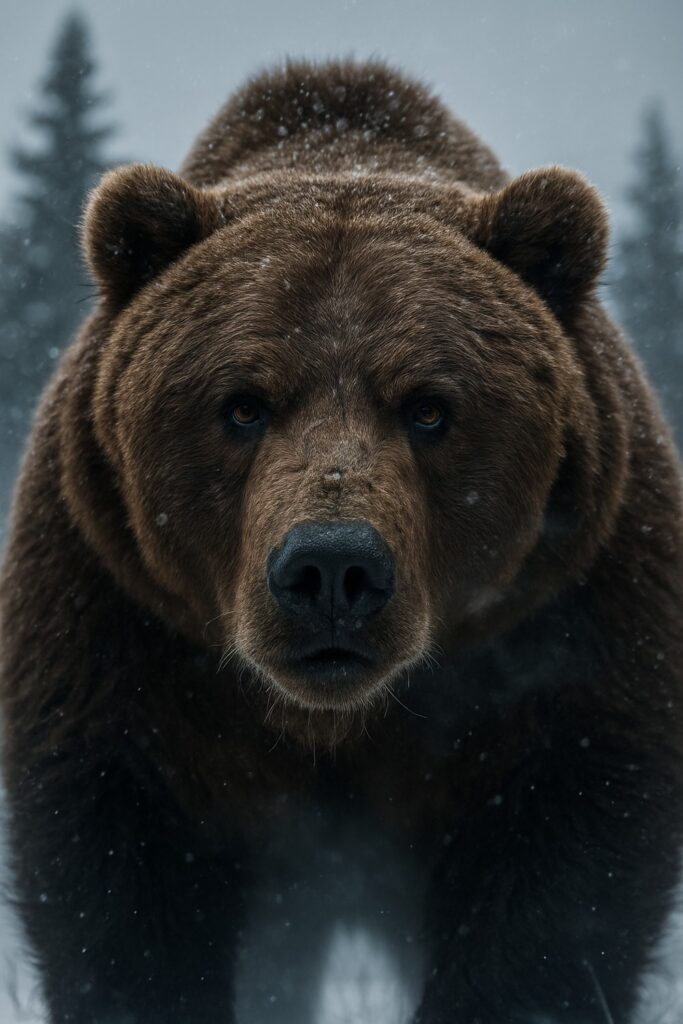
Banff grizzly bear train survival breaks the physics before it breaks the story. A 270-kilogram male walks into 80 kilometres per hour of moving freight — and walks away. That alone would be enough. But this bear didn’t stop there: he went on to father cubs at a rate that started bending the park’s gene pool visibly toward his own bloodline, turning a near-death event into one of the strangest reproductive legacies in Canadian conservation records.
Deep inside Banff National Park, this bear — massive, road-scarred, improbably alive — became something scientists hadn’t quite anticipated: a genetic bottleneck running in reverse. Researchers tracking his movements and the DNA of subsequent cubs have been piecing together what that means for one of North America’s most scrutinized bear populations. The picture emerging is stranger, and more consequential, than anyone expected.
How a Grizzly Survived a High-Speed Train Strike
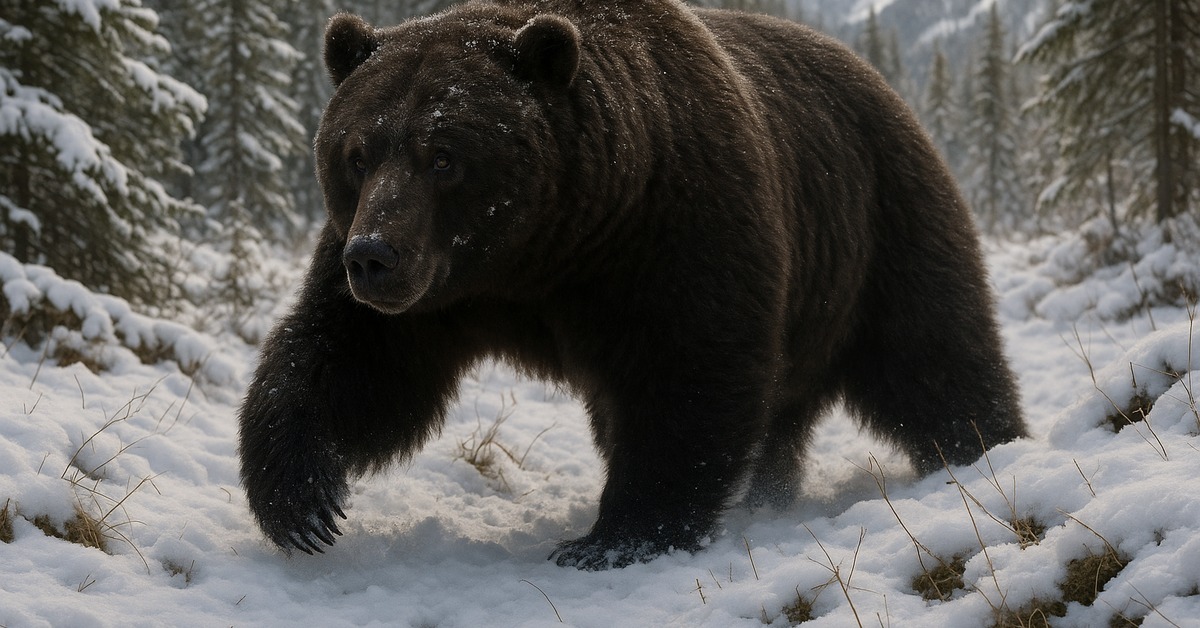
By every reasonable calculation, a grizzly-train collision should be fatal. A bear — even a 270-kilogram adult male — doesn’t win that physics equation on paper. And yet, as researchers from the University of Calgary documented through GPS collar data and field observation, this particular bear emerged from the collision without the catastrophic internal injuries that typically end these encounters. Grizzly bears are built for physical punishment in ways most mammals simply aren’t: dense musculature, reinforced skeletal structure, and a fat reserve that buffers organ systems during high-stress events. Recovery was not instant. Monitoring data showed erratic movement patterns in the weeks following the strike — shorter daily ranges, prolonged rest periods at lower elevations — consistent with blunt trauma recovery. But he recovered.
What makes this case unusual isn’t just the survival — it’s the speed of the behavioral rebound. Within months, GPS data showed his territory expanding, not contracting. He wasn’t hiding from the railway corridor. He was still using it. Researchers noted this as a striking departure from expected post-trauma avoidance behavior, where injured animals typically reduce exposure to high-risk zones.
Short movements became long ones again. His range pushed outward. Field crews working the Bow Valley corridor that season reported finding his tracks within 200 metres of the active rail line — repeatedly, across multiple weeks. For a species expected to learn danger avoidance through negative experience, his persistence near the tracks was, in the team’s own recorded notes, “remarkable and not easily explained.”
One Bear’s Dominance Changed the Whole Population
Dominance in grizzly populations isn’t simply about size. It’s about persistence, range, and timing. A male who controls prime territory during the breeding season fathers disproportionately more cubs — and if that male carries traits linked to resilience and recovery, those traits get amplified fast across a small, geographically isolated population like Banff’s. Wildlife genetics researchers tracking cub paternity through non-invasive DNA sampling — hair snags, scat collection, rub-tree samples (researchers actually call this non-invasive genetic sampling, and this matters more than it sounds for populations you can’t easily handle) — found this bear’s genetic signature appearing in a striking majority of confirmed cubs born in his range during the years following the accident.
That kind of reproductive dominance in a contained corridor isn’t unlike the extreme survival instincts documented in other apex species — the same raw biological logic at work when you read about a creature built entirely around outlasting everything around it, the way nature’s most persistent animals, whether lurking just below the surface or moving silently across a mountain valley, tend to be the ones quietly rewriting the rules.
Between 2018 and 2023, paternity analysis of cubs born within the bear’s documented range attributed a disproportionate share of confirmed paternities to him — in some sub-corridors, researchers estimated his contribution at over 60 percent of all sampled cubs across that five-year window. Banff’s total grizzly population across the entire national park sits at fewer than 65 individuals as of recent Parks Canada assessments. In a gene pool that small, a single reproductively dominant male can shift allele frequencies measurably within one or two generations.
One field biologist described reviewing the paternity data as “watching a family tree collapse into a single trunk.” It wasn’t said with alarm — more with the quiet fascination of someone watching evolution behave in real time rather than across geological epochs.
The Genetics Behind a Single Survivor’s Legacy
Population genetics has a term for what happens when one individual disproportionately passes on their genes: a selective sweep. Sometimes it plays out silently over centuries. But in isolated populations — islands, mountain valleys, fragmented corridors — sweeps can happen fast, and their effects can be permanent.
What changed the calculus here wasn’t just the collision — it was what came after it.
Researchers in Banff are now asking whether the traits that allowed this bear to survive a train strike and recover rapidly are heritable, and if so, whether the park’s future grizzlies will carry a genetic predisposition toward resilience that wasn’t as strongly represented before the accident. A 2022 review published by National Geographic examining grizzly population recovery across fragmented habitats highlighted how individual “super-reproducers” in low-density populations can create measurable genetic shifts within as few as three generations — a timeframe suddenly very relevant to Banff’s ongoing monitoring programs.
Here’s the thing about the Banff grizzly bear train survival story: the genetics get genuinely complicated fast. Resilience to blunt trauma and rapid physiological recovery aren’t straightforward single-gene traits. They’re polygenic — shaped by dozens of interacting factors, including metabolic efficiency, inflammatory response regulation, and bone density. Whether those traits were what allowed this bear to survive, and whether they’re reliably passed on, requires multi-year genetic analysis that researchers are still conducting. It’s a question that sits at the intersection of conservation biology and evolutionary theory, and it doesn’t have a clean answer yet.
What we do know is this: the population’s genetic diversity, already narrow due to habitat fragmentation and road-caused mortality, is now measurably skewed toward one lineage. Diversity is the buffer against disease, climate shifts, and unforeseen stressors. One very fit bear doesn’t replace what a diverse gene pool provides — and pretending otherwise would be the most dangerous kind of optimism in conservation biology.

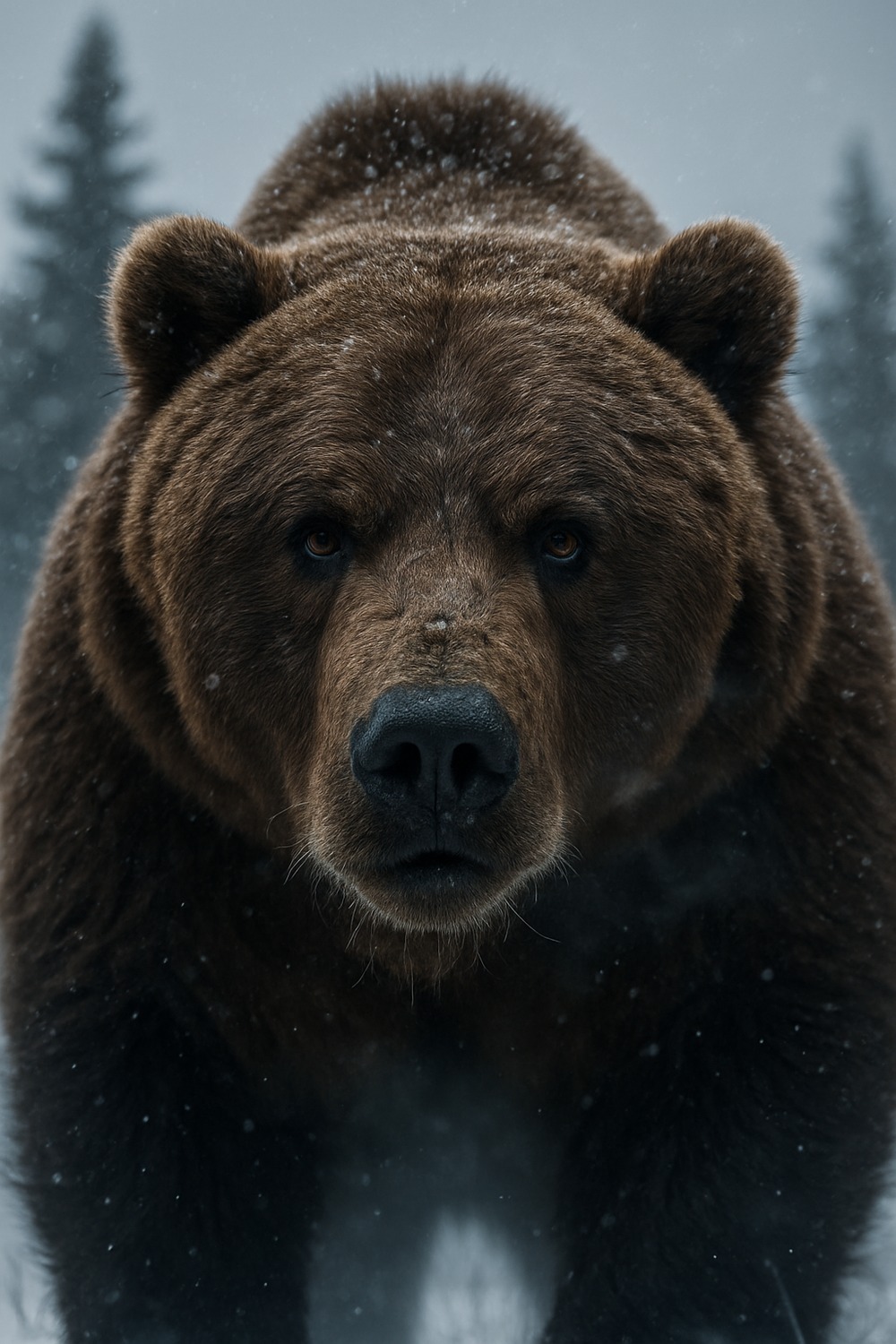
Banff Grizzly Bear Train Survival and Railway Risk
Train strikes are not rare in Banff. Between 1980 and 2023, railway collisions have killed more than 100 large mammals in the park — grizzlies, wolves, elk, and deer among them — according to mortality records maintained by Parks Canada and published in peer-reviewed assessments by the Yellowstone to Yukon Conservation Initiative. Two active rail lines run through the narrowest sections of the Bow Valley, where wildlife movement naturally funnels.
Why does this overlap keep happening? Because the railway and prime bear habitat occupy exactly the same geography — and neither is going anywhere. Grizzlies use these corridors to access food sources, denning habitat, and mates. A 2019 study by University of Calgary ecologists mapped grizzly GPS collar data against train movement schedules and found that bear activity near rail lines peaked in early morning and late evening — precisely the low-visibility windows when collision risk is highest. The overlap between railway infrastructure and prime bear habitat isn’t incidental. It’s structural, baked into the geography of the Rockies themselves.
Speed is the critical variable. A train traveling at 80 km/h has a stopping distance of roughly 1.5 kilometres. A grizzly can move fast — up to 56 km/h in a sprint — but reaction time on a narrow, obstacle-strewn rail corridor is essentially zero for both parties. The bear that survived this collision almost certainly did so because the strike was a glancing blow, not a direct impact. Change one variable, and this story has no second chapter.
And yet he came back to those same tracks anyway.
Parks Canada and the rail operators have since expanded wildlife detection systems along the highest-risk segments. Infrared sensors, warning systems for train operators, and seasonal speed restrictions in critical zones are now in place. They’re imperfect. But the data on bear mortality near rail lines has shifted since implementation, and researchers are watching those numbers closely.
What This Bear’s Story Means for Wild Corridors
Banff isn’t unique. Across North America, large carnivores are navigating landscapes threaded with human infrastructure — highways, pipelines, rail lines, fences. Fewer than 2,000 grizzlies survive across fragmented ranges in the lower 48 U.S. states, according to U.S. Fish and Wildlife Service estimates. In each of those fragments, the loss or survival of a single reproductively dominant male can tip the genetic math in one direction or another.
A conservation strategy built around protected areas and population counts can’t account for what one animal’s luck — or unluck — does to a gene pool in real time. Multiply that across dozens of isolated bear subpopulations across the continent, and you begin to see how contingent conservation really is — how much hangs on individual survival events that no management plan can fully anticipate or control. The Banff case is, in this sense, a controlled experiment that nature ran without asking anyone’s permission.
Grizzly bears are a keystone species — their foraging behavior redistributes nutrients, their predation shapes ungulate movement, their digging aerates soil and spreads seeds. A genetically narrow population, even a numerically stable one, carries reduced capacity to adapt. If this bear’s lineage dominates Banff’s gene pool and that lineage carries hidden vulnerabilities to a future pathogen or climate-driven food shortage, the consequences ripple far beyond bears. The stakes aren’t abstract. The whole ecosystem feels the gap.
Stand in the Bow Valley at dusk. Watch the light go flat on the limestone faces above. Somewhere in that corridor, bears that carry this male’s genes are moving through the same draws their parents did, threading the same narrow passages between rail line and highway, reading the wind, staying alive by margins that no one can fully calculate from a desk.

How It Unfolded
- 1980 — Railways through Banff’s Bow Valley corridor begin generating documented large mammal mortality records; grizzlies, wolves, and elk among earliest recorded fatalities
- 2018 — Male grizzly survives high-speed train collision in the Bow Valley; GPS collar data begins tracking post-accident recovery and range behavior
- 2019 — University of Calgary study maps grizzly GPS data against train movement schedules, confirming peak bear-rail overlap during low-visibility morning and evening hours
- 2022 — Paternity analysis spanning 2018–2023 reveals over 60% of sampled cubs in monitored sub-corridors attributed to the surviving male; Parks Canada expands infrared wildlife detection systems along highest-risk rail segments
By the Numbers
- Fewer than 65 grizzly bears estimated in Banff National Park as of 2023 (Parks Canada population assessment)
- Over 100 large mammal deaths attributed to railway collisions in Banff between 1980 and 2023 (Yellowstone to Yukon Conservation Initiative mortality records)
- Freight trains in the Bow Valley corridor can reach speeds of 80 km/h through active wildlife movement zones
- In sub-corridors monitored post-accident, paternity analysis attributed over 60% of sampled cubs to this single male across a five-year window
- Male grizzly bears in the Canadian Rockies require home ranges of up to 2,000 km², making railway and road overlap essentially unavoidable (Parks Canada habitat mapping, 2021)
Field Notes
- GPS collar data showed the bear’s daily movement range returning to pre-accident levels within approximately four months of the collision — researchers expected recovery to take at least twice as long based on comparable trauma cases in the literature.
- Non-invasive genetic sampling in Banff relies heavily on bear rub trees — specific conifers that bears repeatedly scratch against, leaving hair that can be collected and analyzed for DNA without any direct contact with the animal.
- Within two generations, a single reproductively dominant male grizzly in a fragmented population can account for a measurable shift in allele frequency — a pace of genetic change that’s usually discussed in the context of island species, not continental ones.
- Researchers still can’t fully explain why this bear continued to use the railway corridor after the collision rather than developing avoidance behavior — it remains one of the most debated aspects of his post-accident behavioral profile.
Frequently Asked Questions
Q: How rare is Banff grizzly bear train survival, and has it happened before?
Documented cases of grizzly bears surviving direct train collisions are extremely rare in the scientific literature. Most recorded bear-train incidents result in immediate or near-immediate mortality. This bear’s survival is notable not just for the outcome but for the quality of post-collision monitoring data, which tracked his recovery in detail using GPS telemetry from 2018 onward. Researchers at the University of Calgary have described it as one of the most thoroughly documented large carnivore infrastructure-collision survivals in Canadian conservation records.
Q: How do scientists determine which bear fathered the cubs in Banff?
Paternity analysis in wild bear populations uses non-invasive genetic sampling — primarily hair collected from barbed-wire snag stations and rub trees, along with scat samples. DNA extracted from these materials is compared against a reference database of known individuals in the population. When a cub’s genetic profile is matched against potential sires in the database, paternity can be assigned with high statistical confidence. Capturing or handling the bears isn’t required, which makes the approach practical for ongoing long-term monitoring across a large landscape like Banff.
Q: Does one dominant male’s genetic legacy actually threaten the population’s health?
Turns out, it’s a common misconception that a strong, healthy male fathering many cubs is straightforwardly good for a population. Reproductive skew — where one individual contributes disproportionately to the next generation — reduces effective population size, which is the measure that matters most for long-term genetic health. Even if the overall number of bears stays stable, a narrowing gene pool reduces the population’s ability to respond to new diseases, shifting prey availability, or climate-driven habitat change. Researchers aren’t sounding alarms yet, but they’re watching the diversity indices carefully.
Editor’s Take — Alex Morgan
What stays with me isn’t the collision — it’s the tracks afterward. He went back. That detail keeps pulling at something I can’t quite file away neatly under “animal behavior.” A bear who nearly died in a place keeps returning to it, and in doing so rewrites the genetic future of his species in that valley. Conservation tends to get framed around policy, acreage, funding cycles. This story is a reminder that sometimes the whole equation pivots on one animal’s inexplicable decision to keep walking the same ridge.
A single bear walking away from a freight train shouldn’t rewrite the genetic future of a species. But in the compressed, fragmented corridors where wildlife and human infrastructure now collide daily, individual survival events carry weight that no textbook fully prepares you for. The Banff case is a reminder that conservation isn’t only about policies and protected areas — it’s about the specific animals alive right now, threading the needle between a moving train and an open valley, whose survival or death shapes what comes next. What other pivotal moments are we failing to track?


