


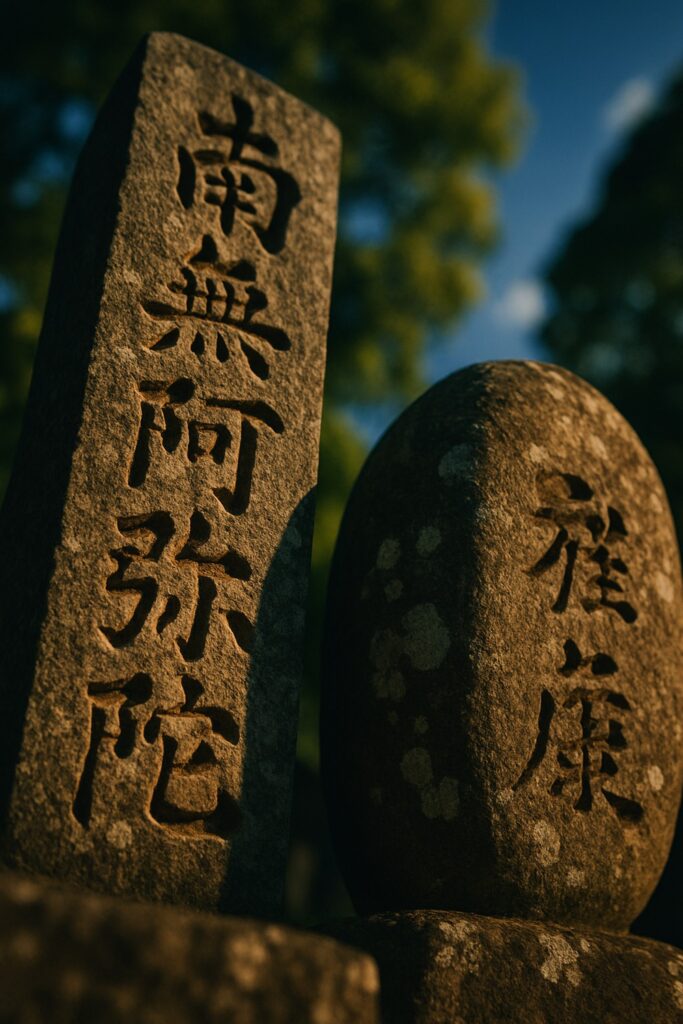
Here’s the thing about a civilization that carves its survival instructions into granite: it already knows it won’t remember. The Japan tsunami stones standing along the Sanriku coast aren’t monuments to ancient wisdom — they’re monuments to ancient doubt. More than a hundred of them, planted at the exact elevation where water once stopped killing, addressed not to the generation that suffered but to the ones who would eventually forget.
They were placed by survivors of disasters so complete that entire communities ceased to exist. What’s remarkable isn’t that ancient people carved warnings into rock. It’s that the warnings worked — and that in the spaces between tsunamis, people kept forgetting them anyway. What does it take for a civilization to remember the thing that nearly killed it?



Japan’s Tsunami Stones: What the Carved Warnings Say
At the entrance to Aneyoshi, a hamlet in Iwate Prefecture, stands the most famous of the Japan tsunami stones. Its inscription, translated roughly, reads: Do not build your homes below this point. Placed after the 1933 Sanriku earthquake and tsunami — which killed over 3,000 people, itself a repeat of the catastrophic 1896 Meiji Sanriku tsunami that had erased more than 22,000 lives in a single night along the same coast — the stone wasn’t metaphor. It was municipal engineering in its most durable form. Researchers at Tohoku University, which has studied the Sanriku coast’s disaster history since the 1980s, estimate that at least 100 such markers remain standing across the northeastern prefectures of Iwate, Miyagi, and Fukushima. The actual count is likely higher, with smaller markers still being rediscovered in overgrown hillside cemeteries.
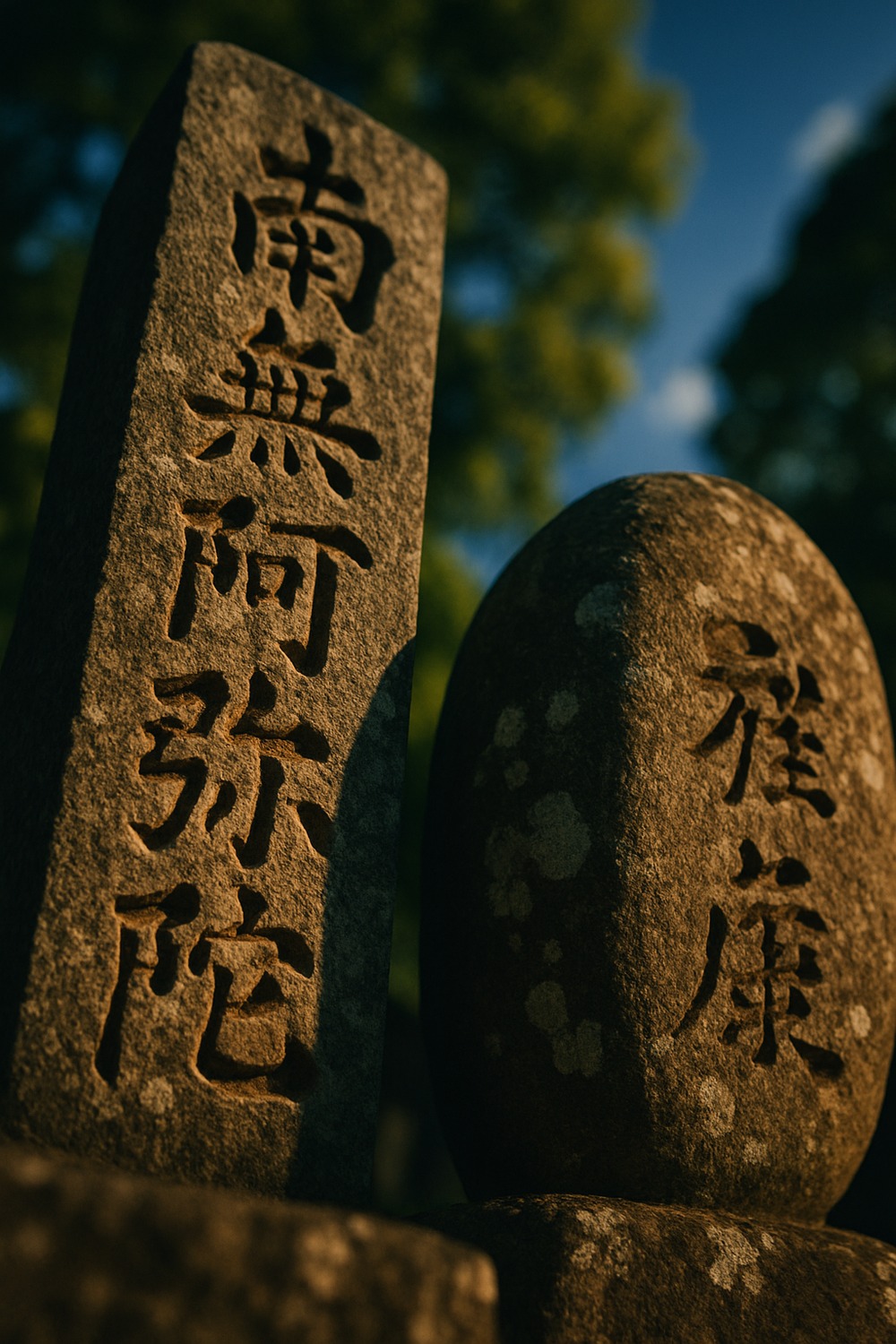
Dating back as far as the 1400s, the oldest examples carry elaborate explanations — accounts of the wave’s height, the number of dead, the speed with which the water moved. Others are blunt to the point of severity. All share a common architecture of urgency: planted at the exact elevation where the water stopped, each functions as a three-dimensional tide gauge frozen in time. The kanji on the oldest stones have softened at the edges, worn smooth by frost and rain. But the message hasn’t blurred. That’s the point of stone.
Aneyoshi’s marker sits roughly 60 meters above sea level. In March 2011, the tsunami that followed the magnitude 9.0 Tōhoku earthquake reached 38.9 meters at its highest point on the Sanriku coast. The two households that had built their homes above the Aneyoshi stone were unharmed. Their neighbors below were not.
Memory, Geography, and the Villages That Ignored Stone
Why does this pattern repeat? Because the landscape heals, and healing is the problem. Survivors carve warnings. Decades pass. Trees grow back, the beach becomes beautiful again, and a new generation sees only land — not the ghost of what the water did to it. In a particular and almost cruel way, the Japan tsunami stones are a physical argument against the limits of human memory, a recognition by the people who carved them that their own descendants could not be trusted to remember. It sits uncomfortably alongside the assumption that modernity has improved on ancient instincts.
There’s a parallel in the natural world: consider how Australia’s most popular beaches conceal deep prehistoric records in their geology — layered evidence of a world before human attention spans shortened. In both cases, the landscape holds information that the people living on it have stopped reading.
Communities that rebuilt below the stone lines after 1933 didn’t do so out of carelessness. Flat coastal land was where fishing boats launched, where markets operated, where community life had always been organized. The economic gravity of the shore is immense. Between 1933 and 2011, approximately 78 years passed without a tsunami of that magnitude striking the Sanriku coast — enough time for the warning to become folklore, and for folklore to become quaint.
Minamisanriku, one of the hardest-hit towns in 2011, had modern concrete seawalls and evacuation sirens and disaster preparedness drills. It still lost roughly half its 17,000 residents’ homes. The stones don’t look impressive next to a 15-meter seawall. But the seawall in Minamisanriku was overtopped. The stones were right.
The Science of Stone as Early Warning System
Geologists increasingly treat the Japan tsunami stones not as historical curiosities but as data. Dr. James Goff, then at the University of New South Wales, co-authored a landmark 2014 paper in the journal GSA Today arguing that coastal communities worldwide were systematically underestimating tsunami risk — in part because written records didn’t reach back far enough, and that indigenous and community-based markers represented an underused archive of disaster frequency (researchers actually call this category “paleotempestology” when applied to storm records, though no single clean term covers tsunami stone archives). The Smithsonian Magazine has explored how this geological memory challenges official hazard maps, which often rely on shorter instrumental records. If you’re drawing your risk contour from 50 years of data and the stones are describing an event cycle of 100 to 400 years, you’re working with an incomplete picture — and designing infrastructure around a false sense of the baseline.
After 2011, Japan’s Cabinet Office began a systematic cataloguing effort, and scholars at Tohoku University’s International Research Institute of Disaster Science — founded in 2012 directly in response to the Tōhoku earthquake — cross-referenced stone locations with run-up data to test their accuracy. The correlation is striking. In nearly every documented case, communities built above the stone lines experienced dramatically lower mortality rates and structural loss than those built below.
That’s not a statistical coincidence. That’s a proof of concept carved into granite by people who had already lived through the failure mode once.
Treating the stones as data rather than folklore is, frankly, overdue — and the delay has cost lives that better hazard mapping might have saved.
What 2011 Changed — and What It Didn’t — for Japan Tsunami Stones
After March 11, 2011, Japan entered one of the most intensive periods of tsunami mitigation construction in its history. The national government committed to building or reinforcing over 400 kilometers of seawalls along the Tōhoku coast at a cost that would eventually exceed $12 billion USD. New evacuation towers went up. Routes were painted on roads. Digital warning systems were upgraded. And something older happened too: new stones were carved. Communities in Iwate and Miyagi prefectures — some of them the same communities that had rebuilt below the old markers after 1933 — placed fresh tsunami stones in 2012 and 2013, inscribed with dates, water heights, and the same essential command. Remember this. Do not build below here. Tohoku University researchers documented at least a dozen new marker installations between 2012 and 2015, all placed by local residents rather than government initiative.
And yet Japan also rebuilt many of its coastal towns closer to the water than the stones advise, because the economic and cultural costs of wholesale relocation are enormous. The fishing industry requires harbor access. Some communities in Iwate Prefecture did relocate entire neighborhoods to higher ground — a process called kōchi iko, meaning high-ground migration — but it took years of political negotiation and left many residents feeling displaced from the landscapes where their families had lived for generations. The tension between geological wisdom and human geography doesn’t resolve neatly. It never has.
What 2011 did change, durably, is attention. GPS-tagged, photographed, studied, and translated, the stones now occupy an entirely different position in the global conversation about risk. UNESCO’s 2015 Sendai Framework for Disaster Risk Reduction explicitly referenced local and indigenous knowledge — the category under which tsunami stones fall — as an undervalued resource in global hazard management. Six centuries of stone carving finally made it into an international policy document.
A Warning Older Than the Nation Watching It
Some of the Japan tsunami stones predate the modern Japanese state by four centuries. They were placed by fishing communities operating entirely on the logic of direct experience — people who had watched their neighbors die and decided that future neighbors should not have to learn the same lesson from scratch. Not myth, not religion, not superstition: systematic, empirical risk communication. Evidence-based public health infrastructure made of rock. Similar traditions exist elsewhere — oral histories among Indigenous Australian communities encode information about sea-level rise events thousands of years old, and geographers at Australian National University have documented cases where Aboriginal place-names contain embedded warnings about flood-prone terrain — but few traditions have left physical markers as precisely calibrated as the Japanese examples.
Seawalls degrade. Digital warning systems require power. Bureaucratic flood maps get revised every few decades based on political and economic pressures. A well-placed block of granite, by contrast, requires no budget cycle, no software update, no committee approval to function — it just stands in the same location, saying the same thing, every single year, including the years when no one is listening. The failure mode of stone is slow and legible. The failure mode of concrete infrastructure is sudden and catastrophic.
Stand at the Aneyoshi stone on a clear autumn morning and what you notice first isn’t the inscription. It’s the view. You can see exactly where the land drops away below the marker, the slope green and gentle toward the glittering water. The bay looks calm. It always looks calm between the events that define it. The stone doesn’t care what the water looks like today. It knows what the water has done before.

How It Unfolded
- 1400s — Earliest known tsunami stones are believed to have been placed along the Sanriku coast following major wave events during the Muromachi period, though precise dates remain disputed among historians.
- 1896 — The Meiji Sanriku tsunami kills over 22,000 people, prompting some communities to carve new markers at maximum inundation lines as part of village reconstruction efforts.
- 1933 — The Shōwa Sanriku tsunami kills roughly 3,000 more along the same coast; the Aneyoshi stone and several others are placed in direct response, establishing the community-level marker tradition that persists today.
- 2011 — Magnitude 9.0 Tōhoku earthquake and its resulting tsunami kill nearly 20,000 people; subsequent analysis confirms that communities built above the stone lines experienced significantly lower mortality, triggering international academic and policy interest in the markers.
By the Numbers
- 100+ tsunami stone markers documented along Japan’s Sanriku and surrounding coasts, with ongoing cataloguing by Tohoku University’s International Research Institute of Disaster Science.
- 22,000+ lives lost in the 1896 Meiji Sanriku tsunami — the deadliest tsunami event in recorded Japanese history prior to 2011.
- 38.9 meters — maximum recorded run-up height of the 2011 Tōhoku tsunami along the Sanriku coast, measured at Miyako City, Iwate Prefecture.
- $12 billion USD+ committed by the Japanese government to seawall construction and reinforcement along the Tōhoku coast following the 2011 disaster.
- 400 years — approximate age of the oldest surviving tsunami stones, making them one of the longest-running continuous disaster warning systems in recorded human history.
Field Notes
- After 2011, researchers from Tohoku University walking the coastline to document damage found that several tsunami stones had been completely submerged by the wave — meaning the water had exceeded even the upper boundary the markers defined. In those locations, everything below the stones was destroyed. Everything above survived.
- Some tsunami stones double as grave markers. The same stone that warns future builders also lists the names of those who died in the event that prompted its placement — functioning simultaneously as memorial and municipal code.
- Japan is not alone in using landscape-based warnings: researchers at Australian National University have documented Aboriginal oral traditions and place-names encoding flood and inundation data going back more than 7,000 years — arguably the oldest oral hazard warning systems in existence.
- Researchers still can’t determine the precise return interval for catastrophic Sanriku tsunamis — the data suggests somewhere between 100 and 400 years, but the variation is wide enough that no modern hazard map can confidently assign a probability to any given decade. The stones are more honest than the models in this respect: they don’t promise a frequency. They just insist on a boundary.
Frequently Asked Questions
Q: What exactly are Japan tsunami stones, and how old are they?
Japan tsunami stones are carved rock markers placed by coastal communities — primarily along the Sanriku coast of northeastern Japan — to warn future generations not to build homes below a certain elevation. The oldest surviving examples date to the 1400s, with most installed after the devastating tsunamis of 1896 and 1933. They’re not government monuments; ordinary fishing villages placed them as a direct response to witnessing catastrophic loss.
Q: Did the tsunami stones actually protect people during the 2011 Tōhoku disaster?
The evidence is compelling. Communities that had respected the stone markers’ elevation boundaries — including the two households in Aneyoshi — came through the 2011 tsunami with dramatically lower casualties than neighboring communities built closer to the waterline. Tohoku University researchers cross-referencing stone locations with 2011 run-up data found consistent patterns: above the stones, structures frequently survived; below them, entire neighborhoods were destroyed. The ancestors weren’t being cautious. They were being correct.
Q: Why did people ignore the tsunami stone warnings and build below them anyway?
The answer isn’t ignorance — it’s economics and time. Between major tsunamis, the coastal flatlands are the most productive, accessible places to build. Markets, harbors, roads, and community life all gravitate toward the water. With 78 years between the 1933 and 2011 events, three or four generations grew up without personal experience of catastrophic inundation. The stones became scenery. The risk became abstract. It’s not a failure unique to Japan — it’s a feature of how human beings process low-frequency, high-consequence events everywhere on Earth.
Editor’s Take — Sarah Blake
What stays with me isn’t the 2011 death toll — horrifying as it is — but the two households in Aneyoshi that were simply fine. Six hundred years of geological memory compressed into one sentence on a rock, and it worked exactly as intended. We spend enormous sums designing smart infrastructure that requires electricity, maintenance, and political will to function. The most durable disaster warning system on this coastline was carved by fishermen who never once considered that their advice would need a software update.
The Japan tsunami stones are a test, and we’ve been taking it for six centuries. Some generations pass. Some fail catastrophically, rebuild, and pass the warning forward in stone precisely because they know the next generation will fail again without it. There’s something both devastating and quietly magnificent about that — a civilization designing for its own forgetfulness, leaving messages in the most permanent medium it could find. Somewhere on the Sanriku coast right now, a stone that has been standing since the 1400s is doing its job. Whether anyone is reading it is the part we don’t get to know in advance.


