Onion Juice and Hair Regrowth: What Science Really Says
Onion juice for hair regrowth sounds like the kind of claim that belongs on a late-night infomercial — except a peer-reviewed clinical trial published in 2002 put it through a control group, measured the outcomes, and produced numbers that researchers are still citing more than two decades later. Whether those numbers mean what patients hope they mean is the more important question.
The Study That Started the Conversation
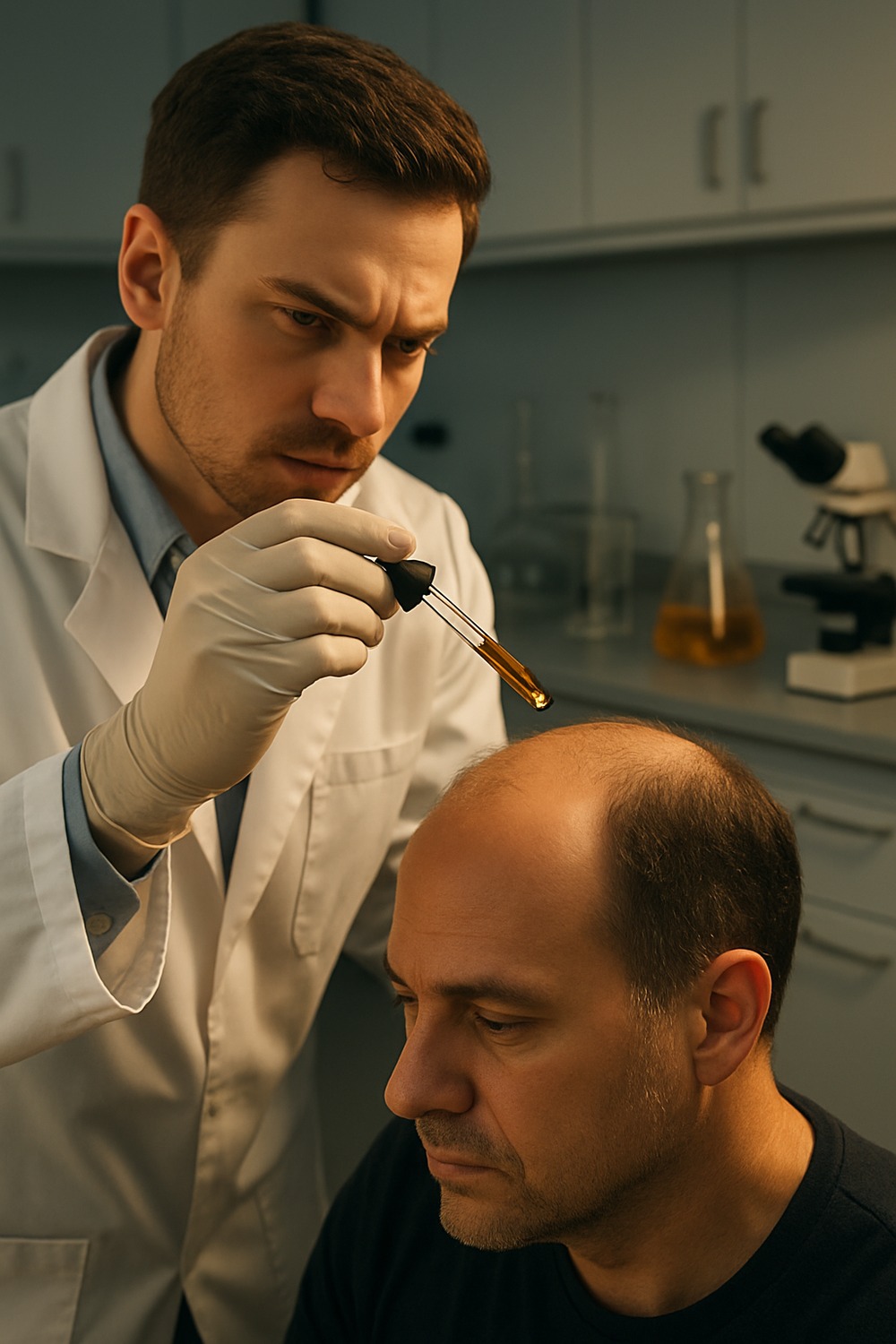
A team of dermatologists in Iraq published the trial in the Journal of Dermatology, setting out to answer a deceptively simple question: does onion juice outperform tap water as a topical treatment for alopecia areata? Participants were split into two groups — one applying raw onion juice to affected scalp areas twice daily, the other using ordinary tap water as a control. The condition itself is no small thing: an autoimmune disorder in which the body’s own defenses turn on hair follicles, producing patchy, unpredictable hair loss that can strike anyone, at any age, with little warning.
Within two weeks, people in the onion group were already reporting visible regrowth in previously bare patches. By week eight, approximately 87 percent of those who completed the treatment showed full terminal hair regrowth. The tap water group landed at roughly 13 percent.
Those aren’t subtle numbers. They’re the kind that make dermatologists sit up straight and patients with treatment-resistant alopecia start Googling grocery delivery.
That response is understandable. Alopecia areata reshapes identity, resists easy treatment, and carries a psychological weight that clinical descriptions tend to understate. Patients who’ve already cycled through corticosteroid injections, minoxidil, and topical immunotherapy with limited results aren’t being naive when they find something like this compelling. But science doesn’t run on hope — and this is precisely where the story gets more complicated.
Understanding the Biology Behind the Bulb
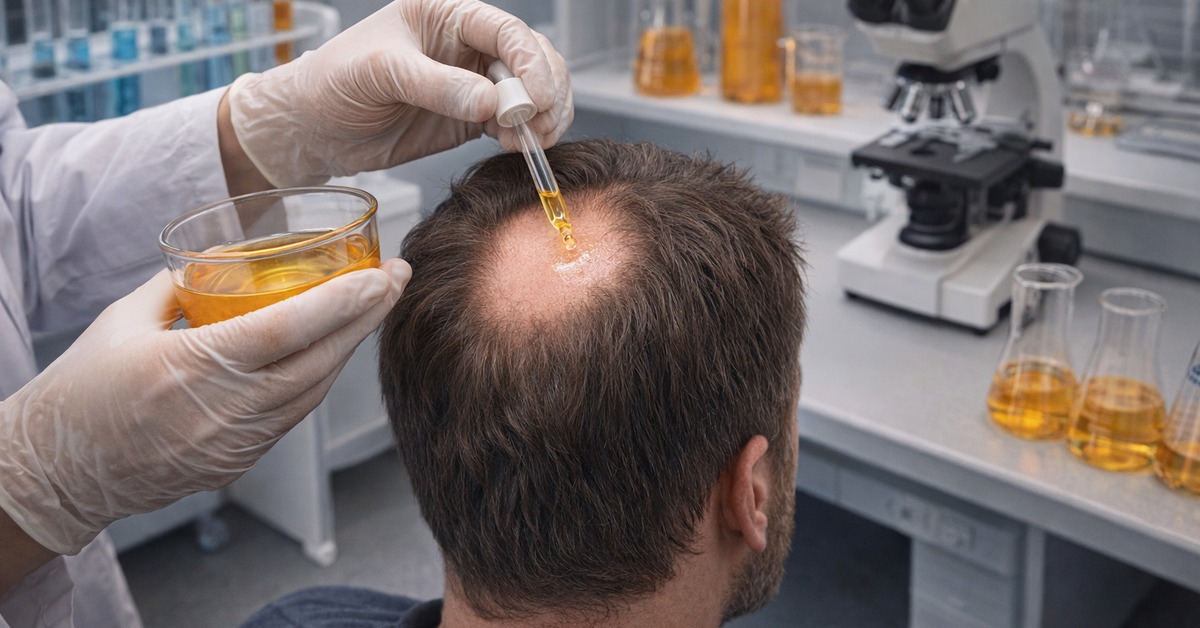
What might actually be happening beneath the scalp? Researchers have proposed several plausible mechanisms, though none has cleared the bar of large-scale controlled investigation. The leading hypothesis involves sulfur — a compound onions contain in abundance, and one that’s essential to keratin production. Keratin is the structural protein that hair is literally built from. Sulfur-rich compounds in onion juice, including quercetin and allicin, have shown anti-inflammatory properties in laboratory settings — which matters here, because alopecia areata is fundamentally an inflammatory, immune-driven condition. Quieting that local inflammation, even partially, could theoretically give suppressed follicles room to reactivate.
Some researchers have also speculated that onion juice enhances blood circulation to the scalp, potentially improving oxygen and nutrient delivery to follicle tissue that’s been functionally shut down by immune attack. Onions also contain flavonoids and polyphenols (researchers actually call this category of compounds “bioactive phytochemicals”) — antioxidants that neutralize free radicals associated with cellular damage. Whether any of this translates meaningfully when the compound is rubbed onto human skin rather than pipetted onto cells in a lab is the central unanswered question.
The gap between a petri dish result and a clinical outcome is vast. The 2002 trial, admirable in its ambition, enrolled a small number of participants — and several dropped out before completion, shrinking the statistical power further and making it genuinely difficult to generalize the findings with confidence.
The Caveats Science Cannot Ignore
Why does this matter? Because no independent research team has since run a large-scale, double-blind, placebo-controlled replication of those 2002 results. In evidence-based medicine, a single small trial sits on a deliberately modest rung — not because the findings aren’t interesting, but because interesting findings have a long history of failing to survive contact with larger, more rigorous scrutiny.
Without comparison against currently approved alopecia areata treatments — corticosteroids, JAK inhibitors, contact immunotherapy — onion juice simply can’t be positioned as a clinically validated remedy. That’s not dismissal. It’s just how the ladder works.
A research gap this wide, sitting beneath results this dramatic, is the kind of thing that should embarrass a field into action.
There’s also the practical reality of tolerability. Regular application of raw onion juice to the scalp produces a persistent, distinctive odor. (Anyone who’s cut onions before a first date would likely agree this is not a trivial concern.) Skin irritation is a documented risk in sensitive individuals, and long-term adherence and safety haven’t been studied in any meaningful way. These aren’t reasons to abandon the hypothesis — they’re reasons to test it properly.
A Remedy Worth Watching, Carefully
6.8 million people in the United States alone have alopecia areata. Globally, the burden is enormous. Here’s the thing: any treatment that shows even preliminary efficacy and remains accessible without a prescription or a specialist’s waiting list deserves serious scientific attention — not credulous adoption, but not reflexive dismissal either. Holding both of those positions simultaneously is harder than it sounds, but it’s the only intellectually honest place to stand given what the evidence currently offers.
And patients considering onion juice as a complementary approach should talk to their dermatologist first, keep expectations calibrated to the actual evidence, and watch for skin reactions. The 2002 findings aren’t nothing — they’re a scientifically grounded hypothesis with observable results behind it, the kind of lead that warrants properly funded, rigorously designed follow-up. What they aren’t is a conclusion.
How It Unfolded
- 2002 — Iraqi dermatologists publish the first controlled clinical trial of onion juice for alopecia areata in the Journal of Dermatology, reporting 87% terminal hair regrowth in the treatment group.
- 2009–2014 — Small subsequent studies from South and Southeast Asia examine sulfur compounds in topical hair treatments, lending indirect support to the sulfur-keratin hypothesis.
- 2017 — Quercetin and allicin gain wider attention in dermatology literature for anti-inflammatory properties, reinforcing plausible mechanisms behind the 2002 findings.
- 2020s — No large-scale replication trial has yet been completed; onion juice remains a discussed but unvalidated complementary approach in alopecia areata management.
Editor’s Take — Dr. James Carter
The 2002 trial produced a result that, by the numbers, would have justified a full replication program within five years. That it still hasn’t received one is the real story here — not the onion. Treatments that are cheap, unpatentable, and already sitting in every grocery store don’t attract industry funding. That structural bias shapes what gets studied and what gets buried. Patients with treatment-resistant alopecia areata deserve better than a single underpowered trial standing in for a decade of proper investigation.
Science moves slowly, but it moves honestly — and the onion’s story isn’t finished yet. Folk remedies occasionally carry a kernel of biological truth that formal research is only beginning to examine carefully. Whether onion juice earns a definitive place in the treatment of alopecia areata depends entirely on the studies still waiting to be run: larger cohorts, tighter controls, proper blinding. Until then, the onion remains what it’s always been — quietly extraordinary, faintly absurd, and just surprising enough to keep scientists paying attention.