Paralyzed Dog Practices Alone at 2 A.M. to Walk Again
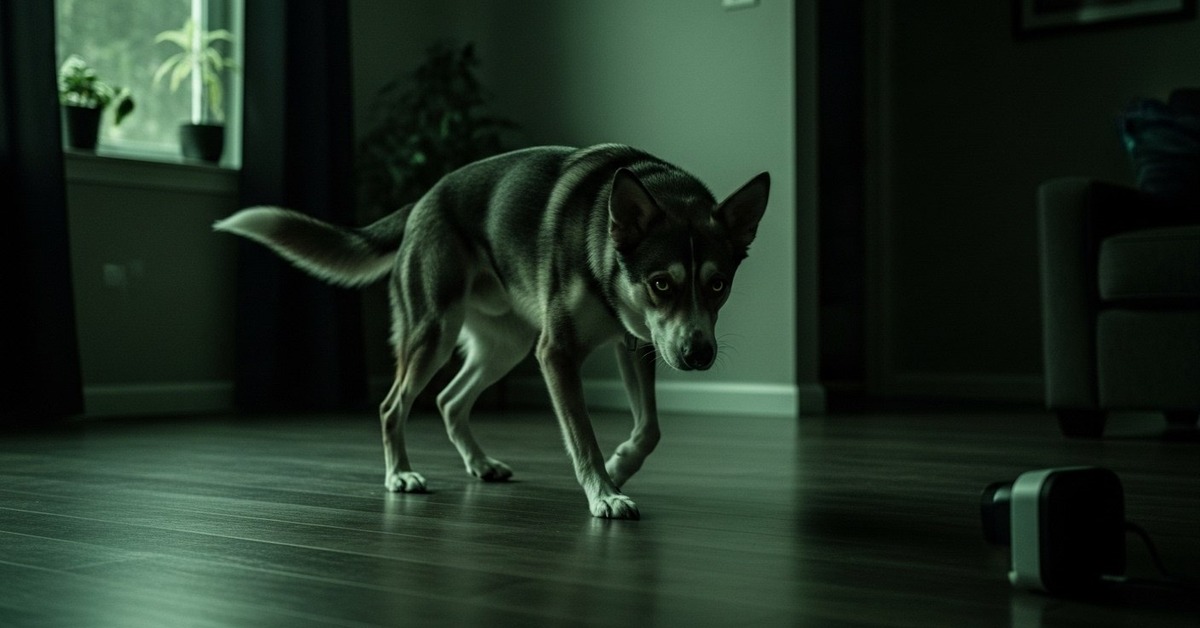
Here’s the thing about willpower — we’ve spent centuries assuming it belongs to us. A paralyzed dog recovery aquatic therapy case in a quiet living room just complicated that assumption. At 2 a.m., with no audience and no reward, a dog working through partial spinal paralysis got up and ran her own drills. The cameras her family installed for safety caught something nobody had a protocol for.
She’d been attending exhausting hydrotherapy sessions for weeks — the kind that demand everything from a body that can barely hold itself upright on land. What the overnight footage showed wasn’t a restless animal. It was a creature working through movement sequences, alone, in the dark, with no one watching. It stopped her owners cold. It’s the kind of thing that makes you reconsider what willpower actually means — and who taught it to whom.

When the Spine Fails: What Paralysis Does to a Dog
Canine spinal injuries are more common than most pet owners realize. According to research compiled by the intervertebral disc disease (IVDD) literature reviewed at Colorado State University’s Veterinary Teaching Hospital in 2021, disc disease accounts for the majority of spinal cord injuries seen in clinical practice — with dachshunds, French bulldogs, and corgis at disproportionate risk due to their body structure. Mixed breeds and larger dogs aren’t immune either. When the spinal cord is compressed or partially severed, the neurological signals that control limb movement don’t simply stop — they fragment. A dog might retain sensation without function, or movement without coordination. The gap between what a dog’s brain wants and what its body can execute becomes the central drama of recovery.
Partial paralysis — as opposed to complete — carries a different prognosis. Any voluntary movement or deep pain sensation is, in veterinary neurology, genuinely meaningful. Rehabilitation specialists at the University of Tennessee’s Veterinary Medical Center have documented, since at least 2018, that dogs retaining deep pain response show measurably better functional outcomes than those who don’t. The nervous system, it turns out, has a remarkable capacity to reroute — but only if it’s consistently stimulated. That’s where hydrotherapy enters the picture.
Water changes everything. Buoyancy removes the crushing weight of gravity from limbs that can barely hold themselves up on land. A dog that collapses immediately on a mat will often sustain controlled movement in a warm therapeutic pool for ten, fifteen, even twenty minutes. That’s not a trick. That’s neuroscience working in real time.
Hydrotherapy and the Science of Rewiring Movement
Aquatic rehabilitation for dogs has roots in human physical therapy, borrowing principles developed for post-surgical recovery and neurological rehabilitation throughout the latter half of the 20th century. Today it’s a formalized discipline. The remarkable world of animal resilience and adaptation extends well into clinical settings, where veterinary physiotherapists now use underwater treadmills, resistance jets, and temperature-controlled pools calibrated specifically for spinal injury cases. The Canine Rehabilitation Institute, one of the leading certifying bodies in the field, has trained practitioners across 30 countries since its founding in 2000. It’s a recognized specialty with its own evidence base, its own equipment manufacturers, and its own published protocols.
Why does the mechanism work so well? Because it operates on multiple levels at once. Water at approximately 32–34°C (89–93°F) relaxes muscle spasticity — the involuntary tightening that often accompanies neurological injury and actively resists recovery. The hydrostatic pressure stimulates proprioception (researchers actually call this “somatosensory re-patterning”), the body’s internal sense of where its limbs are in space, which in paralyzed dogs is severely disrupted. Every session in the water sends thousands of micro-signals back through damaged pathways, asking the nervous system to remember a pattern it once ran automatically. In a 2020 study published by the European Journal of Veterinary Internal Medicine, dogs undergoing consistent aquatic therapy three to five times per week showed statistically significant improvement in limb coordination within four to six weeks — compared to minimal gains in control groups receiving rest alone.
Consistent is the operative word. The nervous system requires repetition the way a language learner requires vocabulary — in volume, over time, without negotiation. That’s what makes this particular dog’s midnight behavior so striking. She wasn’t just showing up for scheduled rehabilitation. She was adding unsupervised sessions in the dead of night, with no therapist, no treadmill, and no one keeping count.
What the Camera Caught Nobody Expected to See
Turns out the most significant moment in her recovery wasn’t captured in a clinical setting.
The footage is quiet. No dramatic scoring, no intervention, no human presence guiding her forward. The living room is dark except for ambient light seeping in from outside. And in that darkness, this dog — carried to her water therapy sessions, still struggling to hold a standing position on dry land — is moving. Carefully, deliberately, with the particular concentration of a creature that has decided something. Researchers studying animal cognition at National Geographic have long argued that dogs demonstrate goal-directed behavior that can’t be explained purely by reflex or conditioned response. What this footage adds to that conversation is a question nobody fully knows how to answer: at what point does persistence become a decision?
Veterinary behaviorists at Tufts University’s Cummings School of Veterinary Medicine, in studies published between 2017 and 2022, noted that dogs with mobility impairment frequently exhibit frustration behaviors — attempts to engage in physical activity their bodies can no longer sustain. But frustration and practice are different categories. Frustration is reactive. Practice is directed. What the camera captured looked, to anyone watching, like the second one. Dogs don’t process recovery the way humans do; they don’t read discharge summaries or search forums for success stories. The paralyzed dog recovery aquatic therapy model depends on external intervention — the water, the therapist, the treadmill. Nobody designed a protocol for what this dog was doing on her own.
A recovery built on what no one designed is, frankly, the most inconvenient kind for researchers to explain — and probably the most important.
That gap in the protocol is worth sitting with. If animals self-initiate therapeutic movement in the absence of instruction, the implications for rehabilitation design are real. You’d want to build home environments that support it. You’d want to track it. You’d want to know how many dogs are doing this in the dark, without anyone watching.
Paralyzed Dog Recovery: What the Numbers Actually Say
Recovery statistics for canine spinal injury are, depending on your angle, either encouraging or sobering. A 2019 systematic review by researchers at the Royal Veterinary College in London analyzed outcomes across 22 published studies covering paralyzed dogs treated with both surgical and conservative management. Dogs with partial paralysis who received structured rehabilitation — including aquatic therapy — regained functional ambulation in 60 to 70 percent of cases. That’s a meaningful majority. Timing matters enormously; dogs who begin rehabilitation within 72 hours of injury show substantially better outcomes than those who start weeks later. The 30 to 40 percent who don’t regain full function aren’t failures of the therapy — they’re often cases where neurological damage was simply too extensive, or rehabilitation began too late.
And at the cellular level, what makes recovery possible at all is neuroplasticity — the nervous system’s capacity to form new pathways around damaged ones. This isn’t unique to dogs. It’s the same mechanism driving human stroke rehabilitation, spinal cord injury recovery programs, and post-surgical physical therapy protocols worldwide. But dogs may have a specific advantage: they don’t catastrophize. A dog in a hydrotherapy session isn’t worried about whether it will work. It’s simply in the water, moving. That absence of psychological resistance may be part of why paralyzed dog recovery aquatic therapy outcomes in veterinary medicine are, in some respects, more consistent than equivalent human rehabilitation timelines.
Rehabilitation specialists are now designing what they call “enriched recovery environments” — home setups with non-slip mats, low-threshold ramps, and furniture arrangements that invite a dog to shift weight and practice balance throughout the day. This dog’s midnight footage didn’t come from a designed protocol. But it describes exactly what those protocols are trying to engineer.
How It Unfolded
- 1990s — Aquatic therapy for dogs begins emerging as a clinical practice, borrowing directly from human hydrotherapy protocols developed for neurological recovery.
- 2000 — The Canine Rehabilitation Institute is founded, establishing one of the first formal certification programs for veterinary physiotherapists specializing in aquatic and land-based rehabilitation.
- 2019 — A systematic review by the Royal Veterinary College in London consolidates evidence across 22 studies, confirming 60–70% functional recovery rates for dogs with partial paralysis undergoing structured aquatic therapy.
- 2023–2024 — Home monitoring via overnight cameras begins revealing spontaneous self-directed therapeutic movement in recovering dogs — behavior that was occurring but had never been formally documented or studied.
By the Numbers
- 60–70% of dogs with partial spinal paralysis regain functional ambulation with consistent aquatic rehabilitation (Royal Veterinary College systematic review, 2019)
- 72 hours: the critical window after injury during which early rehabilitation most dramatically improves long-term outcomes
- 32–34°C (89–93°F): optimal water temperature range for canine hydrotherapy, calibrated to reduce muscle spasticity without elevating core temperature
- 3–5 sessions per week: minimum frequency shown to produce statistically significant improvement in limb coordination within four to six weeks (European Journal of Veterinary Internal Medicine, 2020)
- 30 countries where Canine Rehabilitation Institute-certified practitioners now operate, a figure that has tripled since 2010
Field Notes
- In 2022, a team at the University of Tennessee’s Veterinary Medical Center documented that dogs retaining any deep pain sensation below the injury site — even a single paw withdrawal reflex — showed dramatically better outcomes than fully anesthetic cases. That single signal, invisible to a casual observer, can mean the difference between a dog that walks again and one that doesn’t.
- Underwater treadmills, not pools, are now considered the gold standard for early-stage canine spinal rehabilitation — because they allow precise speed control and gait analysis that open-water swimming can’t provide. Most pet owners don’t know the two aren’t interchangeable.
- Some dogs undergoing spinal rehabilitation begin showing voluntary practice behaviors at home — self-initiated standing attempts, weight-shifting, or repeated short walks — that their owners mistake for restlessness. Veterinary physiotherapists now actively ask about overnight behavior as a rehabilitation progress indicator.
- Researchers still can’t fully explain why some dogs with identical injury profiles and identical treatment protocols recover fully while others plateau. Whether psychological factors — what some behaviorists cautiously call “drive” — play a measurable role in neurological recovery remains an open and genuinely contested question in veterinary rehabilitation science.
Frequently Asked Questions
Q: How effective is paralyzed dog recovery through aquatic therapy compared to rest alone?
Significantly more effective. A 2020 study in the European Journal of Veterinary Internal Medicine found that dogs receiving aquatic therapy three to five times per week showed measurable improvements in limb coordination within four to six weeks, while control groups receiving rest alone showed minimal gains. The Royal Veterinary College’s 2019 systematic review placed functional recovery rates between 60 and 70 percent for dogs with partial paralysis in structured rehabilitation programs.
Q: How long does canine spinal rehabilitation typically take before results are visible?
Most veterinary physiotherapists set an honest expectation of four to eight weeks of consistent therapy before functional ambulation improvements become visible. Early signs of progress often include improved balance during standing, better weight distribution, and increased voluntary movement attempts rather than full walking. The 72-hour post-injury window for beginning therapy is considered critical to long-term outcomes.
Q: Do dogs understand what they’re doing when they practice movement during recovery?
This is where the science gets genuinely uncertain. Dogs don’t “understand” recovery in a conscious, narrative sense. But veterinary behaviorists at Tufts University have documented goal-directed movement behavior in mobility-impaired dogs that can’t be explained by simple reflex or conditioned response alone. What looks like deliberate practice may reflect a deeper neurological drive — the body’s attempt to re-establish pathways it senses are missing. Whether that constitutes intention in any meaningful sense is a question researchers haven’t resolved.
Editor’s Take — Alex Morgan
What unsettles me about this story isn’t the footage itself — it’s the timing. 2 a.m. means nobody asked her to. Nobody was there to reward her. The entire framework of animal training assumes external motivation: treat, praise, cue. This dog dismantled that framework at 2 in the morning in a dark living room. The rehabilitation science is solid and well-documented. But no protocol designed the behavior this camera caught. That gap — between what we’ve built and what she did on her own — is where the real question lives.
There’s a version of this story that’s just a feel-good video clip — paralyzed dog walks, everyone cries, share button gets pressed. But the footage carries something heavier than that. It sits at the intersection of neuroscience, behavioral research, and a question nobody has cleanly answered: what drives a creature to work toward recovery when it has no concept of the goal? The rehabilitation science says consistency is everything. This dog understood that before anyone told her. What does it mean that a species we domesticated ten thousand years ago is still, in certain quiet moments, teaching us something about the will to persist?