



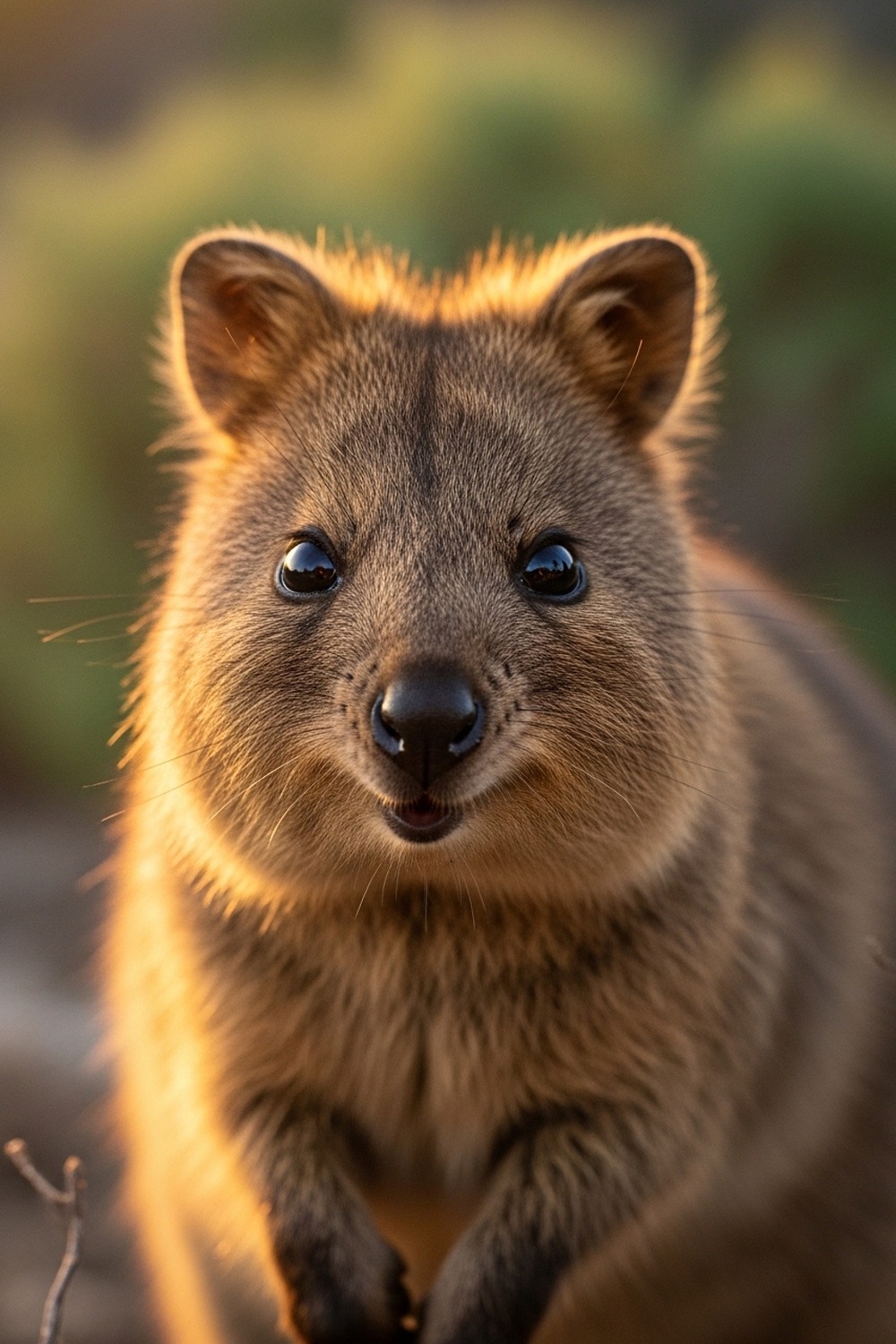
Here’s the thing about the quokka happiest animal on the internet: it shouldn’t exist. Not the animal — the phenomenon. A wild marsupial, roughly the weight of a bag of sugar, that walks up to strangers and holds eye contact while they photograph it. No flight response. No threat display. Just that upturned mouth and a slight tilt of the head, like you’ve arrived exactly on schedule. Evolution doesn’t usually build this. Rottnest Island somehow did.
Twelve kilometers off the Fremantle coast in Western Australia, roughly 10,000 quokkas roam free among tourists, bike trails, and beach bars. They’re impossible to avoid, and nobody tries. But beneath the selfies and the viral grins is an animal with a genuinely complex survival story — one that researchers are still piecing together, and one that’s a lot more urgent than the smile suggests.

The Quokka Happiest Animal: More Than a Pretty Face
Quokkas (Setonix brachyurus) belong to the family Macropodidae — the same group as kangaroos and wallabies — but they occupy their own genus, Setonix, entirely alone. That taxonomic isolation is telling. According to the quokka’s Wikipedia entry, fossil evidence suggests the species has remained largely unchanged for at least 50,000 years — a genuinely ancient lineage shaped by millions of years of island and coastal scrubland life. The University of Queensland’s ecology department has tracked Rottnest Island’s population since the early 2000s, documenting how the animals use their habitat with surprising precision: returning to the same shelter sites, following the same foraging corridors, season after season. Adults typically weigh between 2.5 and 5 kilograms, with body length running 40 to 54 centimeters and a thick, tapered tail adding another 25 to 30 centimeters.
That tail isn’t decorative. When food is scarce — during dry Australian summers when the island’s vegetation dries to a crisp — quokkas mobilize fat stored directly at the tail’s base. Think of it as a marsupial jerky bag, biologically sealed and permanently attached. Their bodies prioritize storage because Rottnest has no permanent freshwater streams. These animals extract moisture almost entirely from the plants they eat: succulents, shrubs, grasses, and whatever fallen fruit they can find. They can go without free water for weeks. That’s not helplessness. That’s engineering.
Dutch explorer Willem de Vlamingh landed on Rottnest in 1696 and decided the animals he saw were enormous rats. He named the island Rotte nest — Dutch for “rats’ nest.” Three centuries of visitors have disagreed with his assessment. The quokkas were clearly unimpressed by his opinion either way.
Island Life Shaped Every Behavioral Quirk They Have
Rottnest Island is predator-free. No foxes. No feral cats. No dingoes. On the Australian mainland and on Bald Island — the only other significant quokka population — the animals are shy, nocturnal, and hard to spot, hiding in dense Melaleuca swamps and moving mostly after dark. That absence of predators on Rottnest has rewired quokka behavior in ways that strike mainland biologists as almost reckless: on Rottnest, they walk up to strangers and inspect their shoes. The behavioral divergence between island and mainland populations is a fascinating case study in how quickly evolution can shift when selective pressure is removed — the same loosening of fear you sometimes see in species that have found a genuine refuge. It mirrors what researchers have documented in creatures like the gliding mammals of Southeast Asia that have similarly adapted to life in ecological pockets with limited predation pressure.
Western Australia’s Department of Biodiversity, Conservation and Attractions (DBCA) manages Rottnest Island as an A-class reserve, regulating human-quokka interaction with genuine seriousness. Feeding quokkas is illegal and carries fines of up to AUD $300. Touching them is prohibited. The rules exist because quokkas that associate humans with food quickly become dependent, lose foraging range, and develop nutritional deficiencies from processed snacks. In 2018, DBCA officers documented a spike in quokkas presenting with thiamine deficiency — a B-vitamin shortage — traced partly to bread and chips given by tourists who thought they were being kind.
Still, the animals approach. They hover near café tables. They investigate camera bags. A quokka in 2019 famously photobombed a professional sports photographer during a beach volleyball event on Rottnest, inserting itself into six consecutive frames with what witnesses described as apparent intention. It probably wasn’t intentional. But it was extremely on brand.
Conservation Status and the Threat No One Talks About
Why does this matter? Because the quokka is listed as Vulnerable on the IUCN Red List — a designation that tends to get completely lost in the noise of their internet fame.
Mainland populations have collapsed dramatically since European colonization. Before 1788, quokkas ranged across much of southwestern Australia. By the late twentieth century, they’d been pushed into a handful of fragmented swamp habitats in the jarrah forest regions and a thin coastal strip near Albany. The culprits are familiar: land clearing for agriculture, urban expansion, and the introduction of European red foxes, which arrived in Western Australia by the 1930s and devastated low-lying marsupial populations with terrifying efficiency. According to a 2021 assessment by the Australian Wildlife Conservancy, mainland quokka numbers may be as low as 4,000 individuals outside island populations. National Geographic has covered the broader crisis of Australia’s small marsupials in depth — their quokka profile details how the species sits at the intersection of every major threat facing Australian wildlife today: habitat loss, invasive predators, and climate-driven drought.
Treating Rottnest’s 10,000-strong population as evidence of abundance is exactly the kind of mistake that lets a species slip quietly toward collapse. Those animals exist in a kind of ecological bubble — protected by water on all sides, managed by a conservation authority, sustained by a landscape shaped partly by tourism infrastructure. They’re thriving. The mainland quokkas are not. And the gap between the two populations is widening as climate change extends drought periods across southwestern Australia, degrading the dense, wet scrubland that mainland quokkas depend on.
Rottnest and Bald Island together hold perhaps 90% of the world’s remaining quokka population. If something disrupts those island ecosystems — a disease outbreak, a catastrophic wildfire, a single feral predator introduction — the species faces a very different future. The smile doesn’t change. The math is grim.
The Quokka Happiest Animal and the Science of the Smile
Animal welfare researchers at Curtin University in Perth began examining quokka facial musculature and behavior in a 2020 study aimed at understanding whether the upturned mouth position correlates with any measurable physiological state. The quokka’s facial anatomy is fixed — those upturned lip corners are structural, not expressive in the way human smiles are expressive. Cortisol measurements from fecal samples collected in 2020 and 2021 showed Rottnest individuals averaging significantly lower stress markers than mainland counterparts sampled from fox-active habitat near Collie, Western Australia. Behavioral indicators, too, suggest Rottnest quokkas exhibit low baseline stress hormones compared to mainland populations, which researchers attribute to the near-total absence of predation pressure.
What this means is that quokkas on Rottnest aren’t just appearing relaxed — they may genuinely be. The fixed smile maps, imperfectly but meaningfully, onto a real physiological state. Evolution built an animal that looks joyful, then placed it in conditions where it actually experiences something closer to calm than most wild animals ever do. That’s a remarkable convergence. It also tells us something uncomfortable about the mainland population: those quokkas are living under chronic stress, navigating a landscape full of predators, dwindling water, and shrinking cover. Same face. Completely different internal life. The distance between those two realities is the most honest thing the data has produced.
Curtin’s team also noted that Rottnest quokkas show elevated exploratory behavior — approaching novel objects, investigating unfamiliar sounds — which in mammals is typically a marker of psychological security (researchers actually call this “neophilia,” and it’s one of the more reliable behavioral proxies for low anxiety states). An anxious animal doesn’t investigate. A relaxed one does. The quokka that walks up to your camera isn’t brave. It just genuinely doesn’t feel threatened.
What Tourism Does — and What Visitors Get Wrong
Rottnest Island receives approximately 800,000 visitors per year, making it one of the most-visited islands in Australia. Surveys conducted by the Rottnest Island Authority in 2022 put the figure at around 43% of visitors citing quokka encounters as their primary reason for making the trip. That’s a remarkable conservation dividend: charismatic megafauna driving tourism revenue that funds the very reserve protecting them. The island’s management budget, partly sustained by visitor fees, supports feral plant control, predator monitoring, and quokka health surveillance. Tourism and conservation are, unusually, pulling in the same direction.
And yet the quokka selfie phenomenon has a real shadow side. In 2021, Rottnest Island Authority data showed a 34% increase in quokka-human interaction incidents over the previous five years — mostly tourists attempting to hold, touch, or hand-feed animals despite signage and fines. Social media creates a feedback loop: someone posts a contact photo, it gets thousands of likes, and the next visitor tries to replicate it. The animals habituate to hands reaching toward them, which researchers describe as a form of behavioral trap. The quokkas aren’t harmed in the moment. But the cumulative effect of thousands of interactions per season shifts their behavior in ways that reduce their long-term fitness.
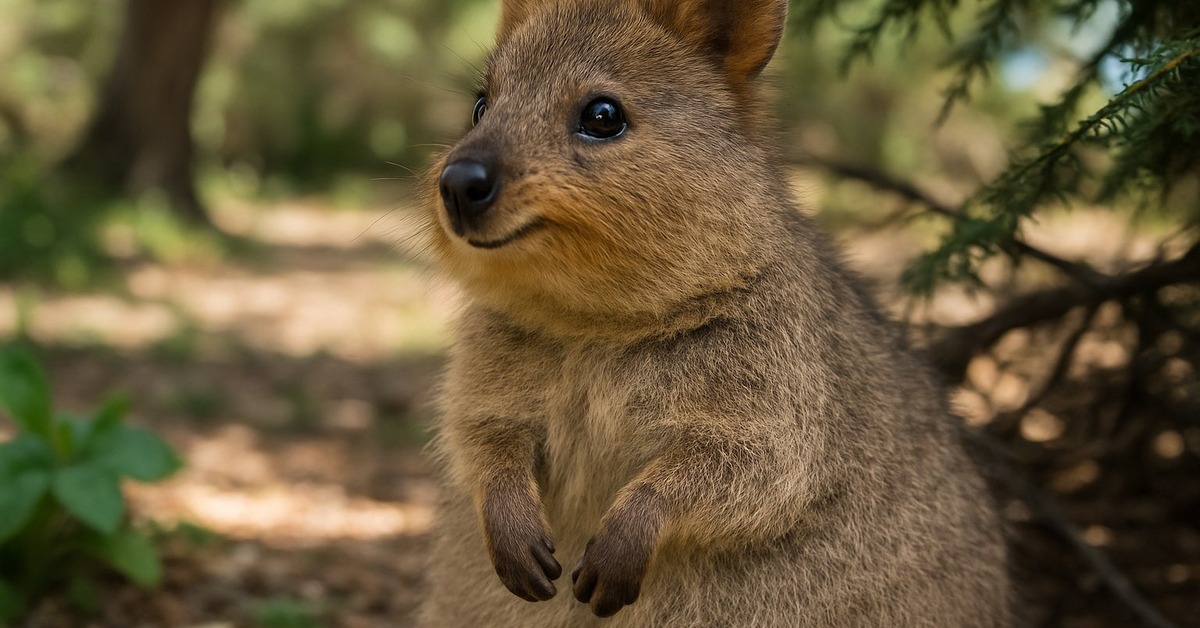
The fix isn’t to stop visiting. Sit on the ground at quokka height instead. Wait. They’ll come to you — and the selfie you get without touching them is genuinely better. The animal is alert, upright, present. The grin is there regardless. It was always going to be there.

Where to See This
- Rottnest Island, Western Australia, Australia — accessible by ferry from Fremantle, Perth, or Hillarys. Best time to visit is March through November, when summer heat is reduced and quokkas are more active during daylight hours. Book ferries through Rottnest Express or SeaLink.
- Bald Island Nature Reserve, near Albany in southwestern Australia, holds a smaller but significant mainland-adjacent quokka population. Access is restricted; contact the Department of Biodiversity, Conservation and Attractions (DBCA) at dbca.wa.gov.au for guided research access.
- Read the Australian Wildlife Conservancy’s ongoing quokka recovery reports at australianwildlife.org — they document both island and mainland population work, including predator-free fencing projects that may eventually allow mainland reintroduction at scale.
By the Numbers
- Approximately 10,000 quokkas on Rottnest Island represent roughly 80–90% of the global island population (DBCA, 2022).
- Mainland numbers are estimated at fewer than 4,000 individuals — down from a range spanning hundreds of thousands of square kilometers before 1788 (Australian Wildlife Conservancy, 2021).
- 800,000 visitors arrive on Rottnest each year; 43% named quokka encounters as their main reason for coming (Rottnest Island Authority, 2022).
- European red foxes reached Western Australia by the early 1930s and contributed to an estimated 90%+ collapse of small marsupial populations across the southwest in under 60 years.
- Without free water, quokkas can survive up to 30 days, pulling hydration almost entirely from plant material during dry-season conditions on Rottnest.
Field Notes
- In 2019, researchers from the University of Western Australia documented quokka mothers temporarily evicting joeys from their pouches during extreme heat events — a stress response never formally recorded on Rottnest before. Observed on four separate occasions during a January heatwave, the behavior has since been incorporated into island heat-risk monitoring protocols.
- Quokkas are among the few macropods that can climb low shrubs and small trees — up to about one meter — to reach leaves and fruit. Most visitors never see this because it typically happens at dawn.
- Joey development follows the standard macropod pattern: a bean-sized newborn crawls unaided to the pouch immediately after birth, developing internally for roughly six months before first emerging. A mother can simultaneously support an embryo in diapause, a joey in the pouch, and a young-at-foot outside it.
- Researchers still can’t fully explain why Rottnest’s quokka population hasn’t grown beyond approximately 10,000 individuals despite decades of predator-free conditions. Some suspect a density-dependent food ceiling; others point to disease cycling. The population ceiling remains an open question in island marsupial ecology.
Frequently Asked Questions
Q: Why is the quokka called the happiest animal in the world?
The quokka happiest animal label comes from its facial anatomy: the upturned corners of its mouth create a permanent smile-like expression that reads as joyful to human observers. The expression isn’t emotional in origin — it’s structural, built into the shape of the face. But research from Curtin University in 2020 suggests Rottnest Island quokkas also show genuinely low stress hormones, meaning the smile and the physiological state aren’t entirely disconnected.
Q: Can you touch or feed a quokka on Rottnest Island?
No — both are illegal under Western Australian wildlife protection law. Feeding quokkas processed food can cause thiamine deficiency and long-term nutritional harm. Touching them disrupts natural behavior and can cause stress injuries if they attempt to flee. Fines of up to AUD $300 apply. Sit quietly at ground level and let the animal approach on its own terms — which it almost always will.
Q: Are quokkas endangered?
Quokkas are listed as Vulnerable — not Endangered — by the IUCN, but that classification masks a serious mainland population crisis. Island populations on Rottnest and Bald Island are relatively stable, but mainland numbers are critically low. Fox predation, land clearing, and climate-driven habitat loss have reduced mainland quokkas to small, fragmented pockets, and those populations continue to decline without active intervention.
Editor’s Take — Alex Morgan
The quokka happiest animal story is one of conservation’s great optical illusions. The image that circulates — beaming marsupial, tourist grinning, Rottnest sunshine — is real. So is the population collapse happening forty kilometers east on the mainland, in wet scrub that most Australians have never visited and most tourists will never see. Those cortisol measurements stay with me: same species, same face, completely different internal state. What we’ve accidentally built on Rottnest is a proof of concept. The question is whether anyone uses it.
Rottnest Island is twelve kilometers of limestone and saltbush sitting in the Indian Ocean, and on it lives an animal that has somehow become a global symbol of uncomplicated happiness. The symbol isn’t wrong — but it’s incomplete. Fifty thousand years of island isolation, predator pressure, and drought built that smile. It wasn’t made for Instagram. Next time that grin appears in your feed, consider what it cost to make — and what it would cost to lose.


