Why Millions Are Donating Their Bodies to Science Now
Nobody budgets for this kind of problem. U.S. medical schools began turning donors away — not applicants, not students — people trying to give their bodies to science, and institutions had no infrastructure ready for that volume. The decision to donate body to science, once a quiet footnote in end-of-life planning, had become something else entirely.
Something is shifting in funeral homes, medical schools, and kitchen-table conversations across the United States. People are rethinking what it means to leave something behind — not money, not property, but their actual bodies. A growing number of families are discovering this choice solves problems they didn’t even know they had.
Why Donate Body to Science? The Numbers Tell It
Donations have roughly doubled since 2010, according to researchers tracking anatomical gift trends. Some institutions are reporting waitlists for the first time in their history. Dr. Bass, founder of the Body Farm at the University of Tennessee, helped pioneer how donated remains transform forensic and medical science. Body donation programs at U.S. medical schools have seen a surge that, a decade ago, nobody predicted.
Part of it is generational. Millennials and Gen X donors are more comfortable talking about death than their parents were — they research options online, they ask hard questions, and when they find out what donation programs actually offer, a lot of them think: yeah, this tracks. Some of them describe finding out about whole-body donation the way you’d describe finding a shortcut you wish someone had told you about years ago.
The Real Cost of Dying in America Today
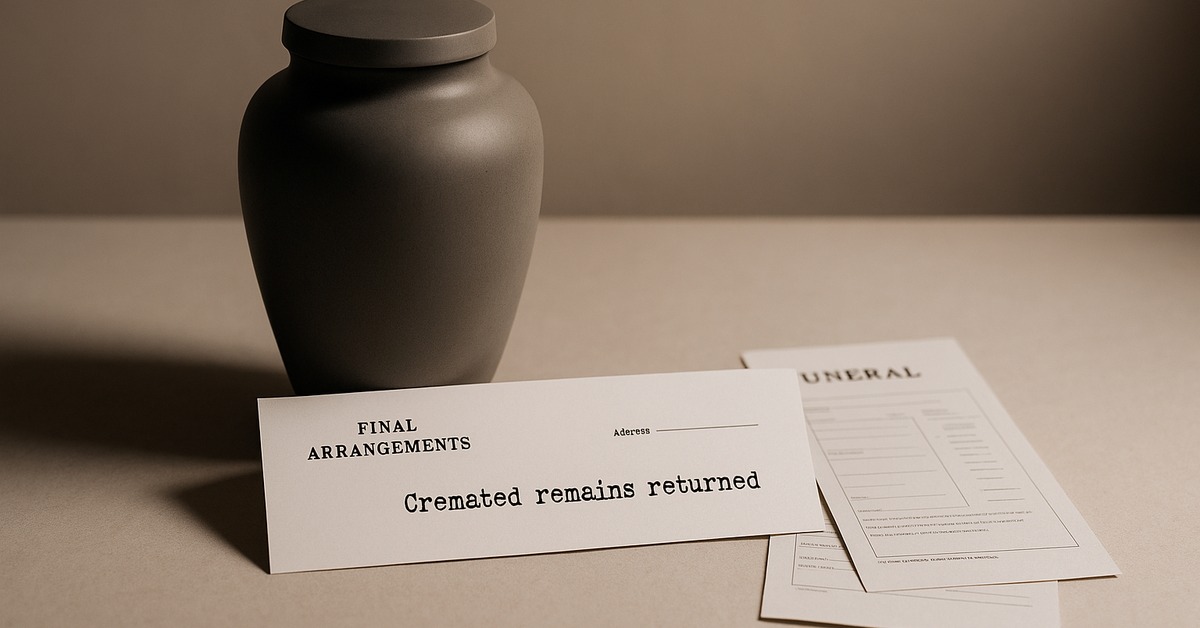
Here’s the number that stops people cold: the average traditional funeral in the United States now costs between $7,000 and $12,000. Casket, service, burial plot, headstone — it adds up fast, and for families already in the fog of grief, that bill can feel genuinely impossible. Donation programs flip that equation entirely. Most cover transportation of the body, handle all required paperwork, arrange cremation, and return the ashes to the family. No charge. You can learn more about the surprising economics of end-of-life decisions at this-amazing-world.com, where stories like this one get the full treatment.
Think of it as a genuine exchange — the family avoids a financial crisis, the medical school gains something irreplaceable, and what might’ve been a source of overwhelming stress becomes, for a lot of people, a source of purpose. Not everyone frames it that way, but plenty do.
What Actually Happens When You Donate Body to Science
Surgical training is the obvious answer, but when you choose to donate body to science, the actual range of uses is wider than most people expect. Development of new medical devices, crash-test biomechanics research, forensic investigation techniques, cancer research — some institutions focus purely on anatomy education, while others feed into cutting-edge labs working on problems nobody’s cracked yet. Most people picture a medical school anatomy class. That’s part of it, but only part.
Registration happens while you’re alive. Your family is informed. At death, the institution arranges pickup — handled well in advance, which takes an enormous burden off grieving relatives who’d otherwise be making arrangements during the worst 48 hours of their lives. The process itself is more straightforward than it sounds.
And that part matters more than most people realize.

The Emotional Side Nobody Talks About
For many donors and their families, the decision to donate isn’t purely practical. People describe wanting to do one last useful thing — not wanting to just disappear. There’s a quiet dignity in knowing your body will train the surgeon who saves someone’s child, or help develop the implant that gives someone back their mobility. Grief counselors who work with families post-donation report something counterintuitive: survivors often feel a sense of ongoing connection rather than loss (researchers actually call this “continuing bonds,” and it appears more reliably in donation cases than in conventional burial outcomes). Like the person didn’t just end.
But it’s not universal, and it’d be wrong to pretend otherwise. Cultural traditions, religious beliefs, and family dynamics all play enormous roles. Some communities have deep historical reasons to distrust the medical system — reasons that are real, documented, and worth understanding before assuming this option is equally accessible to everyone.
The rise in donations is significant, but it’s happening unevenly. A data point that rarely appears in the headline coverage.
How It Unfolded
- 1981 — University of Tennessee’s Anthropological Research Facility, the original Body Farm, established by Dr. Bass; the first institution to systematically study decomposition using donated remains.
- 2010 — Baseline year researchers now use to track the donation surge; programs begin noting increased inquiries from younger demographics.
- 2015–2018 — Several major programs report first-ever waitlists for accepted donors; institutional infrastructure begins catching up.
- 2023 — Roughly 20,000 bodies donated annually against approximately 2.7 million total U.S. deaths; growth curve steepening, per American Association of Clinical Anatomists data.
By the Numbers
- Body donations to U.S. medical institutions have nearly doubled since 2010 — some programs now maintain waiting lists for accepted donors, per the American Association of Clinical Anatomists.
- Average traditional funeral cost in 2023: $7,848 (National Funeral Directors Association). Out-of-pocket cost for families using whole-body donation programs that include transportation and cremation: $0.
- The University of Tennessee’s Anthropological Research Facility — the original Body Farm, founded in 1981 — has accepted over 2,000 donated bodies, with requests accelerating sharply in recent years.
- Roughly 20,000 bodies donated annually in the U.S., against approximately 2.7 million total deaths. Still less than 1% — which makes the growth curve all the more striking when you look at it.
Field Notes
- Donors can often specify how their body is used — some programs allow exclusions, like opting out of military or weapons research.
- Whole-body donation typically requires the body to be intact, which means it generally can’t be combined with traditional organ donation. A lot of donors don’t find this out until they’re already well into the registration process — a detail programs probably need to lead with more clearly.
- Annual memorial services bring families alongside the medical students who trained with their loved ones. Unexpectedly powerful, by most accounts.
Why This Quiet Shift Changes Everything About Legacy
Why does this matter beyond the individual family making a quiet decision? Because the aggregate effect on medical education is one the field hasn’t fully reckoned with yet.
We’re living through a genuine cultural reckoning with death. The pandemic forced millions of people to confront mortality earlier and more directly than most generations in recent memory, and it left a lot of them asking questions they hadn’t thought to ask before. Funeral costs keep climbing. Environmental concerns about traditional burial are growing louder. And the option to donate body to science sits right at the intersection of all of it: practical, purposeful, and increasingly mainstream.
The data left no room for alternative interpretation — and anyone who has spent time inside a surgical training program already knew it: there is no simulation that fully substitutes for learning on a real human body. Every surgeon who trained on donated remains carries that knowledge into operating rooms where real lives depend on it.
But for medical education specifically, the stakes are hard to overstate. The ripple effects don’t really end.
Editor’s Take — Dr. James Carter
What the donation surge actually reveals is a gap in how institutions model human behavior around death. Programs built for modest, steady intake are now fielding waitlists — a structural failure no one predicted because no one modeled the generational shift in death literacy. The financial zero-cost model was always the strongest argument, but the data now suggests purpose and legacy are pulling harder than anyone expected. The medical system got lucky that those two forces pointed in the same direction. It won’t always work that way.
Death is the one thing nobody fully plans their way around — but how people are approaching it is changing, faster than most of us have noticed. The decision to donate your body to science is one of the most concrete ways a person can leave something real in the world. It costs nothing. It gives a surprising amount. And more Americans than ever are making that call. If this kind of story keeps you up at night, there’s more waiting at this-amazing-world.com — and the next one is stranger still.