How a Grizzly Bear Survives 5 Months Without Food or Water
Grizzly bear hibernation biochemistry poses a question medicine hasn’t answered yet: how does a 700-pound animal go five months without food or water and walk out faster than it walked in? Not weaker. Not disoriented. Faster. Every human patient confined to bed for that duration loses muscle, loses coordination, loses ground. The bear loses almost none of it — and the mechanism responsible is stranger than most people realize.
Every autumn, across the mountain ranges of North America, grizzly bears disappear into dens and essentially turn themselves off. No eating. No drinking. Minimal breathing. And yet, when spring arrives, a 700-pound animal emerges lean, coordinated, and functionally intact. What has occupied researchers for decades isn’t just how the bear survives — it’s how it comes out the other side better than almost any human patient after five months of bed rest.
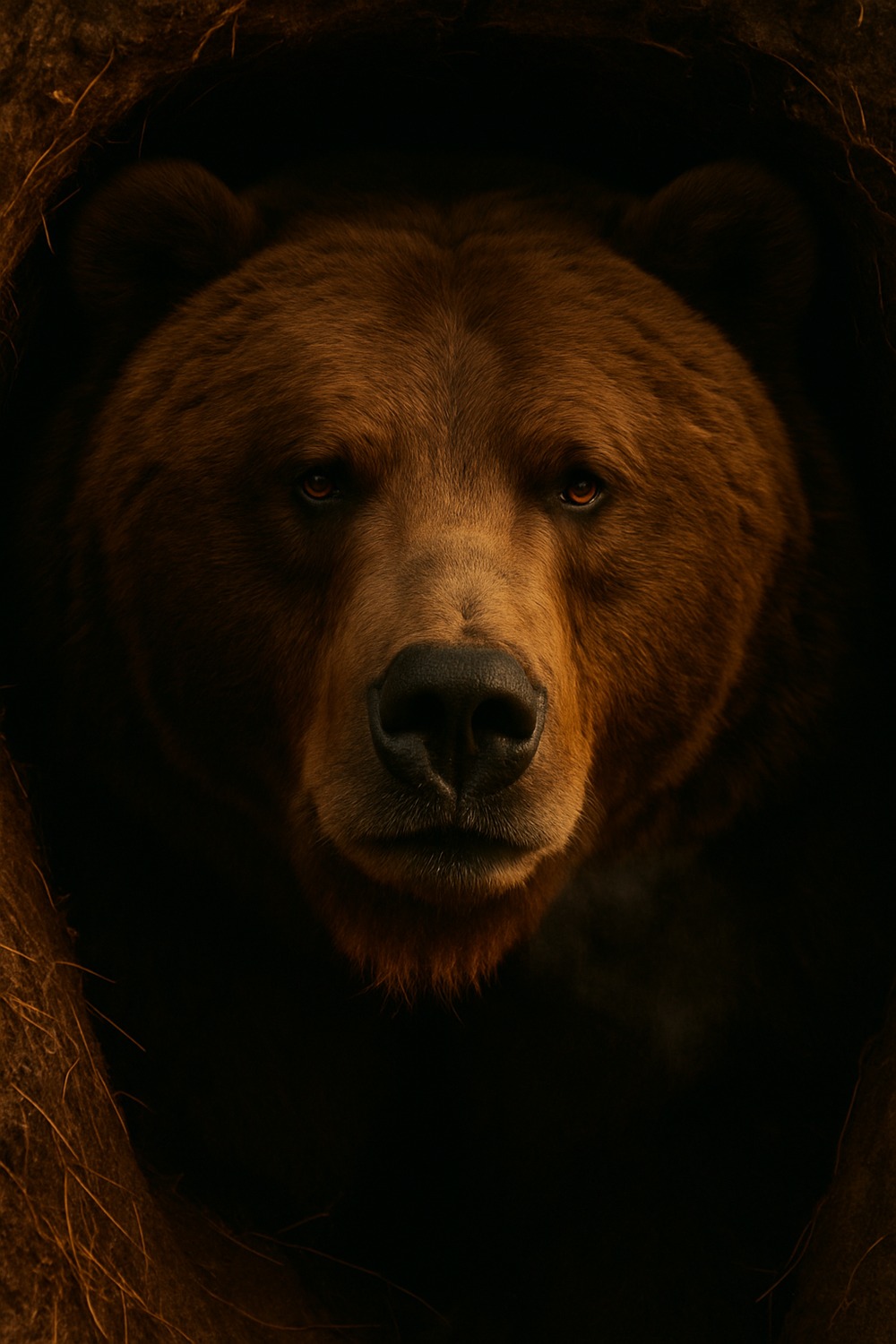
The Biochemistry of Bear Hibernation, Explained
Calling it “hibernation” undersells what’s actually happening. A grizzly’s hibernation isn’t sleep — it’s a carefully orchestrated metabolic state that researchers now call “torpor,” though even that word feels inadequate. Dr. Brian Barnes at the University of Alaska Fairbanks Institute of Arctic Biology has studied bear physiology since the 1980s, documenting how a grizzly’s metabolic rate drops to roughly 25 percent of its normal summer level during peak torpor. Body temperature falls only modestly — perhaps 4 to 6 degrees Celsius — which distinguishes bears from “true hibernators” like ground squirrels whose core temperature plummets to near-freezing. That distinction matters enormously. A grizzly can rouse from torpor in minutes if threatened; a frozen ground squirrel needs hours. Understanding the physiology of mammalian hibernation reveals just how radically different bear torpor is from what most people imagine.
The grizzly is never fully offline. It’s running a reduced program — conserving energy while keeping critical systems ticking at low power. And here’s the thing: as the bear burns through fat reserves — sometimes losing 30 percent of its body weight over winter — that fat oxidation generates something remarkable: metabolic water. For every gram of fat broken down, the body produces slightly more than a gram of water as a chemical byproduct. The bear isn’t slowly dehydrating in a snowbound den. It’s manufacturing its own hydration through pure chemistry. No stream. No snowmelt. Just the controlled combustion of fat stores accumulated through months of hyperphagia — the eating frenzy of autumn where a grizzly may consume 20,000 calories a day.
Field researchers working in Yellowstone and the Selkirk Mountains have documented bears entering dens in late October or early November and not emerging until late March or April. That’s up to 150 days of metabolic self-sufficiency. No animal on Earth runs that system more efficiently.
The Nitrogen Trick That Saves Every Muscle
The real puzzle isn’t the water. It’s the nitrogen. When any mammal — including you — breaks down protein for energy, the process produces urea, a nitrogen-rich waste compound that the kidneys filter out through urine. Stop urinating for five months, and urea accumulates to toxic levels. It’s a biochemical clock counting down to organ failure. A hibernating grizzly doesn’t urinate.
So how does it not poison itself? Rather than letting urea accumulate, the bear’s gut bacteria break it down into component nitrogen compounds, which the liver then reassembles into new amino acids — the building blocks of protein. Researchers at Washington State University’s Bear Center, working with Dr. Charles Robbins since the early 2000s, have demonstrated that this urea recycling loop keeps the bear’s muscles functionally intact across the entire winter. The mechanism is directly relevant to how we understand how mammals manage extreme physiological stress and tissue preservation under conditions that would destroy a human body.
Consider what that means in practical terms. A human patient confined to bed for five months loses roughly 10 percent of muscle mass per week in the early stages of immobility — sarcopenia, the progressive muscle wasting that makes long-term hospital patients so fragile upon discharge. A grizzly loses almost none. Studies measuring bear muscle fiber composition before and after hibernation show losses of less than 1 percent in muscle mass and essentially no degradation in muscle quality. The fibers stay viable. The strength stays. A bear that hasn’t taken a step in 150 days walks out of its den within hours of waking — coordinated, balanced, functional.
That’s not a miracle. It’s a genetic program refined over millions of years of evolutionary pressure. Bears that couldn’t maintain muscle through winter didn’t survive to reproduce. The ones alive today carry the biochemical instructions of every survivor before them.
What Bear Biology Could Do for Human Medicine
Why does this matter for medicine? Because the molecular signals driving muscle preservation in bears may already exist, dormant, in human tissue — and the question is whether they can be switched on. In 2019, a team at the University of Copenhagen published findings in Nature Metabolism identifying a small RNA molecule that appears to regulate muscle preservation during bear torpor. Similar molecular pathways were found in human muscle. If those pathways can be activated pharmacologically, the reach is enormous. Conditions like ALS and sarcopenia — which affects an estimated 10 percent of adults over 60 globally — cause suffering at a scale that makes any plausible treatment pathway worth pursuing aggressively.
The data left no room for complacency — and the researchers knew it.
Counterintuitively, the bear’s cardiovascular system adds another layer of intrigue. During hibernation, heart rate drops from a normal 84 beats per minute to as low as 8. Blood flow slows dramatically. In a human, that level of circulatory reduction would cause blood clots to form within hours — a potentially fatal condition called deep vein thrombosis. Bears don’t develop clots. A 2020 study published in Science identified a specific protein — heat shock protein 47 (researchers actually call this a clotting cascade suppressor) — that drops significantly in bear blood during hibernation, appearing to suppress clot formation. Human patients on long-haul flights, recovering from surgery, or confined to wheelchairs face genuine clot risks. Bears have apparently evolved a natural anticoagulant switch.
Every layer of grizzly bear hibernation biochemistry that researchers peel back reveals another system that functions in a way human medicine hasn’t figured out how to replicate. The bear is a library of solutions we haven’t finished reading.
Grizzly Bear Hibernation Biochemistry and What Triggers It
Photoperiod — not temperature, not food scarcity — appears to be the primary ignition switch. Research led by Dr. Heiko Jäger at the University of Vienna in 2016 identified a complex hormonal cascade driven by shortening daylight hours interacting with rising melatonin levels and falling insulin sensitivity. As autumn progresses, the bear’s cells become progressively resistant to insulin’s signal to store glucose as glycogen; fat storage and fat metabolism take over entirely. By the time the bear enters its den, it’s already running on a fundamentally different metabolic program than any summer grizzly — the fuel system has been flipping from glucose-burning to fat-burning at the cellular level for weeks, across dozens of coordinated hormonal and genetic changes.
During hyperphagia — that autumn eating frenzy — a grizzly can gain up to three pounds of fat per day. Subcutaneous fat insulates the body and provides long-term fuel; visceral fat around the organs is metabolized differently, fueling the organs themselves through winter. Bears also store fat in specific proportions of omega-3 and omega-6 fatty acids that appear to support brain function during torpor — a finding that has caught the attention of neurologists studying cognitive decline. The bear’s autumn diet, rich in fatty salmon, berries, and nuts, isn’t just about calorie loading. It’s precision fueling for a five-month biochemical marathon.
Researchers at the Washington State University Bear Center have implanted data loggers in study bears to track every measurable variable across entire hibernation cycles. Each dataset redraws the map of what hibernation actually is — and it keeps getting more complicated.
The Bear That Wakes Up Running: Spring Emergence
Spring emergence may be the most astonishing phase of the entire cycle. Within 24 to 48 hours of exiting the den, a grizzly is walking kilometers, digging for roots, and responding to threats with full predatory speed — despite having burned through 30 percent of its body mass, not having urinated or defecated for months, and not having moved meaningfully in 150 days. Studies conducted through the U.S. Geological Survey’s Northern Rocky Mountain Science Center have documented bears running at speeds exceeding 35 miles per hour within days of emergence. No human athlete recovering from a comparable period of inactivity could match that timeline. The closest human analogy — astronauts returning from six months on the International Space Station — requires weeks of physical rehabilitation just to walk unaided.
But the first meals of spring matter biochemically, too. Emerging bears seek out high-protein foods — winter-killed ungulates, early-season grasses rich in digestible nitrogen — that appear to prime the gut bacteria back into their active-season configuration. The microbiome shifts measurably between hibernation and active seasons, and researchers suspect this transition is as hormonally orchestrated as the entry into torpor. The gut isn’t a passive digestion system in a grizzly. It’s an active participant in the entire hibernation cycle, switching modes on a schedule written into the bear’s genome.
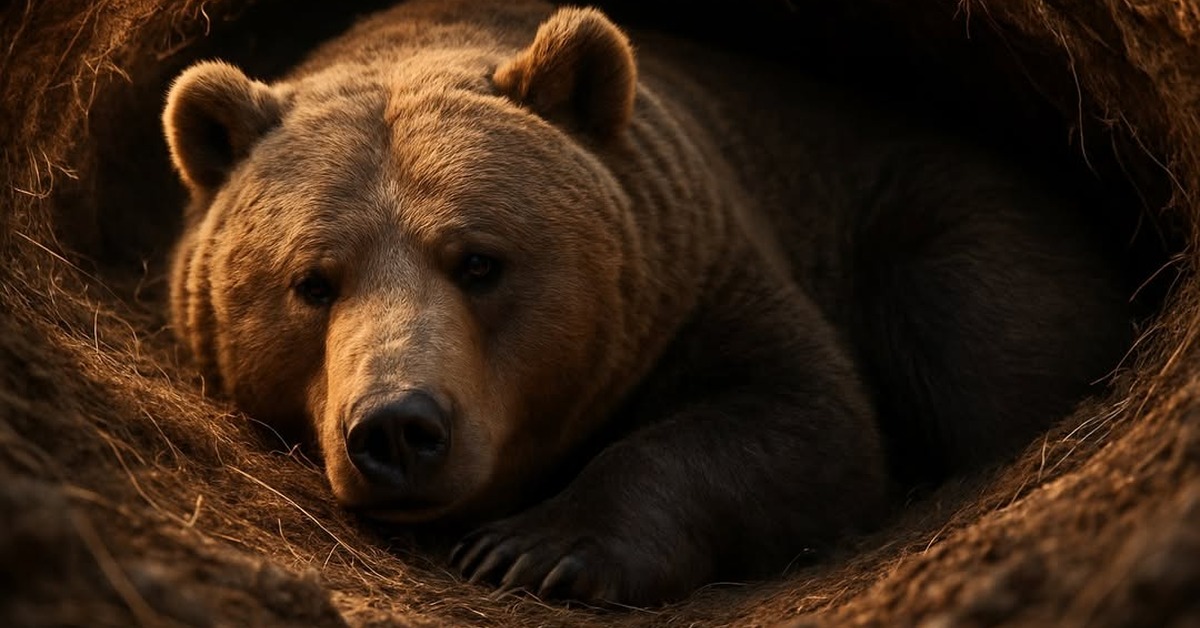
Stand at the edge of a Yellowstone meadow in late March, just after dawn, and you might see it: a massive brown shape moving through grey snowfields, nose down, utterly purposeful. Five months of silence, and then motion — certain and immediate, as if no time passed at all.
Where to See This
- Yellowstone National Park, Wyoming, USA — late March through April offers the highest probability of observing recently emerged grizzlies near Hayden Valley and the Lamar Valley; the park’s bear management team tracks emergence dates annually.
- Washington State University’s Bear Research, Education, and Conservation Center (WSU BERAC) in Pullman, Washington, hosts public events and publishes ongoing research findings from its resident grizzly population at wsu.edu/bearresearch.
- Alaska Department of Fish and Game’s bear hibernation camera program live-streams denning bears each winter — search “ADF&G bear den cam” for current season access and accompanying educational materials.
By the Numbers
- Up to 30% of total body mass lost during a single hibernation cycle — primarily from fat reserves, with less than 1% muscle mass loss (Washington State University Bear Center, 2022).
- Heart rate drops from approximately 84 beats per minute in summer to as low as 8 beats per minute during peak torpor.
- 20,000 calories consumed per day during autumn hyperphagia — roughly 8 to 10 times an adult human’s daily caloric need.
- Body temperature falls only 4–6°C during torpor, compared to near-freezing drops in “true hibernators” like Arctic ground squirrels — a 3× smaller thermal drop that enables rapid arousal.
- An estimated 1,800 grizzly bears currently inhabit the contiguous United States, primarily in the Greater Yellowstone Ecosystem and the Northern Rockies (USFWS, 2023).
Field Notes
- Heat shock protein 47 was identified in a 2020 Science study as a key suppressor of blood clotting during bear hibernation — a finding that could one day inform anticoagulant therapies for immobile human patients. The research emerged from a collaboration between German and U.S. teams tracking bear blood chemistry across full hibernation cycles.
- Female grizzlies give birth inside the den in January or February, while still in torpor — and nurse cubs for months without eating anything themselves. The metabolic cost of lactation during fasting is carried entirely by fat reserves accumulated the previous autumn.
- Bears don’t form pressure sores despite lying on hard den floors for months. Researchers believe periodic micro-movements — too subtle to trigger full arousal — redistribute body weight enough to prevent tissue breakdown, a passive solution that hospital engineers have tried to replicate mechanically for decades.
- Researchers still can’t fully explain how bears transition out of torpor without the refeeding syndrome that kills malnourished humans reintroduced to nutrition too quickly. Something in the metabolic reset prevents the dangerous electrolyte crashes that follow human starvation. The mechanism hasn’t been isolated.
Frequently Asked Questions
Q: What exactly is grizzly bear hibernation biochemistry and why does it matter?
Grizzly bear hibernation biochemistry refers to the suite of metabolic, hormonal, and genetic processes that allow a bear to survive months without food or water while preserving muscle mass and organ function. Those mechanisms — urea recycling, metabolic water production, clot suppression — are directly relevant to treating human conditions like muscle-wasting diseases, deep vein thrombosis, and kidney failure. Researchers at institutions including Washington State University have been actively studying these pathways since the early 2000s.
Q: Do grizzly bears actually go without water the entire time they hibernate?
Yes — and the mechanism is stranger than it sounds. As a grizzly oxidizes stored fat for energy during hibernation, that chemical process produces metabolic water as a byproduct. Roughly one gram of water is generated for every gram of fat burned. Combined with a dramatically reduced metabolic rate — about 25% of normal — the bear’s water needs drop to a level that fat metabolism can cover entirely, with no external water sources required.
Q: Isn’t bear hibernation just deep sleep? What do people get wrong about it?
Most people assume hibernation is simply extended, very deep sleep. It isn’t. A grizzly in torpor has a fundamentally altered metabolic program — different fuel sources, different hormonal profiles, different microbiome activity — that bears no resemblance to sleep beyond the outward stillness. Unlike true hibernators such as ground squirrels, which become nearly frozen and take hours to rouse, a grizzly can be fully alert and moving within minutes of disturbance. It’s running a reduced biological program, not a shutdown. That distinction explains why bears can give birth and nurse cubs in the den without ever fully waking.
Editor’s Take — Dr. James Carter
What strikes me most about this research isn’t the bear — it’s the mirror it holds up to human medicine. We’ve built entire industries around managing muscle wasting, preventing blood clots, and treating kidney failure, and a 700-pound carnivore in a hole in the ground has been solving all three simultaneously for millions of years. The urea recycling loop alone should have had pharmaceutical researchers prying at its mechanism decades earlier than they did. The fact that it didn’t tells you something uncomfortable about how siloed biology and medicine still are.
Grizzly bear hibernation biochemistry isn’t a curiosity at the edge of biology — it’s a functional proof-of-concept for physiological problems that cost human lives every year. Somewhere inside those biochemical loops, written in proteins and gut bacteria and fatty acid ratios, there are probably treatments we haven’t imagined yet. The bear doesn’t know it’s a research subject. It doesn’t know it’s been solving the problems of muscle wasting and blood clotting and metabolic water production since before our species existed. It just sleeps through the winter, wakes up in the spring, and starts eating again. What else is written in that biology that we haven’t thought to ask about yet?