Japan’s 38-Hour Honor System: Nearly 1M Cars, No Tolls
Nearly one million cars slipped through open toll gates across Tokyo’s expressways in April 2025, and almost nobody took advantage. For 38 hours, the Japan highway honor system toll glitch left commuters completely free to disappear into the city without paying a single yen. No cameras. No fines. No enforcement mechanism at all. Most drivers, it turned out, didn’t need one.
NEXCO Central’s Electronic Toll Collection network didn’t fail gradually. It failed completely. When the system went dark across the Chubu and Kanto highway corridors, operators faced a choice most toll authorities would consider unthinkable: snarl traffic for days while engineers worked, or lift the gates and trust the public. Between 920,000 and 960,000 vehicles rolled through unpaid. What happened next stopped being about infrastructure and became something else entirely — a quiet demonstration of how people behave when nobody’s watching.
Key Facts
- A 38-hour ETC server synchronisation failure in April 2025 let 920,000 to 960,000 vehicles pass NEXCO Central toll plazas unpaid.
- More than 24,000 drivers voluntarily paid outstanding tolls despite no enforcement mechanism, roughly 2.5 percent of affected vehicles.
- NEXCO Central waived all charges for the 38-hour window and issued full refunds to drivers who had already paid voluntarily.
- Tokyo Metropolitan Police reported more than 3.8 billion yen in cash turned in to police stations in 2023.
- Japan’s ETC penetration reached about 93 percent of expressway users by 2024, and NEXCO Central manages roughly 2,000 kilometres of expressway.
In short: The Japan highway toll glitch of April 2025 saw a 38-hour ETC outage let nearly a million vehicles pass NEXCO Central toll plazas unpaid. With no enforcement, over 24,000 drivers still paid voluntarily, then NEXCO Central waived all charges and refunded them.
When the System Went Dark Across Tokyo’s Highways
Japan’s Electronic Toll Collection system — known universally as ETC — is one of the most sophisticated road-pricing networks on the planet. Developed and rolled out nationally by the Japan Highway Public Corporation in the early 2000s, ETC allows vehicles equipped with in-car transponders to pass through toll plazas at speeds of up to 20 kilometres per hour, with charges billed automatically to registered accounts. Electronic toll collection systems like Japan’s had become global infrastructure benchmarks by 2024, processing millions of transactions daily with near-zero error rates. NEXCO Central alone manages roughly 2,000 kilometres of expressway across central and eastern Japan.
Engineers at NEXCO Central have since confirmed the glitch originated in a server synchronisation failure affecting regional processing hubs. The fix required manual intervention across multiple nodes — which is why 38 hours elapsed before normal ETC function resumed. When a system-wide outage cascaded through that network in April 2025, it failed fast and completely.
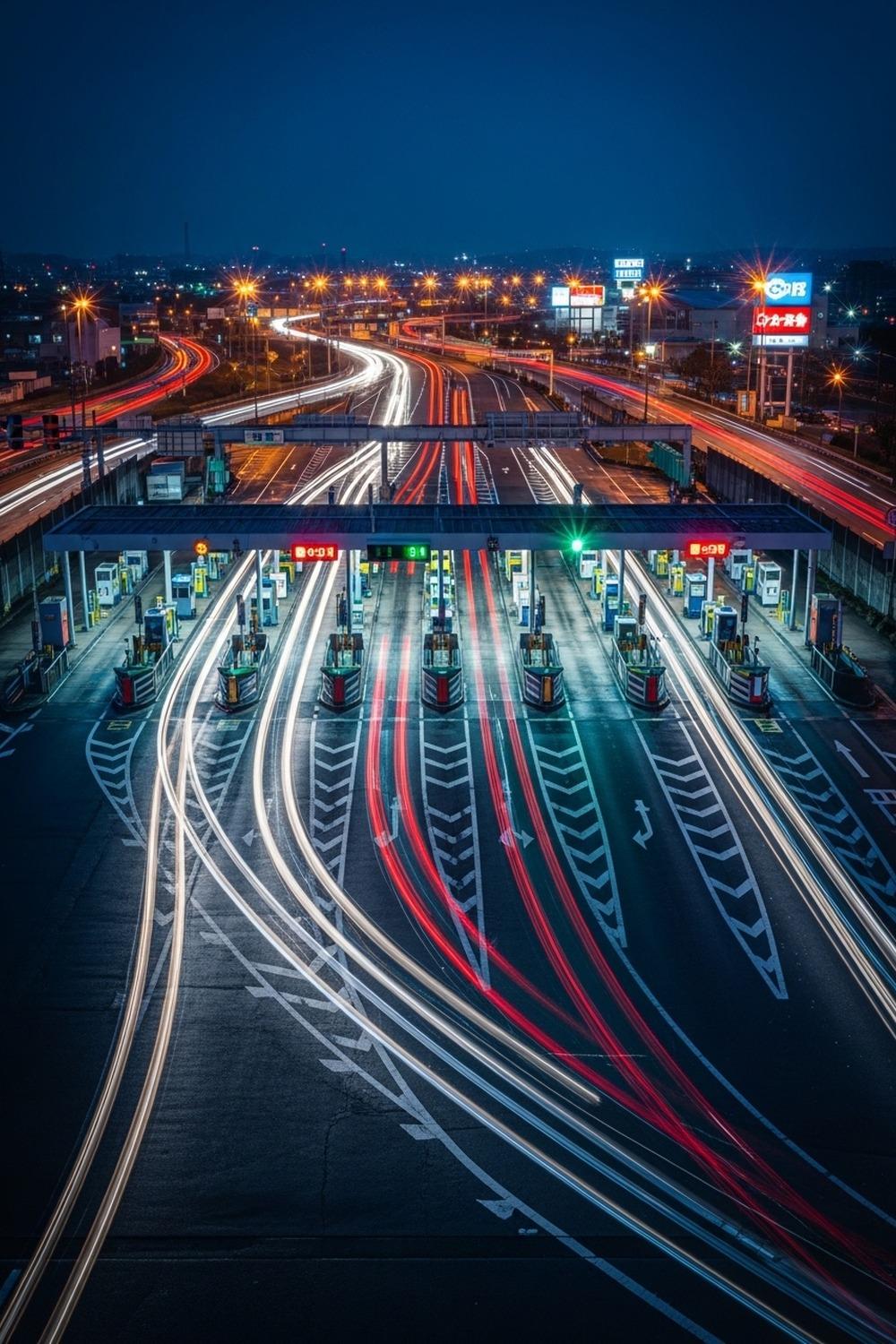
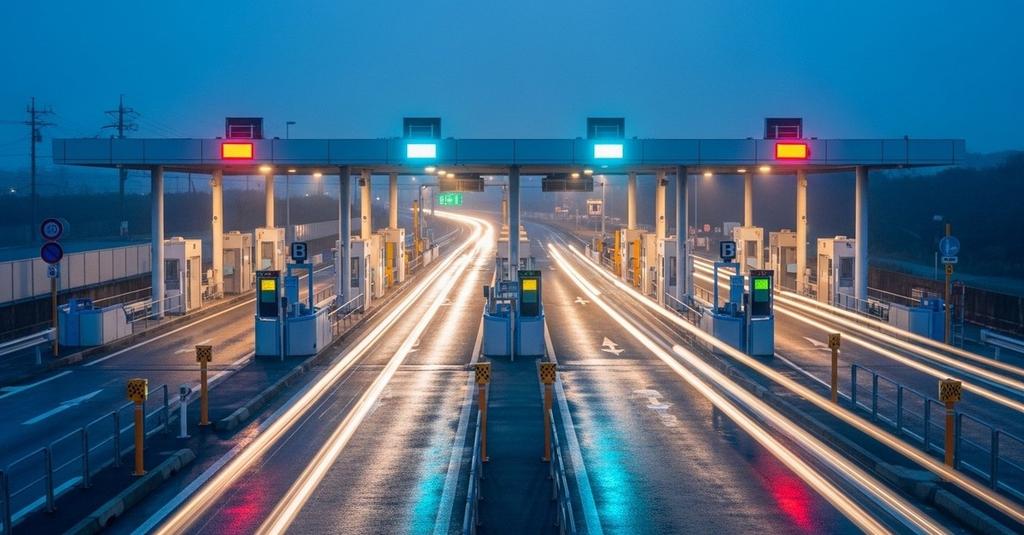
The scale of the outage demanded an immediate operational decision. Holding vehicles at non-functional gates would have triggered gridlock across some of the most congested corridors in the world — routes feeding into greater Tokyo, which moves more than 35 million people daily. NEXCO Central’s managers did something that would be almost unthinkable on most of the world’s toll networks: they instructed staff to raise the gates and wave everyone through. It means releasing nearly a million vehicles with zero guarantee of recovery. Gate staff were posted at some plazas to manage flow and explain the situation to confused drivers. Others simply passed through empty booths, ETC transponders blinking uselessly at offline readers. The highways kept moving.
More Than 24,000 Drivers Chose to Pay Anyway
Here’s the thing: within days of the ETC network coming back online, NEXCO Central opened a voluntary payment portal. No enforcement mechanism backed it. No licence plate data was cross-referenced with registered accounts to generate invoices. Drivers who had passed through during the outage were simply informed — through signage, press releases, and the quiet efficiency of Japanese public communication — that a portal existed, and that they could pay what they owed if they chose to.
Why does this matter? Because the response was striking. In this case, human behaviour under zero surveillance went considerably better than statistics would predict. By mid-April 2025, more than 24,000 drivers had voluntarily logged on and submitted payment. That’s roughly 2.5 to 2.6 percent of the total vehicles that passed through during the outage window.
In isolation, that number sounds modest. In context, it’s extraordinary. These weren’t people facing a penalty notice. They weren’t settling a debt that appeared on their credit statement. They actively sought out a payment mechanism, navigated it, and paid — without a single threat motivating them. The average toll on NEXCO Central expressways runs between ¥150 and ¥1,500 depending on distance, meaning these voluntary payments represented real money. NEXCO Central then made the call that reframed everything: a full toll waiver — every vehicle, every route, the entire 38-hour window. Anyone who’d already paid voluntarily received a full refund. It meant that 24,000 people had gone out of their way to pay tolls they didn’t legally owe and ended up receiving their money back anyway (and this matters more than it sounds — it was a clean, generous resolution that acknowledged their choice rather than erasing it).
What Japan’s Social Contract Actually Looks Like
Social scientists have a term for the friction-free compliance Japan demonstrated during this event: high generalised trust. It refers to a population’s baseline willingness to follow shared norms even when no one is watching and no enforcement is present. Research published through institutions including the OECD and the University of Tokyo has consistently ranked Japan among the world’s highest-trust societies, a pattern that shows up in crime statistics, lost-and-found return rates, and disaster relief behaviour. National Geographic has documented Japan’s broader safety culture, noting that social cohesion there operates through internalised expectation rather than surveillance infrastructure.
What makes the Japan highway honor system toll glitch genuinely unusual — even by Japanese standards — is the absence of social visibility. High-trust compliance often gets reinforced by community observation: neighbours see whether you sort your recycling correctly, shopkeepers know your face. But a driver alone through an unmanned toll gate at 2 a.m.? There’s no social cost to defection. The glitch stripped away every external motivator and left only internal ones. For 24,000 people, that was apparently enough. Whether that percentage holds across the full 960,000 is a more uncomfortable question — but researchers would point out that the voluntary payment rate for most equivalent situations in other countries hovers close to zero.
Japan’s lost-and-found system offers a useful parallel. In 2023, Tokyo Metropolitan Police reported that more than ¥3.8 billion in cash was turned in to police stations across the city — the overwhelming majority of it eventually returned to owners or surrendered to finders after the statutory waiting period.
But what’s striking is this: watching people pay tolls they could have ignored, you stop calling it a trend and start calling it a choice.
The Japan Highway Honor System Toll Glitch in Global Context
Toll system failures aren’t unique to Japan. In 2019, a ransomware attack knocked out the Colorado Department of Transportation’s systems for weeks, forcing manual toll collection at dozens of plazas. In 2021, an outage on Australia’s CityLink network in Melbourne triggered refunds for thousands of incorrectly charged drivers. What makes the Japan case distinctive isn’t the technical failure — it’s the operational response and the public’s reaction to it.
NEXCO Central, which reported operating revenues of approximately ¥1.1 trillion in fiscal year 2023, made a deliberate choice to absorb potential revenue loss rather than impose costs on travellers who had done nothing wrong. That’s a specific institutional value, not a default setting. Modern toll networks in the United States, the United Kingdom, and Australia operate almost entirely on licence plate recognition, with automatic penalty notices issued within days of non-payment. Those systems achieve high compliance rates — but the compliance is coerced, not chosen. When the cameras go down in those environments, as they periodically do, voluntary payment rates are not meaningfully tracked because the assumption of voluntary compliance doesn’t exist. And Japan’s system was built with different assumptions baked in from the start.
Permanent redundancy upgrades were announced in May 2025 to prevent recurrence of the kind of server synchronisation failure that triggered the outage.
How It Unfolded
- Early 2000s — Japan Highway Public Corporation begins national rollout of the ETC system, with full interoperability across major expressway operators achieved by 2004.
- 2013 — ETC 2.0 launched, expanding the system to include traffic information services and dynamic pricing capabilities on NEXCO-operated routes.
- April 2025 — A server synchronisation failure knocks NEXCO Central’s ETC network offline across Kanto and Chubu; gates are raised and 920,000–960,000 vehicles pass through unpaid over 38 hours.
- Mid-April 2025 — More than 24,000 drivers voluntarily pay outstanding tolls via NEXCO Central’s online portal; the company subsequently waives all charges and issues full refunds to voluntary payers.
By the Numbers
- 920,000–960,000 vehicles passed through NEXCO Central toll plazas without payment during the 38-hour ETC outage in April 2025.
- 38 hours — the total duration of the system failure before Electronic Toll Collection service was restored across affected expressways.
- 24,000+ drivers voluntarily paid outstanding tolls with no legal obligation or penalty mechanism compelling them to do so.
- ¥3.8 billion in cash was turned in to Tokyo Metropolitan Police in 2023 alone, illustrating Japan’s broader culture of civic honesty.
- NEXCO Central manages approximately 2,000 kilometres of expressway across Japan’s Chubu and Kanto regions, processing millions of ETC transactions daily under normal operating conditions.
Field Notes
- Japan’s ETC transponders emit an audible beep to confirm a successful toll transaction — during the outage, drivers reported the unsettling silence of passing through gates with no beep, no barrier, and no record. Several described stopping momentarily, uncertain whether they were breaking a law.
- NEXCO Central’s voluntary payment portal required drivers to self-report their entry and exit points, effectively reconstructing their own journey from memory — there was no automated data to cross-check against, making honest self-reporting the only mechanism at work.
- Japan’s broader ETC penetration rate stood at approximately 93 percent of all expressway users by 2024, meaning the vast majority of vehicles in the outage were registered account holders who could have been billed automatically under normal conditions — but weren’t.
- Researchers studying voluntary compliance still can’t fully explain what proportion of the 24,000 voluntary payers were motivated by moral obligation versus anxiety about future penalty — and whether the waiver announcement would have lowered voluntary payment rates if it had come sooner.
Frequently Asked Questions
Q: What exactly caused the Japan highway honor system toll glitch in April 2025?
A server synchronisation failure affecting the regional processing hubs that manage ETC transactions across NEXCO Central’s Kanto and Chubu expressway networks initiated the outage. The failure cascaded through multiple nodes, making remote fixes impossible and requiring manual intervention at infrastructure level. That process took 38 hours. Permanent redundancy upgrades were announced by NEXCO Central in May 2025 to prevent recurrence.
Q: Were drivers legally required to pay the tolls they missed during the outage?
Technically, toll obligations exist the moment a vehicle enters a chargeable expressway — the ETC system is the billing mechanism, not the legal basis for the charge. However, NEXCO Central had no viable enforcement route given the absence of transaction records for the outage period. The company’s subsequent decision to waive all charges rendered the legal question moot. Drivers who had already paid voluntarily received full refunds, making the final financial outcome zero cost to all parties.
Q: Does the voluntary payment rate prove Japan is uniquely honest compared to other countries?
It’s a tempting conclusion, but researchers urge caution. The 24,000 voluntary payers represent roughly 2.5 percent of affected vehicles — meaning roughly 97.5 percent didn’t pay voluntarily either. What the Japan highway honor system toll glitch actually demonstrates is that a meaningful minority will act on internalised norms even under zero surveillance, and that Japan’s institutional response — transparent communication, a simple payment portal, a clean waiver — created the conditions for that behaviour to occur. Whether another country’s population would respond similarly under the same conditions hasn’t been tested at this scale.
Editor’s Take — Sarah Blake
What stays with me isn’t the 24,000 people who paid. It’s the design choice that made paying possible. NEXCO Central didn’t have to build a voluntary portal. They could have quietly waived everything and moved on. Instead, they created a mechanism for people to act on their conscience — and then honoured that conscience with a refund. That’s not just civic trust. That’s institutional architecture that deserves more attention than a server failure ever does.
Every road network in the world is built on an assumption about human behaviour. Most assume the worst — cameras, fines, automated enforcement layered on top of automated enforcement. Japan’s expressways, for 38 hours in April 2025, ran on a different assumption entirely. The gates stayed open. The traffic moved. And somewhere in the early morning dark of a Tokyo interchange, a driver with no transponder beep, no barrier, and no record of ever being there made a quiet decision to log on later and pay what they owed. What does your infrastructure assume about you?
Illustrations are AI-generated. Article fact-checked and human-edited. Our editorial standards.