How Outdoor Cats Survive Winter’s Brutal Cold
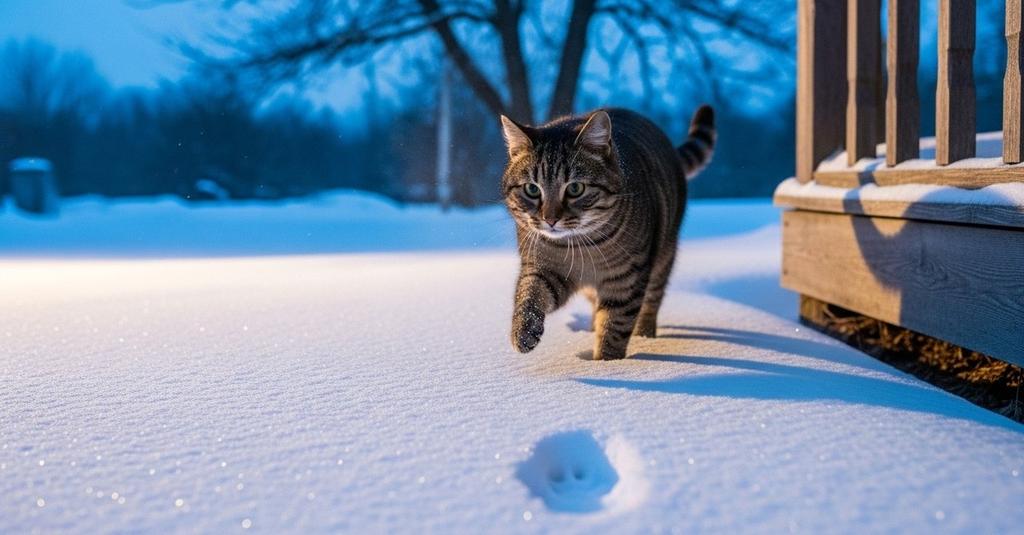
A paw pressed into snow melts by morning, but the calculation behind it started six months earlier. How outdoor cats survive winter reveals something counterintuitive: the biology matters less than you’d think, and the geography matters far more. These animals aren’t just enduring cold. They’re running continuous survival equations against temperatures that would hospitalise a domestic pet within hours, and most of the variables they’re solving for have nothing to do with fur.
Right now, while most of us are pulling blankets up to our chins, outdoor cats across the Northern Hemisphere are navigating a seasonal pattern that arrives on schedule but never quite the same way twice. Their bodies have been preparing since August. Their minds have been mapping since last February.
The question isn’t just whether they survive — it’s how precisely they do it, and what that precision costs them.

Key Facts
- A fully developed winter coat increases insulation capacity by roughly 30 percent compared to a summer coat, per University of Edinburgh thermal studies from 2012.
- Frostbite tissue damage can begin within 15 to 30 minutes at temperatures below -10 degrees Celsius in a stationary, exposed cat.
- A 2017 University of Georgia GPS study found outdoor cats contract their winter range by 20 to 40 percent rather than abandoning it.
- Managed Trap-Neuter-Return colonies showed winter mortality roughly 3 times lower than unmanaged populations, per University of Florida research from 2014 to 2019.
- An estimated 60 to 80 million feral and unowned cats live in the United States, according to a 2023 American Veterinary Medical Association estimate.
In short: How outdoor cats survive winter depends on a winter coat triggered by shortening daylight, learned spatial maps of warm shelters, and huddling for shared heat. A thickened coat adds about 30 percent insulation, while frostbite can start within 15 minutes below -10 degrees Celsius for unsheltered cats.
How Seasonal Coat Change Prepares Cats For Cold
The first line of defence in how outdoor cats survive winter isn’t found in any shelter or food source — it’s built into the cat itself. Beginning as early as late summer, a biological process called photoperiodism triggers the coat-change cycle. This isn’t driven by temperature. It’s driven by light. As day length shortens past a threshold — typically around the autumnal equinox — the pineal gland registers the change and signals a hormonal cascade that begins thickening the undercoat.
Research from the University of Edinburgh’s Royal School of Veterinary Studies, documented in studies running through the early 2010s, confirmed that artificial lighting in indoor-outdoor cats can delay or disrupt this cycle, leaving semi-outdoor cats less prepared than fully feral ones who’ve had no exposure to indoor light sources. The undercoat that results from this process is a dense, insulating layer of shorter hairs that traps body heat against the skin. The longer guard hairs above it shed water and break wind.
What’s counterintuitive here is the timing. By the time the first hard frost arrives — sometimes November, sometimes December depending on latitude — the coat is already finished developing. A cat in a heated apartment, exposed to artificial light year-round, may enter January with the same sparse summer coat it wore in July. Feral cats and long-term outdoor cats, regulated entirely by natural light cycles, arrive at winter biologically dressed for it. The cold itself plays no role in triggering the process. The distinction matters enormously when temperatures plunge.
A fully developed winter coat can increase insulation capacity by roughly 30 percent compared to a summer coat, according to veterinary thermal studies. That number doesn’t sound dramatic until you’re standing in a -5°C wind at midnight. Then it’s the difference between survival and a very bad night.
Learned Geography: The Cat’s Mental Winter Map
Knowledge gets you through a cold winter. Understanding how outdoor cats survive winter means taking seriously the cognitive dimension — the fact that these animals aren’t just reacting to cold, they’re anticipating it based on detailed spatial memory built over months and years. This is closer to what ecologists studying larger predators have long documented — the kind of landscape-level intelligence that, in a different context, helps explain how reintroduced wolves in Yellowstone reshaped entire river systems by changing the movement patterns of prey animals who remembered where danger lived. Memory isn’t just a mammalian luxury. It’s a survival infrastructure.
A cat that has spent one winter on a specific block has already catalogued which porch traps radiant heat from an interior wall, which crawl space stays dry when rain turns to sleet, which neighbour leaves a barn door cracked by six inches at dusk.
This learned geography is refined every season. Why does a feral cat return to the same shelter night after night? Because that specific location — that exact porch corner, that particular crawl space — has been tested and mapped and confirmed to work. A 2017 GPS tracking study conducted by researchers at the University of Georgia’s Warnell School of Forestry and Natural Resources — part of the broader “Kitty Cams” project that tracked free-roaming cats across suburban and rural environments — found that outdoor cats maintain remarkably consistent territorial ranges even in winter, contracting their range by approximately 20 to 40 percent in severe cold rather than abandoning it entirely. They don’t flee winter. They compress their knowledge into its most valuable nodes.
The warm spots. The dry spots. The predictable spots.
Ask anyone who feeds feral cats through a harsh winter and they’ll tell you the same thing: the cats don’t show up randomly. They show up at specific times, from specific directions, and they leave the same way. That’s not coincidence. That’s a route map, revised nightly, optimised by weeks of thermal feedback.
Frostbite Risk and The Limits of Feline Physiology
There is a threshold below which biology runs out of answers. Understanding how outdoor cats survive winter also means being honest about when they don’t — or when survival comes with a permanent cost. Frostbite in cats follows the same mechanism as in humans: peripheral blood vessels constrict in extreme cold to protect the core, reducing blood flow to extremities. Ear tips, tail ends, and paw pads become vulnerable first.
At temperatures below -10°C (14°F), tissue damage can begin within fifteen to thirty minutes in a stationary, exposed cat. According to guidance published by the Smithsonian’s coverage of feline cold tolerance research, feral cats in managed colonies in northern U.S. cities — Minneapolis, Detroit, Chicago — show significantly higher rates of ear-tip scarring and tail injury than cats in colonies monitored in milder climates, with some colony surveys showing visible frostbite damage in 15 to 20 percent of individuals after severe winters. Watching a species navigate damage like this, you stop calling winter a manageable challenge.
What most people get wrong about how outdoor cats survive winter cold is assuming that activity is always protective. Movement generates heat, yes — but a cat burning energy in bitter cold while failing to find shelter is running a deficit. Cats are metabolically efficient but not infinitely so.
Caloric intake in winter needs to increase by roughly 10 to 25 percent to maintain core temperature, according to shelter veterinarians. Cats that can’t access supplemental food sources — from garbage, feeders, or sympathetic humans — may enter a dangerous spiral: cold increases caloric need, insufficient food reduces body heat production, body temperature drops, and the risk of hypothermia accelerates. The paw pad problem deserves separate attention. Cat paw pads contain specialised blood vessel structures — arteriovenous anastomoses (researchers actually call these vascular shunt structures) — that allow some blood flow to continue in cold conditions longer than in human fingers. It’s not magic. It’s engineering. But road salt, ice crystals, and sub-zero pavement still damage the tissue, and a cat that’s limping loses the mobility that’s central to every other survival strategy.
How Outdoor Cats Survive Winter: Community, Colonies, and Human Overlap
The solitary cat is partly a myth. Feral and outdoor cats have complex social structures, and those structures become survival infrastructure in winter. Trap-Neuter-Return programmes studied by researchers at the University of Florida’s Maddie’s Shelter Medicine Program — particularly in work published between 2014 and 2019 — documented that managed feral colonies in northern climates showed lower winter mortality rates than unmanaged populations of equivalent size. The reason wasn’t just supplemental feeding, though that helped. It was huddling behaviour. Cats in stable social groups share body heat in sheltered spaces, rotating positions to distribute warmth more evenly across the group. Researchers observed clusters of three to six cats occupying shared winter shelters, with body heat from the group raising internal shelter temperatures by 5 to 8°C above ambient — enough to push conditions from dangerous to merely uncomfortable.
In most urban and suburban environments, human infrastructure is inseparable from feline winter survival. Car engines. Dryer vents. Basement window wells. Gaps beneath restaurant loading docks. A 2020 survey by the Humane Society of the United States estimated that in cities with populations above 500,000, free-roaming cat densities were highest within 100 metres of food service establishments and residential heating exhaust sources — not because cats chose those areas for food alone, but because warmth and food exist in the same geography. Cities are, functionally, thermal refuges. Their heat islands — the phenomenon where urban surfaces retain warmth — can make city winters 2 to 4°C warmer than surrounding rural areas, a difference that’s biologically meaningful for a small mammal maintaining a core temperature of 38.5°C.
But here’s what the data from Toronto and Minneapolis actually shows: Wildlife rehabilitators in both cities have independently noted something telling. The cats they receive with the most severe winter injuries are almost never colony cats. They’re solitary strays — recently abandoned, recently displaced, navigating a landscape they don’t yet know. Knowledge, again, turns out to be the real currency of winter survival.
Where to See This
- Managed feral cat colonies operating under Trap-Neuter-Return programmes in cities like Chicago, Minneapolis, and Toronto offer the most visible examples of outdoor cats navigating deep winter — colony caretakers often document their charges daily through January and February, with some posting real-time observations online.
- Alley Cat Allies (alleycat.org) is the leading U.S.-based organisation tracking feral cat colony management and winter welfare research, and publishes detailed guides on cold-weather shelter construction and feeding protocols.
- For readers who want to help rather than just observe: a styrofoam cooler with a small entrance hole, filled with straw (not blankets — straw doesn’t absorb moisture), raises internal temperature enough to matter on a bitter night. It costs less than ten dollars and takes fifteen minutes to build.
By the Numbers
- An estimated 60 to 80 million feral and unowned cats live in the United States alone, according to the American Veterinary Medical Association (2023 estimate).
- Winter coat insulation capacity in cold-acclimated outdoor cats increases by approximately 30 percent compared to summer coat density (veterinary thermal studies, University of Edinburgh, 2012).
- Frostbite tissue damage can begin in as little as 15 minutes at temperatures below -10°C (14°F) in a stationary, exposed cat with no shelter.
- Managed TNR colonies showed winter mortality rates roughly 3× lower than unmanaged feral populations of equivalent size in northern U.S. cities (University of Florida Maddie’s Shelter Medicine Program, 2014–2019).
- Urban heat island effects in cities above 500,000 population can raise winter ambient temperatures by 2 to 4°C compared to surrounding rural areas — a difference that alters survival odds for small mammals maintaining a core temperature of 38.5°C.
Field Notes
- In a 2019 study of feral cats in Quebec, colony caretakers recorded cats consistently returning to the same overnight shelter location for up to four consecutive winters — even when that shelter was temporarily removed mid-season and replaced with an identical structure in a slightly different position, most cats relocated to the new structure within 48 hours, suggesting they were tracking thermal signature as much as location.
- Cat paw pads contain arteriovenous anastomoses — vascular shunt structures that allow limited blood flow to continue to the foot even in significant cold. These are the same structures found in the feet of arctic foxes and sled dogs, suggesting convergent evolution around a shared thermal challenge.
- The photoperiod trigger for winter coat development operates independently of temperature, meaning a cat kept under artificial lighting indoors for most of the year may fail to develop a full winter undercoat even if it spends nights outdoors — a detail most cat owners have never been told and vets rarely raise unless asked.
- Researchers still can’t fully explain why some individual cats in the same colony, with access to the same shelter and food, show dramatically different cold tolerance outcomes. Whether this reflects genetic variation, previous cold exposure history, or something in early developmental environment remains an open question with no resolved answer as of 2024.
Frequently Asked Questions
Q: How do outdoor cats survive winter temperatures below freezing?
How outdoor cats survive winter below freezing depends on three overlapping systems: a thickened winter coat triggered by shortening daylight in late summer, learned spatial knowledge of warm shelter locations built up over previous winters, and — where possible — huddling with other cats to share body heat. Below -10°C (14°F), frostbite risk rises sharply within 15 to 30 minutes for stationary cats without shelter. None of these systems are fail-safe. They work together, and when one breaks down, the others are often not enough on their own.
Q: Should I bring outdoor cats inside during a winter cold snap?
If a cat is accustomed to outdoor living and has access to adequate shelter and food, sudden indoor confinement can cause significant stress. The more useful intervention is ensuring outdoor shelter exists — a dry, draught-free space with straw bedding, sized small enough that body heat accumulates. A single cat in a well-insulated small shelter can raise internal temperature by several degrees within minutes. Supplemental feeding matters too: cats need roughly 10 to 25 percent more calories in winter to maintain core body temperature, so increasing food availability during cold snaps is practical and effective.
Q: Don’t outdoor cats just instinctively know how to survive winter — isn’t it natural for them?
This is one of the most common misconceptions about feline cold-weather survival. Instinct provides a framework — coat thickening, heat-seeking behaviour, reduced activity to conserve energy — but the specific knowledge of where to shelter, which routes are safe, and how to read a particular urban landscape is learned, not inherited. A cat abandoned in an unfamiliar neighbourhood in January is genuinely at risk, even if it’s physically healthy. Wildlife rehabilitators consistently report that the most severe winter injury cases involve recently displaced or newly abandoned cats, not long-established outdoor residents. Experience isn’t optional. It’s foundational.
Editor’s Take — Alex Morgan
What strikes me hardest about this story isn’t the biology — it’s the knowledge problem. We keep framing feral cat welfare as a numbers question: how many cats, how many shelters, how many feeding stations. But the data from Toronto and Minneapolis points at something else entirely. The cats most at risk aren’t the ones who’ve lived rough for years. They’re the ones we abandoned last autumn. The ones without a winter map. Every January, we’re releasing animals into cold landscapes they’ve never had the chance to learn. That’s not a wildlife management issue. That’s a human accountability issue.
The paw print in the snow was already there before you woke up. It’ll be gone before you finish your coffee. But the cat that made it has been running thermal calculations since August, navigating a city block by its heat signature, compressing years of spatial memory into the exact sequence of movements needed to stay alive through February. The question worth sitting with isn’t how they manage it. It’s what happens to the ones who never got the chance to learn — and who, exactly, made that decision for them.
Illustrations are AI-generated. Article fact-checked and human-edited. Our editorial standards.