Why Bald Eagles Build Nests That Can Weigh a Ton
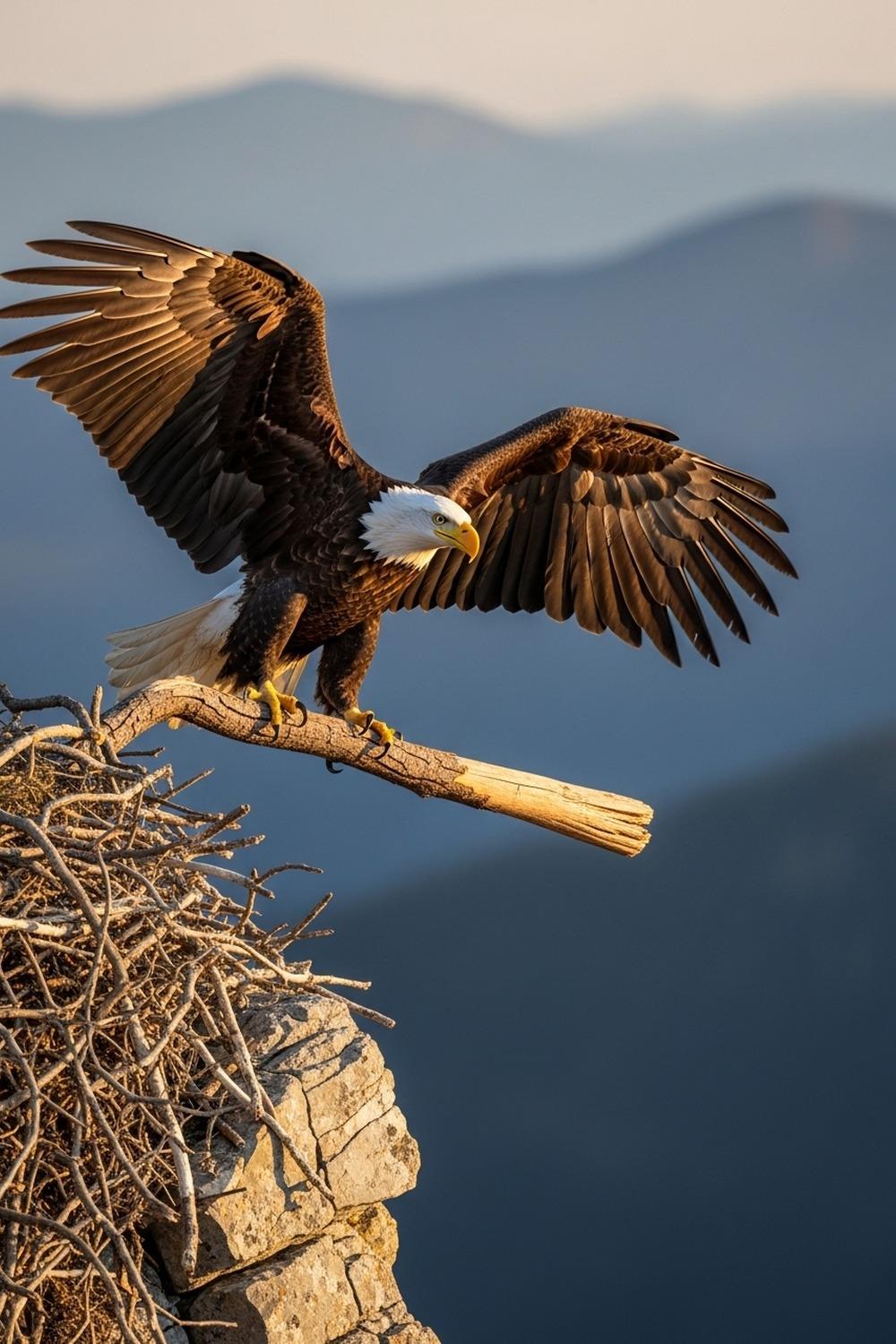
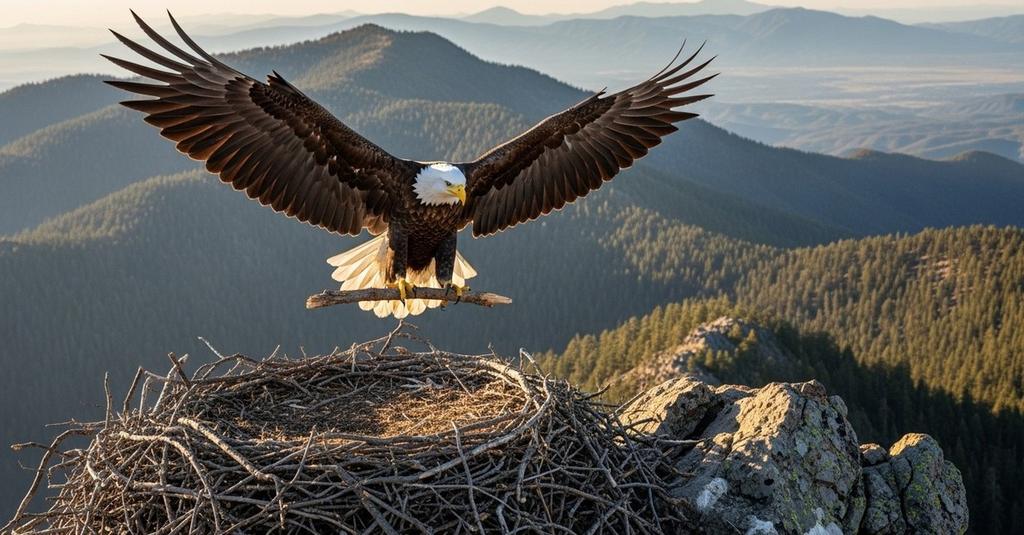
A branch the size of a baseball bat arrives at the nest. Shadow drops it into place. What happens next isn’t parental instinct — it’s something closer to structural problem-solving, and bald eagle nest building has been operating at this level of deliberation for longer than most of us have been alive. The engineering unfolds season after season, visible to millions now through livestream cameras, but the real story starts with a question: what does it mean when an animal stops sheltering and starts building?
At the Friends of Big Bear Valley nest cam in California’s San Bernardino Mountains, Jackie and Shadow have drawn millions of viewers since 2015. The camera captures something most wildlife footage never shows — not just parental behavior, but a construction project that biologists are still working to fully understand. These structures can weigh as much as a car. They defy almost everything we assumed about how birds build.
Key Facts
- The largest recorded bald eagle nest, found in St. Petersburg, Florida in 1963, measured 2.9 meters wide, 6 meters deep, and weighed about 2,700 kilograms.
- The U.S. Fish and Wildlife Service has documented bald eagle nests used continuously for over 35 years.
- Bald eagle breeding pairs in the contiguous United States fell to fewer than 417 in 1963, the population nadir driven by DDT contamination.
- By 2006, when bald eagles were delisted, the lower 48 states held an estimated 9,789 breeding pairs.
- A 2009 Cornell Lab of Ornithology study found fresh conifer sprigs in nests release terpenes that suppress ectoparasites like lice and mites.
In short: Bald eagle nest building produces interlocked stick structures that grow over decades as site-loyal pairs add material yearly. The largest recorded nest weighed about 2,700 kilograms, and the species recovered from 417 breeding pairs in 1963 to 9,789 by 2006, with nest counts tracking that conservation rebound.
How Bald Eagles Engineer Structures That Last Decades
By any structural measure, bald eagle nest building is extraordinary. The average nest — called an eyrie — starts modestly, perhaps 1.5 meters across and half a meter deep. But here’s the thing: eagles are site-loyal. They return to the same nest year after year, adding material each breeding season. Over decades, these structures grow into something closer to a permanent installation than a seasonal shelter.
According to the Bald Eagle’s Wikipedia entry, the largest recorded nest was found in St. Petersburg, Florida in 1963 — it measured 2.9 meters wide, 6 meters deep, and was estimated to weigh nearly 2,700 kilograms. The U.S. Fish and Wildlife Service has documented nests used continuously for over 35 years.
That’s not a nest. That’s a building with a lease agreement.
What makes this structurally possible is method, not luck. Eagles don’t pile material randomly. They interlock branches the way a dry-stone wall is built — each piece bearing against the next, distributing load across the whole structure. Smaller sticks fill gaps. Softer materials — grass, moss, corn husks, even feathers — line the central cup where eggs sit. The outer frame handles compression. The inner lining handles temperature.
Shadow’s baseball-bat branch isn’t decorative. Watch the cam footage long enough and you’ll see Jackie testing placements the way a carpenter checks a joint — pressing, shifting, rejecting, repositioning. There’s judgment happening here. It just doesn’t look like ours.
The Materials They Choose Reveal Something Deeper
Not every branch qualifies. Eagles are selective to a degree that surprised ornithologists when they first started cataloguing nest contents in detail. Studies conducted by the University of Minnesota’s Raptor Center through the 1990s and 2000s found that bald eagles consistently prefer branches with residual moisture — wood that hasn’t fully dried, which is heavier but also more resistant to snapping under sudden load.
They also return to existing material sites, revisiting specific trees or fallen logs for fresh supply. This level of spatial memory applied to construction materials is rare in the animal kingdom.
It’s similar, in a way, to the tool-specific foraging behavior described in crow anting behavior — both species demonstrating that birds are far more deliberate about interacting with their physical environment than we’ve historically credited them for.
Eagles also incorporate fresh green vegetation into their nests — sprigs of conifer, leafy branches, aromatic plants. For years, researchers assumed this was purely about temperature regulation or comfort. A 2009 study from Cornell Lab of Ornithology revised that view significantly.
The volatile compounds in fresh green material — particularly terpenes found in conifers — appear to suppress certain ectoparasites like lice and mites (and this matters more than it sounds). The birds are, in effect, fumigating. They’re not just building a shelter. They’re maintaining a sanitary environment for nestlings whose immune systems aren’t yet equipped to handle parasite loads.
Fresh material arrives almost daily during the active nesting season. Some of it is structural. Some of it is medicinal. Eagles appear to know the difference, and that distinction alone should make anyone rethink what the word “instinct” actually covers.
The Weight Problem — And How Eagles Solve It
A two-ton nest sounds like a structural liability. According to a 2017 report from the Smithsonian Magazine’s wildlife desk, bald eagles almost always select the largest, oldest trees available — typically those exceeding 60 centimeters in trunk diameter — and they prefer crotch positions where two or more major limbs diverge from the main trunk. This distributes the nest’s weight across multiple load-bearing points rather than concentrating it at a single attachment.
It’s the same engineering principle behind a bridge truss.
The tree becomes part of the structure. In coastal or wetland environments, bald eagle nest building presents different constraints. In areas with fewer tall trees — parts of the Gulf Coast, some Alaskan river deltas — eagles have been documented building on cliff ledges, transmission towers, artificial nest platforms, and even on the ground. The Florida Fish and Wildlife Conservation Commission recorded several ground-level nests on protected islands in the 2000s, monitored intensively because of their vulnerability to flooding and predators.
In those cases, the nest footprint expands dramatically. The birds compensate for the absence of vertical anchoring by spreading the structure wide rather than building it deep.
Storm damage, tree collapse, or human disturbance ends most long-used eyries. When a nest goes down, the pair often rebuilds nearby — sometimes within weeks — as if the architectural knowledge simply transfers, and the location matters more than the structure itself.
Bald Eagle Nest Building as a Conservation Barometer
Before 1963, bald eagles were nesting across much of North America. By 1963 — the same year the St. Petersburg nest record was documented — the continental population had collapsed to fewer than 417 breeding pairs in the lower 48 states, according to the U.S. Fish and Wildlife Service. DDT, the pesticide that bioaccumulated up the food chain, was thinning eggshells so severely that nests which should have held viable clutches were crushing them instead.
Bald eagle nest building had essentially become futile. The architecture was intact. The biology wasn’t.
When DDT was banned in 1972 and the Endangered Species Act was enacted in 1973, nest monitoring became one of the primary tools for tracking recovery. Wildlife managers counted active nests. They tracked reuse rates. They measured clutch success. The nest wasn’t just a habitat feature — it was a data point.
By 2006, when the bald eagle was officially removed from the Endangered Species List, the lower 48 states held an estimated 9,789 breeding pairs. That’s a recovery rate measured not in population surveys but in functioning, active eyries — nests being built, maintained, and successfully used. The construction behavior itself was the evidence of survival.
Watching a species disappear at this speed, you stop calling it a trend, and watching it return the same way, you recognize that every functioning nest isn’t just a shelter — it’s a document of ecological restoration.
Nest cam technology transformed public engagement with that recovery. Jackie and Shadow’s eyrie in Big Bear has drawn millions of viewers. That’s not just charismatic wildlife broadcasting. It’s a conservation model — using intimate access to nesting behavior to build the kind of public investment that sustains protection long after the legal battle is won.
Where to See This
- Conowingo Dam on the Susquehanna River, Maryland, USA — one of the most accessible bald eagle viewing sites in North America; best from October through January when eagles congregate to feed on fish below the dam’s spillway.
- Friends of Big Bear Valley nest cam (friendsofbigbear.com) — free, 24-hour live streaming of Jackie and Shadow’s active eyrie in the San Bernardino Mountains, California; available year-round with highest activity from January through May.
- The Cornell Lab of Ornithology’s All About Birds database (allaboutbirds.org) offers detailed nest identification guides, range maps, and links to active nest cams across the United States — a practical first stop for anyone wanting to understand what they’re watching.
By the Numbers
- 2,700 kg — estimated weight of the largest recorded bald eagle nest, found in St. Petersburg, Florida, 1963 (U.S. Fish and Wildlife Service)
- 417 — breeding pairs of bald eagles remaining in the contiguous United States in 1963, the population nadir driven by DDT contamination
- 9,789 — breeding pairs documented in the lower 48 states by 2006, the year bald eagles were delisted under the Endangered Species Act
- 35+ years — documented continuous use period for some established eyries, with the nest structure rebuilt and expanded each season
- 2.9 meters wide, 6 meters deep — dimensions of the St. Petersburg record nest, roughly the footprint of a full-size SUV and the height of a two-story room
Field Notes
- In 2015, a nest near Loess Bluffs National Wildlife Refuge in Missouri was so heavy — estimated at over 900 kilograms — that it brought down its host cottonwood tree during a windstorm. The pair relocated and rebuilt a functional nest within three weeks, selecting a nearby sycamore with a wider trunk crotch.
- Eagles have been documented incorporating human-made materials into their nests: surveyor’s tape, fishing line, plastic bags, and in one Alaska case, a child’s sneaker. Researchers believe the birds respond to color and flexibility rather than material composition — properties that mimic soft natural lining materials.
- The aromatic conifer sprigs eagles add to their nests aren’t replaced randomly. Observations from the Hawk Mountain Sanctuary suggest fresh material arrives in pulses that correspond to nestling age — heaviest at hatching, tapering as chicks develop feathers and their own thermoregulation kicks in.
- Researchers still can’t fully explain why some pairs abandon perfectly intact, structurally sound nests after a single failed breeding season while others return to damaged nests for years. Whether this reflects individual personality differences, sensory cues, or something else entirely remains an open question in eagle behavioral ecology.
Frequently Asked Questions
Q: How long does bald eagle nest building actually take each season?
Active construction typically begins four to six weeks before egg-laying, which in most of the continental United States falls between November and February. Both birds contribute, though females tend to spend more time on the interior lining while males handle the heavier outer branches. A new nest can reach a usable size in as few as four days of intense effort, but pairs with established eyries often spend the entire pre-breeding period adding material — some bringing a branch or green sprig almost daily.
Q: Why don’t bald eagles build a new nest every year instead of adding to an old one?
Site fidelity in bald eagles is driven by several converging pressures. Suitable tree locations near productive foraging habitat aren’t unlimited, and once a pair has invested the energy to establish a structurally sound eyrie, relocating means starting from scratch with no guarantee of finding an equivalent anchor tree. There’s also evidence that experienced pairs return to proven sites — places where they’ve successfully fledged chicks before — which makes evolutionary sense as a risk-reduction strategy. The accumulated mass of the nest over years also provides better insulation and wind resistance than a newly built structure.
Q: Can the weight of a bald eagle nest actually kill the tree it’s built in?
Yes, and this happens more often than people expect. The tree isn’t crushed outright — it’s weakened over years as the nest’s increasing weight stresses branch junctions and the trunk’s structural integrity, making it more vulnerable to storm damage. The same moisture-seeking habits that help eagles find good building material can also mean they select trees near water, which are sometimes already under stress. Wildlife managers monitoring protected nest sites occasionally document tree failures and the subsequent rapid relocation behavior that follows — which reveals just how well eagles understand their own engineering constraints.
Editor’s Take — Alex Morgan
What stops me here isn’t the weight record or the construction statistics — it’s the fumigation finding. The idea that an eagle is selecting aromatic conifers partly because the volatile compounds suppress lice in a nestling too young to preen effectively rewires the whole picture. That’s not instinct in the dismissive sense we usually mean it. That’s accumulated biological knowledge encoded over evolutionary time, playing out in a single bird making a single material choice on a Tuesday morning in the San Bernardino Mountains. The nest is the least of it.
Every breeding season, somewhere in North America, a pair of bald eagles is beginning a construction project that won’t be finished in their lifetimes. They’ll add to what the previous season left, and the season before that, until the structure outweighs the vehicle you drove to work in. What we call instinct, they’ve built into the landscape — branch by branch, year by year, in a language of load-bearing and living timber we’re only beginning to read. What else are we looking at, dismissing as animal behavior, that turns out to be something closer to knowledge?
Illustrations are AI-generated. Article fact-checked and human-edited. Our editorial standards.