The Sacred Bird the Maya Worshipped — Still Exists
The ancient Maya built an entire legal system around a single bird — kill one and you died. Turns out they were onto something. This bird’s tail feathers are longer than your arm, and it’s still flying through Guatemalan cloud forests despite everything working against it.
Somewhere above 10,000 feet, in forests so wet the trees drip constantly and the mist never quite lifts, a bird exists that genuinely shouldn’t look real. The ancient Maya built entire cosmologies around it. Kings wore its feathers. And somehow, against the odds of history and habitat loss, it’s still up there.
Key Facts
- The Resplendent Quetzal (Pharomachrus mocinno) is classified as Near Threatened on the IUCN Red List (2016), with a declining population.
- The male’s tail feathers reach 90 to 100 centimeters (roughly three feet), among the longest decorative feathers of any bird relative to body size.
- Guatemala has lost an estimated 40 percent of its cloud forest cover in recent decades to agricultural conversion and logging.
- The quetzal lives only at elevations between 1,200 and 3,000 meters, making it one of the most habitat-restricted birds in the Western Hemisphere.
- Among the ancient Maya, killing a quetzal was punishable by death, and the bird inspired the deity name Quetzalcoatl, meaning quetzal-feather serpent.
In short: The resplendent quetzal sacred bird, revered by the ancient Maya who made killing one punishable by death, still flies through Guatemala’s cloud forests despite Near Threatened status. With three-foot tail feathers and a narrow 1,200 to 3,000 meter altitude range, it depends on wild avocado trees and faces a 40 percent loss of cloud forest cover.
The Resplendent Quetzal Sacred Bird That Defied Extinction
The Resplendent Quetzal (Pharomachrus mocinno) is classified as Near Threatened on the IUCN Red List. Ornithologist Russell Greenberg spent years studying it in relation to Central American cloud forest fragmentation. The species ranges from southern Mexico to western Panama, but its real stronghold? Guatemala’s Sierra de las Minas — a mountain chain wrapped in perpetual cloud.
What’s killing it off? Mostly us.
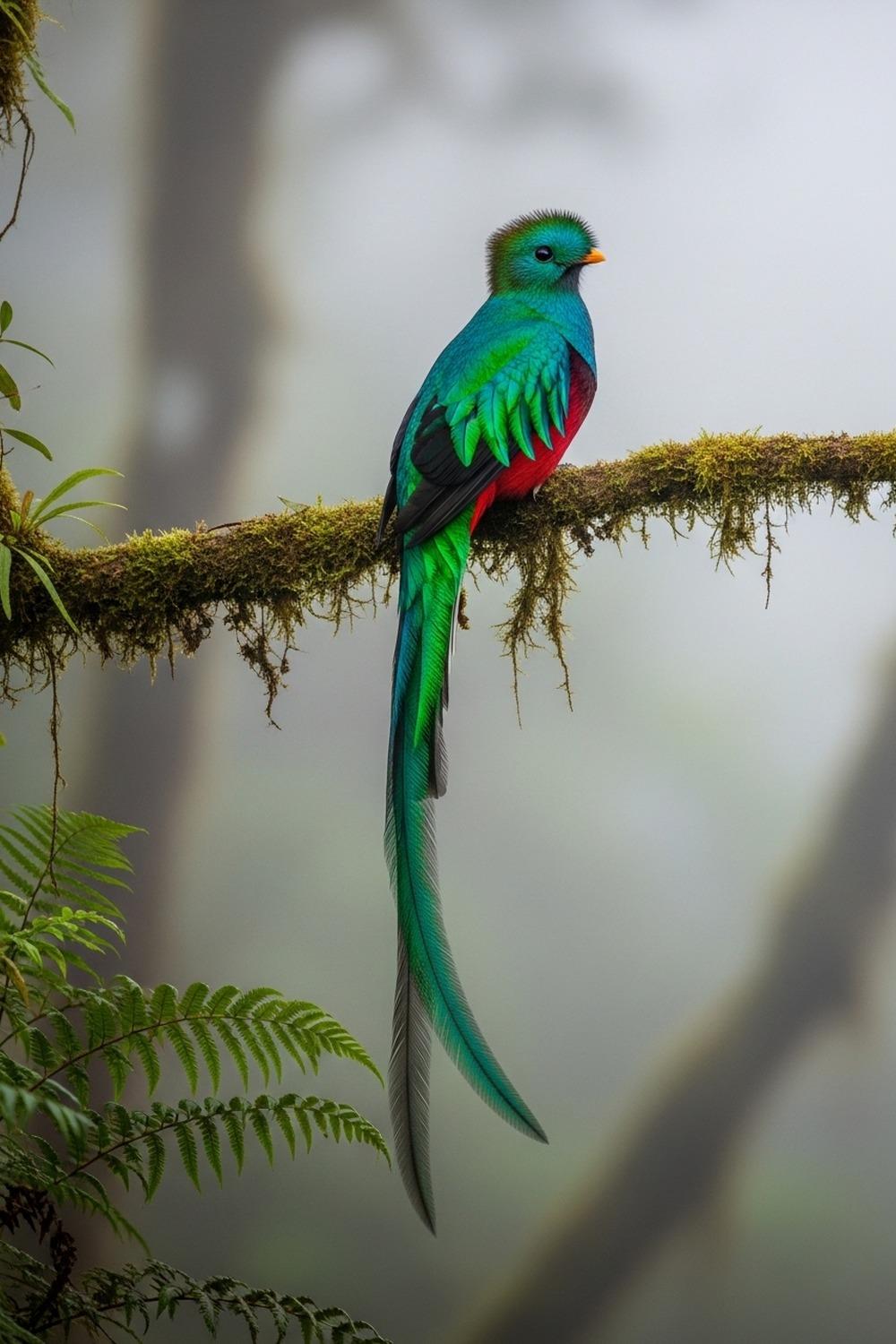
The male’s tail feathers — called uppertail coverts — can reach three feet in length. That’s not poetic exaggeration. That’s literally longer than most toddlers are tall, attached to a bird you could hold in two cupped hands. Evolution decided this was an excellent survival strategy.
Females apparently agreed.
How the Maya Turned a Bird Into a God
The Maya didn’t just admire the quetzal. They wove it into the actual fabric of their spiritual world. Quetzalcoatl, the feathered serpent deity shared across Mesoamerican cultures, literally translates to “quetzal-feather serpent.” Among the Maya, the bird symbolized freedom and divine wind. Rulers wore elaborate headdresses constructed from those shimmering green tail plumes, and the civilizations that built around these symbols were astonishing in their complexity.
Here’s where it gets intense: killing a quetzal was punishable by death.
Not metaphorically. Not theoretically. Actual execution. An entire legal framework designed to protect a single bird species. The Maya understood something about ecological reverence that took Western conservation movements centuries to catch up to. Whether they framed it as ecology or sacred duty didn’t really matter — the outcome was the same. The bird survived.
What Makes This Bird Genuinely Unlike Anything Else
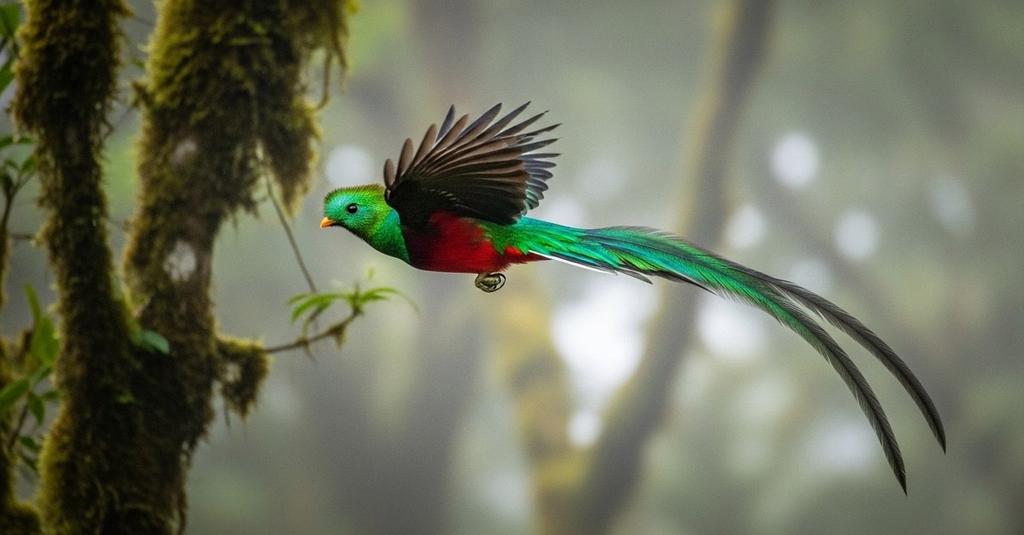
The resplendent quetzal sacred bird doesn’t just look extraordinary. It behaves like it was designed by someone who’d never heard of camouflage. The feathers shift color depending on light angle — deep emerald becomes bright gold in a single wingbeat. The belly is a saturated crimson red that looks almost painted on. In dappled cloud forest light, the whole bird seems to vibrate with color.
Biologists call this structural coloration. Microscopic structures in the feather barbs scatter light rather than absorb it, producing colors that don’t fade even after death. The females are iridescent green too, but without the tail. Sensible, in a way.
The males are essentially flying targets.
Gorgeous. Conspicuous. Carrying three feet of drag behind them every time they need to escape a predator. Natural selection made a brutal trade-off: be irresistible to mates, be visible to everything else. It’s a gamble that’s worked for millions of years. That last fact kept me reading for another hour.
The Avocado Problem Nobody Talks About
Here’s the thing about quetzals — they’re what ecologists call a keystone species, and their survival is tangled up with a tree most people only know from brunch.
Wild avocado trees (Persea species) are the quetzal’s primary food source. The birds swallow the fruit whole, digest the flesh, and disperse the seeds across the forest floor. Without quetzals, avocado regeneration slows dramatically. Without avocados, quetzals starve. It’s a relationship built over millions of years, and we’re dismantling it in decades.
Guatemala has lost roughly 40% of its cloud forest cover in recent generations. These aren’t just trees disappearing — they’re entire ecological webs unraveling. Every hectare cleared removes nesting sites, food sources, and the altitude-specific microclimates the quetzal can’t live without. The bird doesn’t adapt down to lower elevations. It physically can’t. Its biology is too specialized for that.
By the Numbers
- Near Threatened status (2016), population declining.
- Guatemala’s cloud forests have shrunk by an estimated 40% over recent decades, driven primarily by agricultural conversion and logging pressure in highland regions.
- Male tail feathers reach up to 90–100 centimeters — roughly three feet — making them among the longest decorative feathers of any bird species on Earth relative to body size.
- The quetzal flies at elevations between 1,200 and 3,000 meters above sea level; this extremely narrow altitude range makes it one of the most habitat-restricted birds in the Western Hemisphere.
Field Notes
- Cavity nesters carving holes in dead trees.
- Both parents share incubation duties — unusual for birds with extreme sexual dimorphism — and males have to back out carefully to avoid snapping their tail feathers. Every time.
- Despite being Guatemala’s national bird, appearing on the flag and currency, quetzals are notoriously impossible to keep alive in captivity. Most die quickly in enclosures. The Maya knew something we forgot: this bird won’t survive in a cage.
- Quetzal feathers were used as currency in ancient Mesoamerican trade networks, and the Guatemalan monetary unit — the quetzal — is still named after the bird today, making it one of very few animals whose name is also legal tender.
Why Losing This Bird Would Be Irreversible
The resplendent quetzal sacred bird represents something bigger than one spectacular species. It’s an indicator — a living signal of whether Central America’s cloud forest ecosystem is functioning. When quetzals thrive, the forest is intact. When they disappear, it means the whole system is collapsing: the trees, the altitude, the moisture cycles, the thousands of unnamed species that depend on the same conditions.
Conservation biologists use the term “umbrella species” for exactly this reason. Protect the quetzal’s habitat and you protect an entire world.
Guatemala has established several protected reserves specifically targeting quetzal habitat, including the Sierra de las Minas Biosphere Reserve. Community-based ecotourism programs in places like Cobán have given local families a financial reason to protect rather than clear the forests. It’s working, in patches. But the pressure from poverty and land demand doesn’t stop.
And that’s the tension at the heart of this story. The Maya solved it with sacred law. We’re trying to solve it with economics. One approach kept the bird alive for a thousand years. The other has put it on a watch list in less than a hundred.
Something that took millions of years to evolve this perfectly — the iridescent feathers, the forest-specific diet, the tail that defies all aerodynamic logic — exists right now in the mist above Guatemala. It’s still there. Still real. Still the most visually astonishing bird most people will never see in person. Whether it’s still there in fifty years depends entirely on choices being made today, by governments and farmers and tourists and people who’ve never even heard of a cloud forest. If this kind of story matters to you, there’s more at this-amazing-world.com.
“
Frequently Asked Questions
Q: Why was the resplendent quetzal sacred to the Maya?
The Maya wove the quetzal into the core of their spiritual world. The feathered serpent deity Quetzalcoatl, shared across Mesoamerican cultures, literally translates to quetzal-feather serpent. The bird symbolized freedom and divine wind, and rulers wore elaborate headdresses made from its shimmering green tail plumes. The reverence carried legal force: killing a quetzal was punishable by death, an entire legal framework built to protect a single bird species, which helped it survive for centuries.
Q: Why is the resplendent quetzal endangered?
The quetzal is classified as Near Threatened on the IUCN Red List (2016) with a declining population, driven mainly by habitat loss. Guatemala has lost an estimated 40 percent of its cloud forest cover in recent decades to agricultural conversion and logging. Because the bird lives only between 1,200 and 3,000 meters elevation and cannot adapt to lower altitudes, every hectare cleared removes irreplaceable nesting sites, food, and the specific microclimates it requires to survive.
Q: What does the quetzal eat and why does it matter?
Wild avocado trees of the Persea genus are the quetzal’s primary food source. The birds swallow the fruit whole, digest the flesh, and disperse the seeds across the forest floor, making them a keystone species. Without quetzals, avocado regeneration slows dramatically; without avocados, quetzals starve. This relationship took millions of years to develop, and conservationists treat the quetzal as an umbrella species, protecting its cloud forest habitat protects an entire ecosystem.
Q: How long are the quetzal’s tail feathers?
The male’s tail feathers, called uppertail coverts, reach 90 to 100 centimeters, roughly three feet, which is longer than most toddlers are tall and attached to a bird small enough to hold in two cupped hands. These rank among the longest decorative feathers of any bird relative to body size. The trailing length is a brutal evolutionary trade-off: it makes males irresistible to mates while leaving them conspicuous and slowed against predators.
Illustrations are AI-generated. Article fact-checked and human-edited. Our editorial standards.