The Gold Coin Rule America Kept for 250 Years — Until Now
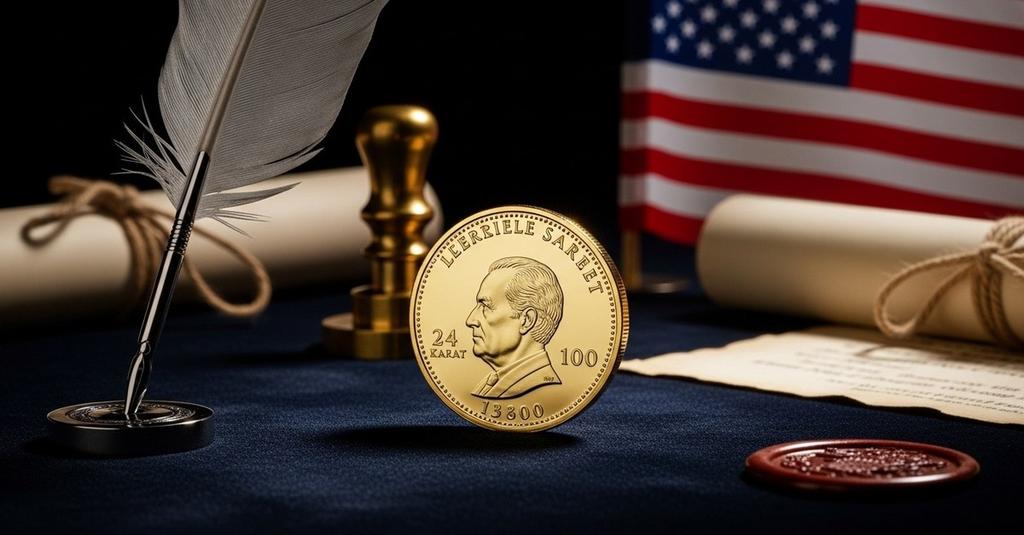
So there’s this rule about American coins. Nobody actually wrote it down. For 250 years, it just… held. A living president’s face never appeared on U.S. currency. Not once. And then the Commission of Fine Arts approved a 24-karat gold coin featuring Donald Trump, timed to land right on America’s 250th birthday in 2026.
If the Treasury signs off, that’s it. The rule cracks. A living president gets minted into gold for the first time since the nation’s founding — and the weird part? There’s no law against it. Never was. It’s purely cultural. Purely symbolic. Which might be exactly why everyone’s so unsettled about it.
Key Facts
- The Commission of Fine Arts approved a 24-karat gold coin featuring Donald Trump for America’s 250th anniversary in 2026.
- For roughly 250 years, no living president’s face appeared on U.S. currency, an unwritten tradition with no governing law.
- George Washington reportedly refused the honor of his face on currency during his lifetime around 1799.
- The U.S. Mint issued its first commemorative coin in 1892, the Columbian Exposition half dollar.
- Washington appeared on the quarter starting in 1932, only after his 1799 death, over 130 years after the founding.
In short: The living president gold coin debate erupted after the Commission of Fine Arts approved a 24-karat gold coin featuring Donald Trump for America’s 2026 semiquincentennial. For 250 years an unwritten rule, traced to George Washington’s refusal around 1799, kept living presidents off U.S. currency. The Treasury must still approve minting.
The Rule Nobody Could Enforce
There’s no statute that says “no living presidents on coins.” That’s what makes this strange. The whole thing traces back to the founding era — a deliberate rejection of what European monarchies did constantly. Kings stamped their faces on every coin. It meant power. Ownership. Divine right. George Washington reportedly refused the honor when it was offered to him. A living face on currency felt too much like monarchy. Too dangerous for a republic that’d just fought a war to get away from that exact thing.
And nobody pushed back. Washington said no, and the tradition stuck.
Two and a half centuries. Wars. Economic collapse. Political upheaval that would’ve shattered lesser customs. But this one held. The fact that an unwritten rule survived all that — it says something about how seriously early Americans took this boundary.
What This Coin Actually Is (And Isn’t)
Before the argument gets too heated, here’s what matters: commemorative coins aren’t the same as everyday money. They’re collectibles. Limited runs. Sold at a premium. The U.S. Mint started minting them in 1892 with the Columbian Exposition half dollar, and they’ve featured everyone from Civil War generals to Olympic athletes. You can find stranger historical artifacts than coins over at this-amazing-world.com — and I mean *stranger*.
So technically? This isn’t breaking the rule. It’s bending it. It’s operating in a category where the traditional restraint never quite applied the same way.
Except it did, quietly. Even commemorative coins kept living presidents off. That restraint didn’t disappear at the mint’s door — it just got quieter. That last fact kept me reading for another hour.
Washington’s Political Statement, Still Echoing
It is 1799. George Washington is offered immortality on American currency during his own lifetime. He refuses.
This wasn’t modesty for the gallery. This was philosophy. Washington understood what historians still argue about: symbols shape power structures. A king’s face on a coin means the king owns the realm — the money, the land, the people. Putting a living leader’s image into everyday circulation blurs that line between democratic republic and the very monarchy they’d just escaped. The living president gold coin wasn’t a design choice. It was a political act.
Which is exactly why a 2026 approval is generating this much noise before production even starts. It’s not neutral. It’s not about one president or one coin. It’s about what the gesture means.
The 250th Birthday Complicates Everything
Timing matters. America’s semiquincentennial in 2026 arrives with enormous cultural weight. The country pauses. Reflects. Decides what it values. Dropping a living president gold coin into that moment isn’t accidental. Whether you see it as celebration or provocation depends entirely on where you sit — politically, historically, philosophically.
The Commission of Fine Arts approved the design.
The Treasury still has to greenlight minting. That gap between approval and production is where the real fight happens. The clock’s already moving.

Every Other Country Figured This Out Differently
Britain put monarchs on coins for centuries. Still does. Canada, Australia, New Zealand — the whole Commonwealth tradition treats living heads of state on currency as normal, almost expected. Even some republics feature sitting leaders without triggering constitutional debates.
America chose differently.
Not because we had to. Because we decided to. A self-imposed constraint that said: our leaders serve the republic, not the other way around. A symbolic statement that mattered enough to last 250 years without legislation.
And now it’s bending — even if it’s just a commemorative coin, even if it’s limited edition, even if it’s 24-karat gold sold at a premium. It’s still a face on metal. It still means something. The question America’s quietly asking is whether it means what it used to.
By the Numbers
- 1892: The U.S. Mint issued its first commemorative coin. Over 130 years of production without a living president’s face on gold.
- 24-karat gold commemorative coins typically sell for 20–50% above face value — they’re financial instruments as much as historical pieces.
- George Washington appeared on the quarter starting in 1932, but only after his death in 1799. Over 130 years after the nation’s founding.
- The 2026 semiquincentennial is expected to generate one of the largest commemorative coin programs in U.S. Mint history, spanning gold, silver, and clad editions across multiple designs.
Field Notes
- The Commission of Fine Arts, established in 1910, is an independent federal agency. It reviews the aesthetics of federal art and architecture — not politics. Its approval is advisory.
- Calvin Coolidge appeared on a commemorative coin relatively close to his time in office, but the standard’s always been that the subject is no longer serving. The living president distinction runs deeper than the death rule.
- Coin collectors — roughly 140 million worldwide — assign higher value to coins marking genuine historical firsts. A Trump semiquincentennial coin, controversial as it is, could become one of the decade’s most sought-after pieces.
What We’re Actually Deciding Here
Strip away the politics. What’s left is a country at a genuine inflection point. Not about one coin or one president, but about which traditions still feel sacred and which we’re quietly renegotiating. This debate isn’t about gold. It’s about what Americans think their leaders actually are, at a symbolic level.
Servants of the republic?
Or figures deserving something closer to veneration?
Washington answered that question 250 years ago. What happens at the Treasury in the next few months — in Congress, in public opinion — that’s America’s answer in 2026. The two answers may look nothing alike.
Symbols last. That’s why we mint them in metal. A coin can outlast the politics that created it by centuries. Whatever gets decided won’t just be a collectible. It’ll be an artifact — a small, heavy, golden record of what this country chose to do at its 250th birthday, when nobody quite knew which direction it was turning.
The unwritten rule held for 250 years. Now it’s bending. Whether that’s progress or a warning depends entirely on who you ask. Either way, the coin doesn’t care. It’ll keep existing long after the debate dies and the people arguing are gone. That’s what makes this bigger than politics. It’s history, happening now. If this keeps you up at night, there’s more at this-amazing-world.com — and the next one gets even stranger.
Frequently Asked Questions
Q: Is there a law against putting a living president on a U.S. coin?
No. There is no statute that prohibits living presidents from appearing on U.S. currency or coins, which is what makes the proposed 2026 living president gold coin so unusual. The restraint is purely cultural and symbolic, tracing back to the founding era as a deliberate rejection of European monarchies that stamped rulers’ faces on coins. The tradition held for roughly 250 years without any legislation enforcing it, surviving wars, economic collapse, and political upheaval.
Q: What is the Trump 2026 gold coin and is it official money?
The Commission of Fine Arts approved the design for a 24-karat gold commemorative coin featuring Donald Trump, timed to America’s 250th birthday in 2026. Commemorative coins are collectibles, not everyday money. They are limited runs sold at a premium, typically 20 to 50% above face value. The U.S. Mint has issued them since 1892, featuring figures from Civil War generals to Olympic athletes. The Treasury still has to approve minting before any coins are produced.
Q: Why did George Washington refuse to appear on currency?
Around 1799, George Washington reportedly refused the honor of having his face on American currency during his lifetime. This was a philosophical and political statement, not modesty. Washington understood that a king’s face on a coin symbolized ownership of the realm, and putting a living leader’s image into circulation blurred the line between a democratic republic and the monarchy Americans had just fought to escape. He appeared on the quarter only in 1932, more than 130 years after his death.
Q: Why is the 2026 timing of the coin significant?
America’s semiquincentennial, its 250th birthday, arrives in 2026 with enormous cultural weight as the country reflects on what it values. The 2026 anniversary is expected to generate one of the largest commemorative coin programs in U.S. Mint history, spanning gold, silver, and clad editions. Dropping a living president gold coin into that symbolic moment is not accidental, and the gap between the Commission’s approval and final Treasury greenlighting is where the real debate is unfolding.
Illustrations are AI-generated. Article fact-checked and human-edited. Our editorial standards.