He Could’ve Avoided It. He Chose Not To.
Lee Ji-ho had a legal way out. Most heirs in his position would’ve taken it quietly, filed the paperwork, moved on. He renounced his U.S. citizenship instead — permanently, irreversibly — and then showed up to naval training anyway.
It’s the kind of choice that makes you sit back and ask: why would anyone do that?
Last week, at a commissioning ceremony in Changwon, South Korea, Lee Ji-ho — eldest son of Samsung chairman Lee Jae-yong — stood as the flag representative for his entire officer class. Not because of his name. Because his peers and instructors chose him, after eleven weeks of the kind of training designed to break people down and see what’s actually underneath.
Key Facts
- Lee Ji-ho, eldest son of Samsung chairman Lee Jae-yong, was commissioned as a South Korean naval officer.
- He renounced his U.S. citizenship permanently before enlisting, forgoing a legal path to avoid conscription.
- He was chosen as flag representative for his officer class after an eleven-week training program.
- South Korea maintains approximately 500,000 active-duty military personnel as of 2024, conscripting about 300,000 men annually.
- Samsung assets are estimated to represent more than 20% of South Korea’s total GDP.
In short: The Samsung heir military service story centers on Lee Ji-ho, son of chairman Lee Jae-yong, who renounced his U.S. citizenship before enlisting in the South Korean navy. After an eleven-week officer program, his peers and instructors chose him as flag representative, a notable gesture given Samsung controls assets worth over 20% of South Korea’s GDP.
Samsung Heir Military Service: The Setup
South Korea requires military service from male citizens between 18 and 28. No exceptions. Except — and here’s where it gets interesting — dual nationals born abroad sometimes can delay or avoid it altogether under existing legal frameworks. According to South Korea’s conscription rules, there are narrow pathways out. Lee Ji-ho had one available to him. Clean. Legal. Quiet.
He didn’t take it.
The renunciation happened before training. Not after. That timing is everything, because it means the hardest part of the choice came first. He closed that door, locked it, threw away the key that could’ve unlocked it again — and then he walked into a naval academy where they train you to function on three hours of sleep while people yell at you.
Eleven Weeks That Change How People See You
The Korean Naval Academy’s officer candidate program isn’t decorative. It’s relentless. Sleep deprivation. Physical conditioning that builds muscle memory and breaks ego simultaneously. Tactical instruction. Peer evaluation that never stops — the instructors and classmates are watching how you act when you think nobody’s looking, and especially how you act when you know everyone is. The flag representative title is chosen by instructors and classmates together. It’s earned, not appointed. That distinction matters more than it sounds.
Someone going in as Lee Ji-ho — with that name, that wealth, that history — had every reason to expect a different experience than the person next to him. Maybe lighter physical demands. Maybe teachers who’d go easier. Maybe the kind of subtle accommodations that money and status typically purchase.
He got none of that. Not because anyone was trying to prove a point, but because the system doesn’t work that way. And that’s what makes the peer recognition legitimate.
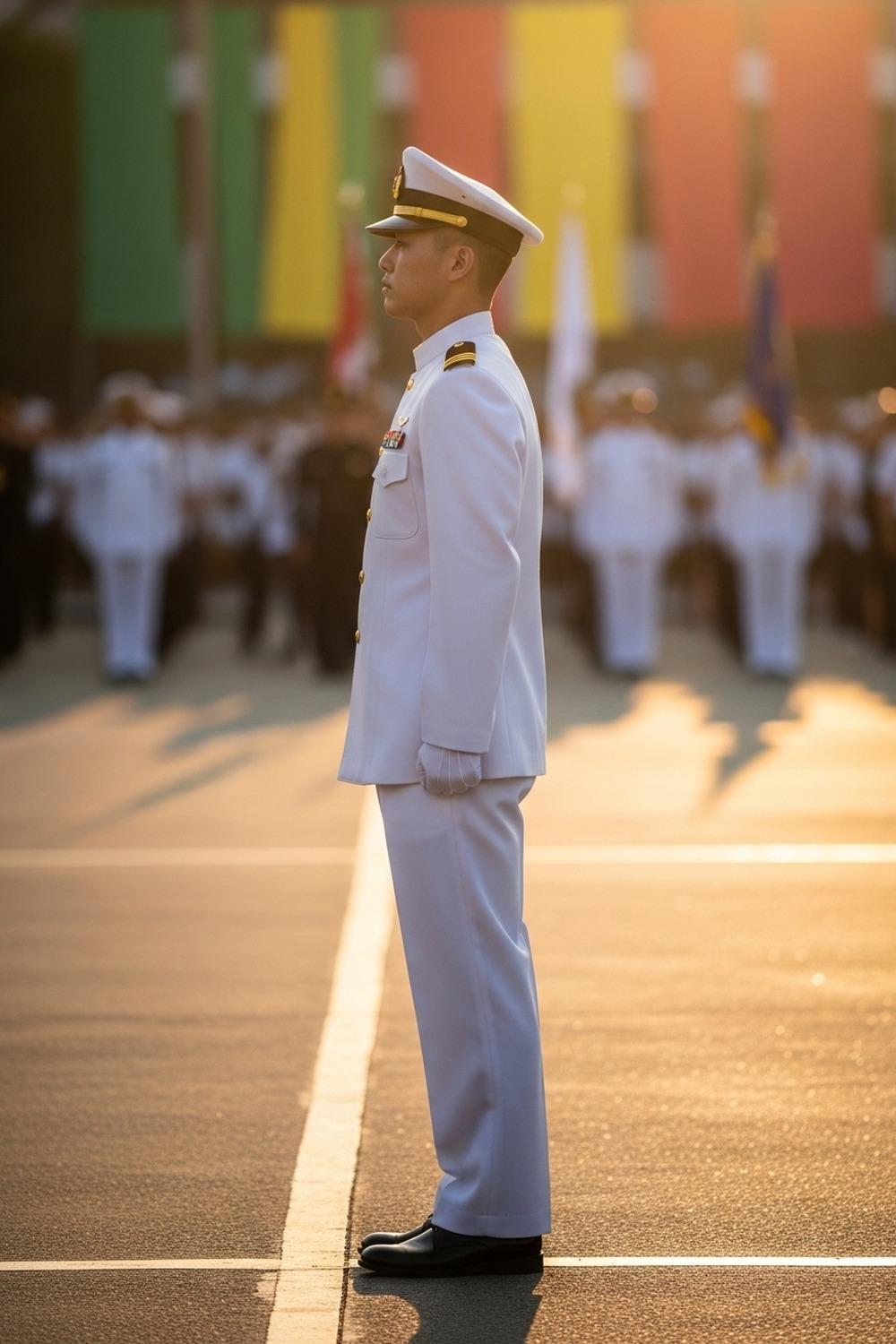
The Lee Family Showed Up Together
Samsung’s founding family is private by design. Public appearances are rare. Full-family appearances are rarer still. They showed up to the ceremony anyway. All of them. Watching their eldest son commissioned as a naval officer, the same way any officer gets commissioned, regardless of whether their family controls assets representing roughly 20% of South Korea’s total GDP.
In a country where Samsung touches nearly everything, that visual carries weight. It sends a signal. And people felt it.
South Korea’s relationship with wealthy families and military service is complicated. There’s a history. High-profile exemptions. Quiet workarounds. Public anger that doesn’t fully dissipate. This felt different, and that difference got noticed.
The Citizenship Thing
Here’s what kept me reading for another hour last night: renouncing U.S. citizenship is permanent. There’s no take-backsies. No provisional cooling-off period. Once it’s done, the U.S. doesn’t let you reverse it. For someone born into the kind of global mobility that extreme wealth provides — the kind of person who’d never actually need a backup passport because they’ve never needed to worry about access — giving that up isn’t theoretical. It closes doors. Narrows options. It’s a legally binding statement that says: I’m choosing this identity, and I’m locking out the other one.
And he did it before enlisting.
The sequence matters. If he’d renounced citizenship after completing service, you could argue it was a symbolic gesture tacked onto something already completed. But he reversed a major life choice first, then walked into the hard part. That’s not the same thing.
By the Numbers
- South Korea maintains approximately 500,000 active-duty military personnel as of 2024.
- About 300,000 men are conscripted annually, with service lengths between 18 to 21 months depending on branch — the U.S. formally processed over 3,800 citizenship renunciations in 2023 alone, but voluntary renunciations tied to military enlistment in another country remain exceptionally rare.
- The Lee family controls Samsung assets representing estimates of more than 20% of South Korea’s total GDP.
- Lee Ji-ho is arguably the highest-profile conscript in the country’s modern history.
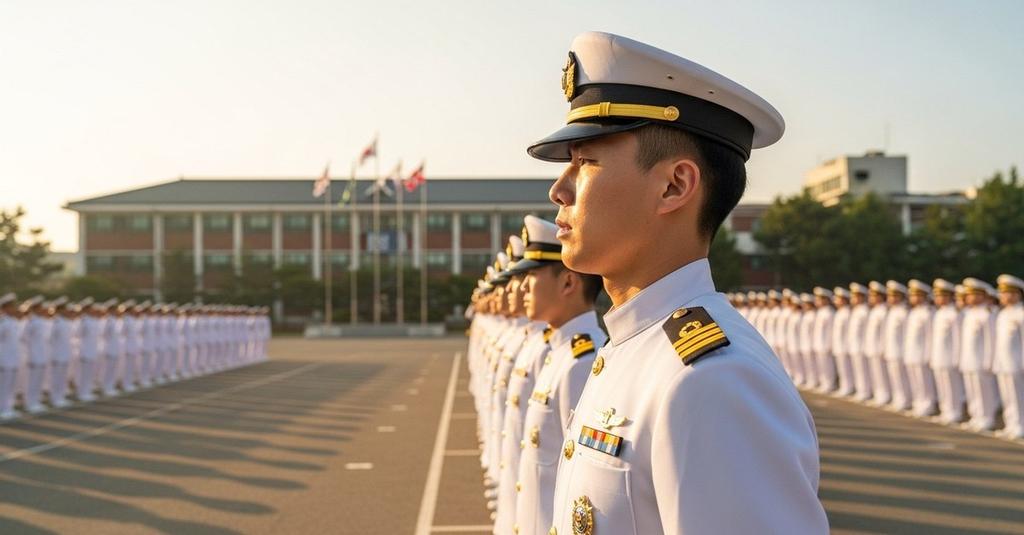
What Actually Happened in Those Eleven Weeks
- The “flag representative” honor isn’t appointed by rank or family background — it’s peer-evaluated across the full training cycle.
- South Korea has legal categories governing dual nationals and military obligations, revised multiple times after public outcry over high-profile exemptions in entertainment and corporate families.
- Several K-pop artists and entertainment figures faced significant public backlash for seeking military exemptions in recent years, making Lee Ji-ho’s voluntary approach land with particular cultural force in that context.
Why This Matters Beyond South Korea
Every society has this same tension running underneath. Rules that apply to everyone. Mechanisms that allow certain people to step around them. Sometimes legal. Sometimes just money moving through the right channels. The existence of those mechanisms isn’t always wrong, but when someone chooses not to use them — especially someone who could, visibly and without real consequence — the story shifts.
It stops being about compliance.
It becomes about character.
Lee Ji-ho didn’t have to renounce anything. Didn’t have to train. Didn’t have to spend eleven weeks in a system designed to strip away comfort. The fact that he did — that’s the part worth paying attention to. Not because it fixes anything systemic. One person’s choice doesn’t repair a broken system. But the choices people make when they’re completely free not to make them? Those choices reveal something true.
He’ll finish his full service obligation. He’ll eventually return to a company that generated over $200 billion in revenue last year, to a family name that’s synonymous with South Korea itself. But right now he’s a commissioned naval officer who earned his place in that room the same way everyone else did. If stories like this pull you down the rabbit hole, there’s more waiting at this-amazing-world.com.
Frequently Asked Questions
Q: Who is Lee Ji-ho and why is his military service notable?
Lee Ji-ho is the eldest son of Samsung chairman Lee Jae-yong and arguably the highest-profile conscript in South Korea’s modern history. His service is notable because he renounced his U.S. citizenship permanently before enlisting, giving up a legal pathway that could have let him avoid conscription. At his commissioning ceremony in Changwon, he was chosen as flag representative for his entire officer class after 11 weeks of demanding naval training.
Q: Why did the Samsung heir renounce his U.S. citizenship?
As a dual national born abroad, Lee Ji-ho could have legally delayed or avoided South Korea’s military service, required of men aged 18 to 28. Instead he renounced his U.S. citizenship before enlisting, an irreversible step the U.S. does not let you reverse. The timing mattered because the hardest part came first. By renouncing before training rather than after, he made a binding statement of identity, not a symbolic gesture.
Q: What is South Korea’s military service requirement?
South Korea requires military service from male citizens between the ages of 18 and 28, with no general exceptions. Service lengths run between 18 and 21 months depending on the branch. The country maintains approximately 500,000 active-duty personnel as of 2024 and conscripts about 300,000 men annually. Dual nationals born abroad can sometimes delay or avoid service under narrow legal frameworks, which is the pathway Lee Ji-ho chose not to use.
Q: What is the flag representative honor he received?
The flag representative title is the highest peer honor in the officer candidate program and is earned, not appointed. It is chosen by instructors and classmates together across the full 11-week training cycle, not assigned by rank or family background. Lee Ji-ho received it after a relentless program involving sleep deprivation, physical conditioning, tactical instruction, and constant peer evaluation, making the recognition legitimate rather than a product of his name or wealth.
Illustrations are AI-generated. Article fact-checked and human-edited. Our editorial standards.