She Turned Down $26M to Keep Her Family Farm Alive
Twenty-six million dollars is the kind of number that ends conversations before they start — except, in Mason County, Kentucky, it didn’t. The farmland vs AI expansion standoff that unfolded on Ida Huddleston’s 1,200 acres never became a negotiation. It barely became a conversation at all.
She and her daughter Delsia Bare own this land — rolling, river-worked soil that’s been farmed continuously for generations. An unnamed AI company wanted to turn part of it into a data center. They offered ten times the local going rate. The Huddlestons said no, and from everything reported, it wasn’t a difficult conversation.
Key Facts
- An unnamed AI company offered the Huddleston family $26 million for a portion of their 1,200-acre Mason County, Kentucky farm in 2026
- The offer worked out to roughly ten times the local going rate of $2,000 to $3,000 per acre for Mason County farmland
- Between 1950 and 2020, the U.S. lost approximately 2.2 million farms, dropping from 5.6 million to roughly 2 million operations, per USDA data
- A single hyperscale data center can consume between 1 million and 5 million gallons of water per day for cooling alone
- Ida Huddleston is 82 years old; her family declined the offer immediately, with daughter Delsia Bare stating their position as ‘Stay and hold and feed a nation’
In short: The farmland vs AI expansion standoff in Mason County, Kentucky saw the Huddleston family decline a $26 million offer, roughly ten times market rate, from an unnamed AI company for part of their 1,200-acre farm. With the U.S. having lost 2.2 million farms since 1950, 82-year-old Ida Huddleston refused without negotiation.
The Farmland vs AI Expansion Standoff Explained
Data centers — the massive server farms that power everything from cloud storage to large language models — need enormous amounts of land, water, and electricity. Rural America has all three. According to data center infrastructure researchers, a single hyperscale facility can consume millions of gallons of water per day and requires hundreds of acres of flat, accessible land. So AI companies have been quietly circling American farmland for years now.
Most of the time, the money wins.
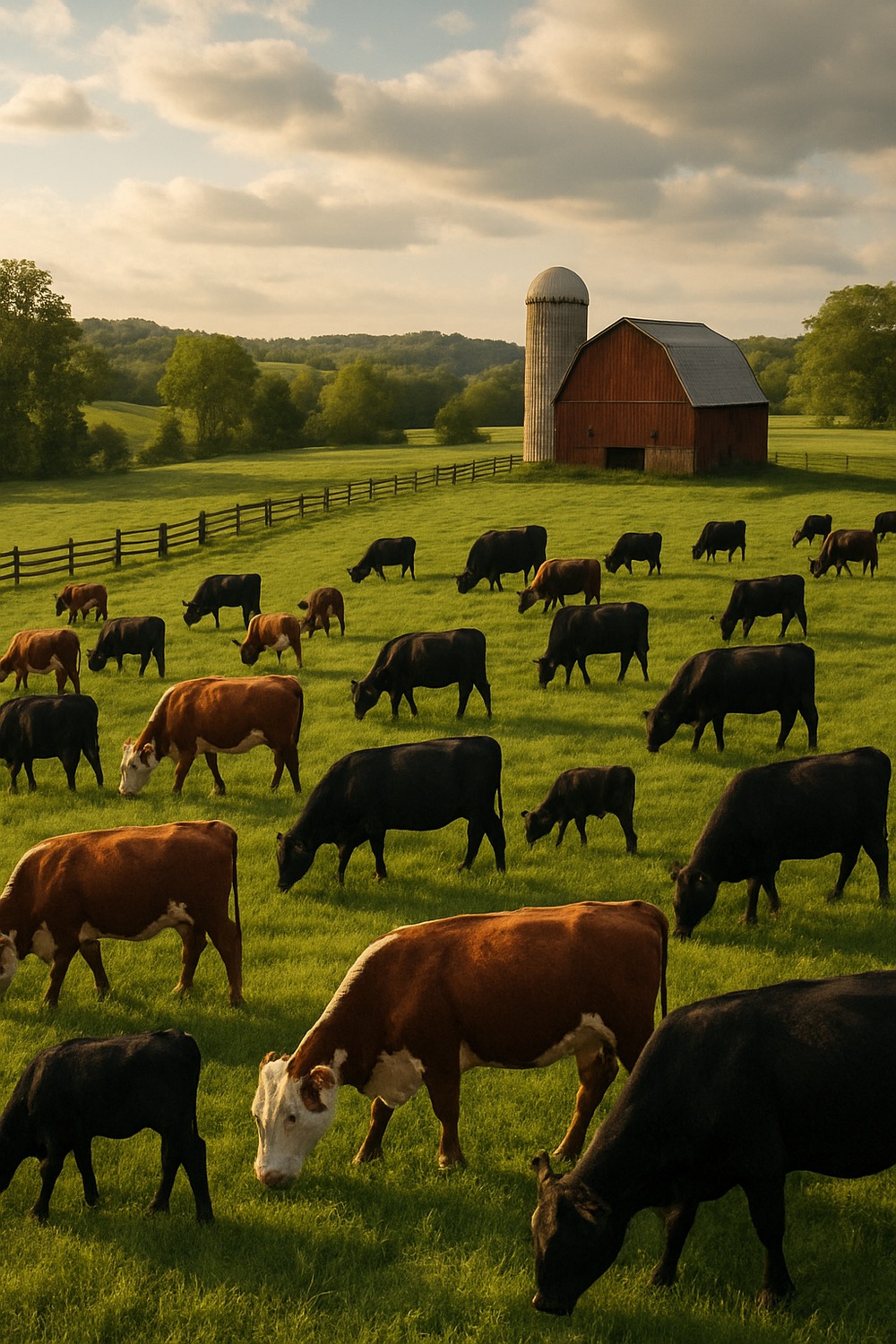
Mason County isn’t a tech hub. It’s tobacco fields and cattle and Ohio River bottomland that’s been worked by hand for well over a century. The Huddlestons aren’t holding out for a better offer. They’re not holding out at all. They’re just not selling.
That last distinction kept me reading about this story for another hour.
What $26 Million Actually Means in Rural Kentucky
Farmland in Mason County typically sells for somewhere between $2,000 and $3,000 per acre. The AI company’s offer — for what appears to be a portion of the 1,200 acres — works out to roughly ten times that. Which isn’t a real estate negotiation. That’s a company that needed something badly enough to make a number almost impossible to say no to.
Why does this matter? Because if you’ve wondered why tech companies are suddenly so aggressive about rural land acquisition, the infrastructure race behind AI is quietly reshaping entire American regions in ways most people haven’t tracked yet.
Across eight decades, Ida Huddleston has watched farming change in ways most people only read about in agricultural histories. Mechanization. Consolidation. Drought years that wiped out neighbors. Market swings that wiped out more. When the offer came — turns out it wasn’t the first time someone had circled this land — her answer was four words: “This farm fed a nation.”
Why Families Like This One Are the Last Line
The farmland vs AI expansion tension isn’t a Kentucky story. Not exclusively, anyway.
Across the U.S., data center developers have been moving into rural land at an accelerating pace — Virginia’s Loudoun County (already called “Data Center Alley”), Arizona’s agricultural valleys, the cornfields of Iowa. Small family farms are particularly exposed. They tend to be land-rich and cash-poor, which makes an offer ten times market rate feel less like a choice and more like gravity. The Huddlestons are unusual not because they were targeted, but because their refusal seems to have been immediate and total — no apparent anguish, no counter-offer, no negotiations dragging into months.
Some decisions, apparently, don’t require deliberation.
Delsia Bare’s stated position: “Stay and hold and feed a nation.” That’s not negotiating language. That’s a declaration. And it raises a question most coverage of this story hasn’t spent much time on — what do we actually lose when farmland becomes server land? Not philosophically. Practically.
The Thing Nobody Talks About When Farms Disappear
Once farmland gets converted to industrial use — paved, graded, filled with heat-generating hardware — it’s functionally gone. The soil doesn’t recover on any timeline that matters agriculturally. And the communities built around farming don’t recover either. Feed stores, equipment dealers, seasonal rhythms, kids who grow up understanding where food actually originates — these things don’t get rebuilt when a data center eventually gets decommissioned.
This isn’t nostalgia for a simpler time. It’s a structural loss that compounds quietly, invisibly, over decades. History has a way of treating the people who ignored this kind of evidence unkindly.
And the asymmetry here is almost impossible to overstate: an AI company doesn’t need any particular piece of land — they’ll find somewhere to build, they always do — but Ida Huddleston only has one farm.
The Hidden Environmental Costs Nobody Mentions
Converting farmland to data centers doesn’t just change what the landscape looks like — it changes how it functions. Farmland, even imperfect monoculture farmland, provides carbon sequestration, groundwater recharge, and wildlife corridors that paved industrial sites simply don’t. Data centers generate significant heat waste, require constant cooling that stresses local water supplies, and produce noise and electromagnetic pollution that affects surrounding properties for miles. The long-term environmental accounting for these conversions (researchers actually call this “landscape function loss”) remains poorly understood.
Rural communities often don’t see the economic benefits they’re promised, either. Data centers are heavily automated. A 500-acre facility might employ fewer than 50 full-time workers. That same land, farmed, supports an entire web of interconnected livelihoods — not just the farm family, but everyone economically downstream of them: the feed stores, the co-ops, the local mechanics who keep the equipment running.
How It Unfolded
- Late 1700s — Mason County’s Ohio River bottomland enters continuous agricultural use; farming records begin, predating Kentucky statehood.
- Mid-20th century — Consolidation accelerates across rural Kentucky; family operations like the Huddlestons’ become rarer as industrial agriculture expands.
- 2010s — Data center developers begin targeting agricultural regions in earnest; Virginia’s Loudoun County transforms from farmland to “Data Center Alley” within a single generation.
- 2026 — An unnamed AI company offers the Huddleston family $26 million — ten times market rate — for a portion of their 1,200-acre Mason County farm. The family declines immediately.
By the Numbers
- Between 1950 and 2020, the U.S. lost approximately 2.2 million farms — dropping from 5.6 million to roughly 2 million operations, according to USDA Census of Agriculture data.
- Data center land consumption grew an estimated 20–25% annually between 2020 and 2024, with rural and agricultural zones increasingly targeted.
- Between 1 million and 5 million gallons of water per day — that’s what a single hyperscale data center can consume for cooling alone. Comparable to a small city’s daily usage, drawn from the same aquifers that irrigate surrounding farmland.
- Ten times market rate.
- Mason County’s $26 million offer signals how acutely data center developers are competing for rural sites with reliable power grid access — experts say premiums like this reflect genuine scarcity, not generosity.
Field Notes
- Neither the Huddleston family nor the unnamed AI company has gone public with the other’s identity — which itself says something about how these deals look from the outside.
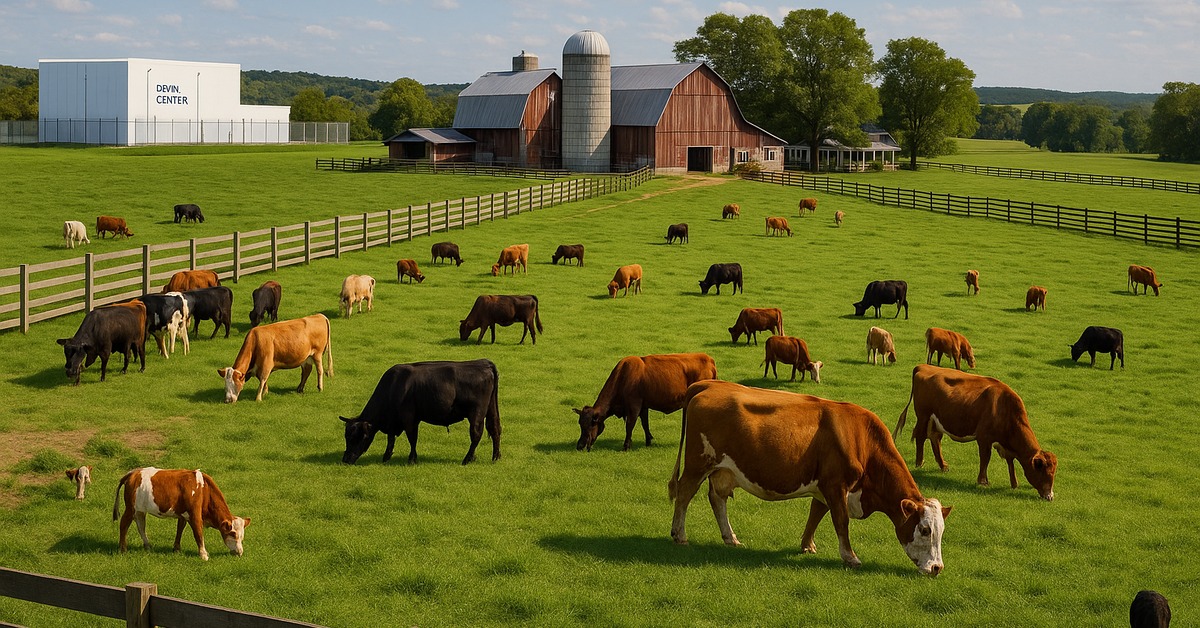
- Mason County sits along the Ohio River and contains some of the oldest continuously farmed soil in Kentucky, with agricultural records stretching back to the late 1700s.
- Virginia’s Loudoun County — now home to the world’s largest concentration of data centers — was once predominantly agricultural land. Local historians have documented a near-total loss of the farming community that defined the county for over 200 years. It happened fast. Most residents didn’t notice until it was finished.
Why This Kentucky Family’s Stand Actually Matters
Here’s the thing about the farmland vs AI expansion conflict: it’s going to get worse before it gets better. As AI systems scale up, they require exponentially more computing infrastructure — more land, more water, more power drawn from grids that rural areas often can’t easily expand. The pressure on agricultural communities isn’t easing.
What the Huddlestons did wasn’t just a personal decision about their property. It was a signal — quiet, unglamorous, made without a press conference — that not everything has a price. That some values don’t sit inside the market at all.
Because what gets lost in the farmland vs AI expansion coverage is this: if every family farm eventually has its price, if every piece of ground is just an asset waiting for a bigger offer, then something disappears that can’t be easily named until it’s already gone. Food security. Rural identity. The basic civic knowledge of where things come from and who grows them. These aren’t abstract concerns. They’re the infrastructure underneath the infrastructure — the layer that was there long before the servers arrived and won’t be rebuilt if it goes.
Editor’s Take — Sarah Blake
What strikes me most about this story isn’t the refusal — it’s how unremarkable Ida Huddleston seemed to find it. No drama, no deliberation reported, no counter-offer floated. That kind of clarity is rare, and it points to something the farmland vs AI expansion debate almost never surfaces: some families have already done the math on what a place is worth, and they arrived at a number no corporation can match. The Huddlestons aren’t holding out. They’ve already decided. That distinction is going to matter more as these offers multiply.
Ida Huddleston is 82 years old. She didn’t turn down $26 million because she doesn’t understand money. She turned it down because she understands something money can’t restate in its own terms. “Stay and hold and feed a nation” might be the most quietly radical thing anyone said in America this year — and it came from a farm in Kentucky, not a conference stage in San Francisco. For more stories like this one, there’s always more at this-amazing-world.com.
Frequently Asked Questions
Q: What is the farmland vs AI expansion standoff in Mason County, Kentucky?
In 2026, an unnamed AI company offered the Huddleston family $26 million for a portion of their 1,200-acre farm in Mason County, Kentucky, roughly ten times the local rate of $2,000 to $3,000 per acre. The family, including 82-year-old Ida Huddleston and her daughter Delsia Bare, declined immediately without negotiation. Their stated position was ‘Stay and hold and feed a nation.’ The case has become a symbol of the broader tension between data center expansion and family farms.
Q: Why are AI companies targeting rural farmland for data centers?
Data centers, the massive server farms powering cloud storage and large language models, need enormous amounts of land, water, and electricity, and rural America has all three. A single hyperscale facility can consume between 1 million and 5 million gallons of water per day and requires hundreds of acres of flat, accessible land. Data center land consumption grew an estimated 20-25% annually between 2020 and 2024, with developers increasingly targeting agricultural zones with reliable power grid access.
Q: What is lost when farmland is converted to data centers?
Once farmland is paved, graded, and filled with hardware, it is functionally gone; the soil does not recover on any agriculturally meaningful timeline. Data centers are heavily automated, so a 500-acre facility might employ fewer than 50 full-time workers, while the same farmed land supports feed stores, co-ops, and local mechanics. Farmland also provides carbon sequestration, groundwater recharge, and wildlife corridors that industrial sites cannot replicate.
Q: How widespread is the farmland vs AI expansion conflict beyond Kentucky?
The conflict extends across the U.S., with data center developers moving into rural land at an accelerating pace in Virginia’s Loudoun County (now called ‘Data Center Alley’), Arizona’s agricultural valleys, and the cornfields of Iowa. Between 1950 and 2020, the U.S. lost approximately 2.2 million farms, dropping from 5.6 million to about 2 million operations. Small family farms are especially exposed because they tend to be land-rich and cash-poor, making large offers hard to refuse.
Illustrations are AI-generated. Article fact-checked and human-edited. Our editorial standards.