Canada Geese Leave the Formation for Each Other
So there’s this moment that happens every autumn, and nobody really talks about it. A goose falls behind the V-formation — the one that’s saving it 71% of its energy — and its mate just… leaves. Drops right out of the pattern. Comes back down.
It’s been happening for thousands of years. Every single migration season. And I only started noticing because I fell down a research rabbit hole at two in the morning reading about bird vocalizations.
Here’s what got me: when one goose can’t keep up, the flock doesn’t wait. That’s the part everyone expects. But someone always does. And the cost of that decision — the one where a bird abandons the most aerodynamically efficient flight pattern nature ever invented — keeps me thinking about what loyalty actually means.
Key Facts
- A 2001 study in Nature found V-formation flight reduces energy expenditure by up to 71% compared to solo flight.
- Canada geese (Branta canadensis) form pair bonds that can last over 20 years.
- Geese produce at least 13 distinct vocalizations, including acoustically different mate-separation calls.
- The longest recorded banded Canada goose migration covered over 2,000 miles in a single season (U.S. Geological Survey).
- North American Canada goose populations grew from roughly 1 million birds in the 1970s to over 7 million today.
In short: Canada geese loyalty behavior reveals that when a mate is injured, its partner abandons the energy-saving V-formation, which cuts flight effort by up to 71%, to stay grounded with the struggling bird. These geese form 20-year pair bonds and use distinct mate-separation calls, sometimes abandoning migration entirely after a loss.
Why Nobody Talks About This
Canada geese (Branta canadensis) are everywhere. They’re loud. They’re messy. They’ve become so common that we’ve stopped actually looking at them. But if you dig into what researchers have documented — people like Dr. Frank Bellrose, who spent decades tracking waterfowl migration across the Great Lakes — the behavior gets strange fast.
According to Wikipedia’s entry on the Canada goose, these birds form long-term pair bonds. Not seasonal. Not convenient. Bonds that last across migration cycles, sometimes for 20+ years. That’s already weird enough. But then you learn what happens when one bird gets injured.
It doesn’t fly ahead to safety. Its mate comes back.
The Math Doesn’t Work
A 2001 study in Nature proved that birds in V-formation reduce energy expenditure by up to 71% compared to solo flight. That’s not a small optimization. That’s the difference between making it to the wintering grounds or not. For a bird on migration — flying hundreds of miles across open water, sleeping a few minutes at a time, burning calories like there’s no tomorrow — that 71% savings is everything.
And yet.
When a goose gets sick or exhausted, its bonded partner abandons that formation entirely. No hesitation that researchers have been able to document. The bird descends. It stays. Sometimes a third goose — usually a close companion from the same social group — follows them down too. They land. They wait. And if the injured bird doesn’t recover, they wait anyway.
That last fact kept me reading for another hour.
What This Actually Looks Like
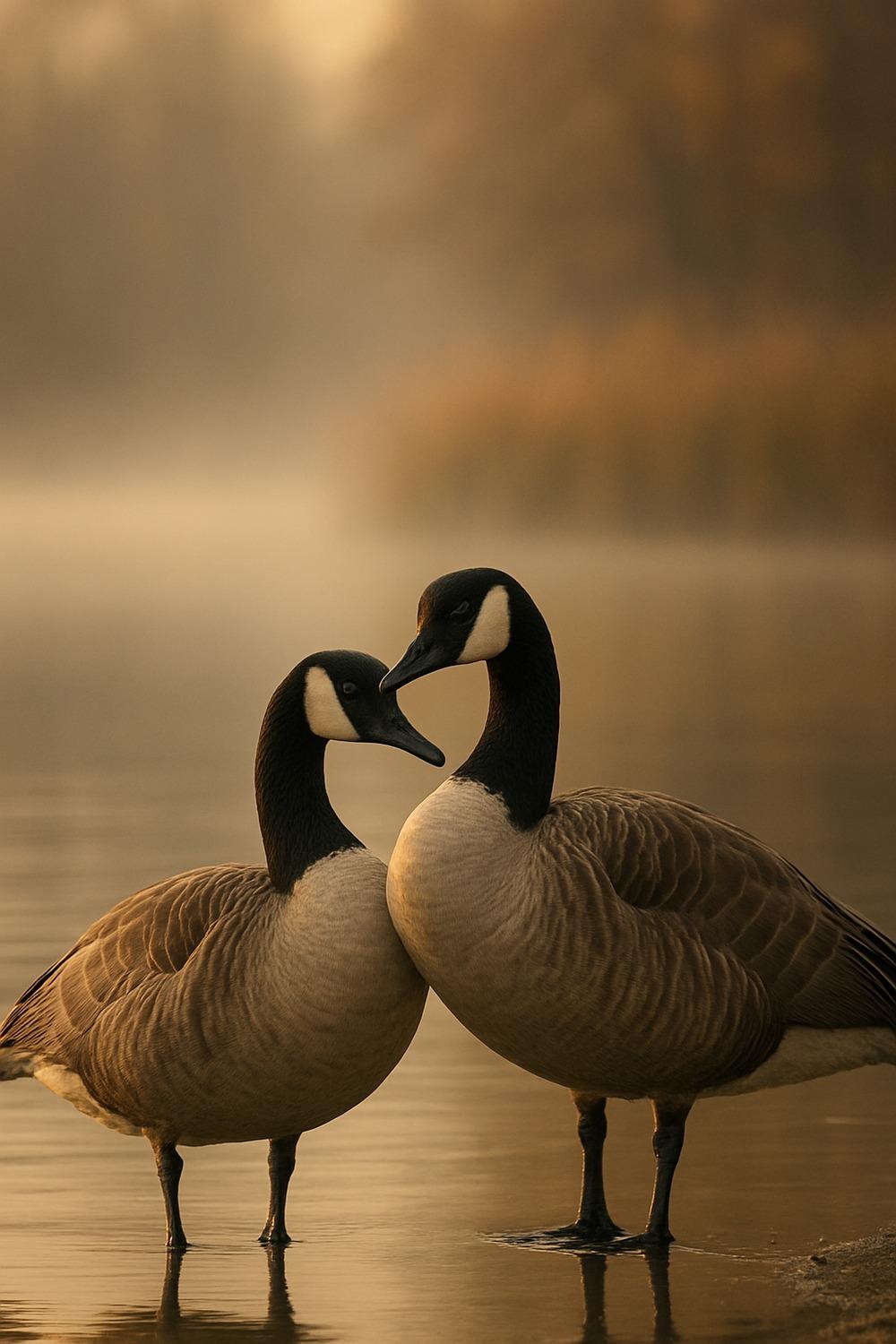
Canada geese loyalty behavior becomes impossible to ignore when a mate dies. That’s when the honking starts — the deep, hollow calling that echoes across water in October. You’ve probably heard it without really registering it. It doesn’t sound like a flock call. It sounds like something is wrong.
Researchers tracking banded birds across the Great Lakes have documented survivors returning to the same shoreline, the same patch of water, day after day. For weeks sometimes. They honk for hours. They pace the shore. Some don’t pair with another bird for an entire season — if at all.
- The honking isn’t random. Geese produce at least 13 distinct vocalizations, and the calls associated with mate separation are acoustically different from flock-coordination sounds.
- Documented cases exist of birds remaining grounded with a dying partner until death, then re-joining a flock alone days later — suggesting deliberate decision-making rather than instinctive behavior.
- When geese lose a mate mid-migration, they sometimes abandon the entire migration for that season.
- Wildlife biologists track this disruption as an indicator of social bond strength in monitored populations.
Scientists are careful about the word “grief.” Too careful, maybe. Anthropomorphism is a real methodological risk. Nobody wants to turn field biology into a Disney movie. But here’s the uncomfortable part: if it honks like grief, paces like grief, and returns to the same shore like grief — at what point does refusing to use the label become its own kind of denial?
The Bond Starts Way Earlier
Most Canada geese form pair bonds in their second year of life. They’re not yet sexually mature. They haven’t successfully migrated together. They choose each other at the wintering grounds — a full year, sometimes longer, before they even build a nest together. Then they figure out the flying and the breeding and the entire long life part.
By the time a real crisis arrives — an injury, an illness, a predator — that loyalty is already ancient history in goose years. The pair breaking formation in October has been practicing fidelity since they were juveniles.
By the Numbers
- Up to 71% reduction in energy expenditure for birds in V-formation — the same formation bonded geese willingly abandon for an injured partner.
- Canada goose pairs typically bond at 2 years old and successful pair bonds often last the entire lifespan of both birds, which can exceed 20 years in the wild.
- The longest recorded migration for a banded Canada goose covered over 2,000 miles in a single season, according to the U.S. Geological Survey’s Bird Banding Laboratory.
- North American Canada goose populations grew from roughly 1 million birds in the 1970s to over 7 million today — meaning millions of people now live alongside this behavior every single year and mostly just complain about the noise.
What Field Researchers Actually See
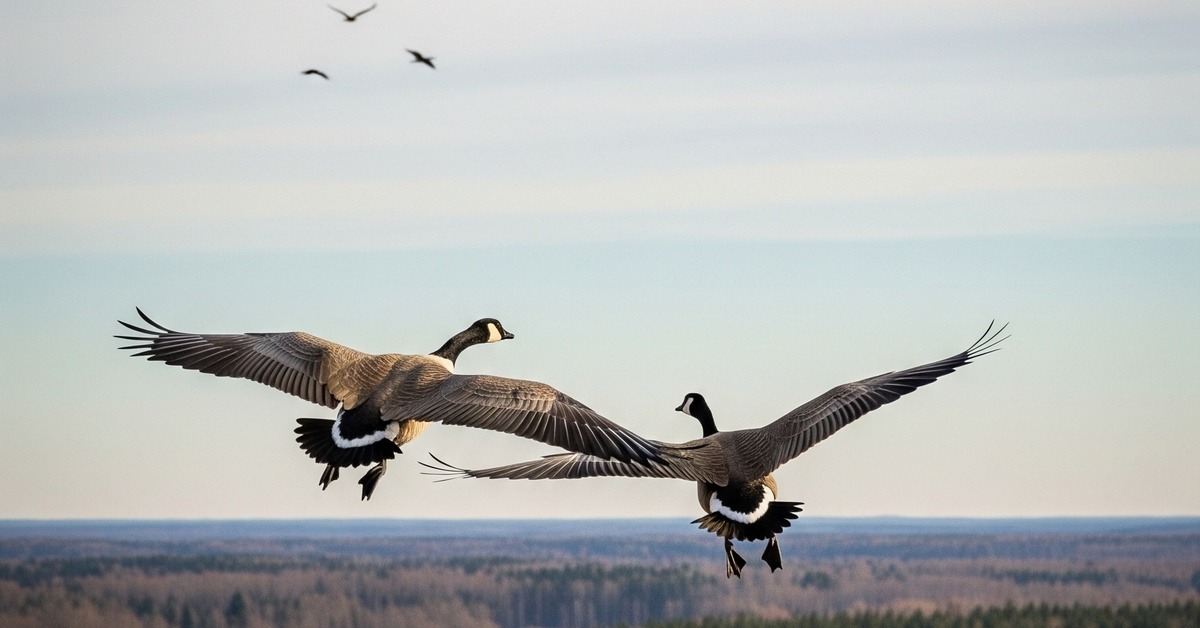
The observations stack up. Consistent. Documented. Repeated across populations from Manitoba to Maryland. A bird doesn’t just stay with an injured mate until recovery — cases exist where geese remain grounded with a dying partner through the entire season, then rejoin a flock alone weeks later. That’s not instinct. That’s choice layered on top of choice layered on top of choice.
Here’s what surprised me most: the specificity of the vocalizations. Those 13 distinct calls aren’t random honking. The acoustics are measurably different for mate-separation calls versus flock-coordination calls. The birds are talking about specific things. They’re communicating deliberate information.
Geese that lose a mate mid-migration sometimes skip the entire migration that year. They winter in places they wouldn’t normally use. They disrupt their own survival strategy — the one they’ve been following for generations — because loyalty demanded it.
So What Do We Do With This?
We treat consciousness like a closed club with a single membership tier. Grief. Loyalty. Love. We hand those words out sparingly, as if they’re ours alone to distribute. But Canada geese loyalty behavior doesn’t ask permission to exist. It just happens.
Every autumn, a formation passes overhead. Somewhere inside it, a bird is making a choice that most humans would find genuinely hard to make. It’s choosing a struggling partner over its own survival math. It’s choosing loyalty over aerodynamic efficiency.
We can keep ignoring it. The honking is annoying. The mess is real. It’s easier to treat these birds as background noise. Or we can look up the next time a V passes and actually wonder which of those birds just decided that something matters more than getting there first.
Canada geese have been migrating across this continent for millions of years before anyone was watching, and they’ll keep doing it long after we stop. They didn’t develop loyalty for our benefit. They developed it for each other. Every fall, in the cold air above every lake and flyway in North America, that loyalty plays out in full — whether we’re paying attention or not. If you want more stories like this, head over to this-amazing-world.com. The next one’s even stranger.
“
Frequently Asked Questions
Q: How long do Canada geese pair bonds last?
Canada geese form long-term, monogamous pair bonds that typically begin at about 2 years of age. These bonds often last the entire lifespan of both birds, which can exceed 20 years in the wild. Unlike many waterfowl, the bonds are not seasonal but persist across multiple migration cycles. Pairs frequently choose each other at the wintering grounds a full year before they nest together for the first time.
Q: Why do Canada geese leave the V-formation for an injured mate?
When a goose becomes sick or exhausted, its bonded partner descends out of the V-formation to stay with it, even though that formation saves up to 71% of flight energy according to a 2001 Nature study. A third goose from the same social group often follows them down. The birds land and wait, sometimes remaining with a dying partner through the entire season before rejoining a flock alone, suggesting deliberate choice rather than pure instinct.
Q: Do Canada geese actually grieve when a mate dies?
Scientists are cautious about the word grief, but documented behavior is striking. Survivors return to the same shoreline day after day, sometimes for weeks, honking for hours and pacing the shore. Geese produce at least 13 distinct vocalizations, and mate-separation calls are acoustically different from flock-coordination sounds. Some birds do not pair again for an entire season. Researchers track this disruption as an indicator of social bond strength in monitored populations.
Q: How many Canada geese live in North America today?
North American Canada goose populations grew from roughly 1 million birds in the 1970s to over 7 million today. This dramatic increase means millions of people now live alongside Canada geese year-round, encountering their loyalty behavior every migration season, though most simply notice the noise and mess. The species (Branta canadensis) is among the most common and widely distributed waterfowl on the continent.
Illustrations are AI-generated. Article fact-checked and human-edited. Our editorial standards.