The 19-Year-Old Pregnant Woman Who Sailed a Clipper Around Cape Horn
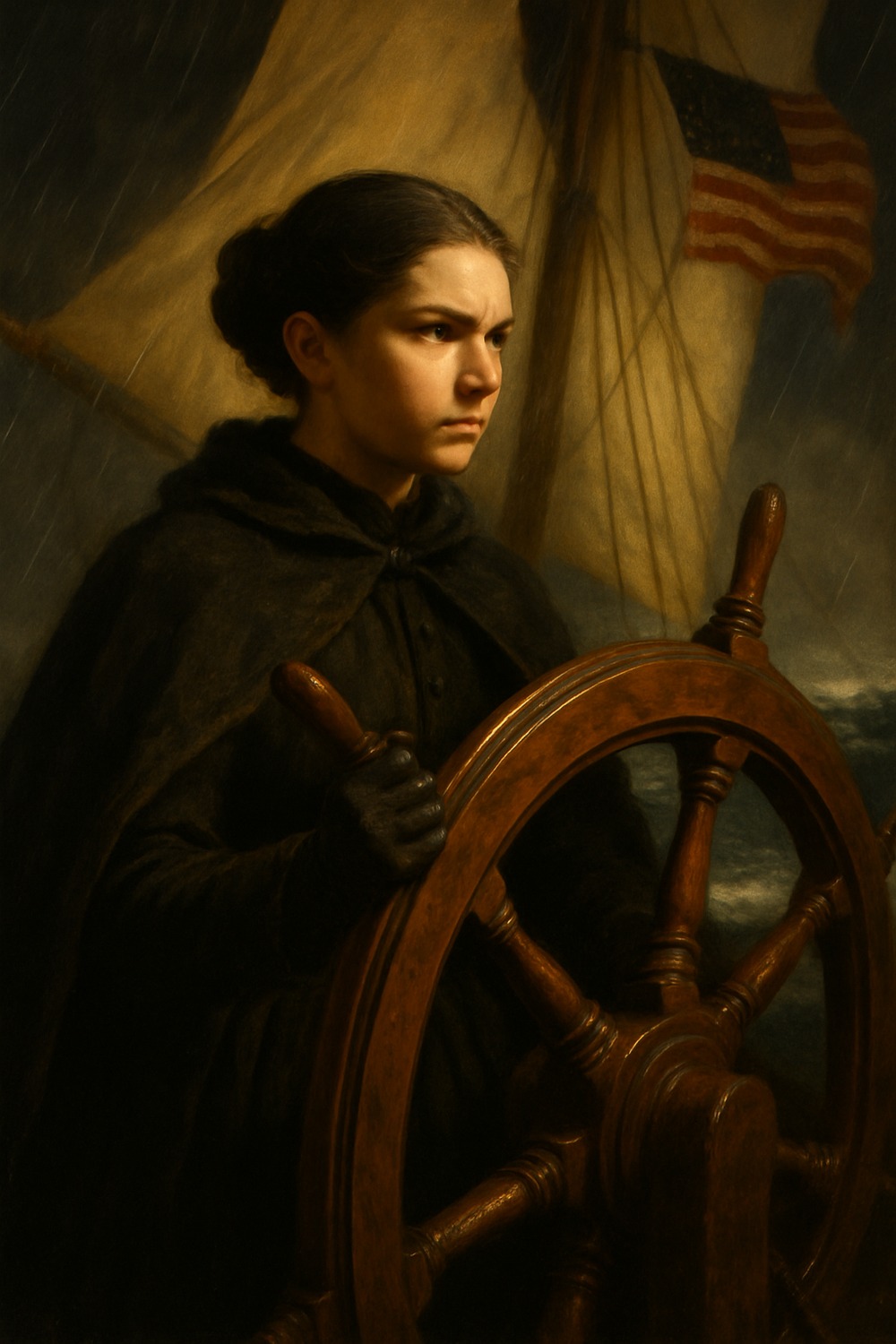
She was nineteen years old, four months pregnant, and standing on the deck of a 216-foot clipper ship in the middle of one of the most punishing ocean crossings in the world. Nobody handed her the wheel. She just picked it up.
It was 1856. The Neptune’s Car is racing around Cape Horn — a route so brutal that seasoned sailors called it the graveyard of ships. Mary Ann’s husband, Captain Joshua Patten, is unconscious below deck with a raging fever. The first mate is under arrest for sabotage. And somehow, this teenage captain’s wife is the only person left who can save everyone aboard.
Key Facts
- In 1856, 19-year-old Mary Ann Patten, four months pregnant, took command of the clipper ship Neptune’s Car around Cape Horn after her husband Captain Joshua Patten fell unconscious with cerebral meningitis.
- The Neptune’s Car was 216 feet long and 1,616 tons, among the largest clippers racing the New York to San Francisco route in the 1850s.
- Mary Ann navigated Cape Horn for 50 straight days while the first mate, William Keeler, was confined for sabotage after deliberately slowing the ship.
- When the ship reached San Francisco Bay in November 1856, the underwriters awarded Mary Ann $1,000, roughly equivalent to $35,000 today.
- She gave birth to a son, William, in March 1857 and was widowed by the following summer at age 20 when Captain Joshua Patten died of tuberculosis.
In short: Mary Ann Patten became a ship captain by necessity in 1856, when at 19 and four months pregnant she took the wheel of the clipper Neptune’s Car around Cape Horn. With her husband unconscious from meningitis and the first mate confined for sabotage, she navigated 50 days of brutal seas and brought the ship safely to San Francisco.
How Mary Ann Patten Became a Ship Captain Overnight
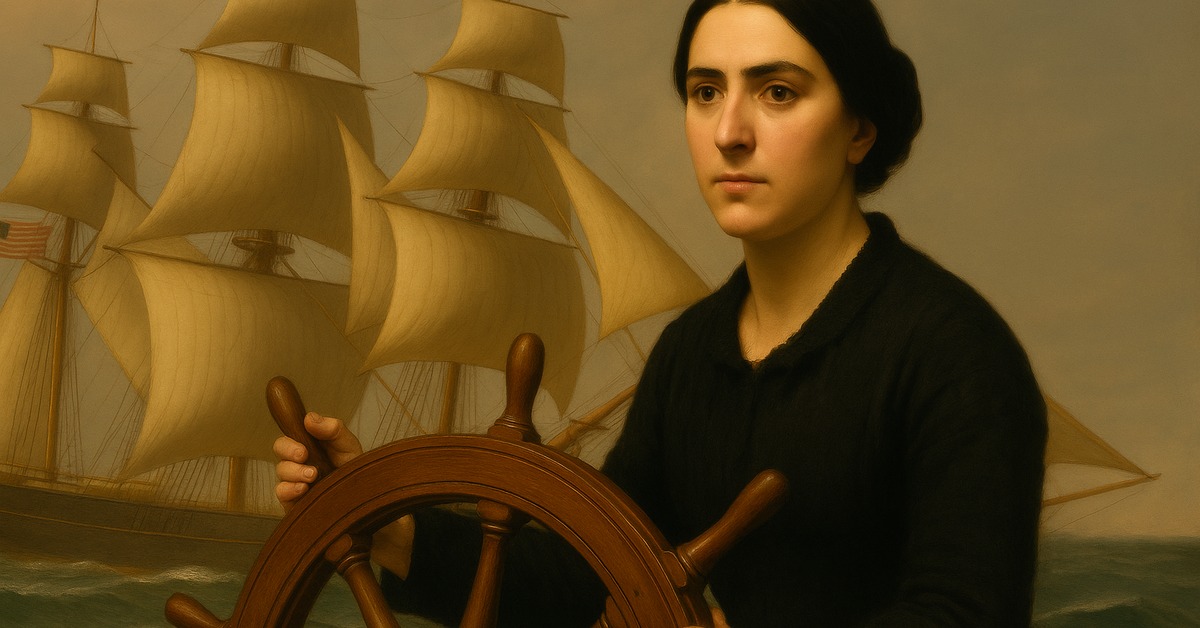
The Neptune’s Car was one of the fastest clipper ships of the mid-19th century, built to race between New York and San Francisco around the bottom of South America. According to maritime historian Alexander Laing, who documented American clipper ship records extensively, the Cape Horn route claimed hundreds of vessels annually during the 1850s gold rush era. You can read more about the Neptune’s Car’s history on Wikipedia.
Mary Ann hadn’t trained for command. She’d come aboard as a captain’s wife — a companion, a presence. But during the long ocean voyages she’d quietly worked through her husband’s books on navigation, charts, meteorology. Nobody thought to ask why she was doing it. Nobody thought they’d ever need to know the answer.
That’s the part that keeps snagging at me.
The Mutiny That Made Everything Worse
Before Captain Joshua collapsed completely, he’d already had the first mate — a man named William Keeler — locked in his quarters. Keeler had been deliberately slowing the ship, apparently trying to lose the race to San Francisco and sabotage the voyage. With Joshua feverish and barely conscious, Keeler saw his opening and tried to leverage the chaos to reclaim control. You can explore other astonishing true stories from history at this-amazing-world.com that involve ordinary people thrust into impossible situations — but this one is something else.
Mary Ann refused him. Flatly, without negotiation. She had Keeler kept confined and turned to the second mate and crew instead. She was 19, visibly pregnant, and surrounded by hardened sailors who had every reason to doubt her.
She didn’t ask for their belief. She just got to work.
What It Actually Took to Sail Cape Horn Pregnant
Cape Horn sits at the southern tip of South America, where the Atlantic and Pacific Oceans collide. The winds there — the Roaring Forties and the Furious Fifties — are so relentless that sailors once said Cape Horn “makes men out of boys and corpses out of men.” Mary Ann Patten, the Mary Ann Patten ship captain the maritime world wasn’t ready for, navigated these waters for fifty straight days.
Fifty days. She slept in snatches, plotted course corrections by lantern light, and nursed her husband using whatever the ship’s medical books could teach her in real time. She was treating what we’d now recognize as cerebral meningitis — without a doctor, without modern medicine, on a moving ship in freezing seas. And between medical rounds, she’d go back up to the deck and command the crew.
That’s not endurance. That’s something else entirely.
San Francisco Didn’t Know What to Do With Her
When the Neptune’s Car finally sailed into San Francisco Bay in November 1856, the shipping world was stunned. The voyage records were intact. The cargo was safe. The crew was alive. The underwriters — the insurance men who’d watched the ship leave with a sick captain and every reason to fail — awarded Mary Ann $1,000, roughly equivalent to $35,000 today.
But what the newspapers and the maritime community actually struggled with was simpler and stranger than the money. They didn’t have a category for what she was. She wasn’t a sailor by training. She wasn’t a licensed captain. She was a wife. And that label — wife — was the only one 1856 America felt comfortable attaching to her, even after everything. So that’s mostly what they called her.
A devoted wife. As if that explained it.
By the Numbers
- The Neptune’s Car: 216 feet long, 1,616 tons — among the largest clippers racing the New York to San Francisco route in the 1850s.
- Cape Horn claimed an estimated 800 ships between 1800 and 1900, making it one of the deadliest maritime routes in recorded history.
- Roughly 15,000 miles of open ocean navigated during the voyage — approximately the distance from New York to Sydney and back.
- She was four months pregnant when the Cape Horn ordeal began. She gave birth to a son, William, in March 1857, just months after arriving safely in San Francisco — widowed by the following summer, at 20 years old, with an infant and almost no income.
Field Notes
- Entirely self-taught celestial navigation, using her husband’s instruments on previous voyages.
- Captain Joshua Patten survived the crossing but never fully recovered. He died of tuberculosis in 1857, months after their son was born. That last detail kept me reading for another hour — the sheer accumulation of what she was asked to absorb, at 20, is almost incomprehensible.
- Public praise from the American Shipmasters’ Association — remarkable, given that women weren’t permitted to hold maritime licenses or command vessels under any official capacity at the time.
Why Mary Ann Patten’s Story Still Matters Today
The story of Mary Ann Patten, ship captain by necessity and by extraordinary nerve, is really a story about what people are capable of when the situation removes the option of not acting. She didn’t step forward because she wanted glory. She stepped forward because her husband was dying, her crew was adrift, and someone had to hold the wheel.
What’s striking isn’t the drama — it’s the quiet competence underneath it. She’d prepared, without knowing she was preparing. Paid attention when no one expected her to. And when the moment arrived, she was ready in ways that even she probably hadn’t fully realized.
There are countless people like this folded into history. Women especially. People who acted without being asked, led without being titled, and were remembered — if at all — for something smaller than what they actually did. Mary Ann said she’d only done what a wife must do. But she’d done what very few humans, of any gender, would have managed.
She was 19. She was pregnant. She was navigating the most dangerous ocean crossing in the world, nursing a dying man, holding off a mutiny, and getting the ship home. When she arrived, they handed her a check and called her devoted. History has a habit of underselling its most astonishing people — and this is one of the clearest examples I’ve ever come across. If this kind of story is the sort that keeps you reading until 3am, there’s more at this-amazing-world.com. The next one is even stranger.
Frequently Asked Questions
Q: How did Mary Ann Patten learn to navigate a clipper ship?
Mary Ann Patten was entirely self-taught. She had come aboard the Neptune’s Car as a captain’s wife, but during long ocean voyages she quietly worked through her husband’s books on navigation, charts, and meteorology, and practiced celestial navigation using his instruments. Nobody expected her to need these skills until 1856, when her husband fell unconscious with cerebral meningitis around Cape Horn and she became the only person capable of commanding the ship.
Q: Why was the first mate confined during the Cape Horn voyage?
The first mate, William Keeler, had been deliberately slowing the ship, apparently trying to lose the race to San Francisco and sabotage the voyage. Captain Joshua Patten had already locked him in his quarters before collapsing. When the captain became feverish and barely conscious, Keeler tried to leverage the chaos to reclaim control. Mary Ann, 19 and visibly pregnant, flatly refused him and kept him confined for the remainder of the 50-day passage.
Q: What recognition did Mary Ann Patten receive for saving the Neptune’s Car?
When the Neptune’s Car reached San Francisco Bay in November 1856 with intact records, safe cargo, and a living crew, the underwriters awarded Mary Ann $1,000, roughly $35,000 today. She also received public praise from the American Shipmasters’ Association, remarkable given that women could not hold maritime licenses at the time. Yet newspapers struggled to categorize her, mostly settling on calling her simply a devoted wife.
Illustrations are AI-generated. Article fact-checked and human-edited. Our editorial standards.