When the Sky Strikes Back: The Iron Dome’s Deadly Limits
Here’s the thing about Iron Dome missile defense limits — they were never hidden. The engineers wrote them into the design specs, acknowledged them in congressional briefings, discussed them in peer-reviewed journals. And still, on a Tuesday evening in June 2025, a missile found the gap. Nine people had run to the shelter. The shelter didn’t hold.
The Fateh-110 that struck Beit Shemesh didn’t slip through Israeli airspace undetected. Radar tracked it. Alarms screamed. Families ran — to the exact shelter that crumbled around them. What happened that night isn’t a story about intelligence failure or military negligence. It’s a story about geometry, physics, and the hard arithmetic of missile defense: what a system can intercept, what it can’t, and the gap between those two facts where people die.
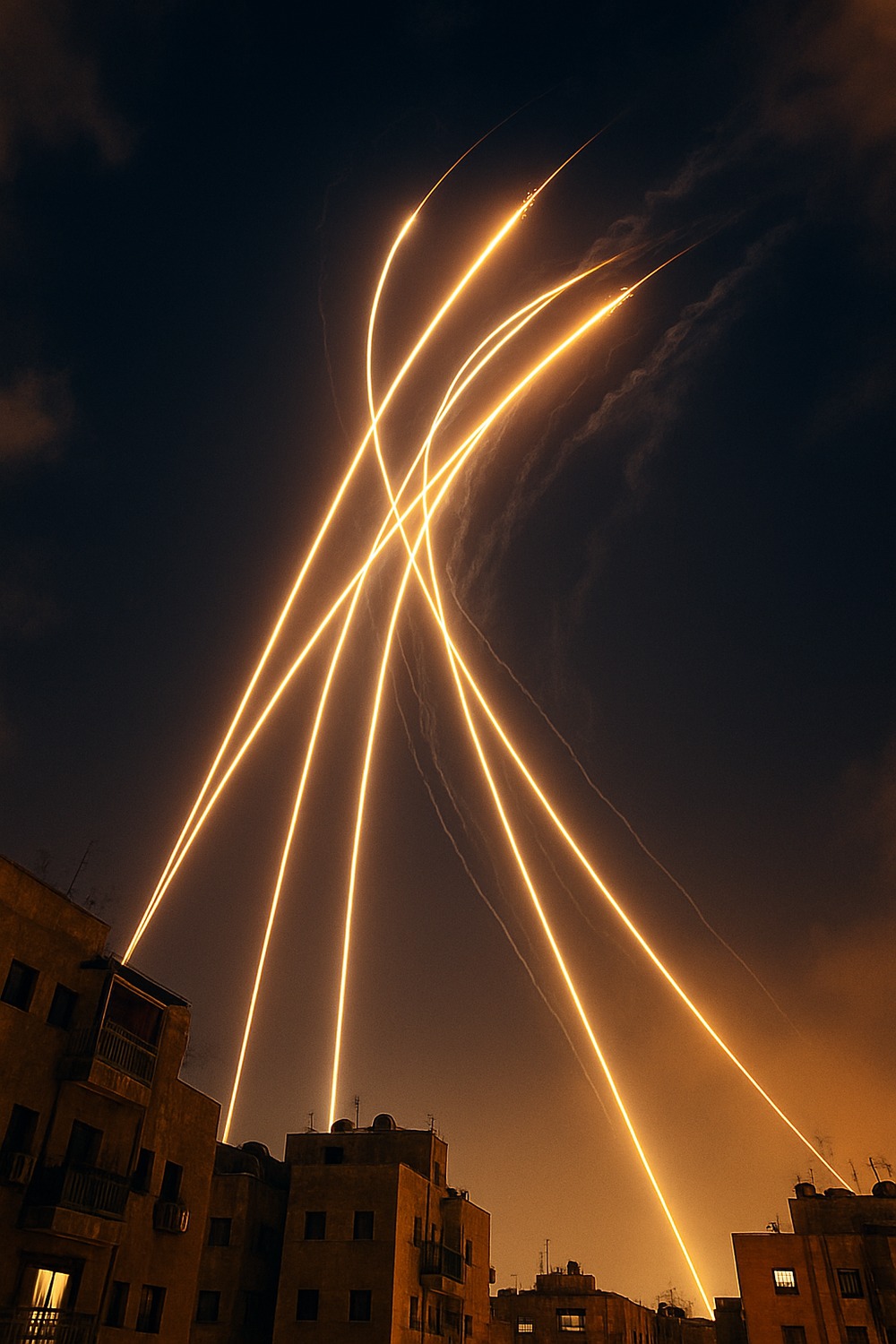
Key Facts
- The Iron Dome became operational in March 2011, when it intercepted its first rocket over Ashkelon.
- The U.S. government contributed over $1.8 billion to Iron Dome development and procurement between 2011 and 2021.
- The system’s official intercept rate is 85 to 90 percent against short-range rockets under standard conditions, per Rafael Advanced Defense Systems.
- Saturation attacks of 15 or more simultaneous missiles reduce intercept rates by 30 to 40 percent, according to a 2022 Center for Strategic and International Studies analysis.
- In June 2025, a Fateh-110 missile struck Beit Shemesh, killing nine civilians despite active air defense operations.
In short: The Iron Dome missile defense limits were never hidden: the system was built for short-range rockets, not precision ballistic missiles like the Fateh-110 that struck Beit Shemesh in June 2025, killing nine. High-angle geometry, saturation salvos, and weapon mismatch compress intercept windows to under five seconds, where even a working battery can be beaten.
How the Iron Dome Actually Works—and Fails
Rafael Advanced Defense Systems and Israel Aerospace Industries built the Iron Dome with significant U.S. Department of Defense funding — over $1.8 billion between 2011 and 2021 alone. Operational since March 2011, when it intercepted its first rocket over Ashkelon, the system runs on three components: a detection and tracking radar, a battle management and control unit, and Tamir interceptor missiles. When a threat appears, the battle management unit calculates the rocket’s projected impact point within seconds. Populated area in the path — it fires. Open field — it doesn’t. That triage logic is deliberate, and it saves interceptor missiles. But it also means some projectiles are intentionally allowed to fall.
The Iron Dome’s Wikipedia entry documents an official interception rate hovering between 85 and 90 percent under typical conditions. What that figure obscures is the word “typical.” Typical means short-range, low-velocity Qassam rockets fired from Gaza across a relatively flat trajectory. It doesn’t mean a Fateh-110 ballistic missile launched from Iran or a forward Iranian proxy position, traveling at hypersonic speeds, arriving at steep angles the system’s engagement envelope wasn’t originally designed to handle. The Fateh-110 is a solid-fueled, precision-guided weapon capable of carrying a 450-kilogram warhead over 300 kilometers. Its terminal velocity and angle of descent create what defense analysts at the Missile Defense Advocacy Alliance described in 2023 as a “high-angle problem” — a flight path that compresses the intercept window to under five seconds in some scenarios.
Five seconds. That’s shorter than it takes to read this sentence aloud twice. When the geometry works against the system, even a functioning Iron Dome battery with a full magazine of Tamirs can watch a missile punch through. Not because something broke. Because physics won.
The Gap Between Promise and Protection
There’s a certain cruelty embedded in systems that almost work. They build confidence. They fill bomb shelters with people who genuinely believe reinforced concrete and an alarm system will be enough. Iron Dome missile defense limits become most dangerous not when the system fails outright, but when its partial success creates a false ceiling of safety — a threshold people trust more than they should. Behavioral economists call it risk compensation (and this matters more than it sounds), and it’s as old as the first Roman soldier who put on armor and charged a little closer. In Beit Shemesh, families didn’t panic or flee the city because the Iron Dome was there. The shield had held before.
Why does this matter? Because the same psychological dynamic shapes how governments fund and communicate about defense systems — and how civilians interpret the alarm that tells them to run.
Defense systems are layered precisely because no single layer is complete. Arrow-3, which reached initial operational capability in 2017, intercepts ballistic missiles in space — outside the atmosphere, before reentry. David’s Sling, also operational since 2017, covers medium- to long-range threats. Iron Dome handles short-range rockets and artillery shells. Together, the three form what Israeli military planners call a “multi-tier” defense. On paper, it’s elegant. In practice, every layer carries its own intercept geometry, its own weather sensitivity, its own saturation threshold — the point at which too many incoming threats overwhelm the available interceptors. A 2022 analysis by the Center for Strategic and International Studies in Washington found that saturation attacks, fired in coordinated salvos of 15 or more missiles simultaneously, reduced estimated intercept rates across all tiers by 30 to 40 percent.
That night in Beit Shemesh, the Fateh-110 may not have arrived alone. Reports from the Israel Defense Forces cited a wave of simultaneous launches targeting central Israel. The system had to choose. It chose wrong — or ran out of time to choose at all.
Ballistic Threats That Outrun the System’s Design
Since at least the mid-2000s, the Fateh-110 has represented a category of threat reshaping missile defense doctrine. Iran’s Islamic Revolutionary Guard Corps has invested heavily in precision-guided munitions that don’t just fly farther than their predecessors — they steer in their final seconds, correcting course to hit within meters of a designated target. The BBC’s security correspondent reported in 2024 that Iran’s ballistic missile arsenal had grown to over 3,000 operational units — the largest in the Middle East by volume, with the Fateh family constituting a significant proportion of that stockpile. The BBC’s detailed analysis of Iran’s missile program noted that guidance packages on newer Fateh variants have reduced circular error probability — the radius within which 50 percent of shots land — from 500 meters to under 10 meters. That’s not a rocket. That’s a sniper’s bullet at ballistic speeds.
Understanding these Iron Dome missile defense limits requires stepping back from the interceptor itself and looking at what engineers call the “kill chain” — the sequence of detect, track, classify, engage, destroy. Each link carries a time budget. Radar detects a launch. Computers classify the threat. The battle management system calculates impact. A Tamir missile fires. Against a slow Qassam rocket, there’s time for multiple intercept attempts. Against a fast-closing Fateh-110 fired from a shorter range, the kill chain may not complete before the window closes. The missile arrives before the response does.
Ignoring this problem for long enough has consequences that compound — and the Beit Shemesh strike is what compounding looks like.
Engineers at Rafael have publicly acknowledged the gap since at least 2019, describing ongoing software updates designed to compress kill-chain latency. The updates help. They don’t solve the problem entirely. A system designed in 2005 to counter 2005-era threats will always lag behind weapons refined in 2025.
Iron Dome Missile Defense Limits in the Real World
Nine people killed in Beit Shemesh weren’t statistics when they woke up that Tuesday morning. Three were teenagers — siblings. A mother died beside her adult daughter. Another mother died beside her son. The synagogue where they sheltered had been reinforced according to Israeli Home Front Command standards, its basement classified as a protected space, designed to withstand blast overpressure from conventional rockets. But a Fateh-110 is not a conventional rocket, and the blast that collapsed the structure exceeded the shelter’s design parameters by a margin engineers are still measuring.
A 2021 study by the Technion — Israel Institute of Technology in Haifa examined structural resilience in public shelters across 47 Israeli cities, finding that 62 percent of shelters built before 2010 were designed to standards that would not protect against modern precision ballistic weapons carrying warheads above 200 kilograms. The Fateh-110 carries more than double that. Buildings built to one era’s threat model, now standing in another era’s conflict — that’s not a scandal. That’s an engineering timeline problem. And it’s exactly the kind of problem that looks manageable until a Tuesday night in June proves otherwise.
And this is where the Iron Dome missile defense limits cut deepest. The system was never the only line of defense. It was designed to be the first line — to reduce the volume of threats reaching the ground to a manageable number. When that first line falters against a high-end threat, the fallback is a shelter network built for a different threat model. Both protections failing simultaneously produces exactly what happened in Beit Shemesh: a night when the shield didn’t hold, and the shelter didn’t hold, and nine people paid the difference.
Israeli authorities announced within 72 hours that the Home Front Command would begin a comprehensive reassessment of shelter standards nationwide, with particular attention to structures within 150 kilometers of the Lebanese and Syrian borders. Defense Minister Israel Katz called for accelerated procurement of additional Tamir interceptors and an emergency review of engagement protocols for ballistic threats. The review was already overdue.
What Comes Next: Defense in the Age of Precision Missiles
History offers uncomfortable parallels. During the 1991 Gulf War, Patriot missile batteries were deployed across Saudi Arabia and Israel with enormous public fanfare — hailed as a technological triumph that would neutralize Saddam Hussein’s Scud missiles. The reality, documented in a landmark 1992 General Accounting Office report, was sharply different: Patriot’s actual intercept rate against Scuds may have been as low as 9 percent under operational conditions, compared to the 80 percent figure the U.S. Army cited at the time. On February 25, 1991, a Scud struck a U.S. barracks in Dhahran, killing 28 American soldiers — passing through a Patriot battery that had been taken offline for software maintenance. The system was there. The missile got through. Thirty-four years later, the names change. The arithmetic doesn’t.
Since 1983 — from Reagan’s Strategic Defense Initiative to today’s Ground-Based Midcourse Defense system in Alaska — the U.S. Department of Defense’s Missile Defense Agency has spent over $200 billion on missile defense programs. The cumulative evidence suggests that intercepting modern ballistic missiles under operationally realistic conditions, against an adversary actively trying to saturate or decoy the system, remains one of the hardest engineering problems in existence. Not impossible. Not unsolvable. But unsolved — and likely to remain so as long as offensive missile technology continues to outpace defensive systems in cost efficiency. A Tamir interceptor costs roughly $50,000 to $100,000. The Qassam rockets it intercepts cost under $1,000 to manufacture. The economic asymmetry alone makes saturation attacks an almost irresistible strategy.
Stand in Beit Shemesh today, on the street where the synagogue stood, and the rubble has been cleared but the foundation scar remains. Children’s shoes, photographs, a prayer book with its spine broken — the artifacts of lives interrupted mid-sentence. The people who walked into that basement shelter did everything right. They heard the alarm, they moved fast, they chose the reinforced space. The system failed the mathematics. They paid the difference. That is what the edge of a missile defense system looks like when it’s measured not in intercept percentages, but in actual human cost.
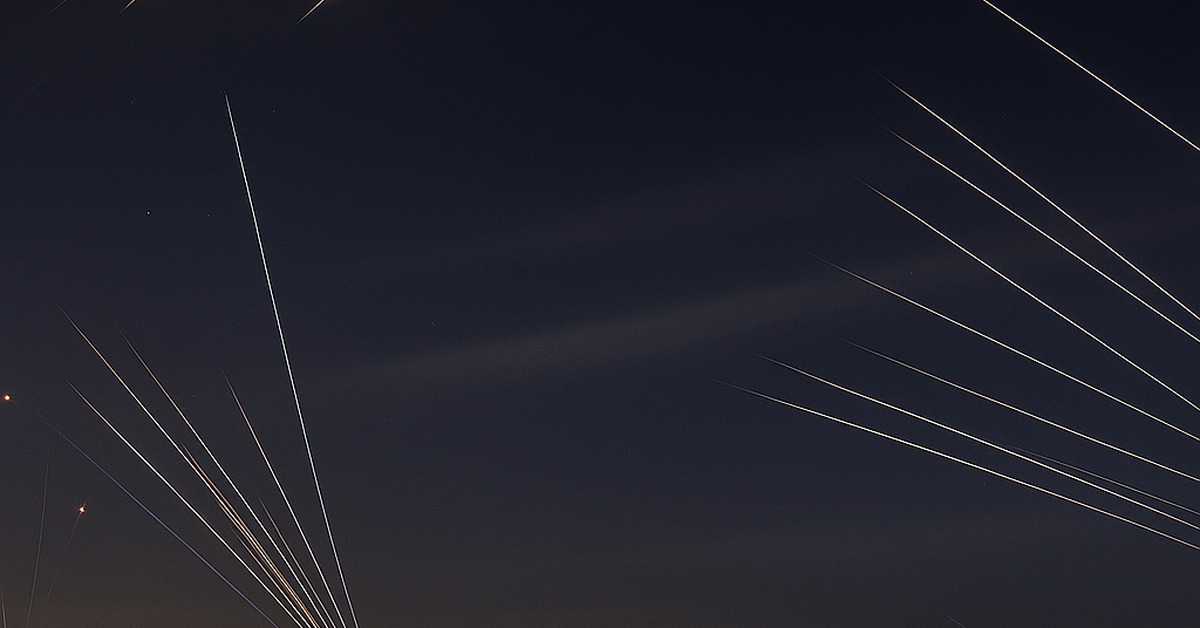
How It Unfolded
- 2005: Rafael Advanced Defense Systems and Israel Aerospace Industries begin development of the Iron Dome system, funded partly by the U.S. Department of Defense in response to the 2006 Lebanon War’s Katyusha rocket campaign.
- 2011: Iron Dome achieves first operational intercept over Ashkelon in April, intercepting a Grad rocket fired from Gaza — marking the first combat use of any short-range missile defense system.
- 2021: During the May conflict in Gaza, the Israeli Defense Forces reported intercepting over 1,500 rockets, with an official intercept rate cited at 90 percent — the system’s most high-profile operational test to date.
- 2025: A Fateh-110 missile strikes Beit Shemesh despite active air defense operations, killing nine civilians and triggering an emergency review of shelter standards and intercept protocols across Israel.
By the Numbers
- $1.8 billion: U.S. government funding contributed to Iron Dome development and procurement between 2011 and 2021 (U.S. Department of Defense).
- 85–90%: Official Iron Dome intercept rate under standard operational conditions against short-range rockets (Rafael Advanced Defense Systems, 2021).
- 30–40%: Estimated reduction in intercept rates across all tiers during saturation attacks of 15 or more simultaneous missiles (Center for Strategic and International Studies, 2022).
- 3,000+: Operational ballistic missiles in Iran’s arsenal as of 2024 — the largest stockpile in the Middle East by volume (BBC Security, 2024).
- 62%: Share of Israeli public shelters built before 2010 found inadequate against modern precision ballistic weapons exceeding 200-kilogram warheads (Technion–Israel Institute of Technology, 2021).
Field Notes
- In 2014, during Operation Protective Edge, analysts at MIT’s Security Studies Program observed that Iron Dome’s battle management software was deliberately programmed to ignore rockets predicted to land in unpopulated areas — a triage decision that conserves interceptors but means some projectiles are consciously allowed to fall. This design choice has never been changed.
- The Tamir interceptor doesn’t destroy incoming rockets with explosive proximity detonation alone — it’s designed to detonate directly within the incoming warhead’s fuze section, a targeting precision that becomes exponentially harder to achieve at higher closing velocities.
- Missile defense systems perform measurably worse in humid, coastal environments because moisture affects radar wave propagation — a factor that matters enormously for batteries positioned along Israel’s Mediterranean coastline near Tel Aviv and Haifa.
- Researchers at the Missile Defense Advocacy Alliance still can’t definitively determine how effective Iron Dome would be against a simultaneous, coordinated attack combining ballistic missiles, cruise missiles, and drone swarms — because no real-world test of that combined scenario has ever been conducted under operational conditions.
Frequently Asked Questions
Q: What are the main Iron Dome missile defense limits that let some missiles through?
Iron Dome missile defense limits fall into three main categories: intercept geometry (high-angle ballistic threats compress the engagement window to under five seconds), saturation (simultaneous salvos of 15 or more missiles reduce effective intercept rates by 30–40 percent according to the Center for Strategic and International Studies), and weapon mismatch (the system was designed for short-range rockets, not precision ballistic missiles like the Fateh-110 traveling at hypersonic terminal velocities).
Q: Why didn’t the multilayer defense system — Arrow, David’s Sling, and Iron Dome — stop the Beit Shemesh missile?
Each layer of Israel’s multi-tier missile defense handles a different threat category, and each has its own engagement window. Arrow-3 targets missiles outside the atmosphere; David’s Sling covers medium-to-long-range threats at altitude; Iron Dome handles close-range rockets. A missile fired at Beit Shemesh from a relatively short range may have entered Iron Dome’s engagement zone with insufficient time for a successful intercept, while simultaneously exceeding Iron Dome’s original design envelope. If the attack was part of a coordinated salvo, available interceptors may also have been committed to higher-priority threats elsewhere.
Q: Is the Iron Dome’s 90 percent success rate accurate?
The 90 percent figure is real but specific — it reflects performance against short-range, slow-moving rockets under the conditions most commonly encountered in conflicts with Gaza-based militant groups. It doesn’t represent performance against precision-guided ballistic missiles, hypersonic threats, or saturation attacks. A common misconception is that “90 percent” means any given missile has a 10 percent chance of getting through. In reality, performance varies dramatically by weapon type, attack geometry, and the number of simultaneous threats. Against a single Fateh-110 fired at close range under saturation conditions, the effective intercept probability is substantially lower than headline figures suggest.
Editor’s Take — Sarah Blake
The hardest thing to sit with, after reporting this story, is that nobody failed catastrophically. The radar worked. The alarms fired. The families ran to the shelter. The engineers at Rafael built a system that genuinely saves thousands of lives. And nine people still died in a basement they were told was safe. That’s not an argument against missile defense. It’s an argument against the sentence “you’ll be protected” — a sentence governments keep saying because the alternative is admitting that some threats are faster than any answer we’ve built so far.
Missile defense has always been sold as a wall. The honest version is closer to an umbrella in a hurricane — enormously useful, genuinely life-saving, and never quite wide enough. Iron Dome’s missile defense limits aren’t a design flaw or a political failure; they’re a statement about the physics of modern warfare, where precision-guided weapons have closed the gap between offense and defense faster than any defense budget can track. Nine people in Beit Shemesh walked into a shelter believing the math was on their side. What do we owe the next family who believes the same thing — and what will we have built for them by then?
Illustrations are AI-generated. Article fact-checked and human-edited. Our editorial standards.