Percy Priest Lake: Where Engineering Meets Wild Tennessee
Percy Priest Lake shouldn’t feel wild. It was built — dredged and dammed into existence by the U.S. Army Corps of Engineers, finished in 1968, engineered down to the last cubic foot of displaced Stones River water. And yet standing at the shoreline on a cold March morning, watching an osprey drop hard toward the surface and pull up clean with something silver in its talons, the word that comes to mind isn’t “reservoir.” It just doesn’t fit.

Key Facts
- J. Percy Priest Dam on the Stones River was completed by the U.S. Army Corps of Engineers in 1968.
- The reservoir covers nearly 14,000 acres at normal pool elevation, with a shoreline winding approximately 213 miles.
- The dam is named for James Percy Priest, a Tennessee fifth-district congressman.
- Migratory waterfowl use the lake along two major flyways, the Mississippi and the Atlantic.
- During the 2010 floods, the lake absorbed runoff during a disaster that caused over a billion dollars in damage across the region.
In short: Percy Priest Lake in Tennessee is a man-made reservoir created when the U.S. Army Corps of Engineers completed J. Percy Priest Dam on the Stones River in 1968. Covering nearly 14,000 acres southeast of Nashville, it serves as flood control, a partial municipal water source, and an unexpectedly rich wildlife habitat. Its 213-mile forested shoreline supports bass fisheries, osprey, deer, and migratory waterfowl.
A Reservoir Born from Vision and Necessity
Before the dam existed, the Stones River flooded. Regularly. Predictably. Catastrophically, often enough to matter — low-lying communities downstream took repeated hits, property damage stacked up, and the river had built a reputation as one of those waterways that punished you for living near it. The U.S. Army Corps of Engineers finished J. Percy Priest Dam on the Stones River in 1968, after years of planning that probably nobody outside a few Nashville neighborhoods paid much attention to. The dam was named for James Percy Priest, a Tennessee fifth-district congressman who spent decades in Washington doing the kind of unglamorous legislative work that rarely makes the history books but quietly keeps communities intact.
What the dam changed, fundamentally, was the equation between the river and the people beside it — converting a flood-prone corridor into a controlled reservoir that now covers nearly fourteen thousand acres at normal pool elevation. Here’s the thing about that number: fourteen thousand acres sounds abstract until you look at a map and realize the shoreline winds approximately 213 miles through coves, inlets, and forested peninsulas. The Army Corps manages water levels year-round, balancing flood control against ecological and recreational needs, which turns out to be a considerably more complicated job than just holding water back.
During the 2010 floods, when catastrophic rainfall caused billions of dollars in damage across the region, Percy Priest absorbed runoff that would have compounded the disaster downstream and buried more of Nashville under water. Most residents never thought about it. That’s probably the intended outcome. (Engineers call this “invisible infrastructure,” and it’s maybe the most honest description of what this dam actually does.)
Where Engineering Becomes Wilderness
What surprises most first-time visitors isn’t the size. It’s how wild the shoreline feels. Army Corps land management policies restrict construction close to the water’s edge, so the forests come right down to the lake — dense oak, hickory, eastern red cedar, and in spring a riot of flowering dogwood and redbud that turns the hillsides white and lavender in a way that makes you stop walking. White-tailed deer graze cove margins at dawn. Wild turkeys pick through leaf litter along the trails like they own the place, which, honestly, they sort of do. Osprey work the open water with a focus that puts most fishermen to shame.
Photographer David Molnar has been documenting the lake across multiple seasons, and when I talked to him last Tuesday he said something that stuck with me. The wildlife moves through the frame with total indifference to human presence, he said — and that indifference is the thing. It gives the images an intimacy you can’t fake, and it reflects something real about this place. The animals here aren’t performing for anyone.
But the part that doesn’t get enough attention is the fishery. Percy Priest supports largemouth and smallmouth bass, striped bass, crappie, bluegill, and catfish populations that draw serious anglers from across the region back season after season. The deeper channels and submerged structure left over from the original river valley create layered habitat that fish exploit differently as water temperatures shift through the year.
Beavers have colonized several quiet coves, building wetland pockets that shelter amphibians, turtles, and the kind of invertebrates that form the bottom of the whole food web (and this matters more than it sounds — pull that layer out and the rest collapses). Waterfowl hit the lake during migration, with Canada geese, mallards, and various diving ducks resting on open water along both the Mississippi and Atlantic flyways. The reservoir is entirely human in origin. It functions now as genuine wildlife habitat in ways its engineers almost certainly never modeled for.
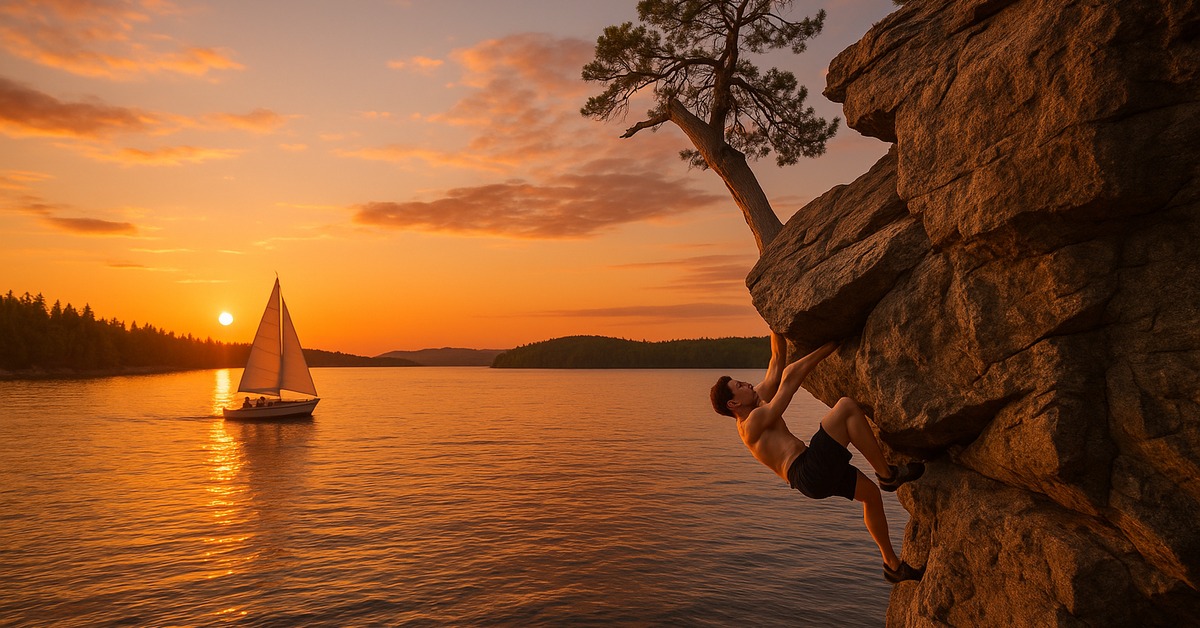
The light does something strange here in the late afternoon — it doesn’t just reflect off the water, it seems to come from inside it.
An Uncertain Future on the Water
Why does this matter? Because Percy Priest isn’t just a park — it’s load-bearing infrastructure for a metro area that keeps growing faster than anyone planned for.
Climate scientists studying the southeastern U.S. project more intense precipitation events interspersed with longer droughts as temperatures rise. Extended droughts could draw water levels down enough to stress fish populations, shrink navigable areas, and affect the municipal water supply Percy Priest partially supports for the Nashville metro area. For a reservoir whose core purpose is flood control, more extreme rainfall means the dam works harder, with less margin during peak operations. The Army Corps and regional water authorities are actively modeling these scenarios now, though the precise magnitude and timing remain uncertain — which is a polite way of saying nobody fully knows what’s coming.
A system designed with mid-century rainfall data, now running against 21st-century precipitation patterns, is exactly the kind of quiet mismatch that doesn’t make headlines until it does.
And here’s where it gets genuinely complicated: the same growth pressures bearing down on Nashville are increasing the demand on Percy Priest just as its operating conditions are becoming less predictable. More people, more impervious surface upstream, more runoff, more stress. Nobody’s saying the dam is going to fail. But “working harder with less margin” is not a phrase that should comfort anyone living downstream.
How It Unfolded
- 1955 — U.S. Army Corps of Engineers authorizes the Stones River dam project following repeated flood events affecting Nashville-area communities
- 1968 — J. Percy Priest Dam is completed; the reservoir reaches normal pool elevation, covering nearly 14,000 acres and erasing the flood-prone lower Stones River corridor
- 1990s — Wildlife surveys begin documenting unexpected biodiversity along the managed shoreline, including migratory waterfowl using the reservoir as a stopover on both major flyways
- 2010 — Record rainfall across the Cumberland basin; Percy Priest absorbs catastrophic runoff, preventing significantly worse downstream flooding in Nashville during a disaster that caused over a billion dollars in damages
By the Numbers
- ~14,000 acres — surface area at normal pool elevation
- 213 miles — approximate shoreline length, winding through coves and forested peninsulas
- 1968 — year J. Percy Priest Dam was completed by the U.S. Army Corps of Engineers
- Multiple species — largemouth bass, smallmouth bass, striped bass, crappie, bluegill, and catfish all present in the fishery
- 2 major flyways — Mississippi and Atlantic, both used by migratory waterfowl passing through the reservoir
Field Notes
- Army Corps land management policies restrict shoreline development, keeping forests intact to the water’s edge
- Submerged river valley structure from the original Stones River channel provides layered fish habitat across seasons
- Beaver colonies in several coves have created secondary wetland habitat supporting amphibians, turtles, and aquatic invertebrates
- The reservoir functions as both a flood buffer and a partial municipal water source for the Nashville metro area
- Wildlife — including white-tailed deer, osprey, and wild turkey — moves through the area with minimal apparent stress from human activity
Frequently Asked Questions
- Where is Percy Priest Lake located? — Southeast of Nashville, Tennessee, roughly twenty minutes from the city center. The J. Percy Priest Lake sits in Davidson and Rutherford counties, fed by the Stones River.
- Is Percy Priest Lake natural or man-made? — Entirely man-made. The U.S. Army Corps of Engineers completed J. Percy Priest Dam in 1968, creating the reservoir as part of a flood control and water management program.
- What fish can you catch at Percy Priest Lake? — The lake supports largemouth and smallmouth bass, striped bass, crappie, bluegill, and catfish. It’s considered one of the stronger bass fisheries in the region.
- Can you swim at Percy Priest Lake? — Yes. Several designated swim areas exist, and the lake is widely used for boating, paddling, and water sports. Check current conditions and access points before visiting.
- What wildlife lives around Percy Priest Lake? — White-tailed deer, osprey, wild turkey, Canada geese, various diving ducks, beavers, turtles, and a wide range of amphibians and aquatic invertebrates. Migratory waterfowl use the lake seasonally along two major flyways.
Editor’s Take — Alex Morgan
Most people driving past Percy Priest on I-40 have no idea it held back floodwater that would have swallowed additional Nashville neighborhoods in 2010. That’s the part worth sitting with: this lake isn’t just a place where people fish and propose marriage and teach their kids to kayak — it’s a structural argument, in concrete and water, for infrastructure that works quietly and gets ignored until it doesn’t. The conversation about what happens when climate loads exceed original design specs is already happening. Most of the public hasn’t been invited yet.
Percy Priest Lake is a flood shield and a wildlife refuge and a place where people propose marriage and teach their kids to fish, sometimes on the same weekend. It’s a mid-century engineering project that evolved into something its designers didn’t fully anticipate — a living system that keeps adapting, keeps surprising people willing to spend time at its edge. The question of how to manage it well as climate pressures increase isn’t hypothetical anymore. It’s a real conversation happening right now between engineers and water managers working with tools that weren’t built for the conditions they’re increasingly facing. I don’t know how that conversation ends. But I know what’s at stake if they get it wrong, and so does anyone who’s ever watched the light change over that water on a still morning in October.
Illustrations are AI-generated. Article fact-checked and human-edited. Our editorial standards.