Monks Walked 350 Miles for Peace — Here’s What Happened
In San Jose, a child ran up to a barefoot monk mid-stride and pressed a folded paper crane into his hands. The word written on it, in block letters: hope. That’s where this story actually starts.
A group of saffron-robed monks from the Huong Dao Vipassana Bhavana Center have just finished walking 350 miles across California. No shoes. No vehicles. No rest days off the road. Just feet on pavement, moving through one of the busiest, loudest, most distracted states in the country — and somehow, people kept stopping everything to watch.
Key Facts
- Monks from the Huong Dao Vipassana Bhavana Center walked 350 miles across California barefoot, roughly Los Angeles to San Francisco
- Researcher Dr. Gene Sharp documented over 198 methods of nonviolent protest at the Albert Einstein Institution
- Satish Kumar’s 1962 peace walk ran over 7,000 miles, from India to America
- Monks typically cover 15 to 20 miles per day, putting the journey at roughly three to four weeks of continuous movement
- Research in the Journal of Positive Psychology found witnessing an act of altruism increases prosocial behavior in observers by up to 23% in the following hours
In short: A group of walk for peace monks crossed 350 miles of California on foot, barefoot, with no press releases or chanting, and strangers kept stopping everything to watch. The journey, roughly Los Angeles to San Francisco, sparked unplanned conversations between neighbors who hadn’t spoken in years, showing how peace can travel at walking speed.
Why Walk for Peace Monks Choose the Hardest Path
Peace walks have roots stretching back decades across multiple spiritual traditions. Researcher Dr. Gene Sharp, who studied nonviolent action extensively at the Albert Einstein Institution, documented over 198 methods of nonviolent protest — and walking is one of the oldest. It’s also, according to Sharp’s research, among the most quietly effective. What makes this California trek unusual isn’t the 350 miles. It’s what the monks refuse to do: demand attention. No press releases sent ahead. No signs. No chanting. They just walk.
Which raises the obvious question — why does that refusal end up commanding so much of it?
There’s something about a person moving slowly through a fast place that short-circuits the brain. You notice them because they don’t fit. And once you’ve noticed, you can’t quite look away. The monks aren’t marching. They’re just — moving. Steadily. With their whole bodies saying something their mouths aren’t.
Strangers Along the Route Keep Stopping Everything
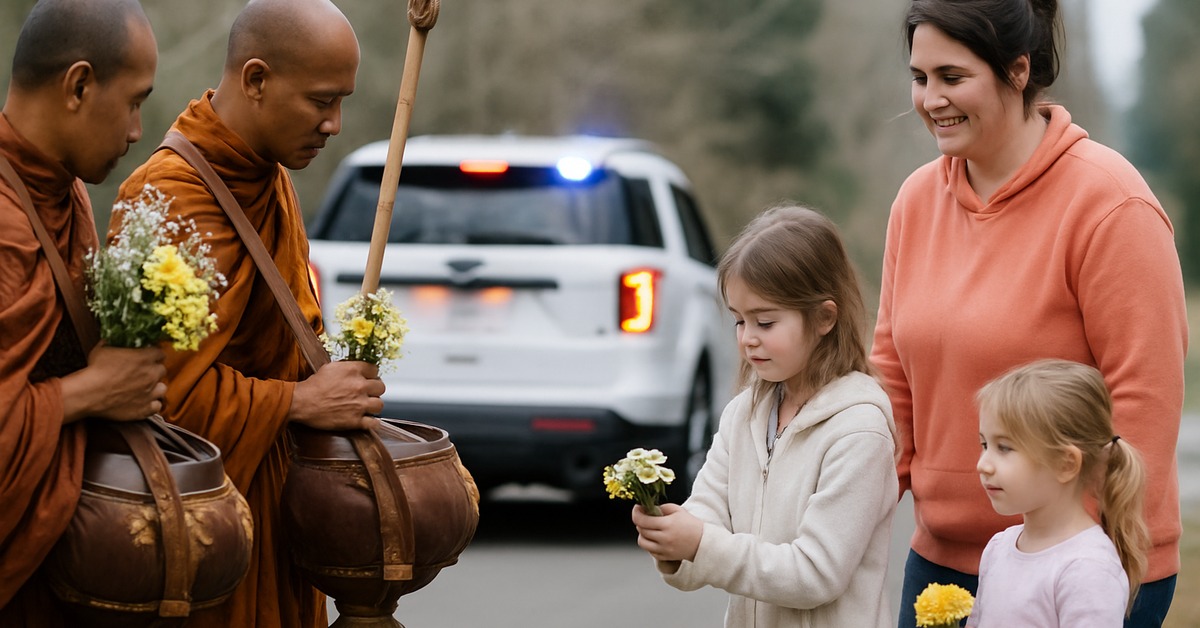
In San Jose, a woman who’d been mid-argument with her neighbor spotted the monks passing and went quiet mid-sentence. She came back out two minutes later with a tray of cold water. Neither she nor the neighbor she’d been fighting with said anything. But they stood on that porch together long enough that something shifted. For more stories of communities changed by unexpected encounters, visit this-amazing-world.com.
The water thing keeps happening, by the way. Neighbors who’ve never spoken end up standing at the same roadside, handing the same monks the same cups. It creates this accidental introduction — two strangers suddenly with something in common, even if that something is just witnessing the same quiet moment at the same time. Two people who’ve avoided each other for years, now just… standing there. Together.
The Walk for Peace Monks Leave Seeds, Not Speeches
They move through neighborhoods the way weather does. Gradually, and then all at once you realize the atmosphere has changed.
Across the California route, communities that expected nothing found themselves outside, talking to people they’d avoided for years. Some conversations lasted twenty minutes. Some lasted two hours. In one Central Valley neighborhood, a man followed the monks for six blocks without saying a word. Just walked behind them. When he finally turned back, a neighbor who’d been watching from her steps called out and asked what that was about. That question, apparently, became a two-hour conversation about grief.
Just walking. That’s all it took.
The Science Behind Why This Actually Works
This isn’t just feel-good storytelling. Studies on mirror neurons suggest that watching someone move with calm deliberateness triggers physiological calm in observers — even in strangers who pass by for thirty seconds. Dr. Sara Lazar at Harvard has studied how mindfulness-based movement changes brain structure in the people practicing it, but observers show measurable responses too. The monks may be gently rewiring the neurology of everyone who watches them pass.
That last fact kept me reading for another hour.
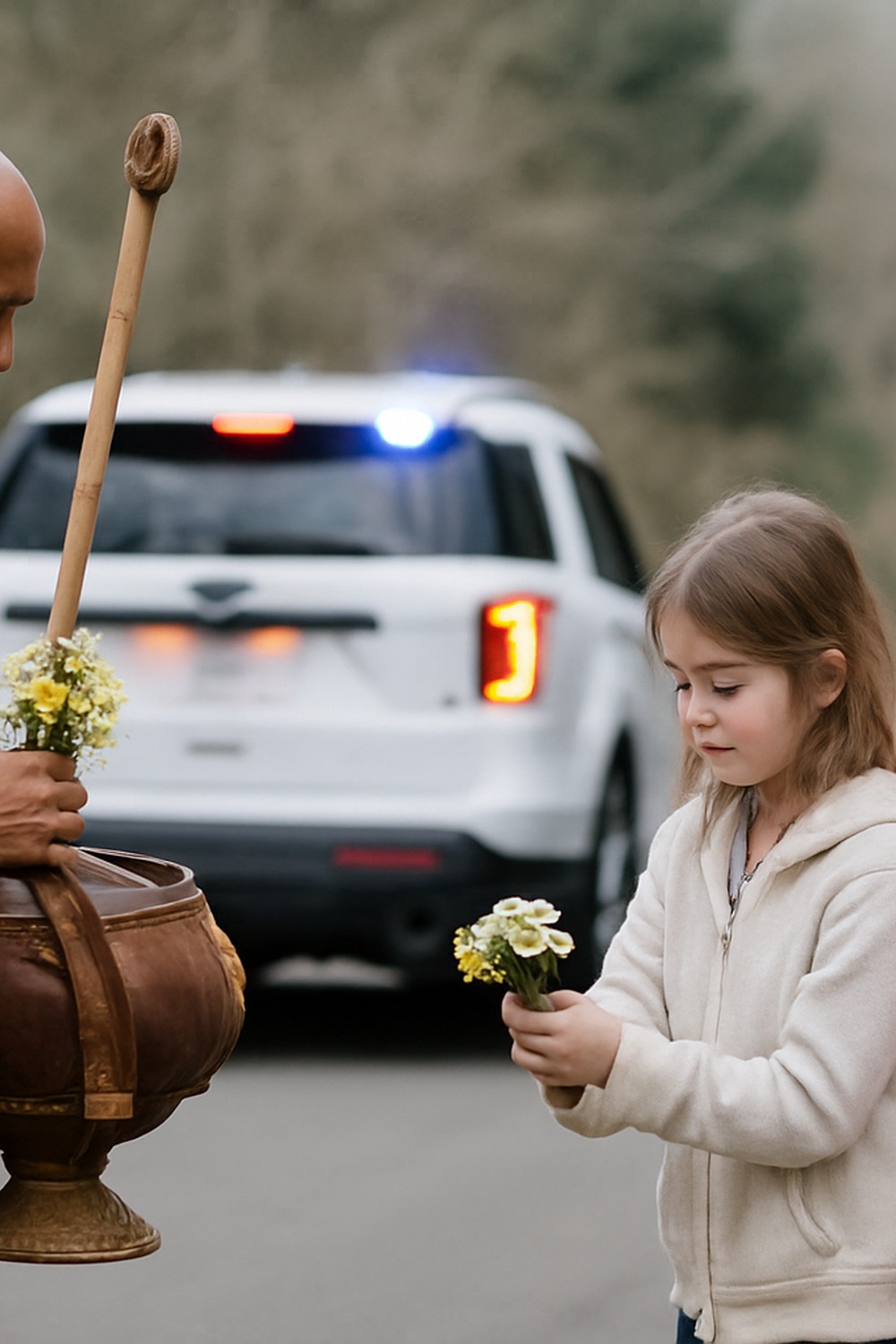
And then there’s the child with the paper crane. A kid runs up mid-walk, presses a folded piece of paper into a monk’s hands, the word “hope” written in block letters — that’s not just a sweet image. That’s a child processing something enormous and reaching for the language of peace to do it. Children absorb the emotional climate around them constantly. When they see stillness treated with respect, they respond in kind. That crane didn’t come from nowhere.
By the Numbers
- 350 miles walked — roughly Los Angeles to San Francisco, no motorized assist.
- Monks typically cover 15–20 miles per day on extended walks, putting this journey at roughly three to four weeks of continuous daily movement.
- Satish Kumar’s 1962 peace walk ran over 7,000 miles, from India to America. California’s route is a fraction of that — but notable for the sheer density of human contact along a populated corridor, where strangers are everywhere and usually invisible to each other.
- Research in the Journal of Positive Psychology found that witnessing an act of altruism — even briefly, even as a passing stranger — increases prosocial behavior in observers by up to 23% in the hours after the encounter.
Field Notes
- Each monk carries one small bell, rung at intervals. It’s a personal mindfulness cue, not a signal for onlookers — but locals started timing their days around the sound.
- Frangipani petals kept appearing at certain points along the roadside. No one claimed to have left them.
- Research on “awe experiences” — the moments when something bigger than your routine interrupts it — shows they’re among the most reliable triggers for increased human connection. A group of barefoot monks walking silently through your neighborhood almost certainly qualifies as one. Studies suggest the effect can last for days in people who experience even a single awe moment.
What One Quiet Walk Actually Changes in the World
The Walk for Peace monks aren’t naive about what they’re walking through. California carries real weight — division, unhoused populations, neighborhoods where strangers have stopped making eye contact. A 350-mile walk doesn’t fix any of that. Nobody’s pretending it does.
But here’s what it does do: it creates moments. Real ones. The kind that stick because they were unexpected, and gentle, and asked nothing of you except to be present for thirty seconds while something passed. The woman who handed a monk water on a Tuesday might still be thinking about it on Thursday when she decides how to speak to a difficult neighbor. The child who pressed hope into a stranger’s hands and watched it received with care — that child will carry that somewhere for a long time.
These aren’t metaphors. They’re actual events, happening in actual people’s nervous systems, on actual streets.
That’s how peace moves through the world. Not in declarations. In footsteps. In cups of water. In one folded piece of paper.
The Walk for Peace monks have already returned home. But the roads they walked still carry something — in the neighbors who finally talked, in the strangers who briefly weren’t, in one child who learned that hope is something you can hand to a person and they will hold it. Peace travels at walking speed. Turns out that might be exactly fast enough. There’s more at this-amazing-world.com — and the next one is even stranger.
Frequently Asked Questions
Q: How far did the walk for peace monks travel across California?
The monks from the Huong Dao Vipassana Bhavana Center walked 350 miles across California, roughly the distance from Los Angeles to San Francisco, with no motorized assistance. Since monks typically cover 15 to 20 miles per day on extended walks, that puts the journey at roughly three to four weeks of continuous daily movement, traveling barefoot through one of the busiest and most populated corridors in the country.
Q: Why don’t the monks try to attract attention?
What makes the trek unusual isn’t the 350 miles but what the monks refuse to do: demand attention. They sent no press releases ahead, carried no signs, and did no chanting. They simply walk. The article notes that a person moving slowly through a fast place short-circuits the brain, so the very refusal to command attention ends up commanding it. Researcher Dr. Gene Sharp documented walking as one of his 198 methods of nonviolent action.
Q: Is there scientific evidence that watching the monks has an effect?
Studies on mirror neurons suggest that watching someone move with calm deliberateness triggers physiological calm in observers, even strangers passing for thirty seconds. Dr. Sara Lazar at Harvard has studied how mindfulness-based movement changes brain structure. Separately, research in the Journal of Positive Psychology found that witnessing an act of altruism, even briefly, increases prosocial behavior in observers by up to 23% in the hours after the encounter.
Q: How does this walk compare to historic peace walks?
Satish Kumar’s 1962 peace walk ran over 7,000 miles, from India to America, so California’s 350-mile route is a fraction of that distance. What makes the California walk notable instead is the sheer density of human contact along a populated corridor, where strangers are everywhere and usually invisible to each other. The walk’s significance lies less in mileage than in the volume of brief, unexpected encounters it generated.
Illustrations are AI-generated. Article fact-checked and human-edited. Our editorial standards.