She Won Olympic Gold at 41 and Broke a 100-Year Record
A 41-year-old woman got on a sled in Beijing and casually erased 98 years of Olympic history. Nobody was really talking about it. That’s the weird part.
Elana Meyers Taylor was sick when she did it.
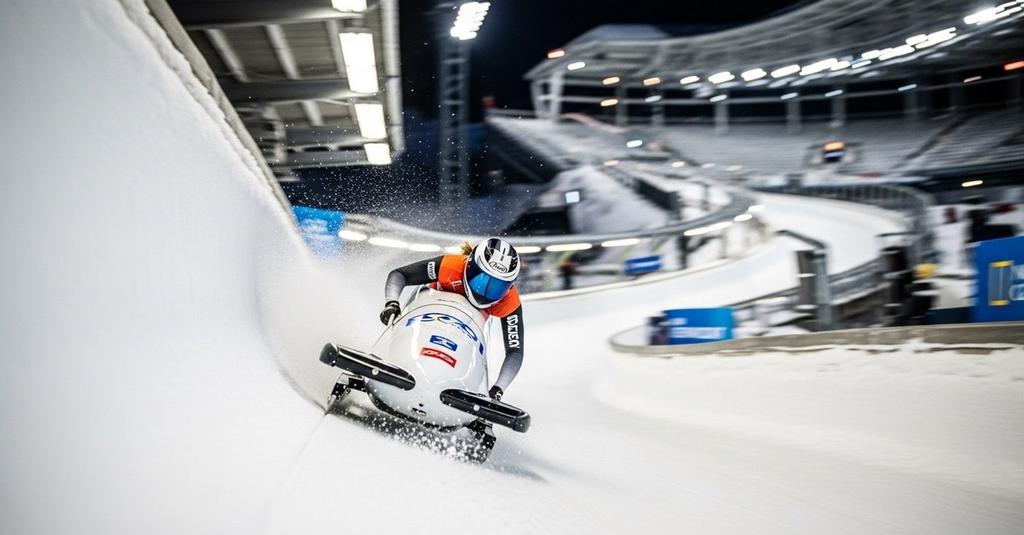
February 2022. The Yanqing Sliding Center. She pushes off the starting block and the sled drops into 16 curves, 121 meters of elevation, speeds climbing toward 130 km/h. Four runs. Four perfectly controlled runs. When it was over, she’d broken a record that had survived two world wars, the invention of television, the entire span of modern competitive bobsledding.
The monobob — single-pilot bobsled — debuted at these Games. Brand new event. Wide open field. And somehow the oldest person on that start list went and won the whole thing.
Key Facts
- Elana Meyers Taylor won the women’s monobob gold at the Beijing 2022 Winter Olympics at age 41.
- She became the oldest individual Winter Olympic gold medalist, breaking a record that had stood 98 years since Chamonix 1924.
- The monobob, a single-pilot bobsled event, debuted at the 2022 Games, and she won its first-ever women’s gold.
- She tested positive for COVID-19 during the Beijing Games before competing and winning.
- The Yanqing track features 16 curves and 121 meters of elevation, with athletes reaching speeds close to 130 km/h.
In short: Elana Meyers Taylor became the oldest Winter Olympic gold medalist at age 41, winning the debut women’s monobob event at Beijing 2022 and breaking a 98-year-old record dating to Chamonix 1924. She did it after testing positive for COVID-19 at the Games, adding to silver medals from Sochi 2014 and PyeongChang 2018.
Let’s Back Up, Because This Doesn’t Make Sense At First
Winter Olympics started in Chamonix in 1924. That’s almost a century of athletes, dozens of countries, thousands of people chasing gold medals in conditions that’ll freeze you solid if you’re not careful. In all that time — across downhill skiing, speed skating, ice hockey, all the sliding sports — nobody had ever won an individual gold medal at 41 years old. Not once.
The record was a wall.
And Meyers Taylor didn’t just crack it. She cleared it cleanly, with four consistent runs that were faster than everyone else competing. No photo finishes. No drama. She was simply better that day.
Here’s what gets lost in the statistics: she’d been here before. Silver at Sochi in 2014. Silver again at PyeongChang in 2018. She knew what gold looked like. She’d been two feet away from it, twice, and had to watch it go to someone else. For eight years, she’d carried that with her.
And then she went back.
The COVID Part
During the Beijing Games, she tested positive for COVID-19.
Think about what that sentence actually means in context. Quarantine protocols. Recovery time you don’t have. A respiratory virus right when you need your lungs to work perfectly in a sport that demands explosive power off the starting block. She got sick, she recovered enough to compete, and then she went out and became the oldest Winter Olympic gold medalist in recorded history.
She’d also just had a kid. This wasn’t a comeback story in the traditional sense — the kind where someone disappears for years and roars back. This was something weirder. A continuation. A refusal to accept that she was finished.
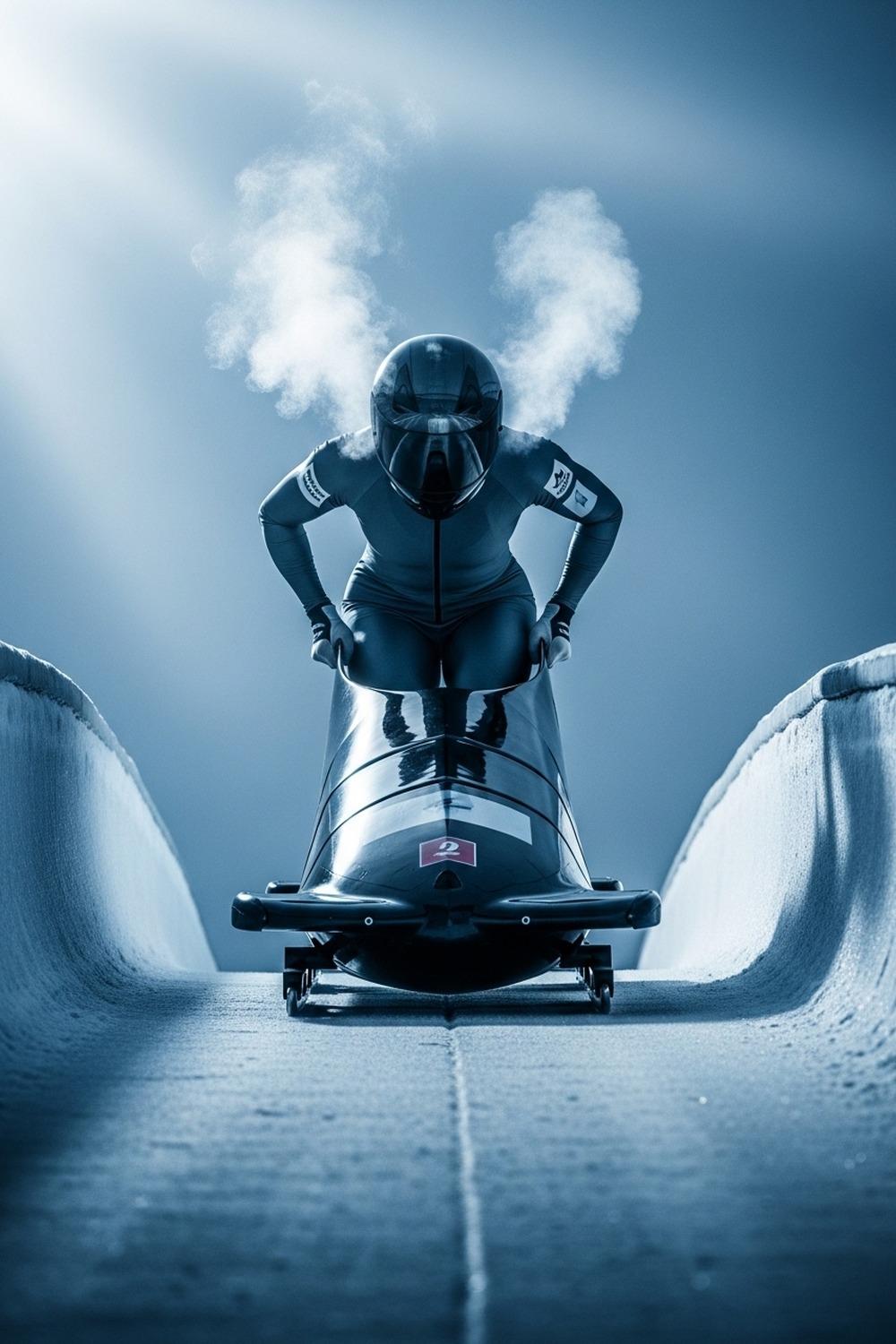
Why the Monobob Changed Everything
The monobob was brand new. Nobody had Olympic experience in it. The field was completely open, which meant experience from other bobsled disciplines didn’t automatically transfer over.
Theoretically, that should have favored the young athletes. Explosive power off the block. Reaction time through turns that hit you faster than you can consciously process. Sports scientists — people like Dr. Stephen Muller, who studies athlete longevity in sliding sports — have consistently said the late twenties is when your body peaks for this kind of work. The numbers support it.
But turns out, 41 years of building body knowledge in a sled doesn’t disappear.
It compounds. Meyers Taylor had logged more sliding hours than almost anyone on that start list. Her legs knew things that younger athletes’ legs were still learning. When a brand-new event suddenly put everyone on equal footing and then said “go,” experience started cashing in its chips.
That last fact kept me reading for another hour.
By the Numbers
- 98 years. That’s how long the previous record had stood — from Chamonix in 1924 until Beijing in 2022.
- 41 years old. Meyers Taylor’s age when she won, making her the oldest Winter Olympic gold medalist in history.
- 121 meters of elevation across 16 curves on the Yanqing sliding track, with athletes reaching speeds close to 130 km/h during competition runs (Olympic records, IOC).
- She’d already won Olympic silver at Sochi 2014 and PyeongChang 2018 — three consecutive Olympic podium finishes across eight years.
- The average age of top-10 bobsled finishers at recent Winter Olympics hovers around 27-29 years old. A 41-year-old gold medalist is statistically far outside the expected range.
Field Notes
- The monobob was introduced to increase gender equity at the Winter Olympics — giving women a dedicated single-pilot event. Meyers Taylor became the first person ever to win the women’s monobob gold medal, which means that record will stay with her forever.
- She came to bobsled from softball. At Georgia Tech, she was a standout athlete before transitioning to the sliding track. The explosive lower-body power she’d built as a softball player translated directly into bobsled starting strength — which is where races are often decided before you even leave the starting line.
- COVID protocols during Beijing 2022 created a uniquely isolating competition environment. Athletes who tested positive faced strict quarantine, limited recovery support, and uncertain return timelines. Meyers Taylor navigated all of that and still showed up.
What This Actually Means
We build invisible walls around getting older. Not just in sports — in careers, in creativity, in ambition. There’s an unspoken contract that says certain windows close, that striving belongs to the young, that eventually you’re supposed to stop pushing. Meyers Taylor’s story doesn’t argue loudly against that contract. It just doesn’t sign it.
She spent years watching younger athletes reach podiums. She kept training anyway. She had a baby. She got sick. She got back in the sled. And at 41, she stood at the top of a sport that supposedly belongs to people a decade younger.
This isn’t motivational poster material. It’s just what happened. A competitive result on a technical course, measured in hundredths of a second, against the best athletes in the world. The numbers don’t care about narrative. The numbers just said she was fastest.
The next time someone decides they’re too old to try something, there’s now a gold medal sitting on a mountain in Beijing that says otherwise. A hundred-year record. A 41-year-old woman who simply didn’t acknowledge the wall.
She didn’t make history by accident. She made it by showing up — again, and again, and then once more when she had every reason not to. That’s what stays with you. Not the record itself, but the decision that produced it. If you want more stories like this, there’s more at this-amazing-world.com — and the next one’s even stranger.
“
Frequently Asked Questions
Q: Who is the oldest Winter Olympic gold medalist?
Elana Meyers Taylor is the oldest individual Winter Olympic gold medalist, winning the women’s monobob at the Beijing 2022 Games at age 41. Her victory broke a record that had stood for 98 years, since the first Winter Olympics in Chamonix in 1924. Across nearly a century of athletes, no one had ever won an individual Winter gold at 41 years old until she did it in February 2022.
Q: What is the monobob event she won?
The monobob is a single-pilot bobsled event that made its Olympic debut at the Beijing 2022 Games, introduced to increase gender equity by giving women a dedicated solo sliding event. Because it was brand new, no one had prior Olympic experience in it and the field was wide open. Meyers Taylor became the first person ever to win the women’s monobob gold, a record that stays with her permanently.
Q: Did Elana Meyers Taylor compete while sick?
Yes. During the Beijing 2022 Games she tested positive for COVID-19, facing quarantine protocols and limited recovery time before competing in a sport demanding explosive lung power off the starting block. She recovered enough to race four controlled runs and won gold. She had also recently had a child, making the achievement a continuation rather than a traditional comeback after years away.
Q: How many Olympic medals does Elana Meyers Taylor have in bobsled?
Before her Beijing gold, Meyers Taylor had already won Olympic silver at Sochi 2014 and silver again at PyeongChang 2018, giving her three consecutive Olympic podium finishes across eight years. Her decades of accumulated sliding experience proved decisive in the new monobob event: on the Yanqing track of 16 curves and 121 meters of elevation, her four runs were simply faster than everyone else’s.
Illustrations are AI-generated. Article fact-checked and human-edited. Our editorial standards.