The Bikers Who Show Up So Abused Kids Don’t Face Court Alone
In 1995, a child psychologist in Utah named John Paul Lind realized something that should’ve been obvious but somehow wasn’t: kids testifying against their abusers needed more than a caseworker and a waiting room. They needed people who looked genuinely scary standing next to them. So he got on his motorcycle and started recruiting bikers.
What happened next wasn’t supposed to turn into a nationwide movement. It was supposed to be one guy with a leather jacket and a very specific problem to solve. But here we are — decades later, with chapters in all 50 states and more than a dozen countries, all because Lind understood something about fear that most professionals miss: it doesn’t care about logic. It cares about presence.
Key Facts
- Bikers Against Child Abuse (B.A.C.A.) was founded in 1995 by child psychologist John Paul Lind in Utah.
- The organization operates in all 50 U.S. states plus 17 countries on volunteer hours and donations only.
- The CDC reports 1 in 4 girls and 1 in 13 boys experience sexual abuse in childhood.
- Research shows a trusted adult present during court proceedings can reduce child witness anxiety by more than 40 percent.
- B.A.C.A. members undergo background checks and child safety training and can never be alone with a child.
In short: Bikers Against Child Abuse, founded in 1995 by psychologist John Paul Lind, sends leather-clad bikers to stand beside abused children at courthouses and hearings. Operating in all 50 states and 17 countries on volunteers alone, members undergo background checks and offer a reassuring presence that research shows can cut child witness anxiety by over 40 percent.
The Setup
A child walks into a courthouse. The hallways are loud. Strangers everywhere. And somewhere in that building, maybe in the next room, is the person who hurt them.
Then a group of leather-clad bikers walks in beside them. Everything shifts.
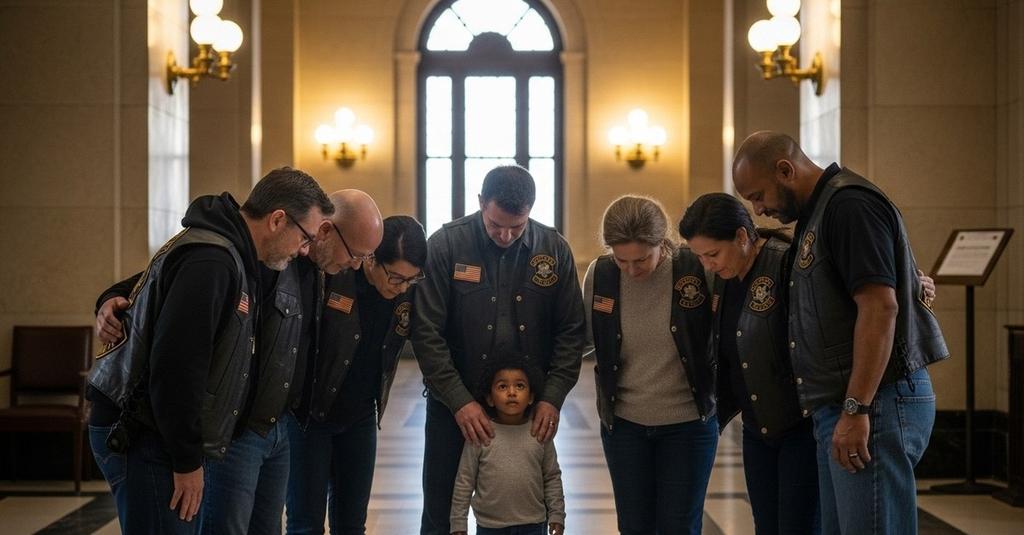
That moment — the specific moment when a kid realizes they’re not walking in alone — is what Bikers Against Child Abuse actually does. Not symbolically. Physically. They stand next to the child. They’re there when testimony starts. They’re there during breaks. They’re there in the hallway after.
How This Actually Works
B.A.C.A. members show up in person. At courthouses, at preliminary hearings, at legal meetings. When a child’s case moves through the system, members coordinate with caregivers and legal teams to maintain what they call a “reassuring presence” — which is their professional term for standing between a terrified kid and one of the worst days of their life. Arizona’s chapter does this constantly. So does every other chapter across the country.
But here’s what makes it different from victim advocacy programs that exist on the official side of the system: these aren’t people answering calls during business hours. They answer calls at midnight. They get on their bikes in the rain. They show up because a kid called, not because it’s part of a protocol. That last fact kept me reading for another hour, honestly — the sheer commitment of it.
- Members undergo background checks and child safety training.
- They work within strict legal frameworks alongside parents and case workers — nothing freelance or unsanctioned, even though it feels that way.
- Can’t be alone with children. Ever. The organization takes this seriously because it knows what’s at stake.
The Ride
When a child is officially accepted into a local chapter, the chapter organizes a formal event. A ride.
Dozens of motorcycles pull up to the child’s house. Every member shows up. The child meets them all. And then the chapter gives the kid their own road name — their own patch, their own identity within the group.
For a child who has been made to feel powerless, invisible, or guilty — for a child whose entire world has been about what was taken from them — this moment does something else: it claims them. Publicly. Loudly. In front of a group of intimidating adults who are now explicitly saying: you’re one of us now.
Psychologists who work with trauma survivors understand why this works. It shouldn’t work, technically. A child’s nervous system has learned that the world isn’t safe. Logic won’t fix that. But showing up — actually being there, looking unafraid, staying calm — that rewires something.
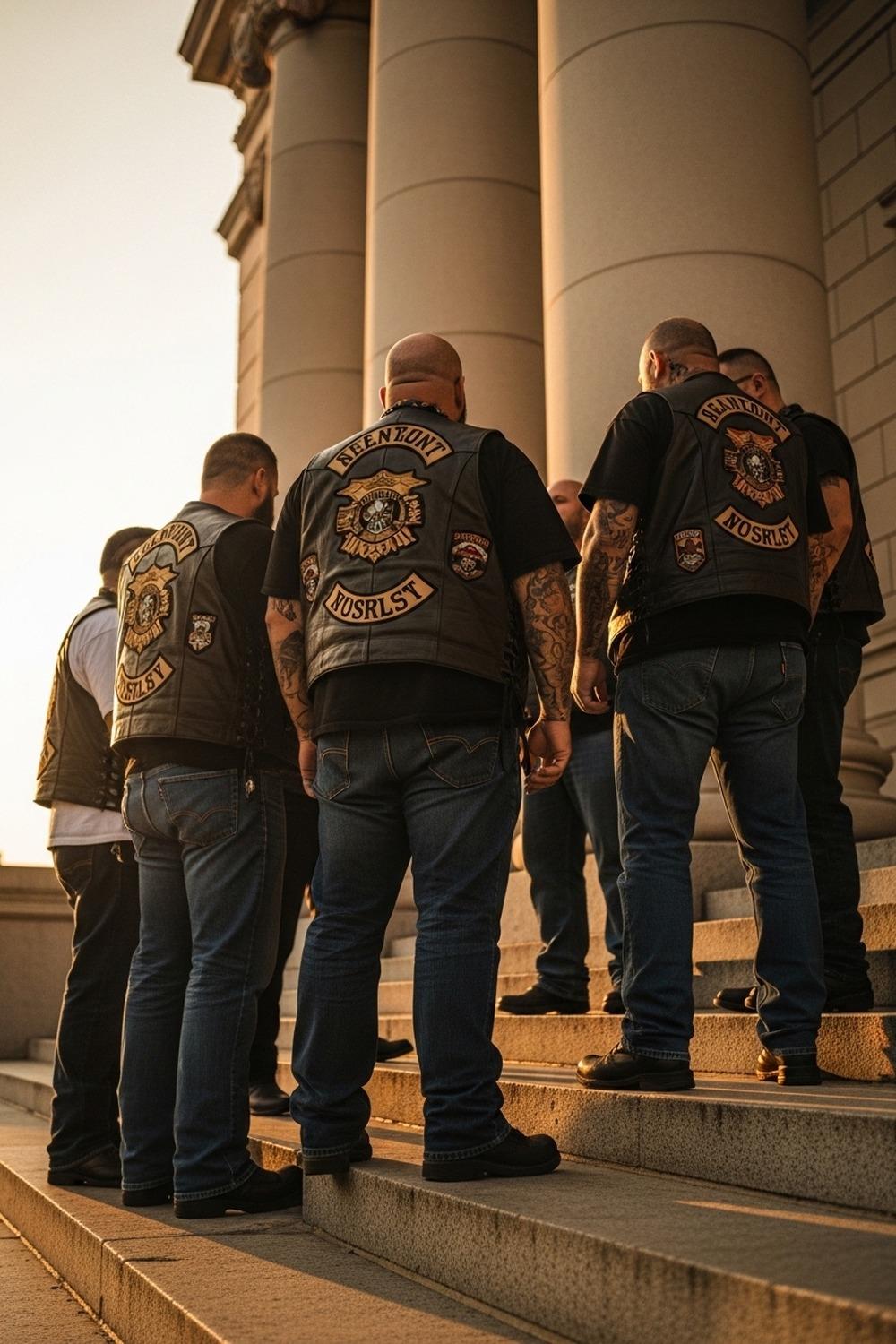
Why the Leather and Motorcycles Are Strategic (Not Aesthetic)
Here’s where it gets interesting. The imagery is completely intentional.
Child trauma experts point out that children often feel unsafe because the adults around them appear vulnerable — or worse, are the source of the threat. B.A.C.A. members are trained to present as physically imposing, dependable, and calm. The leather. The patches. The motorcycles. All of it sends a specific message to a child’s nervous system: these people are not afraid. And if they’re not afraid, maybe I don’t have to be either.
Members never ask a child what happened to them. They don’t investigate. They leave those questions to professionals. Their entire job is to be present and to communicate through their mere existence that safe adults are real and they’ve chosen to show up for this kid.
What the Data Actually Says
- B.A.C.A. operates in all 50 states plus 17 countries on volunteer hours and donations only. No government funding. No institutional backing. Pure choice.
- The CDC reports that 1 in 4 girls and 1 in 13 boys experience sexual abuse in childhood — millions of families who could use this kind of on-the-ground support.
- Research in child trauma journals consistently shows that having a trusted adult present during court proceedings reduces anxiety in child witnesses by more than 40 percent in some studies. Not a little. Not measurably. Dramatically.
- Founded in 1995 and still expanding.
What Actually Happens
- Every member gets a road name. When a child joins, they get one too. This is a small thing that carries enormous weight — it places the child inside the group’s identity, not outside looking in.
- Some chapters run an on-call system. A member can be dispatched at night if a child is frightened. Not just on court dates. Whenever the fear gets too loud to handle alone, someone answers.
- The organization is sustained almost entirely by people who choose to show up. Consistently. Over years.
Why This Model Actually Matters
What B.A.C.A. has built is a proof of concept for something child welfare systems rarely manage: sustained, human-scale presence. Not a hotline. Not a pamphlet. Not a single meeting with a caseworker drowning in forty other files. What they offer is continuity — the same faces, the same road names, the same people who showed up last time showing up again.
For a child learning to trust adults again, that repetition is everything.
Trauma doesn’t resolve in a verdict. It doesn’t end when the hearing concludes. Healing happens over time, in small moments, in the accumulated evidence that safe adults exist and some of them will ride across town on a Tuesday night just to remind you that someone has your back.
Bikers Against Child Abuse isn’t a headline. It’s a phone call at 11pm. It’s a patch with a kid’s road name on it. It’s fifty motorcycles pulling up to a house so one child can feel, for the first time in a long time, like they matter to someone who doesn’t have to be there. If this kind of story pulls you in, there’s more at this-amazing-world.com — and the next one is even stranger.
Frequently Asked Questions
Q: When and why was Bikers Against Child Abuse founded?
Bikers Against Child Abuse (B.A.C.A.) was founded in 1995 by child psychologist John Paul Lind in Utah. He recognized that children testifying against abusers needed more than a caseworker and a waiting room; they needed physically imposing, calm adults standing beside them. Lind began recruiting bikers to provide that reassuring presence. What started as one man with a leather jacket grew into a nationwide and international movement with chapters in all 50 states and 17 countries.
Q: How does B.A.C.A. actually help abused children?
Since 1995, B.A.C.A. members have shown up in person at courthouses, preliminary hearings, and legal meetings, coordinating with caregivers and legal teams to maintain a reassuring presence. They stand beside the child during testimony and breaks. Some chapters run a 24-hour on-call system where a member can be dispatched at night if a child is frightened. Members never investigate; their job is simply to be present and show that safe adults exist.
Q: Is Bikers Against Child Abuse safe and properly vetted?
Yes. Since its 1995 founding, all B.A.C.A. members have undergone background checks and child safety training before participating. The organization works within strict legal frameworks alongside parents and case workers across all 50 states, with nothing freelance or unsanctioned. A core rule is that members can never be alone with a child, ever. It enforces this strictly because it understands what is at stake with vulnerable, traumatized children.
Q: How is Bikers Against Child Abuse funded?
B.A.C.A. operates entirely on volunteer hours and donations, with no government funding or institutional backing. It runs across all 50 states plus 17 countries purely through people who choose to show up consistently over years. This volunteer-driven model is part of what makes the organization distinctive: members answer calls at midnight and ride in the rain because a child called, not because a protocol or paycheck requires it.
Illustrations are AI-generated. Article fact-checked and human-edited. Our editorial standards.