How Roosters Survive Their Own 140-Decibel Screams
A rooster’s crow hits 140 decibels. That’s loud enough to permanently damage human hearing in seconds. But the rooster? It just does this every morning and walks away fine, like nothing happened.
Nobody was looking for an explanation because, well, it’s just a rooster. It’s been there the whole time. But when researchers finally got curious enough to actually examine what was happening inside a rooster’s skull during that ear-splitting crow, they found something that rewrites how we think about bird biology, self-preservation, and whether there’s a pathway hidden in evolution that could help the roughly 1.5 billion people worldwide dealing with hearing loss.
Key Facts
- A rooster’s crow reaches 140 decibels at close range, confirmed by University of Antwerp researchers in 2018, louder than a jet engine at 100 feet.
- Permanent human hearing damage becomes immediate around 120 decibels, which roosters exceed by 20 decibels every crow.
- Researchers led by Hans Winkler confirmed in 2018 that a rooster’s ear canal partially collapses during crowing to shield the eardrum.
- Birds regenerate damaged inner-ear hair cells within about 12 weeks, while humans are stuck with roughly 16,000 non-regenerating hair cells.
- Hearing loss affects roughly 1.5 billion people worldwide, making avian hair-cell regeneration a target for medical research.
In short: Why roosters don’t go deaf comes down to two systems: their ear canal partially collapses during a 140-decibel crow to shield the eardrum, and birds regenerate damaged inner-ear hair cells within 12 weeks. Researchers documented the canal collapse in 2018, while humans keep only 16,000 hair cells.
The Mechanism Nobody Bothered To Document Until 2018
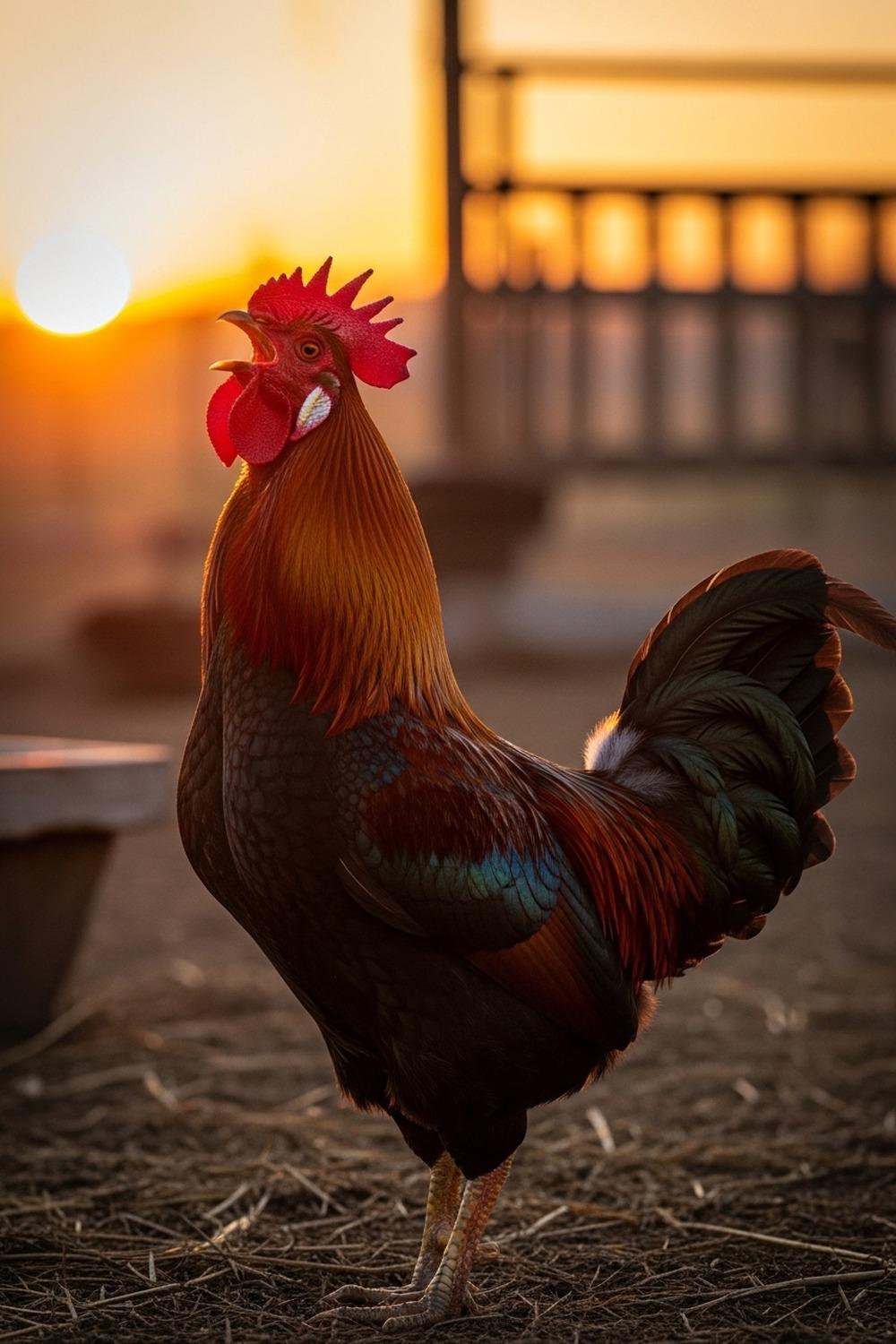
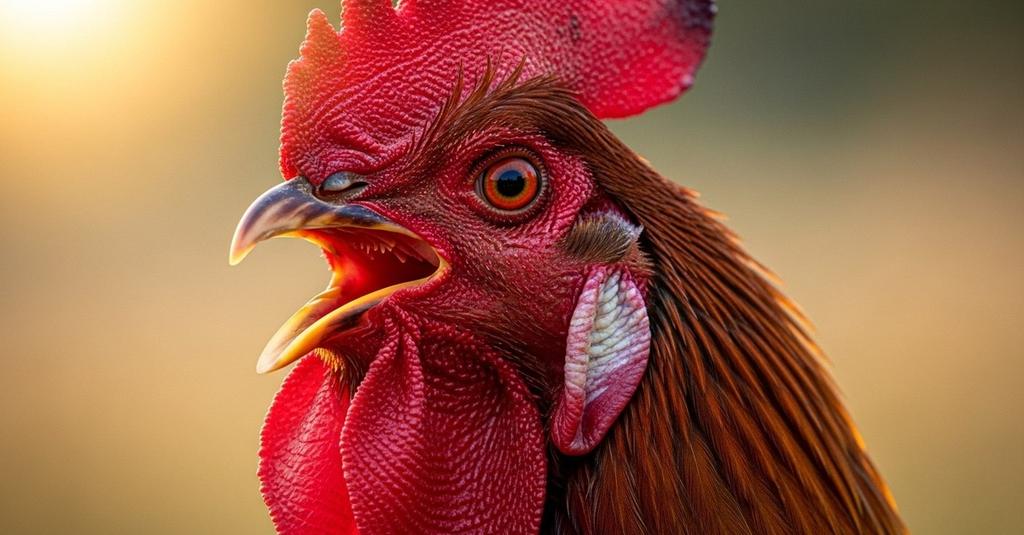
Hans Winkler and a team of European researchers confirmed something that seemed impossible when you really think about it: when a rooster crows, the ear canal doesn’t just stay open and absorb the hit like a target. It partially collapses. The whole thing folds inward on itself — soft tissue repositions, the opening compresses, and the eardrum gets shielded from the full force of the sound wave. It’s automatic. It happens every single time. The rooster isn’t thinking about it.
And here’s the thing — the timing is what kills. The collapse triggers from the muscular mechanics of crowing itself. When the beak opens wide and the neck extends into that familiar stretched-out posture, the same physical motion cues the ear canal to shut down. It’s a reflex that’s been baked into the bird’s anatomy over millions of years. The rooster’s own body knows exactly when to protect itself.
But that’s just the warm-up.
What 140 Decibels Actually Does
A chainsaw running two feet from your face is about 110 decibels. Stick yourself near a jet engine at close range and you’re hitting roughly 140. Human hearing damage starts becoming permanent right around 120 decibels. Roosters blow past that threshold every single morning — sometimes multiple times, sometimes starting at 3:47 a.m. on a Tuesday when you were hoping for sleep.
And yet their hearing stays intact.
The ear canal collapse handles some of the damage. It’s elegant, it’s automatic, it’s basically free biologically. But even a partially closed canal lets some sound pressure through. Any system working that close to the edge is going to take minor hits. In humans, those hits accumulate silently for years. You don’t notice anything wrong until you’re at a restaurant asking people to repeat themselves and wondering when the world got so loud. In a rooster, the story ends differently because roosters have access to something we mammals apparently lost or never developed in the first place.
The Cellular Trick Mammals Gave Up
Deep inside the inner ear, in a coiled structure called the cochlea, sit rows of tiny hair cells. These aren’t actual hair — they’re mechanosensory structures that convert vibrations into electrical signals your brain can translate into sound. When those cells die from noise exposure in humans, they’re gone. Forever. No replacement. No regeneration. We simply don’t do that anymore.
Birds never stopped.
Any minor wear and tear that slips past the ear canal collapse — the cellular damage from screaming into the dark — gets quietly repaired between one morning alarm and the next. The rooster wakes up, demolishes the sound barrier, and then its body fixes whatever that screaming cost. Over and over. For years. For the entire lifespan of the bird. Researchers studying chicks and zebra finches have documented this: damaged hair cells regenerate within about 12 weeks. Humans? We’re stuck at roughly 16,000 hair cells and whatever we’re born with.
That kept me reading about this for another hour.
The Part That Makes You Step Back
Rooster hearing protection works on two completely separate biological levels happening simultaneously. First: mechanical. A physical reshaping of anatomy triggered by the act of crowing itself. Second: cellular. Active regeneration of the sensory structures that noise obliterates. Most animals have neither. Roosters have both operating at the same time.
And nobody documented the first part until 2018.
This mechanism has been operating every morning on farms across the planet for as long as roosters have existed. It was just… not written down. Researchers noticed it while examining rooster heads under high-resolution imaging. They were looking for something else. They found this by paying attention.
Why Medical Researchers Care About Farm Birds
The hair cell regeneration thing isn’t unique to roosters — it’s a broad avian capability that researchers at Harvard, the University of Washington, and other institutions have been studying for decades trying to replicate it in human patients. Nobody’s cracked it yet. No approved treatment exists. But the biological proof that hair cell regeneration is possible in vertebrates? That comes directly from birds like the rooster, crowing in its own face every morning without consequence. The proof is standing on your fence post screaming at 6 a.m.
You can read more about how bird senses compare to mammals in this deeper look at avian biology at this-amazing-world.com.
By the Numbers
- 140 decibels — peak volume of a rooster’s crow at close range, confirmed by researchers at the University of Antwerp in 2018. That’s louder than a jet engine at 100 feet.
- 120 dB is where permanent hearing damage becomes immediate in humans. Roosters exceed this by 20 decibels every single crow without consequence.
- The white bellbird of the Amazon holds the record for loudest bird call at 125 decibels. Still quieter than your average backyard rooster.
- Human inner ear hair cells: roughly 16,000, and they don’t regenerate. Birds can restore damaged cells within 12 weeks of injury, according to studies on chicks and zebra finches.
The Details That Matter
- Roosters don’t just crow at dawn.
- They crow in response to light changes at any hour. Farms near streetlights get roosters screaming at 2 a.m. because their internal clock runs on light intensity, not time of day.
- Hens have the same inner ear hair cell regeneration ability as roosters, but they don’t crow. Which means the protective ear canal collapse was almost certainly an evolutionary response specific to the act of crowing itself — a problem that needed solving because the rooster created it.
- The soft tissue shift that partially closes the rooster’s ear canal during a crow also affects the hen standing nearby. She gets no such protection. This is part of why researchers started asking questions about hearing health in flock birds in the first place.
What This Actually Tells Us
Rooster hearing protection is a case study in how evolution solves a problem it created. The rooster’s crow got loud enough to signal territory, to anchor a flock, to cut through distance and weather. And then, quietly, the biology built two separate countermeasures to keep the animal from destroying itself with its own voice. Not accident. Intention written into the skeleton over millions of years. Two solutions, operating in parallel, inside a skull the size of your fist.
For researchers working on human hearing loss — affecting roughly 1.5 billion people worldwide — the rooster isn’t just a noisy bird. It’s a working blueprint of something we lost. Something we might be able to rebuild if we understand it well enough. That matters.
The rooster crows every morning and its ears stay fine. Not luck. Biology doing exactly what it evolved to do, down to the cellular level, in ways we’re only now documenting. Science has a habit of hiding the most interesting answers in the most ordinary places — a bird on a fence post, screaming at the sun, and we’re just now getting around to looking closely.
“
Frequently Asked Questions
Q: Why don’t roosters go deaf from their own 140-decibel crow?
Roosters avoid deafness through two simultaneous biological systems. First, when a rooster opens its beak and extends its neck to crow, the same muscular motion causes its ear canal to partially collapse, shielding the eardrum from the full 140-decibel sound wave. Researchers led by Hans Winkler documented this reflex in 2018. Second, birds can regenerate damaged inner-ear hair cells within about 12 weeks, repairing any wear that slips past the canal collapse, an ability humans lost.
Q: How loud is a rooster’s crow compared to dangerous noise levels?
A rooster’s crow reaches about 140 decibels at close range, confirmed by University of Antwerp researchers in 2018, which is louder than a jet engine heard from 100 feet away. Permanent hearing damage becomes immediate in humans at around 120 decibels, meaning roosters exceed the danger threshold by roughly 20 decibels every single crow, sometimes multiple times each morning, yet their hearing stays completely intact thanks to anatomical protection and cellular repair.
Q: Can humans regenerate hearing the way birds do?
Not yet. Humans are born with roughly 16,000 inner-ear hair cells, and once they die from noise exposure, they are gone permanently with no natural replacement. Birds, by contrast, regenerate damaged hair cells within about 12 weeks. Researchers at Harvard, the University of Washington, and other institutions have studied this avian ability for decades hoping to replicate it for the roughly 1.5 billion people worldwide with hearing loss, but no approved treatment exists as of yet.
Illustrations are AI-generated. Article fact-checked and human-edited. Our editorial standards.