The Opossum’s Death Act Has Fooled Predators for 70M Years
A Virginia opossum doesn’t decide to play dead. Its nervous system just… unplugs. And then it smells like a three-week-old corpse, which turns out to be the part that actually works.
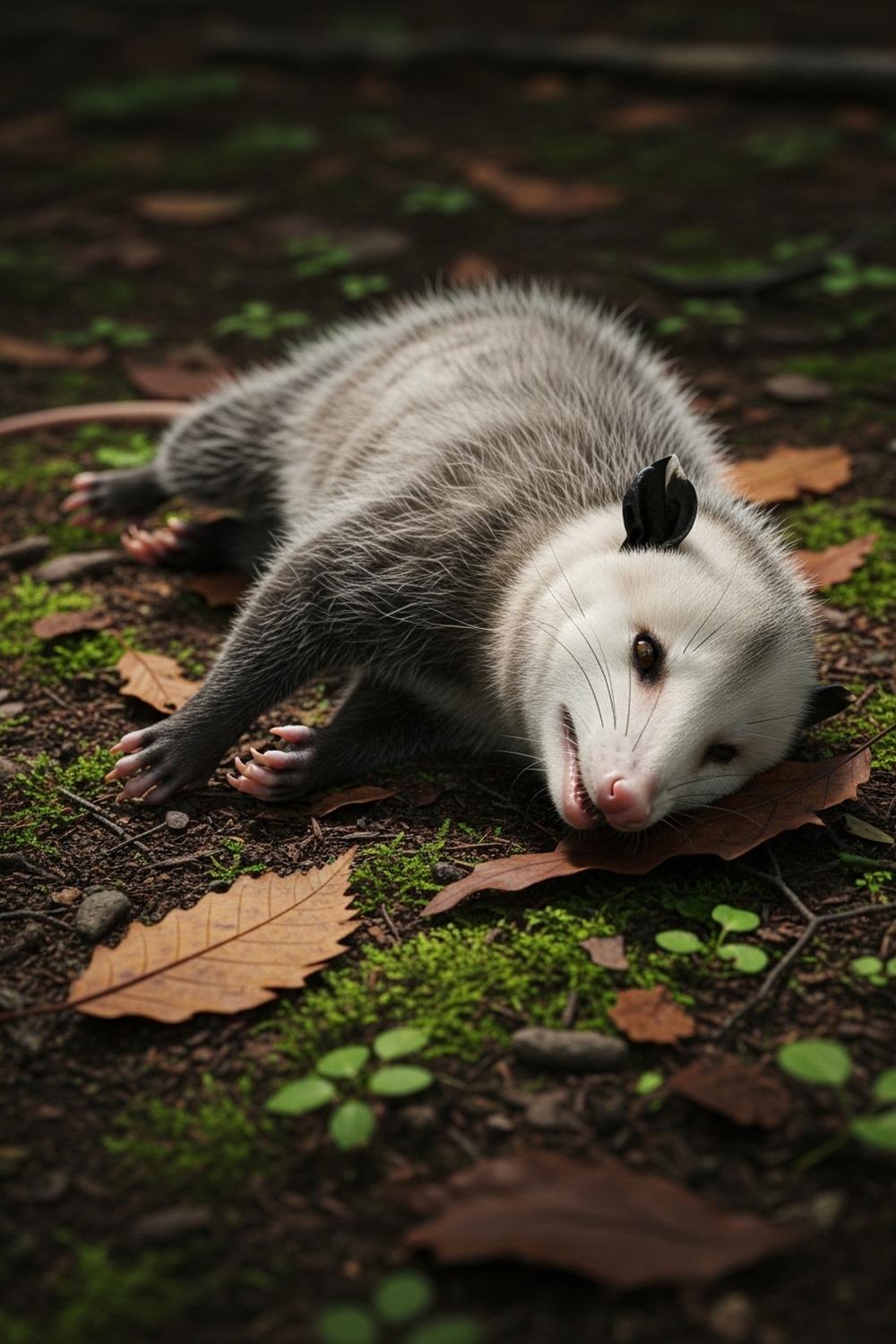
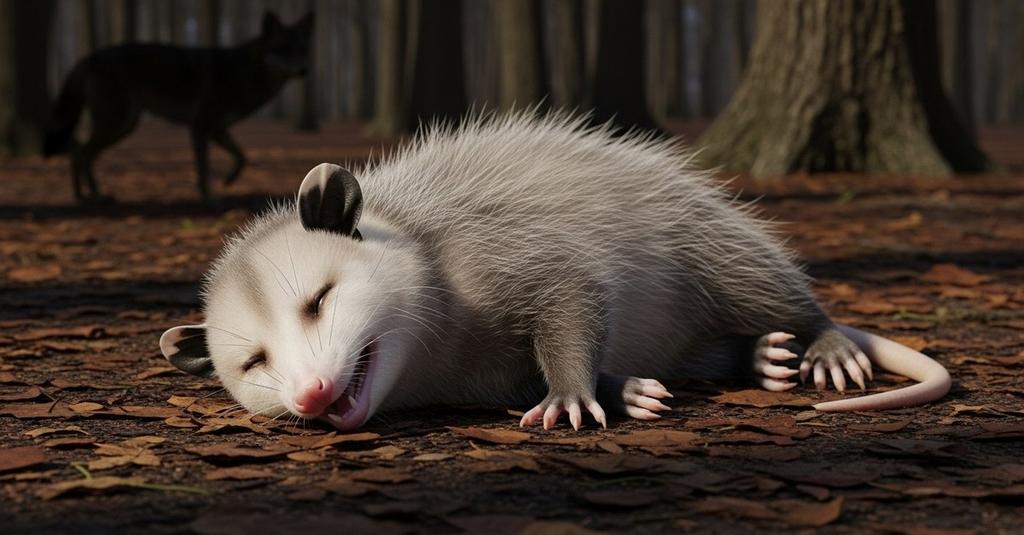
Picture this: a coyote has cornered something small against a fallen log in the dark. What happens next isn’t a performance. It’s a neurological event that looks like shutdown but functions like a weapon. The opossum goes rigid. Then liquid. Mouth hangs open. A nauseating stench rises from glands near its tail. The coyote, suddenly uncertain about whether it’s about to eat something toxic, loses interest and walks away.
This trick has been working for 70 million years.
Key Facts
- Opossums have existed for approximately 70 million years, with fossils dating to the late Cretaceous per the Paleobiology Database, 2021.
- A tonic immobility episode in an opossum can last up to 4 hours with zero voluntary response to external stimuli.
- The Virginia opossum is the only marsupial native to North America, with all others living in Australia or South America.
- Opossum body temperature runs around 94 to 97 degrees Fahrenheit, which researchers believe makes them inhospitable to the rabies virus.
- Opossums have 50 teeth, more than any other North American land mammal, and a peptide in their blood neutralizes many snake venoms.
In short: Opossum playing dead is an involuntary nervous-system shutdown called tonic immobility, paired with a corpse-like stench from scent glands that deceives predators. The strategy has worked for about 70 million years, since the late Cretaceous, and a single episode can last up to 4 hours with no voluntary movement.
What Actually Happens When an Opossum “Plays Dead”
The moment an opossum hits peak fear, its autonomic nervous system triggers something called tonic immobility — a shock-like state where heart rate plummets, breathing becomes almost invisible, and voluntary muscle control essentially vanishes. It’s not a choice. It’s involuntary, which is why it works so well. There’s no hesitation in the performance. No tells. One second the animal is moving, the next it’s completely inert.
But here’s where it gets interesting: the smell separates opossums from every other freeze-response animal on the continent. Research on apparent death behaviors shows this strategy exists in dozens of species, but only the opossum pairs visual stillness with chemical deception. Scent glands near the cloaca activate during collapse and release a cocktail of compounds that accurately mimic a decomposing mammal.
It doesn’t just look dead. It passes the smell test.
The episode can last anywhere from a few minutes to four full hours. The opossum has zero control over when it wakes up — its nervous system decides that too. Predators nudge it. Sometimes they carry it. Sometimes they bite it. Still walk away. The opossum just lies there, completely helpless, waiting for its own autonomic system to reset.
Seventy Million Years Without an Upgrade
Let that timeline sink in: opossums have been on Earth for approximately 70 million years. The earliest opossum ancestors were alive during the late Cretaceous period, sharing territory with non-avian dinosaurs. When the asteroid hit 66 million years ago and eliminated roughly 75% of Earth’s species, opossums survived. Ice ages came and went — opossums were still here. Mammoths, saber-toothed cats, giant ground sloths all vanished. Opossums watched them disappear and kept using the exact same collapse-and-smell strategy.
That’s not accident.
Natural selection had 70 million years to swap this defense for something flashier. Faster predators, smarter predators, predators with better senses — all of them circled opossums. None of them generated enough pressure to change the fundamental strategy. Which means either this solution was perfectly optimized from the start, or evolution just stopped trying to improve it because nothing worked better.
Take a second with that thought.
How Predators Get Fooled
Here’s the thing about predators: they don’t want a fight. A wounded predator in the wild is typically a dead predator. Infections, broken bones, reduced hunting ability — any of these can be fatal in an ecosystem where meals don’t come easy. So the opossum’s dual strategy hijacks a predator’s risk assessment. Visual: this animal is dead. Olfactory: this animal is rotting. Together they create a complete picture of something not worth eating. A smarter predator, paradoxically, gets fooled harder — because a smarter predator has learned that sick or decomposing prey isn’t worth the gamble.
The opossum isn’t just surviving. It’s weaponizing predator intelligence against itself.
By the Numbers
- Opossums have existed for approximately 70 million years — fossils from the late Cretaceous period place them among North America’s oldest surviving mammal lineages (Paleobiology Database, 2021)
- A tonic immobility episode can stretch up to 4 hours with zero voluntary response to external stimuli
- Only marsupial native to North America — everything else lives in Australia or South America
- Body temperature runs around 94–97°F, which researchers believe makes them inhospitable to the rabies virus. Despite what you’ve probably heard, opossums almost never carry rabies.
Field Notes
- Functionally immune to most snake venoms, including pit viper and rattlesnake toxins. Scientists isolated a peptide in opossum blood that neutralizes the venom, and they’re now studying whether it could become the basis for a universal antivenom. That last fact kept me reading for another hour.
- Fifty teeth — more than any other North American land mammal. Despite this arsenal, they rarely bite. Complete reliance on the feign when threatened.
- Joeys are born after just 12–13 days of gestation, the shortest of any North American mammal. They’re roughly honeybee-sized at birth and must crawl to the pouch immediately or die.
Still Thriving in a World That Doesn’t Resemble the Cretaceous
Opossums aren’t a fossil. They’re expanding northward as winters warm, colonizing suburban neighborhoods, and adapting to environments that wouldn’t exist to dinosaur-era opossums. The same neurological response that fooled a Cretaceous predator works perfectly when a suburban dog charges out of the dark. The mechanism hasn’t needed revision in 70 million years because the central problem — sudden threat from something larger — hasn’t fundamentally changed. Evolution found a solution and stopped redesigning it.
There’s something worth sitting with there.
In a world obsessed with innovation and constant optimization, the most successful survival strategy on the continent is doing absolutely nothing. Complete collapse. Letting the threat pass through. The opossum doesn’t fight the situation. It vanishes into it.
The opossum’s story quietly rewires something about how we think survival works. Not every winner fights. Not every ancient solution is obsolete. Sometimes the animal that’s been here longest figured out something nothing else has matched. Opossums watched the dinosaurs end. They’ll probably outlast quite a bit of what we think is permanent. If this kind of story pulls you further down the rabbit hole, there’s more at this-amazing-world.com — and the next one gets even stranger.
Frequently Asked Questions
Q: How does an opossum playing dead actually work?
When an opossum reaches peak fear, its autonomic nervous system triggers tonic immobility, an involuntary shock-like state where heart rate plummets, breathing becomes nearly invisible, and muscle control vanishes. Because it is not a conscious choice, there are no tells. Scent glands near the cloaca simultaneously release compounds that mimic a decomposing mammal, so the animal looks and smells dead. A single episode can last from a few minutes up to 4 hours, with the opossum unable to control when it wakes.
Q: How long have opossums used the play-dead strategy?
Opossums have existed for approximately 70 million years, with the earliest ancestors alive during the late Cretaceous period alongside non-avian dinosaurs, according to the Paleobiology Database in 2021. They survived the asteroid impact 66 million years ago that eliminated roughly 75 percent of Earth’s species, plus multiple ice ages. Throughout that entire span, natural selection never replaced the collapse-and-smell defense, suggesting the strategy was either perfectly optimized from the start or simply unbeatable.
Q: Are opossums dangerous or likely to carry rabies?
Opossums are remarkably low-risk to humans. Their body temperature runs around 94 to 97 degrees Fahrenheit, which researchers believe makes them inhospitable to the rabies virus, so despite common belief they almost never carry rabies. Although the Virginia opossum has 50 teeth, more than any other North American land mammal, it rarely bites and relies almost entirely on feigning death when threatened. A peptide in opossum blood even neutralizes many snake venoms, prompting research into a possible universal antivenom.
Illustrations are AI-generated. Article fact-checked and human-edited. Our editorial standards.