The Ghost Cats Quietly Reclaiming New Jersey’s Forests
A bobcat slipped back into New Jersey sometime in the 1990s, and almost nobody noticed. Forty-seven years of extinction, reversed so quietly that most people living right next to them have no idea they’re there.
There’s one watching something right now. Probably within fifty feet of a hiking trail in Sussex County. Maybe closer. New Jersey spent most of the 20th century erasing these cats — unregulated hunting, habitat fragmentation, the usual story — until only a handful clung to the Kittatinny Ridge like a last breath. Then something shifted. Not dramatically. Just… quietly. Several hundred bobcats now live in forests they’d been completely absent from for decades.
Key Facts
- New Jersey listed the bobcat as endangered in 1991 after unregulated hunting and habitat loss nearly wiped them out.
- The population fell below 50 animals at its lowest point and now numbers several hundred across the state.
- The 2004 Highlands Water Protection and Planning Act protected over 800,000 acres of connected habitat.
- A single adult male bobcat needs roughly 25 square miles of home range.
- Highway mortality on roads like Route 206, Route 80, and I-78 is now a leading documented cause of bobcat death in the state.
In short: The New Jersey bobcat recovery happened almost by accident: after a 1991 endangered listing and the 2004 Highlands Act protecting 800,000+ acres, a species absent for decades rebuilt to several hundred animals. They spread quietly into Warren and Hunterdon counties, now threatened mainly by road mortality and genetic isolation.
How This Actually Started (It’s Boring, Which Is the Point)
1991. New Jersey listed the bobcat as endangered. By then the window for easy solutions had already closed. Dr. Emile DeVito at the New Jersey Conservation Foundation has spent years tracking what happened next, and here’s what he keeps emphasizing: the cats didn’t come back because of a rescue program or a reintroduction initiative. They came back because people stopped killing them and then mostly forgot about them.
Time did the heavy lifting.
We want conservation to be dramatic. A release ceremony. A before-and-after photo. A governor cutting a ribbon. This is the opposite of that. This is about patience spanning entire human careers — the kind of thing you commit to knowing you probably won’t live to see it finished.
The Forests Grew Back First
What actually happened in New Jersey’s highlands was ecological succession playing out in slow motion. Abandoned farmland became scrub. Scrub became young forest. Young forest developed that dense, tangled understory that bobcats need to hunt. They’re edge specialists — they want a mix of thick cover and open ground where they can pin prey before it bolts.
Meanwhile white-tailed deer surged through the 1990s. Cottontail rabbits came back. The food chain snapped into place.
A healthy bobcat needs about 25 square miles of territory. As the habitat got thicker and the prey multiplied, suddenly 25 square miles started meaning something. A cat could actually live there. Could breed. Could raise kits.
And then one night in the early 2000s, a trail camera mounted on a forest road picked up movement at 2 a.m. Something spotted. Something feline. Something that hadn’t been photographed in that county since before most of the people living there were born.
The Invisible Neighbor Problem
Here’s what keeps me up about this: most people living within a mile of active bobcat territory will never see one. Not because they’re rare where they live. Because a healthy bobcat has zero interest in being seen. They move at dawn and dusk. They use terrain. They can cross open ground in a burst and disappear before your eyes catch up.
If you’ve hiked the Highlands Trail in the last decade, one probably watched you pass.
For deeper reading on how predators reshape entire ecosystems just by existing, this-amazing-world.com has some pieces that’ll fundamentally change how you look at any forest walk. The bobcat isn’t a cool thing to spot. It’s an ecological signal. It’s a report card on whether the whole system is working.
Wildlife managers have been trying to explain this to the public for years. A bobcat presence means the forest is functional.
The Numbers
New Jersey’s bobcat recovery didn’t happen in a vacuum. Across the northeastern United States, bobcat populations that had completely collapsed by mid-century started rebuilding as protections came online and land conservation programs expanded. But New Jersey got a specific boost in 2004 when the Highlands Water Protection and Planning Act protected over 800,000 acres. That’s 800,000 acres that didn’t get chopped into subdivisions. That didn’t get fragmented into unusable scraps. That actually stayed connected enough for a wild predator to live in it.
The weird part? It happened almost by accident. The law was about protecting human water supplies.
Sometimes conservation wins because nobody was trying to win them.
And the expansion keeps going. Trail camera data from the last few years shows bobcats moving into Warren and Hunterdon counties in numbers that would’ve seemed impossible twenty years ago. The frontier keeps shifting south and east.
What We’re Still Getting Wrong
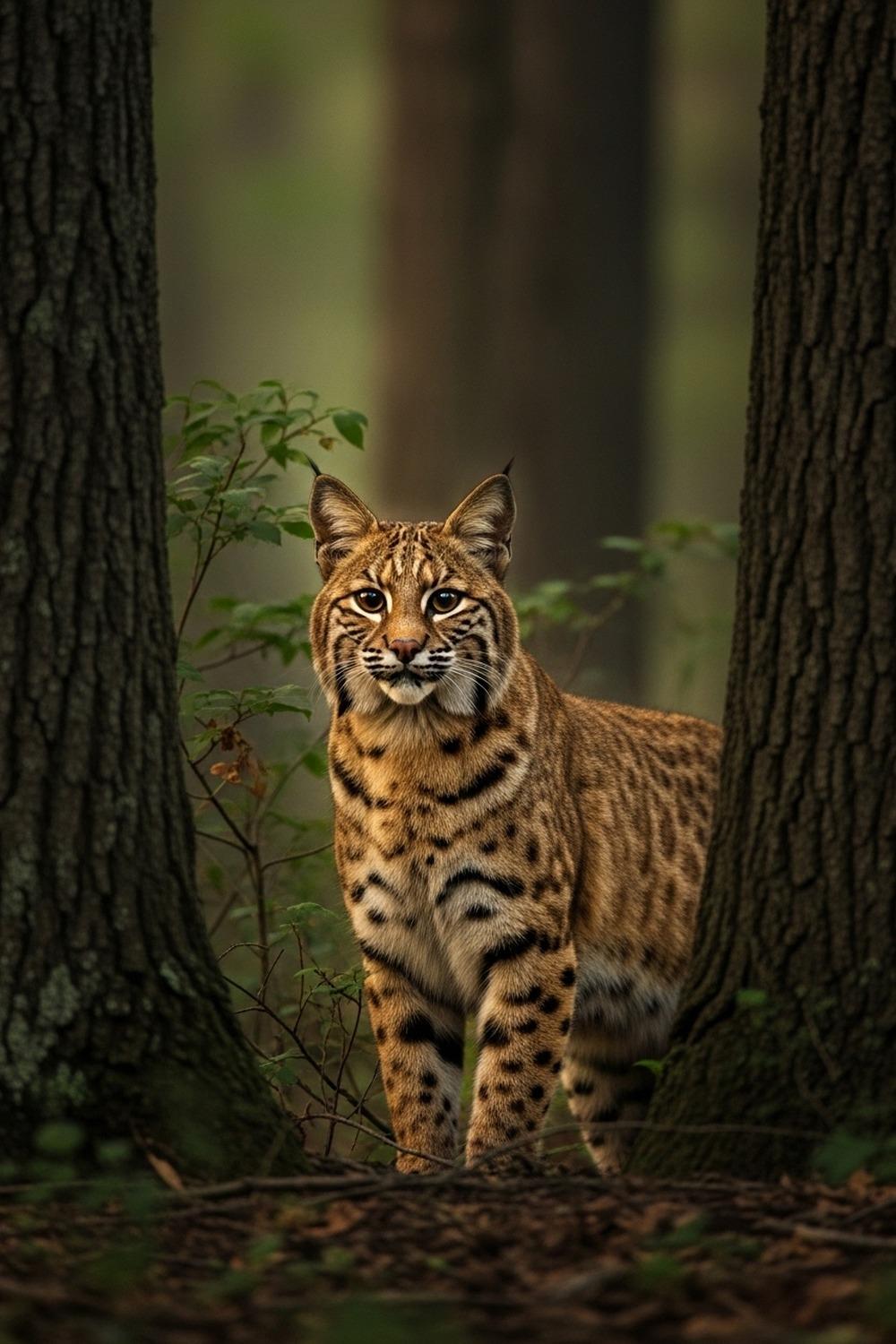
The biggest threat to New Jersey’s bobcats isn’t hunting anymore. It’s roads.
Highway mortality is now one of the leading documented causes of bobcat death in the state. Route 206. Route 80. I-78. Animals that can navigate 25 miles of dense woodland at night can be killed in seconds crossing a four-lane highway. Biologists are pushing for targeted crossing structures — culverts, overpasses — in the highest-traffic corridors. It’s infrastructure nobody thinks about. It’s also the difference between a population that survives and one that slowly fragments.
Then there’s genetic diversity.
A recovering population that’s been isolated for 47 years doesn’t have the genetic depth of a historically healthy population. Small, fragmented groups breed among themselves. Eventually New Jersey’s bobcats might depend on connectivity with populations in New York and Pennsylvania — a problem that no single state can solve alone. We saved them in New Jersey. Keeping them alive requires thinking bigger than state lines.
The Actual Numbers
- 47 years from mid-20th century collapse to 1991 listing
- Fewer than 50 animals at the lowest point. Several hundred now.
- 800,000+ acres protected under the 2004 Highlands Act — habitat anchoring the entire recovery zone
- 25 square miles. That’s the average home range for a single adult male bobcat. Which means the population needs an absolutely enormous connected landscape just to not collapse.
Field Notes
- Bobcats are almost entirely silent hunters. They don’t roar. Adults rarely vocalize at all except during mating season, when their calls have been mistaken for screaming humans.
- New Jersey bobcats have turned up on trail cameras in agricultural fields, suburban edges, even within a few miles of developed areas — which suggests they’re far more adaptable than people assume.
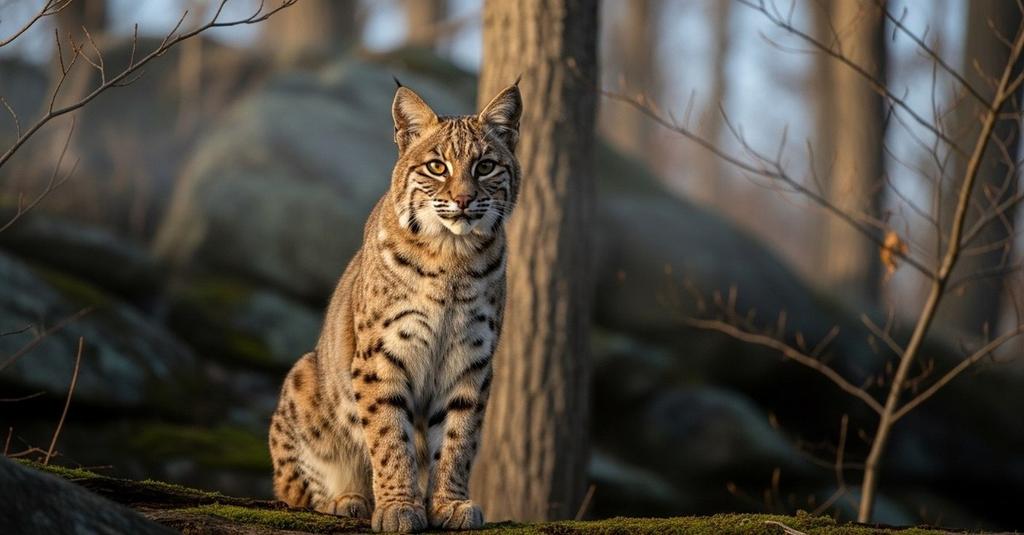
- A bobcat’s spotted coat isn’t just camouflage for hiding from prey. It also helps cubs stay hidden from other predators, including larger bobcats, during those vulnerable first months.
Why This Matters Outside New Jersey
The bobcat recovery in New Jersey is a template. Not a perfect one. Road mortality is real. Genetic isolation is real. The political will required to maintain wildlife corridors across a densely developed state is always fragile. But it proves something: a species you’ve written off as regionally extinct can claw back through legal protection, habitat restoration, and the simple discipline of leaving enough space for nature to work. That’s proof of concept.
What’s actually remarkable is the timescale. We’re terrible at thinking in decades. Conservation demands it. The people who listed the bobcat as endangered in 1991 knew they’d probably retire before the story resolved. They did it anyway.
Now the cats are in Warren County.
There’s a bobcat moving through the New Jersey Highlands right now, crossing ridges in the dark, absolutely unbothered by anyone’s expectations. It doesn’t know it’s a conservation success story. It’s just hunting. That’s exactly the point — when it works, you don’t see it. For more on species that vanished and came back, check out this-amazing-world.com. The next one is even stranger.
Frequently Asked Questions
Q: How many bobcats live in New Jersey now compared to their lowest point?
At their lowest point in the mid-20th century, New Jersey’s bobcat population fell below 50 animals before the state listed them as endangered in 1991. Today, several hundred bobcats live across the state, having spread from the Kittatinny Ridge into Warren and Hunterdon counties. The recovery was driven not by reintroduction but by ending hunting and letting forests regrow over decades.
Q: What is the biggest threat to New Jersey bobcats today?
Road mortality is now one of the leading documented causes of bobcat death in New Jersey, replacing hunting. Highways including Route 206, Route 80, and I-78 cut through bobcat territory, and animals that navigate 25 miles of woodland at night can be killed crossing a four-lane road in seconds. Biologists are pushing for crossing structures like culverts and overpasses in the highest-traffic corridors.
Q: Why did the 2004 Highlands Act matter for bobcat recovery?
The 2004 Highlands Water Protection and Planning Act protected over 800,000 acres in New Jersey, even though its primary purpose was safeguarding human water supplies. That land stayed connected rather than being fragmented into subdivisions, giving wild predators enough continuous habitat to live and breed. Because a single adult male bobcat needs about 25 square miles of range, this large connected landscape anchors the entire recovery zone.
Q: Why do most people never see a bobcat even where they are common?
A healthy bobcat has zero interest in being seen and is active mainly at dawn and dusk. Even people living within a mile of active territory rarely spot one because the cats use terrain expertly, cross open ground in fast bursts, and disappear quickly. Bobcats are also almost entirely silent, rarely vocalizing except during mating season, which makes them an invisible neighbor across much of New Jersey’s Highlands.
Illustrations are AI-generated. Article fact-checked and human-edited. Our editorial standards.