The Real Charlie No-Face: Man Behind the Monster Legend
A teenager glimpses a disfigured figure walking Route 351 at midnight and tells three friends by morning. By the following week, the story has mutated — glowing skin, supernatural powers, a creature that stops car engines. This is how the Charlie No-Face Green Man real story was born: not from a ghost, but from a man named Raymond Robinson who simply chose to walk at night. The legend outlasted him by decades. The truth took far longer to surface.
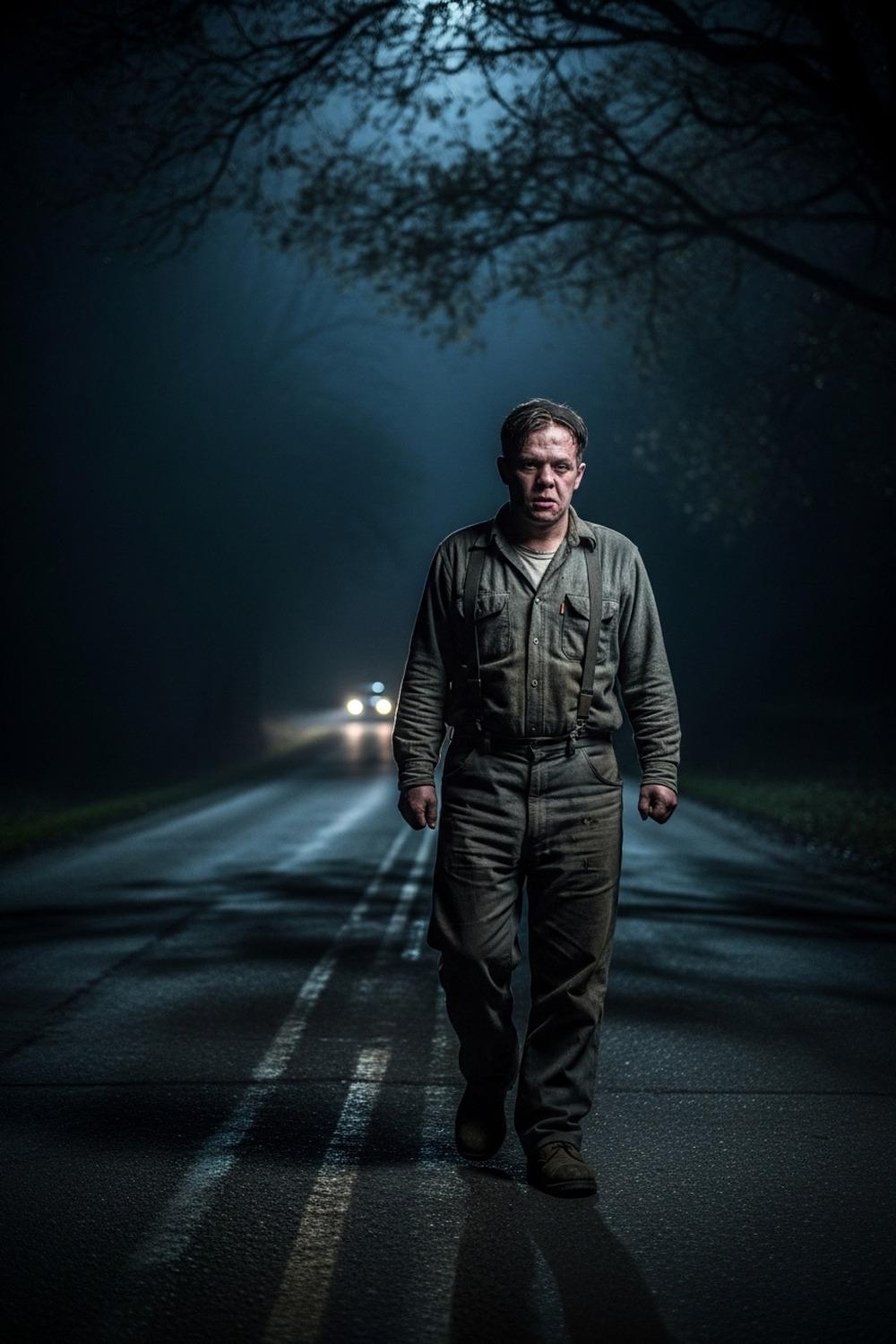
In 1919, near Beaver Falls, Pennsylvania, an eight-year-old boy named Charles Robinson made contact with a high-voltage electrical line. He survived the accident — survival itself was the statistical improbability. The burns that followed were severe enough to permanently disfigure his face, leaving him scarred in ways that made public movement a constant exercise in being stared at, recoiled from, treated as an aberration rather than a person. So Robinson adapted. He discovered that nighttime offered something daylight never would: anonymity, movement, the simple freedom of existing without being scrutinized. For the next several decades, he walked the empty backroads of western Pennsylvania after dark. What he didn’t anticipate — what no one could have — was that this single practical decision would transform him into one of the region’s most enduring pieces of folklore.
Key Facts
- The Charlie No-Face legend is based on Raymond Robinson, who was severely disfigured by a high-voltage electrical line near Beaver Falls, Pennsylvania around 1919 at about age eight.
- Robinson walked roughly 12 miles of Route 351 in Beaver County regularly over several decades after dark.
- Raymond Robinson died in 1985 at the Western Center in Canonsburg, Pennsylvania, in his eighties.
- The high-tension distribution lines he contacted carried approximately 14,400 volts, making survival extraordinarily rare.
- A 2006 book, Weird Pennsylvania, helped bring Robinson’s real name to a wide audience for the first time.
In short: The Charlie No-Face Green Man legend grew from Raymond Robinson, disfigured by a 14,400-volt line around 1919, who walked Route 351 at night for decades to avoid stares. People who actually met him described a calm, sociable man, but the monster story outlived him after his 1985 death.
The Night Walk That Sparked the Green Man Legend
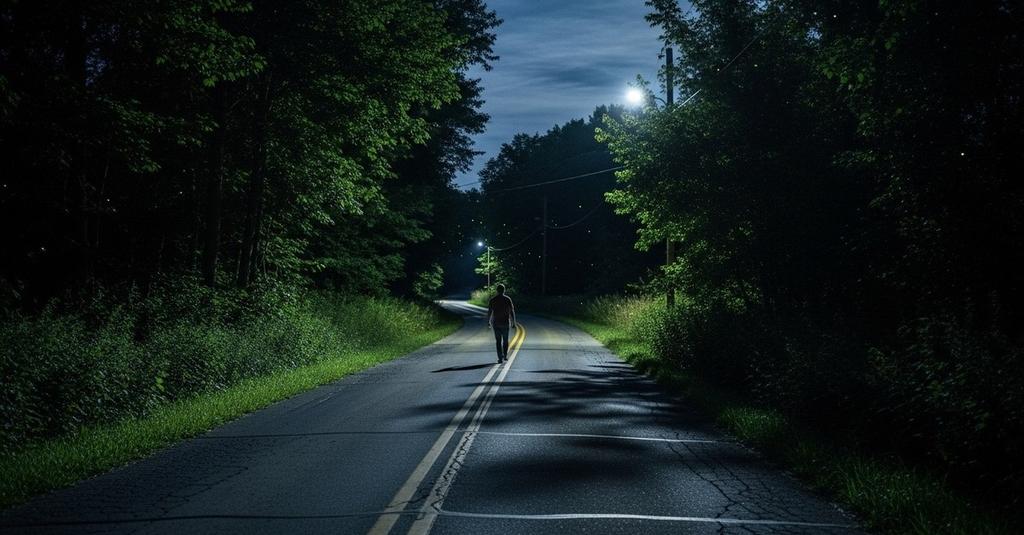
Route 351 threads through Beaver County’s forested hills, quiet farmland in the mid-twentieth century where almost nothing happened after sunset. That was the entire appeal. Western Pennsylvania’s histories, compiled by Beaver County researchers in the 1990s, confirm that Robinson became a familiar figure along stretches of this road over several decades. Neighbors in New Galilee knew exactly who he was. They saw a man taking a walk. But occasional passing motorists saw something different — a disfigured figure moving in darkness, glimpsed through headlights for a fraction of a second before vanishing again into the tree line. The human brain processes a frightening visual before reason gets a chance to intervene. That neurological gap, between perception and understanding, is where all folklore begins to form.
Raymond Robinson, as records clarify his actual name, became the raw material for something no living person can fully control. Teenagers began daring each other to drive down Route 351 after midnight, and the name “Charlie No-Face” emerged from that ritual. The “Green Man” variation — the claim that Robinson’s skin glowed faintly in the dark — has no credible origin point whatsoever, but it’s exactly the kind of embellishment that spreads in oral tradition because it answers a need the truth doesn’t.
A detail gets added. Someone misremembers. Someone else exaggerates for effect.
By the time a story crosses three generations, the original man is almost unrecognizable inside it. The legends described a figure that could stop car engines, cause headlights to fail, or materialize in the middle of the road with no warning. What’s remarkable is how passively Robinson existed in relation to all of this. He didn’t seek confrontation. He didn’t disappear into myth willingly. He simply kept walking his roads, and occasionally, when someone stopped their car and spoke to him respectfully, he talked back. That detail alone dismantles the monster narrative completely.
Who Robinson Was When People Actually Stopped
Folklore studies reveals a pattern that mirrors something you find in natural history: the creature inspiring the most fear turns out, on closer inspection, to be doing almost nothing threatening at all. Think of survival instincts misfiring in the dark — an unfamiliar silhouette triggers alarm before the mind asks questions. The Charlie No-Face Green Man real story is essentially a case study in that exact misfiring. Researchers at the University of Pittsburgh who documented Pennsylvania regional folklore in the early 2000s found something striking: Robinson was regularly described by people who’d actually met him as calm, sociable, and willing to chat. He reportedly smoked cigarettes, occasionally accepted a beer from people who stopped, and posed for photographs with visitors who were polite enough to ask. Here’s the thing — stories like this, of a feared figure who turns out to be genuinely gentle, are rarer than you’d think in American folklore.
Witnesses from the 1950s and 1960s — the height of Robinson’s nighttime walking years — consistently described a man who was, by all accounts, more comfortable with people than the legend suggested. He had lost his eyes, nose, and one ear in the 1919 accident, and his face bore deep scarring, but his voice was reportedly ordinary and his manner unhurried. Several accounts note that he wore a hat and carried a walking stick. But here’s where the psychology becomes interesting: not hiding was the most radical thing he could have done, because visibility is what the legend needed to survive.
Why does this matter? Because the irony is blunt: the people who feared him most had never met him. The people who had met him feared him least.
How Folklore Transforms Real Lives Into Myth
The transformation of Raymond Robinson into Charlie No-Face follows a trajectory that folklorists have documented across dozens of cultures. Smithsonian Magazine’s coverage of American regional legends has repeatedly noted that the most persistent urban legends tend to anchor themselves to a kernel of verifiable fact — a real accident, a real person, a real location — before expanding outward into the impossible. Robinson’s accident was real. His disfigurement was real. His nighttime walks were real. Everything after that point is the work of imagination operating in darkness, which is exactly where imagination does its most dramatic work.
The “Green Man” element is particularly instructive. In many tellings, Robinson’s skin glowed phosphorescent green, sometimes bright enough to illuminate the road. This detail almost certainly traces back to the way high-voltage electrical burns can leave unusual scarring — skin that catches light differently, particularly in the low-contrast environment of headlights on a dark road. But “catches light differently” is not a story. “Glows green” is. The legend upgraded the detail to something supernatural because supernatural details are what survive retelling. And here’s what makes the Charlie No-Face Green Man real story unusual: Robinson remained so accessible throughout. He didn’t retreat entirely. He just moved to different hours.
By the time the story reached suburban Pittsburgh schools in the 1970s and 1980s, Robinson had been dead for years, yet the legend was more vivid than ever. This is what folklore actually does: it outlives its subject, then rewrites the subject to match what the story needs.
Charlie No-Face’s Real Story and What It Reveals About Us
Raymond Robinson died in 1985 at the Western Center in Canonsburg, Pennsylvania, a state institution where he had lived for many years — he was in his eighties by then. His death received almost no public attention, just a brief notice, nothing more. The legend named after him continued to spread through schools, Halloween tradition, and eventually, the early internet. By the mid-2000s, when researchers at Carnegie Mellon University’s folklore documentation projects began tracing the legend’s geographic spread across western Pennsylvania, they found it had migrated far beyond Beaver County. Generations of Pennsylvanians could reference Charlie No-Face without explanation, the way you reference any shared cultural shorthand.
And yet Robinson himself — the actual man — had almost vanished inside the legend he inspired. His real name took years to circulate widely. His actual history, the 1919 accident, his decades of quiet nighttime walks, his willingness to chat with strangers who stopped: all of it was available but not pursued. People preferred the ghost.
That preference reveals something uncomfortable about how communities construct their monsters.
It’s easier to be afraid of something unfamiliar than to be curious about it. Robinson’s visible disfigurement made him unfamiliar to the strangers who glimpsed him from cars. Curiosity would have required stopping, speaking, treating him as a person worth knowing. Fear required nothing — just acceleration and a good story to tell later. The legend of Charlie No-Face is, at its core, a story about what happens when a community chooses not to look closely at someone who makes them uncomfortable. Watching a society mythologize a living person it refuses to understand, you start to grasp that the real horror isn’t disfigurement — it’s indifference.
Descendants of Beaver County families have been quietly correcting the record for decades. The real Robinson, they insist, was a neighbor. Not a monster. Not a ghost. A man who walked the roads at night because the night was the only place that left him alone — and occasionally didn’t, in the best possible way, when someone kind enough to stop actually did.
How It Unfolded
- 1919 — A young Raymond Robinson contacts a high-voltage power line near Morado Bridge in Beaver County, Pennsylvania, suffering severe burns that permanently disfigure his face.
- 1940s–1950s — Robinson develops the habit of walking Route 351 after dark to avoid public stares; local neighbors in New Galilee accept him as a familiar presence.
- 1960s–1970s — Teenage dare culture around “finding Charlie No-Face” spreads through western Pennsylvania; the “Green Man” glowing variant enters circulation in urban legend form.
- 1985 — Raymond Robinson dies at the Western Center in Canonsburg, Pennsylvania; the legend continues to circulate and eventually migrates to the early internet.
By the Numbers
- 1919 — The year of Robinson’s accident; he was approximately 8–9 years old at the time, based on birth records cited by Beaver County genealogical researchers.
- Route 351, Beaver County — roughly 12 miles of road that Robinson walked regularly over several decades, according to regional folklore documentation.
- 1985 — Robinson’s death, meaning the legend outlived him by at least 40 years and continues circulating today.
- 3+ generations of western Pennsylvanians grew up with the Charlie No-Face legend before comprehensive fact-checking became widely available online.
- Approximately 14,400 volts — the standard voltage of high-tension distribution lines in rural Pennsylvania in the early 20th century, making survival of direct contact extraordinarily rare.
Field Notes
- A 2006 book by folklorist Brian Longe, Weird Pennsylvania, helped bring Robinson’s real name — Raymond Robinson — to a wide audience for the first time, correcting decades of “Charlie” misidentification and giving the story a factual anchor it had long lacked.
- Robinson reportedly carried a walking stick and wore a flat cap during his night walks — concrete, documented details that directly contradict the shapeless, spectral figure described in legend versions.
- The “Green Man” name also exists in British folklore as a completely separate nature deity — a coincidence that occasionally causes confusion in international retellings of the Robinson legend, folding a Pennsylvania accident survivor into a much older mythological tradition he had nothing to do with.
- Scholars still can’t fully explain why Robinson’s legend spread geographically while he was still alive and walking — most folklore figures are mythologized after death, not during life, and the mechanism that turned a living neighbor into a ghost story in real time remains an open question in regional folklore studies.
Frequently Asked Questions
Q: What is the Charlie No-Face Green Man real story — was he a real person?
Yes, absolutely. The Charlie No-Face Green Man real story centers on Raymond Robinson, a real man from Beaver County, Pennsylvania, who was severely disfigured in a high-voltage electrical accident around 1919 when he was a child. He survived, lived into his eighties, and died in 1985 at the Western Center in Canonsburg. His habit of walking backroads at night was practical, not supernatural — he simply avoided crowds and the constant scrutiny of strangers.
Q: Why did people call him the Green Man?
The “Green Man” nickname most likely originated from the way Robinson’s scarred skin caught the headlights of passing cars — appearing unusual or discolored in low-contrast nighttime lighting. Oral tradition then amplified this into a supernatural glow. Once a detail becomes part of a legend’s emotional core, it doesn’t need to be accurate to survive retelling; it needs to be vivid. The “glowing green” version was simply more memorable than the truth.
Q: Wasn’t Robinson dangerous to approach — or did people actually meet him?
This is where the Charlie No-Face Green Man real story diverges most sharply from its popular form. Multiple documented accounts from people who actually stopped their cars and spoke with Robinson describe a calm, sociable man who chatted with visitors, accepted cigarettes and occasionally beer, and posed for photographs when asked politely. He wasn’t dangerous. He wasn’t hiding. The people who found him frightening were almost always those who had never spoken to him — which reveals everything about how legends replace people.
Editor’s Take — Sarah Blake
What strikes me hardest about Robinson’s story isn’t the legend — it’s the arithmetic of it. He walked those roads for decades. Neighbors knew him. People stopped and talked. The human version of this story was always available. And yet the monster version won, effortlessly, for generations. That should make us genuinely uncomfortable about the stories we choose to carry forward, because the choice between curiosity and fear is rarely as passive as it feels in the moment.
Raymond Robinson never asked to be a legend. He asked, in the only way available to him, to be left alone — and occasionally, when the mood was right, to be treated like any other person standing on the side of a quiet road. The legend of Charlie No-Face says something true, just not about Robinson: it says something about how quickly a community can transform an inconvenient human reality into a comfortable ghost. The roads along Route 351 are still there. So is the question of who else we’re turning into monsters because looking closely feels like too much effort.
Illustrations are AI-generated. Article fact-checked and human-edited. Our editorial standards.