Why Feeding Ducks Bread in Winter Can Kill Them
Most people don’t realise they’re poisoning the animal they’re trying to feed. A duck paddles toward your outstretched hand, looking healthy. Salt toxicosis in wildlife — a condition where sodium concentration rises faster than the body can compensate — kills quietly, undetected, and bread is the most common trigger. The gesture feels kind. The outcome is cellular collapse.
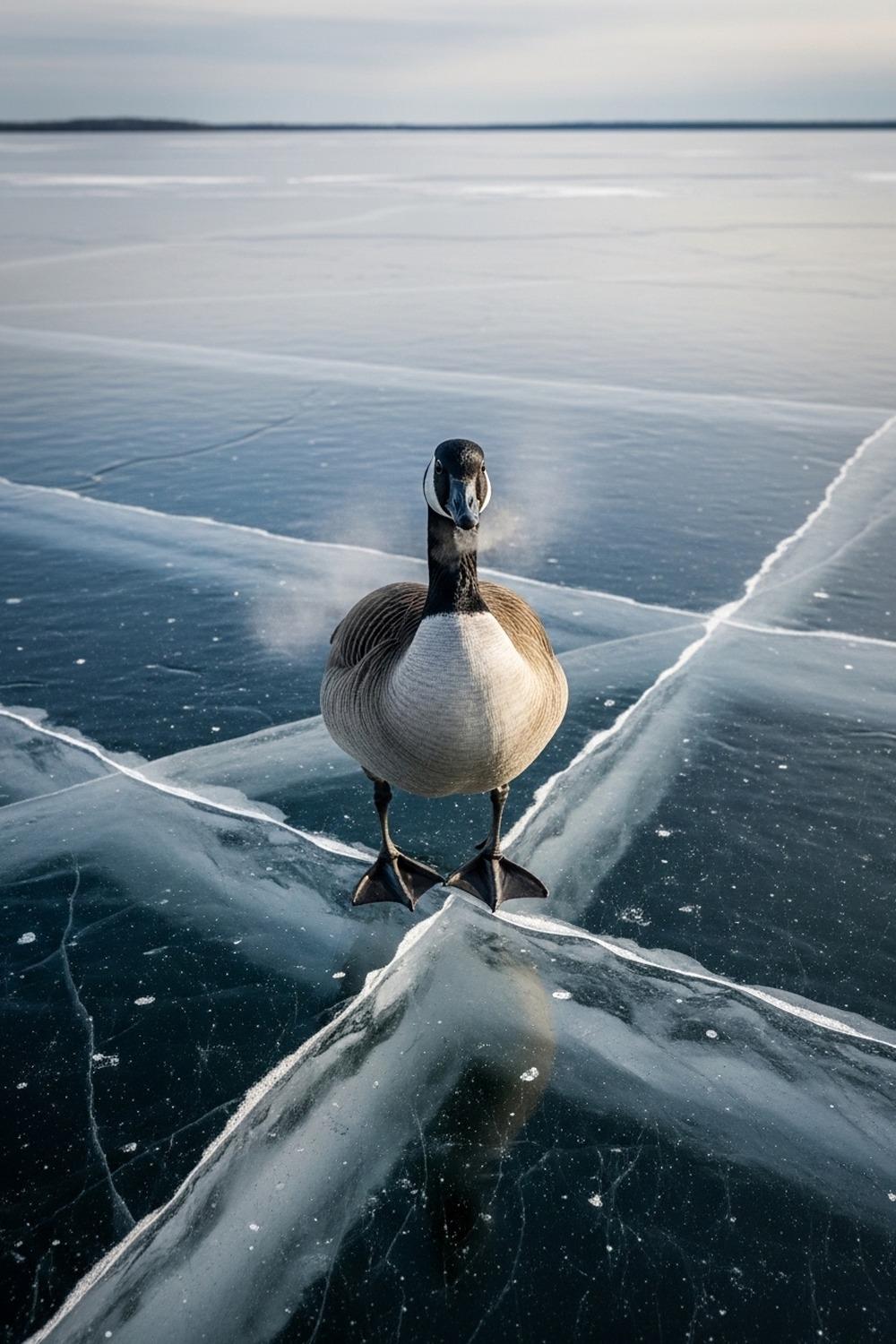
Every winter, well-meaning visitors crowd the edges of frozen parks, tossing bread crusts, crackers, and chips to waterfowl huddled at the unfrozen margins of lakes and rivers. The gesture feels kind. Wildlife rehabilitators across North America will tell you it’s one of the most predictable causes of preventable death they see between January and March.
The question isn’t why people do it. It’s why nobody ever told them what happens next.
Key Facts
- A single slice of commercial white bread contains 100 to 170 milligrams of sodium, enough to stress a 1.2 kg Mallard’s kidneys when no liquid water is available.
- A Canada Goose requires approximately 700 ml of fresh water per day for baseline organ function.
- Wildlife rehabilitators in the U.S. reported a 34 percent increase in waterfowl salt toxicosis cases between 2015 and 2022, per the National Wildlife Rehabilitators Association.
- Survival rates for birds admitted with severe salt toxicosis range from 40 to 60 percent.
- January and February account for the highest salt toxicosis mortality in waterfowl and white-tailed deer across North America.
In short: Cases of salt toxicosis in wildlife occur when blood sodium rises faster than the kidneys can excrete it, pulling water from cells. Feeding ducks bread in winter, when water is frozen, triggers it: a single bread slice holds 100-170 mg sodium, U.S. cases rose 34 percent from 2015 to 2022, and survival runs only 40-60 percent.
How Salt Toxicosis in Wildlife Silently Shuts Down Organs
A kidney doesn’t fail loudly. It fails quietly, over hours, as salt pulls water out of the very cells meant to filter it. This is the core mechanism of salt toxicosis — a condition where sodium concentration in the bloodstream rises faster than the body can compensate. Cells begin losing water to osmosis. Organs follow.
In healthy animals with reliable access to fresh water, the kidneys can sometimes keep pace, excreting excess sodium before it accumulates to lethal levels. But winter changes the equation entirely. When streams freeze and puddles turn to ice, there’s nowhere left to drink. Dehydration accelerates. The kidneys fail faster. Wildlife rehabilitators at the Canadian Wildlife Health Cooperative documented hundreds of salt toxicosis cases in waterfowl during the winters of 2021 and 2022, with January and February consistently accounting for the highest mortality rates.
What makes this condition so deceptive is how normal the animal looks in the early stages. A Canada Goose or a Mallard that has ingested a significant sodium load won’t collapse immediately. It’ll keep paddling. It might even approach you again for another piece of bread. The neurological symptoms — disorientation, loss of balance, seizure-like trembling — don’t appear until sodium levels are critically elevated. By then, the window for intervention is narrow. Rehydration has to happen slowly. Push fluids too fast and you risk cerebral edema. And for every bird that makes it to a rehabilitator, an unknown number die alone at the water’s edge, listed in no database, counted by no one.
A Canada Goose needs roughly 700 millilitres of fresh water daily just for baseline organ function. Deny it that — while simultaneously loading it with sodium from processed human food — and you’re not feeding it. You’re accelerating its death on a timeline it can’t communicate to you.
Winter Strips Away the Body’s Only Defense
Frozen water. That’s the whole problem. There’s a reason salt toxicosis in wildlife spikes in winter specifically, and it’s not simply about diet. It’s about the collapse of an animal’s ability to self-correct. In warmer months, a duck that eats something salty will drink, urinate, and restore balance. The mechanism exists. It works. Winter doesn’t remove the mechanism — it removes the raw material the mechanism requires.
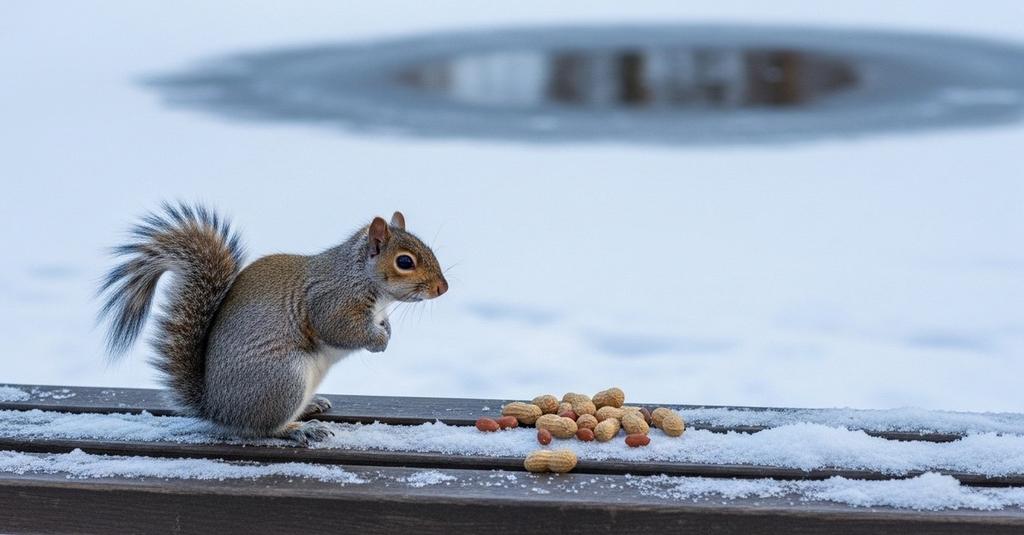
Wildlife in winter is operating at the absolute edge of its physiological reserves. There is no buffer. It’s worth thinking about this alongside other stories of animal vulnerability that seem invisible to passersby — like the behaviour documented in cases where a baby squirrel climbs you and grips your sleeve, signalling not boldness but desperate dehydration or disorientation, a distress call wearing the costume of curiosity. Read more about what it means when a wild animal approaches you.
White-tailed deer are equally vulnerable, and arguably less understood in this context. Most people associate deer feeding with corn or vegetable scraps, not salt. But roadside salt lick habits — deer actively seeking sodium from treated roads — combined with well-intentioned supplemental feeding of crackers and bread have created a documented crisis. A 2019 study from the University of Vermont found that white-tailed deer in northeastern states showed elevated blood sodium levels during February that correlated directly with proximity to suburban feeding zones. The deer weren’t just eating salt. They were eating it without access to the meltwater that would normally dilute it. February is the month when most waterbodies are deepest under ice. It’s also when animals are at their lowest body weight after months of food scarcity.
A bird or deer hitting peak sodium stress at its biological weakest point doesn’t recover the way a well-fed summer animal might. The margin is simply gone.
The Science Behind Why Bread Is Particularly Dangerous
Bread seems harmless. It’s soft, it floats, it disappears quickly. But a single slice of standard commercial white bread contains between 100 and 170 milligrams of sodium — and that’s before you factor in the butter, the seasoning, or the crackers and chips that often get thrown alongside it. For a Mallard duck weighing roughly 1.2 kilograms, that sodium load is disproportionate in a way that has no parallel in its natural diet.
Smithsonian’s National Zoo and Conservation Biology Institute has published guidance noting that bread provides essentially zero nutritional value to waterfowl while simultaneously contributing to a condition called angel wing — a wing deformity caused by nutritional imbalance in growing birds — as well as accelerating salt toxicosis in wildlife during winter months when compensatory drinking is impossible. Beyond sodium, the high carbohydrate content of bread ferments in a bird’s digestive system differently than natural food sources, creating a false sense of satiation that crowds out actual foraging. (And this matters more than it sounds: a bird that feels full stops looking for the nutrients it actually needs.)
Here’s the counterintuitive part. Why do ducks and geese actively prefer bread over their natural food sources when both are available? Because it’s the same calorie-seeking behaviour that drives most animals, including humans, toward energy-dense options. Evolution didn’t prepare a Mallard to evaluate sodium-to-body-weight ratios. It prepared a Mallard to eat when food was in front of it. The result is an animal that enthusiastically participates in its own poisoning, and a human who walks away feeling like they did something good.
Salt toxicosis in wildlife doesn’t require a dramatic amount of food. Repeated small offerings across a single afternoon — three or four visitors each tossing a handful of bread — can collectively push a bird past the threshold its kidneys can handle on a frozen day.
The cumulative effect is the silent killer here, not any single generous handful.
Salt Toxicosis in Wildlife: What Rehabilitators Actually See
A bird arrives limp, eyes half-open, unable to hold its head upright. Inside a wildlife rehabilitation centre in late January, this scene repeats. The admitting rehabilitator checks for signs of trauma — none. No impact injuries, no evidence of predator attack. Blood panel confirms it: elevated sodium, compromised kidney function, dehydration despite the bird having been found near a water source. The diagnosis is salt toxicosis in wildlife, and the treatment is painstakingly slow. Subcutaneous fluids, then oral fluids, then careful monitoring of sodium levels as they drop.
The National Wildlife Rehabilitators Association in the United States has reported that waterfowl salt toxicosis cases increased by an estimated 34 percent between 2015 and 2022, a period that coincided with growing suburban wildlife feeding culture driven partly by social media — people photographing themselves feeding ducks, sharing the images, normalising the behaviour to millions of followers. Watching this trend accelerate, you stop calling it a trend and start calling it a crisis. The numbers don’t lie, but they don’t capture the quiet part either: the birds that never reach a rehabilitator, that die alone, that nobody counts.
Survival rates for birds that arrive at rehabilitation centres with severe salt toxicosis hover around 40 to 60 percent, depending on how quickly they were found and how advanced the organ damage was. Those that survive rarely return to full function immediately. Many require weeks of supportive care.
Rehabilitators are not neutral observers in this conversation. Many have stopped politely suggesting alternatives. They’ve started saying it plainly: don’t feed waterfowl in winter. Not less bread. No bread. The gap between what the public understands and what rehabilitators see every February is wide enough to kill thousands of birds a year.
Where to See This
- Urban parks with unfrozen water sections in winter — such as Hyde Park in London, Central Park in New York, or Beacon Hill Park in Victoria, British Columbia — are where salt toxicosis cases most frequently originate; visiting these sites in January or February and observing (not feeding) waterfowl behaviour provides a direct window into winter wildlife stress.
- The National Wildlife Rehabilitators Association (NWRA) maintains a directory of licensed wildlife rehabilitation centres across the United States where you can report a bird showing signs of salt toxicosis, disorientation, or inability to hold its head upright; find them at nwrawildlife.org.
- If you want to support waterfowl in winter without harming them, the Cornell Lab of Ornithology recommends leaving cracked corn, oats, or defrosted frozen peas near the water’s edge — low-sodium, species-appropriate foods that don’t trigger the osmotic cascade that makes bread so dangerous in cold months.
By the Numbers
- A single slice of commercial white bread contains 100–170mg of sodium — enough to stress a 1.2kg Mallard’s kidneys on a day when no liquid water is available for compensatory drinking.
- A Canada Goose requires approximately 700ml of fresh water per day for baseline organ function, a need that becomes impossible to meet when surface water is frozen solid.
- Wildlife rehabilitators in the U.S. reported a 34 percent increase in waterfowl salt toxicosis cases between 2015 and 2022, according to the National Wildlife Rehabilitators Association.
- Survival rates for birds admitted with severe salt toxicosis range from 40 to 60 percent — meaning up to six in ten birds die even after reaching professional care.
- January and February account for the highest salt toxicosis mortality in waterfowl and white-tailed deer across North America, coinciding with peak ice coverage on freshwater bodies in the northern United States and Canada.
Field Notes
- In 2021, a wildlife rehabilitator in Ontario documented a flock of twelve Canada Geese, all from the same urban park, admitted within a single week in February — each showing identical symptoms of salt toxicosis. Witness accounts confirmed that multiple visitors had been feeding the flock white bread and crackers daily for over a month. All twelve birds required intensive care; three did not survive.
- Ducks process salt differently from mammals: their kidneys are efficient but not exceptional, and unlike seabirds such as petrels or albatrosses — which have a specialised nasal salt gland to excrete excess sodium — ducks have no secondary excretion system to fall back on when their kidneys are overwhelmed.
- Angel wing, the wing deformity most visible in urban park geese, is now considered a co-indicator of chronic bread feeding: birds showing angel wing are also statistically more likely to have elevated blood sodium levels, suggesting the nutritional insults of bread feeding are never isolated to a single system.
- Researchers still don’t fully understand why some individual birds in the same flock survive salt toxicosis events that kill others with apparently identical exposure. Genetic variation in kidney function efficiency is one hypothesis, but no controlled study has yet isolated the variable — it remains an open question in wildlife toxicology.
Frequently Asked Questions
Q: What exactly is salt toxicosis in wildlife, and how quickly does it develop?
Salt toxicosis in wildlife is a condition in which blood sodium rises faster than the kidneys can excrete it, causing cells to lose water through osmosis. In a bird deprived of drinking water in winter, serious symptoms — disorientation, tremors, inability to stand — can develop within six to twelve hours of significant sodium ingestion. The process is faster in smaller animals, where the ratio of ingested sodium to body mass is highest. There is no safe threshold for processed food sodium in wild waterfowl.
Q: Is bread the only dangerous food, or should I avoid feeding ducks anything in winter?
Bread is the most common culprit, but chips, crackers, popcorn, pretzels, and any salted or processed snack carry comparable risks. Even seemingly neutral foods like plain white rice can cause problems — it expands in the digestive tract and displaces actual nutritional foraging. The safest approach in winter is no supplemental feeding at all. If you genuinely want to support waterfowl, cracked corn or defrosted peas near — not in — the water are far safer options recommended by ornithological organisations including the Cornell Lab.
Q: Why do ducks keep coming back for bread if it’s harmful to them?
This is the most common misconception: that animals instinctively avoid harmful foods. They don’t. Waterfowl are opportunistic feeders shaped by evolution to prioritise calorie density, not nutritional balance. Bread is energy-rich and easy to eat. A duck has no cognitive mechanism to connect today’s bread intake with tomorrow’s kidney failure. The behaviour that looks like enthusiasm is actually a mismatch between evolutionary programming and a modern food environment that evolution never anticipated. It’s the same reason humans reach for ultra-processed food — the signal says eat, and the body obeys.
Editor’s Take — Alex Morgan
What stays with me about this story isn’t the biology — it’s the gap. The person tossing bread feels genuinely good about it. The duck takes it eagerly. And somewhere between that exchange and the rehabilitation centre intake form two days later, an entire chain of physiological failure has unfolded that neither participant understood. That gap — between intention and outcome, between what looks kind and what is kind — is exactly where wildlife education needs to live. We’ve built a culture of feeding that feels like connection. It mostly isn’t.
Salt toxicosis in wildlife is a problem built from goodwill, which makes it harder to talk about than cruelty or negligence. Nobody is villainised in this story. But the ducks die at the same rate regardless of motive. What changes when you understand the mechanism is not your love of animals — it’s what you do with your hands at the water’s edge in February. The lake is frozen. The bird is struggling. The best thing you can offer it, on that particular cold morning, is nothing at all.
Illustrations are AI-generated. Article fact-checked and human-edited. Our editorial standards.