The Moth That Can’t Eat and Only Has 2 Weeks to Live
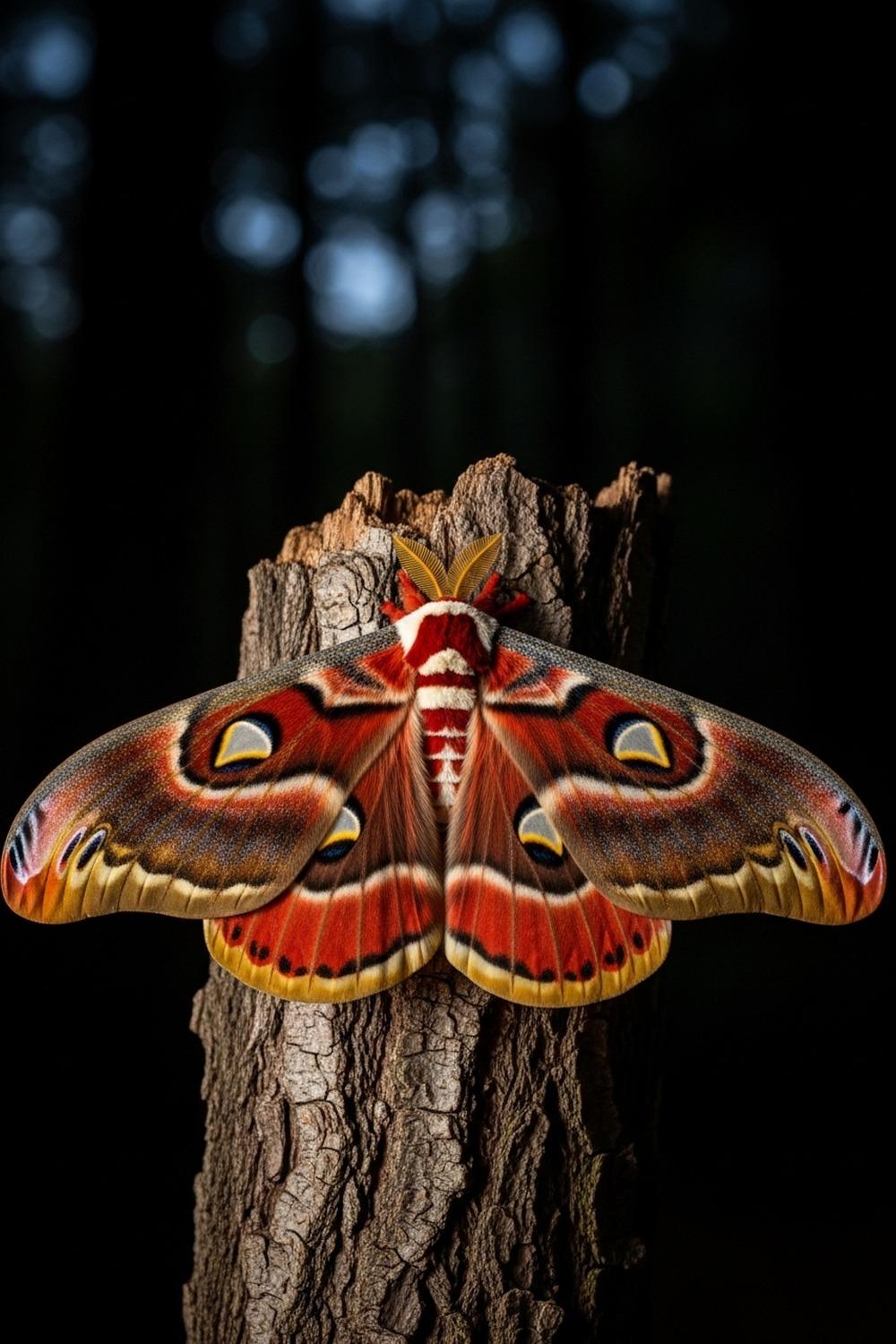
Two weeks. That’s the entire adult life of a Cecropia moth — North America’s largest native moth, with a wingspan wider than your hand. And it spends every single one of those fourteen days completely unable to eat.
I know. Sit with that for a second.
A creature the size of a small bird emerges from its cocoon with no working mouth. None. It’s got these massive, gorgeous wings — we’re talking almost six inches across — and it will drift through spring nights on pure fumes, powered entirely by fuel it stored when it was a caterpillar. No meals. No water. No second chances.
Key Facts
- The Cecropia moth (Hyalophora cecropia) is North America’s largest native moth, with a wingspan up to 5.9 inches (15 cm).
- Adult Cecropia moths live about two weeks and cannot eat, lacking functional mouthparts and a digestive system.
- Cecropia belongs to the family Saturniidae, which contains over 2,300 species worldwide, nearly all non-feeding as adults.
- Male antennae can detect female pheromones at a few molecules per cubic meter, with recorded detection distances over one mile.
- Entomologist David Wagner documented these creatures, which fuel their entire adult life on reserves stored as caterpillars.
In short: The Cecropia moth lifespan lasts only about two weeks, and the adult cannot eat at all, having no functional mouthparts. North America’s largest native moth, with a wingspan up to 5.9 inches, it burns through fat reserves stored as a caterpillar with one purpose: reproduction. This big-bang strategy is called semelparity.
The Cecropia Moth Lifespan: A Race Against Time
The Cecropia moth, Hyalophora cecropia, belongs to the family Saturniidae — a group that’s collectively known as “non-feeding moths.” And here’s what gets me: they literally cannot eat. Not because they’re choosing not to. Because they don’t have functional mouthparts anymore. No digestive system either. According to Wikipedia’s entry on Hyalophora cecropia, the transformation from caterpillar to moth involves a complete body rebuild — and somewhere in that process, evolution just… decided to skip the feeding apparatus.
Entomologist David Wagner, who literally wrote the book on caterpillars of eastern North America, has documented how these creatures operate. Every calorie the adult moth will ever burn was eaten months earlier, before the cocoon was even spun.
There’s no going back.
What Happens Inside That Silk Cocoon
The Cecropia caterpillar spends warmer months doing one thing: eating. Cherry trees, apple trees, birch, maple, elderberry — it doesn’t matter. The caterpillar is basically a leaf-crushing machine. It gorges itself until it’s plump enough to spin one of the most elaborate cocoons in the moth world. Dense. Double-walled. Silk so thick and tightly woven it can survive freezing winters.
Then something wild happens inside.
A process called histolysis breaks the caterpillar’s body down into a biological soup. Cells dissolving. Tissues liquefying. And then — this is the part that kept me reading for another hour — the moth rebuilds itself from scratch. Same DNA. Completely different creature.
Wings instead of leaf-gripping legs. Antennae built for smelling pheromones instead of finding food. A reproductive system primed and ready to go. And a mouth that simply will not open.
You can read more about extraordinary animal transformations at this-amazing-world.com, but honestly, what happens in that cocoon rivals almost anything else in nature.
The Cecropia Moth Lifespan Has Exactly One Purpose
Reproduction. That’s it. That’s the entire job description.
The male emerges first — sometimes days before the female — and immediately begins flying at night. He’s not hunting for food. He’s hunting for a chemical signal. A pheromone. And here’s what’s bonkers: females can broadcast that signal from miles away, and males with their massive, feathery antennae can detect it. Researchers have documented males finding females from distances of over a mile. One mile. Guided entirely by scent.
The female, once mated, has one goal: find the right trees. Cherry. Maple. Birch. Deposit eggs in small clusters on the leaves.
And then she stops.
That’s the whole arc. No second summer. No encore performance.
They’re Not Alone
Here’s the thing: the Cecropia isn’t unique in this strategy. The Luna moth — arguably the most visually stunning moth in North America, with those long tails and pale green wings — lives exactly the same way. The Polyphemus moth too, named after the cyclops for the giant eyespots on its hindwings. The entire Saturniidae family, all 2,300 species worldwide, operates on this principle. Evolution has independently decided, multiple times, that the adult stage doesn’t need to be long. Just long enough.
In biology, this strategy has a name: semelparity. “Big bang” reproduction. Spend everything you have, once, and go.
It’s the same logic that drives Pacific salmon upstream to die after spawning. It’s why some plants flower once and never again. The adult exists only to deliver the next generation. After that? Redundant.
Nature is efficient about redundancy.
By the Numbers
- Wingspan up to 5.9 inches (15 cm) — largest native moth in North America.
- A single Cecropia caterpillar may consume the equivalent of hundreds of leaves before cocooning, storing enough lipid reserves to fuel an entire adult lifespan without a single additional meal.
- Male antennae can sense female pheromones at concentrations of just a few molecules per cubic meter of air — detection distances recorded at over one mile.
- Saturniidae family contains over 2,300 species worldwide, nearly all non-feeding adults — one of the most successful examples of semelparity in the insect world.
Field Notes
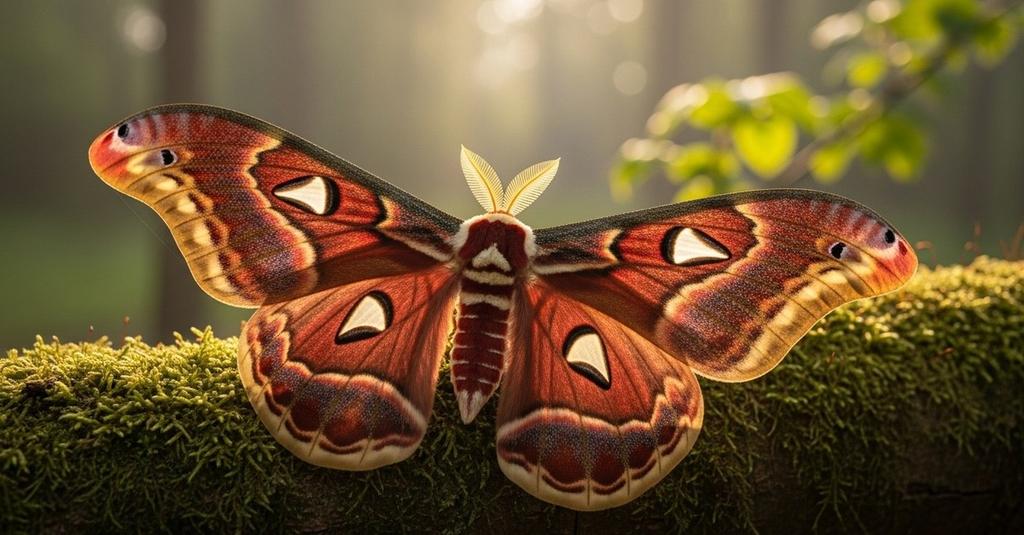
- Most commonly spotted May through July across eastern North America, drawn to porch lights at night. It’s actually a navigational glitch — moths use moonlight to orient themselves, and artificial lights throw off that entire system.
- The cocoon is so structurally sound that Native American tribes used them as rattles. Nineteenth-century naturalists collected them as curiosities. The silk inside is real silk, though too tangled to harvest commercially the way Bombyx mori silk is.
- Nearly silent in flight — wing scales disrupt sound waves so effectively they’re nearly invisible to bat echolocation, an anti-predator adaptation so elegant it’s been studied by acoustic engineers.
Why This Matters
There’s something genuinely strange about the Cecropia moth lifespan, if you’re willing to sit with it. This animal arrives in the world already carrying everything it will ever have. No opportunity to gather more. No meals. No growth. No accumulation. Just the reserves from a former life, burning down.
And within that constraint, it does the only thing that matters.
It finds its match. It continues the line. It exits without drama.
We tend to think of short lives as tragic. But the Cecropia doesn’t operate on tragedy. It operates on precision. Every flicker of those enormous wings is metabolically expensive — it spends that energy anyway. Because the alternative, staying still and conserving, would mean failing at the one job it was built to do.
The Cecropia moth doesn’t know it’s dying. But it acts like it knows exactly what matters.
Two weeks. No food. One mission. And then those enormous wings go still somewhere in the dark. There’s something worth carrying in that — the idea that enough preparation, and enough focus, might be all you actually need. If this keeps you up at night, there’s more at this-amazing-world.com. And the next one is even stranger.
“
Frequently Asked Questions
Q: How long does a Cecropia moth live as an adult?
An adult Cecropia moth lives about two weeks. During that entire fourteen-day span it cannot eat, because the transformation from caterpillar to moth leaves it without functional mouthparts or a digestive system. Every calorie it will ever burn was consumed months earlier as a caterpillar, before the cocoon was spun. The adult stage exists solely for reproduction, after which the moth dies.
Q: Why can’t the Cecropia moth eat?
The Cecropia moth cannot eat because it has no working mouthparts and no digestive system. During metamorphosis inside the cocoon, a process called histolysis breaks the caterpillar’s body into a biological soup, then rebuilds it as a moth. In that rebuild, evolution skips the feeding apparatus entirely. The adult is fueled exclusively by the fat reserves it stored as a leaf-eating caterpillar during the warmer months.
Q: How big is a Cecropia moth?
The Cecropia moth has a wingspan of up to 5.9 inches (15 centimeters), making it the largest native moth in North America, with wings wider than a human hand. It belongs to the giant silk moth family Saturniidae, which contains over 2,300 species worldwide. A creature roughly the size of a small bird, it drifts through spring nights powered entirely by reserves rather than food.
Q: How do male Cecropia moths find females?
Males find females entirely by scent, using their massive, feathery antennae to detect pheromones the female broadcasts. These antennae can sense pheromone concentrations of just a few molecules per cubic meter of air, and researchers have documented males locating females from distances of over one mile. The male emerges first, sometimes days before the female, and flies at night searching for that single chemical signal.
Illustrations are AI-generated. Article fact-checked and human-edited. Our editorial standards.