Finnish Pizza’s Wild Nordic Toppings Conquered the World
Finnish pizza Nordic toppings shouldn’t have won anything in Parma. That’s the part worth sitting with. A country of five million, with no pizza heritage and a larder full of things Italian judges had never tasted — reindeer, cloudberries, boreal chanterelles — walks into the Vatican of pizza and comes out with medals. The punchline, it turns out, was never the punchline at all.
For decades, Finnish pizza occupied an awkward corner of European food culture: too bold for purists, too unusual for casual diners, too stubbornly local to apologize for itself. Italian food critics catalogued its offenses. The internet found it endlessly mockable. Then the World Pizza Championships happened, and the narrative snapped in half. Finland didn’t just compete. It placed. Multiple times. Against competitors from over 40 countries who’d been making pizza since before Finland had grocery stores with reindeer on the shelves. How does that happen?
Key Facts
- The World Pizza Championship has run in Parma, Italy since 1991 and draws competitors from more than 40 countries.
- Finnish competitors won medals in the specialty division at the 2022 and 2023 World Pizza Championships.
- Kotipizza, founded in 1987, operates over 260 locations across Finland’s population of 5.5 million.
- Northern Finland manages approximately 200,000 reindeer, regulated by the Reindeer Herders’ Association, which has kept data since 1948.
- About 75% of Finland’s 338,000 square kilometers is forested, supplying chanterelles, lingonberries, and cloudberries.
In short: Finnish pizza Nordic toppings such as smoked reindeer, chanterelles, and cloudberries turned a mocked cuisine into a medal winner. Finnish competitors placed in the specialty division at the 2022 and 2023 World Pizza Championships in Parma. Kotipizza had served reindeer pizza since 1987, decades before Nordic cuisine became fashionable worldwide.
Nordic Toppings That Made Italian Judges Pause
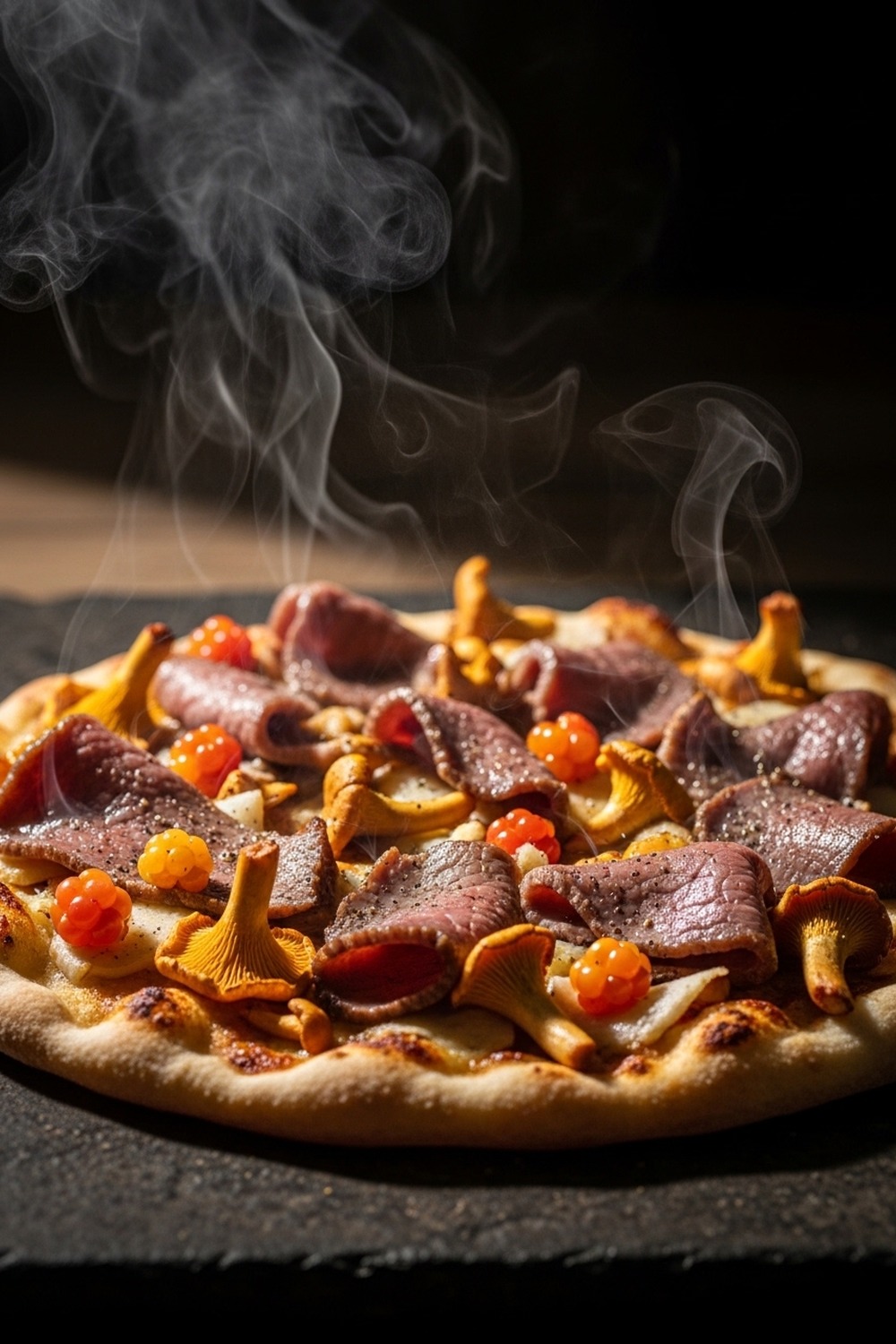
Running since 1991 in Parma, the World Pizza Championship — the Campionato Mondiale della Pizza — draws competitors from more than 40 countries across categories ranging from classic Neapolitan to acrobatic dough-spinning. Finland’s entries leaned hard into the country’s larder: smoked reindeer (poronkäristys-style, slow-cooked and layered), golden chanterelle mushrooms foraged from boreal forests, cloudberry jam drizzled over cured meats, and juniper-smoked salmon sourced from Lapland rivers. Judges at the 2022 and 2023 competitions awarded Finnish competitors medals in the specialty pizza division — rewarding exactly the boldness that food critics had spent years treating as a liability.
The Finnish Culinary Institute, which has supported the development of Nordic food identity since its 2000s expansion, noted that the country’s medal haul reflected growing global appetite for locality and provenance in competition cuisine. None of this happened by accident. Finnish pizza culture developed in relative isolation from Italian orthodoxy, which turned out to be an advantage. Without the weight of tradition pressing down, Finnish pizzerias — especially in Helsinki and Tampere — experimented freely. They treated pizza the way Nordic chefs treat everything: as a canvas for what grows in the forest, runs across the tundra, or swims up the river. Short growing seasons produce ingredients with concentrated flavor. Cold forces intensity. The mushrooms taste more like mushrooms. The berries hit harder. That compression of flavor is exactly what judges in specialty categories are looking for.
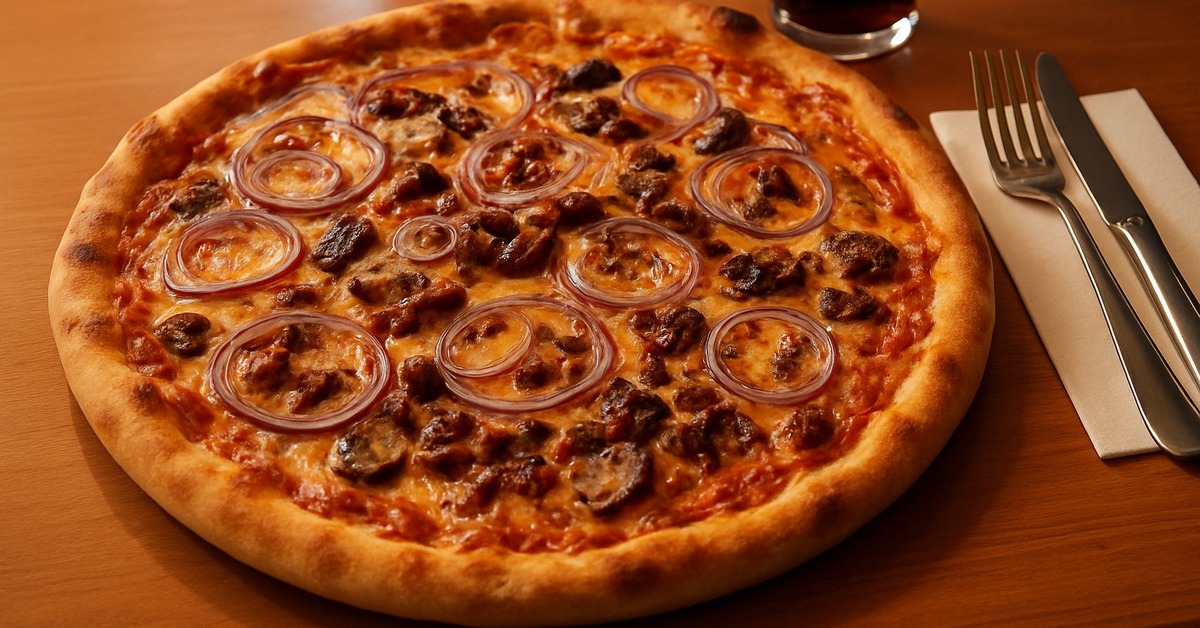
Walk into Kotipizza, Finland’s largest pizza chain, and you’ll find the Berlusconi — named provocatively after the Italian politician — topped with smoked reindeer, chanterelles, and red onion. It’s been on the menu for years. In 2008, it was named the world’s best non-traditional pizza in an international tasting held in New York. Mockery as fuel. Criticism as a compass pointing the wrong direction.
The Forest Floor Makes Its Way Onto the Crust
What makes Finnish pizza Nordic toppings distinctive isn’t novelty for its own sake — it’s the depth of the sourcing ecosystem behind each ingredient. Finland covers 338,000 square kilometers, about 75% of which is forested. Every autumn, that forest produces an extraordinary bounty: golden chanterelles, funnel chanterelles, porcini, lingonberries, cloudberries, crowberries. Finnish law grants every citizen the right to forage — a legal tradition called everyman’s right, or jokamiehenoikeus (researchers actually call this one of the most significant food-access laws in the developed world) — meaning the supply chain for pizza toppings can, in principle, run from forest floor to oven in the same afternoon. Just as the Bornean rainforest hides a palm that fruits entirely underground, the Finnish boreal forest conceals an astonishing food pantry that most of the world hasn’t opened yet.
Reindeer is the anchor protein. In Lapland, the Sámi people and Finnish herders manage approximately 200,000 reindeer across northern Finland, a population regulated by the Reindeer Herders’ Association, which has tracked herd management data since 1948. The meat is lean, rich in iron, slightly gamey in the way venison is, but softer — when smoked or slow-cooked and placed on a pizza base with a crème fraîche sauce and caramelized onion, it behaves like an ingredient that was always meant to be there. Finnish pizzerias figured that out in the 1980s. The rest of the world is still catching up.
Chanterelles deserve their own paragraph. Finland is one of Europe’s leading foraging nations, and the golden chanterelle — Cantharellus cibarius — flourishes in the country’s birch and pine forests from July through September. Its flavor is woodsy, faintly peppery, with a texture that doesn’t collapse under heat the way many mushrooms do. On a pizza, it holds its shape. It holds its flavor. It doesn’t disappear into the cheese. That’s a technical advantage as much as a culinary one.
Why Nordic Food Culture Had the Answer All Along
René Redzepi opened Noma in Copenhagen in 2003 and asked a deceptively simple question: what does this region actually taste like? The restaurant’s philosophy — radical locality, foraged ingredients, fermentation, and a rejection of imported luxury — rippled across Scandinavia within a decade. Finland absorbed those ideas and adapted them to its own context, applying Nordic culinary logic to pizza in the same way Noma applied it to fine dining. According to Smithsonian Magazine’s coverage of the Nordic food movement, the region’s embrace of locality as identity — rather than locality as limitation — fundamentally changed how food culture is evaluated globally. Finnish pizza Nordic toppings benefited directly from that shift in perception.
What changed? Everything, starting in the 2010s, when global food culture moved decisively toward provenance, traceability, and authenticity — and Finnish pizza was already there. It hadn’t pivoted to meet a trend. It had been doing this for thirty years out of habit. That’s a genuinely rare position in food culture — to have been ahead of a movement without knowing the movement was coming. Nordic ingredients weren’t trendy additions. They were practical ones. Reindeer was available. Salmon was running. The forest was full of mushrooms. Pizza was a vehicle for what was already on the table.
History has a way of treating the people who dismissed Finnish pizza Nordic toppings as a category error unkindly — because Parma itself has since complicated the fixed definition of pizza they were defending. The World Pizza Championship’s specialty category explicitly invites regional interpretation. In that context, Finland’s entries aren’t deviations from pizza — they’re the premise of the category, taken seriously.
Finnish Pizza Nordic Toppings Win on the Global Stage
Kotipizza, founded in 1987, spent the better part of two decades building a menu that treated Nordic ingredients as a permanent feature, not a seasonal gimmick. When the company entered its Berlusconi pizza in international competition, it did so with the kind of quiet confidence that Finnish culture tends to project — no fanfare, no marketing campaign built around the entry. The pizza competed. It won. The University of Helsinki’s food science department, which has tracked Finnish culinary identity in research papers since the early 2000s, noted that the competition success aligned with a broader pattern: Nordic countries that invest in the culinary legitimacy of their regional ingredients consistently outperform expectations in international contexts where novelty is valued alongside technique.
Nobody was watching Finland on the scoreboard.
And then the 2023 World Pizza Championships put Finnish competitors on the podium — medals in the specialty and non-classical categories both. The judging criteria include dough texture, topping distribution, visual presentation, and overall flavor balance — a rubric that doesn’t penalize smoked reindeer. It rewards umami depth, textural contrast, and visual coherence. Finnish pizzas deliver all three. Smoked salmon provides fat and salinity. Chanterelles provide earthiness and texture. Cloudberry jam provides acidity and sweetness in a single ingredient. That’s a flavor architecture sophisticated enough to score well on any rubric.
Finnish pizzerias have since embraced the competition success as a marketing reality. Restaurants in Helsinki now list their awards openly. Tourists arrive specifically to try the reindeer pizza — a remarkable reversal for an ingredient that was once presented as evidence of Nordic culinary confusion.
What Happens When a Country Refuses to Apologize
Finland’s position in the global pizza conversation mirrors something larger about Nordic cultural identity. Sixth in 2024, first in seven of the previous eight years — Finland’s ranking in the World Happiness Report isn’t incidental context here. Happiness, as measured by Gallup and the UN Sustainable Development Solutions Network, tracks closely with social trust, autonomy, and the freedom to pursue life on one’s own terms. That same architecture shows up in Finnish food culture. There is no Italian-approval anxiety in a Finnish pizzeria. There is reindeer, and there is cheese, and there is a crust, and the combination doesn’t require external validation to exist on the menu.
But here’s the thing: the global food industry is beginning to recognize this as a model. Regional specificity, once treated as a barrier to entry in international competition, has become a differentiator. Japan’s food culture has operated on this principle for decades — ramen, sushi, and tonkatsu are recognizably Japanese and globally dominant simultaneously. Korea’s kimchi and gochujang have undergone the same transformation. Finland’s pizza is following a similar arc, slower and quieter, but directionally the same. Finnish pizza Nordic toppings are moving from curiosity to category.
Stand in a Helsinki pizzeria on a November evening — dark by three in the afternoon, snow pressing against the windows — and watch someone order the reindeer pizza without hesitation or explanation. No one in the room thinks it’s unusual. That confidence, accumulated across forty years of just making the pizza and not worrying about what Rome thinks, is exactly what carried Finland to Parma. And won.
How It Unfolded
- 1987 — Kotipizza founded in Finland, beginning the systematic integration of Nordic ingredients — including reindeer and salmon — into pizza menus designed for the Finnish market.
- 2003 — Noma opens in Copenhagen, launching the Nordic food revolution that would eventually reframe regional ingredients as a global culinary asset rather than a limitation.
- 2008 — Kotipizza’s Berlusconi pizza, topped with smoked reindeer and chanterelles, named the world’s best non-traditional pizza in an international tasting competition held in New York.
- 2022–2023 — Finnish competitors claim multiple medals at the World Pizza Championship in Parma, Italy, in specialty and non-classical categories, completing the full arc from punchline to podium.
By the Numbers
- 40+ countries compete annually at the World Pizza Championship in Parma, which has run continuously since 1991 — Finland placed multiple times in the specialty division between 2022 and 2023.
- 200,000 reindeer are managed across northern Finland by licensed herders, regulated by the Finnish Reindeer Herders’ Association, which has maintained population data since 1948.
- 75% of Finland’s 338,000 square kilometers is forested — the primary source of chanterelles, lingonberries, cloudberries, and porcini used in Nordic pizza toppings.
- Finland ranked first in the UN World Happiness Report for seven of the eight years preceding 2024 — the same national character that produces quiet culinary confidence in international competition.
- Kotipizza operates over 260 locations across Finland, making Nordic-topped pizza accessible to a national population of 5.5 million — roughly one pizzeria per 21,000 people.
Field Notes
- The Berlusconi pizza was named deliberately to provoke — and it worked. When it debuted on Kotipizza’s menu in the early 2000s, the Italian media briefly covered it as an affront. The publicity it generated in Italy was, by most accounts, accidental. The name stayed.
- Cloudberries, which appear as a topping in several award-winning Finnish pizza recipes, can’t be commercially farmed at scale. They grow exclusively in Arctic and sub-Arctic bogs, making them genuinely scarce — a luxury ingredient that happens to be a common sight in Finnish supermarkets only during an eight-week window each summer.
- Finnish pizza culture developed largely without Italian immigration influence — unlike pizza cultures in the United States, Australia, or Brazil, which were shaped by Italian diaspora communities. Finland arrived at pizza independently and solved it differently, which may explain why its solutions look so unlike anyone else’s.
- Researchers studying culinary regionalism still can’t fully explain why Finland’s competition success hasn’t triggered a wave of Nordic-style pizzerias internationally. The ingredients are available, the awards are documented, and the flavor logic is sound. What’s missing — if anything — remains genuinely unclear.
Frequently Asked Questions
Q: What exactly are Finnish pizza Nordic toppings, and how do they differ from standard pizza ingredients?
Finnish pizza Nordic toppings typically include smoked reindeer, chanterelle mushrooms, cloudberries, Lapland salmon, juniper-cured meats, crème fraîche, and lingonberry-based sauces — replacing or supplementing the Italian baseline of tomato, mozzarella, and cured pork. The key difference is sourcing: Finnish toppings are tied to the boreal forest and Arctic ecosystem, producing flavor profiles that are earthier, smokier, and more acidic than Mediterranean-influenced pizza. The tradition has been building since at least the late 1980s.
Q: How did Finnish pizza win medals at an Italian-run championship?
The World Pizza Championship includes a specialty and non-classical category that explicitly invites regional interpretation — it isn’t restricted to Neapolitan or Margherita-style entries. Judges score on dough quality, topping distribution, visual presentation, and overall flavor balance. Finnish entries score well because Nordic ingredients create sophisticated flavor architecture: smoked proteins provide depth, foraged mushrooms provide texture, and wild berries provide acidity. The judging rubric rewards balance and technique, neither of which requires Italian ingredients to achieve.
Q: Is Finnish pizza just a novelty, or does it represent a genuine culinary tradition?
Genuine tradition, not a marketing gimmick. Kotipizza has served reindeer and mushroom pizzas since the late 1980s — predating the Nordic food revolution by nearly two decades. Finnish pizzerias integrated local ingredients out of practical availability and cultural habit, not to court international attention. The competition success came after decades of quiet consistency, which is precisely what makes the Finnish case unusual. Countries that trend-hop don’t win awards for doing what they’ve always done.
Editor’s Take — Sarah Blake
What strikes me most about this story isn’t the medals. It’s the timeline. Finland was putting reindeer on pizza in 1987, fifteen years before Noma made Nordic ingredients fashionable, thirty-five years before Parma handed over a trophy. They weren’t ahead of the curve — they weren’t watching the curve at all. They were just making pizza with what was in the forest. That kind of indifference to external validation is almost impossible to manufacture. It turns out you can’t fake your way to that kind of confidence. You have to actually not care. And then, apparently, you win.
Food culture tends to reward the loudest claimants — the countries with the most history, the most prestige, the most insistence that their version is the only version. Finland ignored all of that and kept slicing chanterelles. The deeper question the Finnish pizza story raises isn’t about toppings at all. It’s about what happens when a culture stops seeking permission and starts foraging for its own answers. The forest doesn’t care what Rome thinks. Neither, it turns out, does the pizzeria. What would your own cuisine look like if it had been built the same way — with nothing to prove and everything to taste?
Illustrations are AI-generated. Article fact-checked and human-edited. Our editorial standards.