The Tiny Protein That Cracked the Chicken-or-Egg Problem
Nobody set out to solve the chicken-or-egg problem. A team at the University of Edinburgh was just trying to figure out how eggshells form so fast — and they stumbled into a philosophical argument that’s been running for about 2,500 years.
The protein they found is called OC-17. It’s tiny, it’s specific to domestic chickens, and it turns out it’s been quietly answering one of humanity’s oldest questions this whole time. Here’s the thing: once you understand what OC-17 actually does, the chicken-or-egg paradox stops being a paradox. It becomes a biology lesson. A surprisingly clean one.
Key Facts
- A University of Edinburgh team identified the protein OC-17 as the catalyst that drives chicken eggshell formation, publishing in Science in 2010.
- A hen assembles roughly 17 grams of calcium carbonate into a shell in about 24 hours, with OC-17 directing crystals into the calcite form.
- Each eggshell contains about 10,000 pores that allow gas exchange while blocking bacteria.
- Shell thickness ranges from 0.3 to 0.35 millimeters yet can withstand compressive forces up to 100 newtons when pressure is applied evenly.
- OC-17 is specific to Gallus gallus domesticus, the domestic chicken, and reptile eggs use aragonite instead of calcite without OC-17.
In short: The chicken egg shell protein OC-17, identified by a University of Edinburgh team in a 2010 Science paper, drives calcite crystal formation in eggshells. Because OC-17 is specific to domestic chickens, the article argues it resolves the chicken-or-egg paradox: the chicken came before its defining egg.
The Chicken Egg Shell Protein That Builds Faster Than You Think
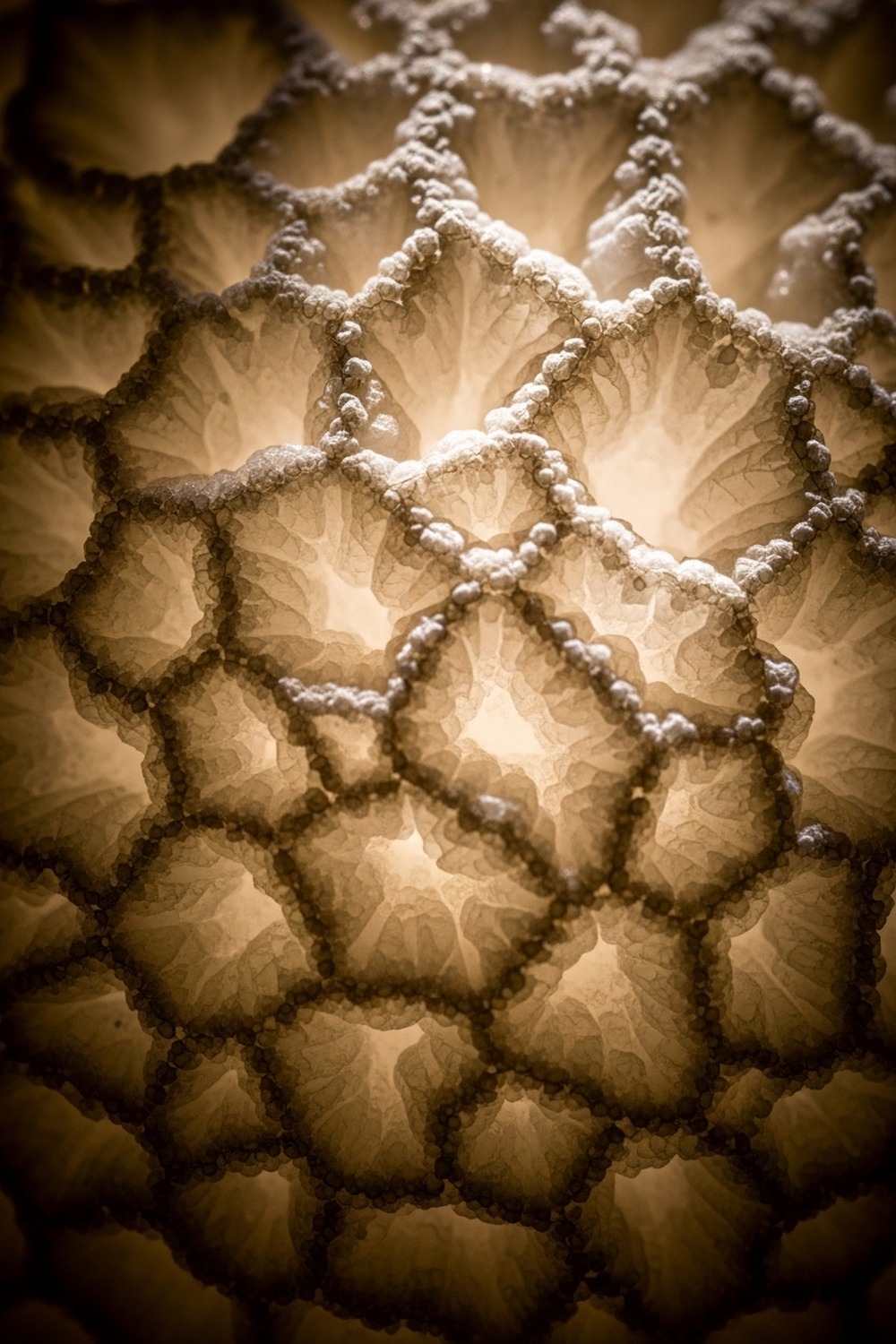
Every day, inside a hen’s uterus, roughly 17 grams of calcium carbonate gets assembled into a curved, structurally layered shell in about 24 hours flat. That’s not gradual. That’s a sprint. Dr. Colin Rodger and his colleagues at Edinburgh pinned down OC-17 as the catalyst driving this — a protein that functions like a molecular switch, telling calcium carbonate crystals exactly when to form, and more importantly, which form to take. The eggshell isn’t just compressed calcium. It’s a precisely engineered, multi-layered structure, and OC-17 is the thing that makes it that instead of a useless mineral blob.
The technical term is nucleation. OC-17 grabs individual calcium carbonate molecules and triggers crystallization in a specific pattern — calcite, not aragonite, not vaterite, the other forms calcium carbonate can take depending on conditions. That distinction matters more than it sounds. It’s roughly the difference between chalk and marble. The protein doesn’t assist. It dictates.
Which raises the obvious question — why calcite? Why this exact structure?
Because calcite, arranged in radial columns growing outward from the inner membrane, gives the shell exactly the mechanical properties a developing embryo needs. Strong enough to resist crushing. Weak enough that a chick can break through from the inside. That’s not a coincidence. That’s 10,000 pores per shell allowing gas exchange while blocking bacteria, all made possible because OC-17 forced the crystals into the right geometry in the first place. That last fact kept me reading for another hour.
A Daily Miracle Happening Inside Every Hen
Here’s what that means at scale. A hen capable of laying eggs is running this protein-driven construction project on a near-daily loop, sometimes for years. Up to 300 shells per year under good conditions. Each one going through the same stages — soft membrane first, then OC-17 nucleating calcite crystals outward in organized columns, then a surface cuticle sealing the whole structure. Multi-phase biological manufacturing, repeated almost every single day of her laying life.
Silently. No visible sign from outside. Just chemistry doing something that took evolution an extraordinarily long time to get right.
And then humans crack it open and make scrambled eggs.
Why This Tiny Protein Cracked an Ancient Riddle
OC-17 doesn’t exist in just any bird. It’s specific to Gallus gallus domesticus — the domestic chicken. Not the red junglefowl it descended from. Not other poultry. Chickens. That specificity is what makes this philosophically strange: the complete eggshell we’re talking about, built this exact way, with calcite crystals arranged in this exact radial column structure, required OC-17 to already exist in the animal building it. The shell is a product of the chicken. Definitionally. Structurally.
So follow that to its conclusion.
The chicken-or-egg question assumes a loop — that you can’t have one without the other, so neither can logically come first. But OC-17 breaks the loop. The chicken egg shell protein is species-specific. That means the egg built by OC-17 — the genuine, modern, calcite-column chicken egg — could only have been produced by a chicken. Which means a chicken had to exist first. Which means the animal came before the egg that defines it.
The Proto-Chicken and the Egg It Actually Laid
Here’s where it gets weirder. The first actual chicken hatched from an egg, obviously. But that egg was laid by something that wasn’t quite a chicken yet — a proto-chicken, genetically close enough that the difference might’ve been a single mutation. That proto-chicken didn’t carry OC-17 in its current form. So the egg it laid — the egg the first true chicken hatched from — was built differently. Slightly, but meaningfully differently.
Turns out, the egg that produced the first chicken wasn’t technically a chicken egg.
That means the chicken came first, at least in the sense that matters. The first genuine chicken egg — meaning an egg constructed with the full OC-17-driven calcite crystal architecture — was laid by the chicken, not laid to produce it. It’s a small distinction. The kind of small distinction that keeps evolutionary biologists genuinely occupied, because it means every defining biological feature of a species has a precise first moment. And that moment belongs to the organism, not its parent.
A mutation happened. Probably in a single animal. And from that animal forward, the eggs were different.
By the Numbers
- 17 grams of calcium carbonate assembled per shell, in roughly 24 hours — that figure comes directly from the Edinburgh team’s 2010 paper in Science
- About 10,000 pores per shell
- Shell thickness: 0.3 to 0.35 millimeters, yet capable of withstanding compressive forces up to 100 newtons when pressure is applied evenly — that’s roughly a 10-kilogram object sitting on it
- Up to 300 eggs per year per hen under optimal conditions, meaning the OC-17 construction process runs nearly every day of her laying life — for years
Field Notes
- OC-17 belongs to a protein family called ovocleidins, found in bird egg calcification generally. But the specific calcite-nucleating behavior appears unique to domestic chickens — suggesting it either evolved or intensified during domestication. Nobody’s entirely sure which.
- Inhibit OC-17 in lab conditions and the radial column structure collapses. What you get instead is disorganized mineral deposits that can’t hold shape.
- Reptile eggs use aragonite instead of calcite, and they don’t use OC-17 at all. Completely different molecular solution, similar functional outcome. Biologists call this convergent evolution — and it means the chemistry of egg-building evolved independently at least twice, through entirely separate molecular paths arriving at roughly the same destination. You can explore more surprising biological engineering like this at this-amazing-world.com.
What OC-17 Actually Tells Us About Life
The chicken egg shell protein story isn’t really about eggs. It’s about how complexity builds itself — how one small protein becomes the linchpin of a biological system running billions of times a day across the planet. OC-17 is a reminder that beneath every ordinary thing, there’s a molecular story happening at a scale we can barely conceptualize. The Edinburgh research opened a door into that story in 2010, but scientists are still working out the full picture of how proteins like this evolve, specialize, and quietly become indispensable to an entire species.
The philosophical payoff is real, though. When you trace the chicken-or-egg question down to the protein level, you don’t get a frustrating loop anymore. You get a specific moment in evolutionary history. A mutation. Probably one animal. And from that moment forward, every chicken egg was built differently than every egg that came before it.
One protein. One mutation. An argument humans have been having for thousands of years, quietly resolved at the molecular level — not by philosophers, but by a research team trying to understand crystal formation. Biology does this constantly. Hides enormous answers inside impossibly small things. The chicken-or-egg question was never a paradox. It was a signpost, pointing at the way life actually works: one tiny change at a time, compounding forward into everything we take for granted. If that kind of thing keeps you reading past midnight, there’s more at this-amazing-world.com — and the next one is stranger than this.
Frequently Asked Questions
Q: What is the chicken egg shell protein OC-17 and what does it do?
OC-17 is a protein identified by a University of Edinburgh team led by Dr. Colin Rodger, published in Science in 2010. It acts as a molecular catalyst driving nucleation, grabbing individual calcium carbonate molecules and triggering crystallization specifically into calcite rather than aragonite or vaterite. This produces the radial column structure that makes a shell strong enough to resist crushing yet weak enough for a chick to break through from the inside.
Q: How does the chicken egg shell protein help answer the chicken-or-egg question?
OC-17 is specific to Gallus gallus domesticus, the domestic chicken, and not its red junglefowl ancestor. The complete modern eggshell, built with calcite columns, requires OC-17 to already exist in the animal producing it. The article argues this breaks the loop: the genuine chicken egg could only be produced by a chicken, so a chicken with OC-17 had to exist first, meaning the animal came before the egg that defines it.
Q: How fast does a hen actually build an eggshell?
A hen assembles roughly 17 grams of calcium carbonate into a curved, multi-layered shell in about 24 hours, a figure from the Edinburgh team’s 2010 Science paper. The process moves through stages: a soft membrane first, then OC-17 nucleating calcite crystals outward in organized columns, then a surface cuticle sealing it. Under good conditions a hen can lay up to 300 eggs per year, running this protein-driven construction nearly every day of her laying life.
Illustrations are AI-generated. Article fact-checked and human-edited. Our editorial standards.