Why Nadal’s 14 French Open Titles Feel Like a Law of Nature
Rafael Nadal won the French Open 14 times. He lost there twice. That gap — between those two numbers — is where the whole story actually lives.
Fourteen titles across nineteen years at the same tournament on the same surface. Two losses total. You sit with those numbers for a minute and something starts to feel wrong in the best possible way — like watching someone solve a puzzle everyone else thinks is unsolvable, then solve it again, then solve it thirteen more times while the rest of the world watches.
Key Facts
- Rafael Nadal won the French Open 14 times across 19 years at Roland Garros
- His Roland Garros record stands at 112 wins and 4 losses, a 96.6% win rate
- Nadal’s topspin forehand generated over 3,200 RPM, roughly double the tour standard
- His only two French Open losses came in 2009 (Robin Soderling) and 2015 (Novak Djokovic)
- Roger Federer’s Wimbledon record is 8 titles, nearly half of Nadal’s 14 at Roland Garros
In short: The Rafael Nadal French Open story is defined by 14 titles and only 2 losses across 19 years at Roland Garros, a 112-4 record. His 3,200-RPM topspin forehand turned the slow clay into a weapon, producing the most dominant surface-specific run in Open Era tennis history.
How Rafael Nadal French Open Dominance Actually Worked
Clay is supposed to be a leveler. It slows the ball down, kicks it up past your shoulders, punishes anything less than perfect movement. Sports scientist Dr. Alan Pearce has spent years studying how elite players move on different surfaces, and his research is pretty clear: clay requires a completely different physical approach than hard courts or grass. It’s slower. It’s meaner. It should have stopped Nadal like it stopped everyone else.
Except his forehand generated upward of 3,200 RPM of topspin.
That’s roughly double what most tour players produce. Think of it like this — the ball doesn’t just come back to you on clay. It comes back higher, meaner, angrier. On any other surface that’s an inconvenience. On clay it’s a weapon.
Nadal spent nineteen years sharpening it.
The Record That Stopped Making Sense Somewhere Around Year Seven
According to his career statistics, Nadal compiled a 112–4 record at Roland Garros — 96.6% win rate. Over 450 matches won on clay in his entire career. No other player in the Open Era comes close to that kind of sustained surface-specific dominance in a Grand Slam setting. Not even remotely.
But here’s the part that kept me reading for another hour: it wasn’t just winning. It was how he won. Players who’d beaten him on hard courts, who’d humiliated him on grass, who’d figured him out in other tournaments — they’d arrive at Roland Garros and something shifted. The clay seemed to change the odds in ways that looked almost scripted.
- 112 wins, 4 losses at Roland Garros — a 96.6% career win rate (ATP Tour, 2024)
- His topspin forehand: 3,200+ RPM average, twice the tour standard, leaving opponents barely enough time to react to high clay bounces
- Between 2005 and 2014 he won the French Open nine times in ten years
- The one year he didn’t win during that stretch? He withdrew due to injury. He didn’t lose. He just wasn’t there.
- Federer’s Wimbledon record stands at 8 titles — Nadal has nearly double that at Roland Garros
Why His Entire Game Was Built for This One Place
It’s weird. Nadal’s physical approach — the extreme western grip, the looping forehand, the left-handed serve that kicks wide into a right-hander’s backhand, the defensive retrieval that made him move like he had springs in his knees — wasn’t something he stumbled into. It was engineered. You can explore how specific physical traits shape extraordinary performance across sports, but Nadal’s case is almost too clean. Every technical choice amplified on clay.
He moved differently on it.
Other players slide reluctantly, like they’re fighting the surface. Nadal slid with precision — using the clay to recover position faster than seemed physically possible. It looked effortless. That’s how you know it was incredibly difficult.
The Two Losses
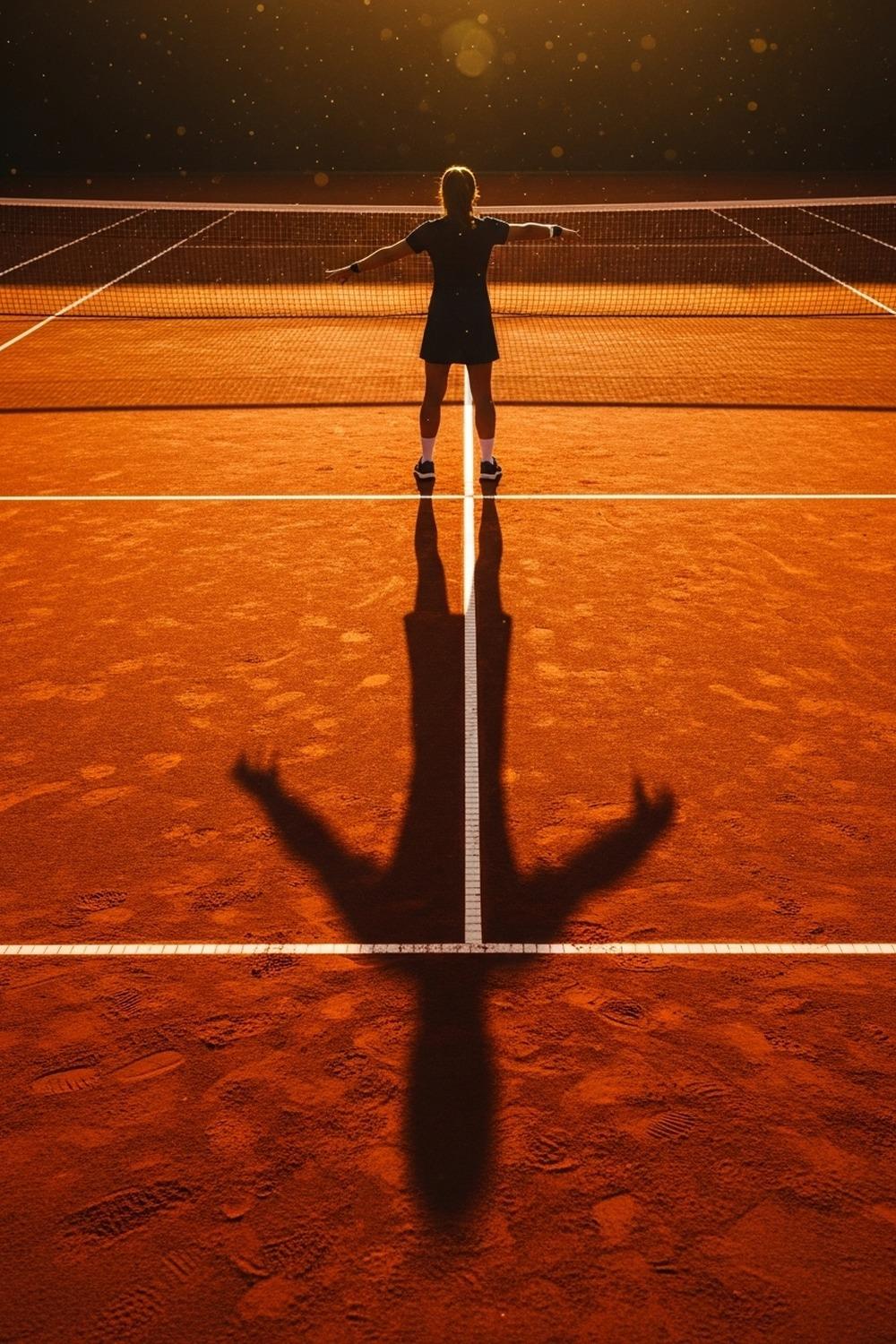
Here’s what makes the Rafael Nadal French Open story genuinely strange: he only lost twice. Once in 2009 to Robin Söderling in the fourth round — a result that shocked the tennis world so completely it made global news. Once in 2015 to Novak Djokovic in the quarterfinals, when Djokovic had arguably become the best clay player alive, aside from the obvious exception.
Two losses. Nineteen years. Same tournament.
Two losses in two decades isn’t a statistic. It’s a philosophical statement.
What Söderling’s Win Revealed
The 2009 loss might have done more for Nadal’s legend than a win would have. It proved he was beatable. Söderling had an enormous flat game that ate into Nadal’s topspin advantage. He hit through the clay rather than sliding across it. He had one perfect afternoon, then Nadal won the next five French Opens in a row. That’s the thing about dominance at this level — it isn’t fragile. It just absorbs the disruption and continues.
The resilience, the capacity to return to a place where you’ve been hurt and win it again and again — that’s arguably the most remarkable part of the whole story.
Field Notes
- Nadal’s uncle Toni, his longtime coach, made him play left-handed as a child despite being naturally right-handed — a decision that dramatically amplified his serve’s kick to a right-hander’s backhand, and on clay the effect becomes even more severe
- Roland Garros clay is actually orange
- That specific shade comes from crushed brick topped with white limestone powder — the color affects ball visibility in ways players spend years learning to read
- During Nadal’s peak years, his average rally length on clay was significantly longer than his opponents’, which means he won more points in extended exchanges — the opposite of what most aggressive baseliners prefer, and yet he built his entire game around it
Why This Record Will Never Be Replicated
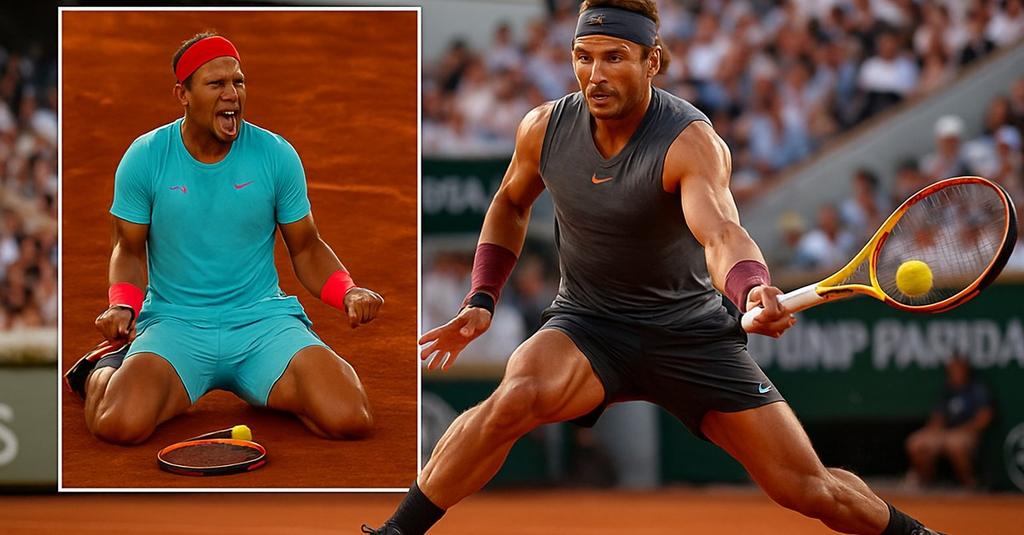
The Rafael Nadal French Open legacy isn’t about titles. It’s about what happens when one human being completely redefines what’s possible in one specific place. Sports produce streaks. Sports produce dynasties. But they almost never produce ownership — the sense that one person has so thoroughly claimed territory that the place itself changes meaning.
Roland Garros doesn’t just mean “the French Open” anymore. It means Nadal.
It will for decades.
Future players will arrive knowing what happened on that clay. They’ll carry the weight of 14 titles that belong to one man. That’s a psychological force that doesn’t fade with retirement. Fourteen titles. Two losses. One player who found a surface and made it his own in a way sports may never see again. It wasn’t magic — it was topspin, footwork, and two decades of relentless return. But it felt like something more permanent than any of those things. Some records are statistics. This one feels like geography. If you want more stories like this, there’s plenty more at this-amazing-world.com — and the next one is even stranger.
Frequently Asked Questions
Q: How many times did Rafael Nadal win the French Open?
Rafael Nadal won the French Open 14 times between 2005 and 2022, across a span of 19 years at Roland Garros. His career record at the tournament was 112 wins and just 4 losses, a 96.6% win rate. Between 2005 and 2014 alone he claimed nine titles in ten years, the only gap coming in 2009 when Robin Soderling defeated him in the fourth round.
Q: Why was Rafael Nadal so dominant on clay courts?
Nadal’s game was engineered for clay. His forehand generated over 3,200 RPM of topspin, roughly twice the tour average, making the ball bounce high and awkwardly on the slow surface. Combined with his left-handed serve that kicked into right-handers’ backhands and his precise sliding movement, every technical choice amplified on clay. He also won more than 450 clay-court matches across his entire career, more than any player in the Open Era.
Q: How many times did Nadal lose at the French Open?
Rafael Nadal lost only twice at the French Open in 19 years. The first loss came in 2009 against Robin Soderling in the fourth round, a result that shocked the tennis world. The second came in 2015 against Novak Djokovic in the quarterfinals. After the 2009 defeat, Nadal won the next five French Open titles in a row, underscoring how rare those losses were.
Q: Why is Nadal’s French Open record considered unbreakable?
Nadal’s 14 titles and 112-4 record at a single Grand Slam represent a level of surface-specific dominance no other player approaches. For comparison, Roger Federer’s 8 Wimbledon titles, the next closest single-tournament mark, is nearly half of Nadal’s total. Achieving 14 wins requires sustained excellence over almost two decades on one surface, a combination of physical longevity, technical fit, and consistency that statisticians regard as practically impossible to replicate.
Illustrations are AI-generated. Article fact-checked and human-edited. Our editorial standards.