Inside Sloth World: 40 Free-Roaming Sloths, No Cages
In February 2026, Orlando’s getting a slotharium — 40 free-roaming sloths, zero cages, and you’re walking straight into their rainforest with nothing between you and them. Not glass. Not barriers. Not even the pretense that this is designed for your convenience.
This isn’t some sloth corner at a zoo. It’s the first actual slotharium on Earth, and it’s opening in a city that already has everything, which makes the whole thing even weirder to think about. The habitat will have more than 40 three-toed and two-toed sloths sharing one immersive rainforest space with visitors. But here’s the catch — and it’s a big one — the entire operation runs on sloth terms, not guest expectations. Entirely.
Key Facts
- Sloth World Orlando, the first slotharium on Earth, opens in February 2026 with more than 40 free-roaming three-toed and two-toed sloths.
- Sloths sleep roughly 15 to 20 hours a day and descend from trees about once a week.
- A sloth’s digestive system takes 30 days to process a single meal of leaves, versus 24 to 72 hours for similarly sized mammals.
- Three-toed sloths have the lowest metabolic rate of any non-hibernating mammal, approximately 74% lower than their body size predicts.
- Sloths have existed for 64 million years and spend up to 90% of their lives motionless, per the Zoological Society of London, 2023.
In short: Sloth World Orlando, opening in February 2026, is the first slotharium on Earth: more than 40 free-roaming sloths in an immersive rainforest with no cages or barriers. The entire design runs on sloth terms, with capped visitor headcounts and restricted noise, because sloths are extraordinarily sensitive to stress.
The Whole Thing Is Backwards From Every Other Attraction
Most wildlife attractions are engineered for you. Gift shop proximity. Sight lines. Instagram moments. Photo ops at predictable times. Sloth World Orlando flips that completely. The design is built around what the sloths need, not what visitors want to see or buy or post.
Visitor headcounts are capped. Noise is restricted. Disruption gets engineered out of the model.
Dr. Rebecca Cliffe, a primatologist who’s spent years researching sloth physiology, has documented how absurdly sensitive these animals are to stress — way more than their permanent sleepy face would suggest. A stressed sloth’s digestion basically stops. One stressed sloth can spend up to a month processing a single meal. Their entire body chemistry runs on a knife’s edge of calm. Break that, and everything breaks.
So the real question: can a commercial attraction actually pull this off without destroying what makes it worth visiting in the first place?
What It Actually Looks Like When Animals Run the Show
Forty animals with total behavioral freedom.
That means the sloths climb when they feel like it. Sleep when they feel like it (which is roughly 15 to 20 hours a day, so most of the time). Eat on their own schedule. Nobody taps glass. There’s no scheduled feeding time where everyone crowds around to watch. It’s just life happening slowly above your head, and you’re allowed to stand there and witness it.
Most people think that sounds boring. Until they actually do it.
See, there’s a difference between guaranteeing a sighting and guaranteeing an experience. A sighting is a checkbox. An experience is something that changes how you think about being alive. Some visitors will stand in that rainforest and watch a sloth do absolutely nothing for ten minutes straight, barely moving, barely breathing, and they’ll realize they’ve never actually seen an animal at peace before. That hits different. For more on how immersive animal sanctuaries are reshaping what captivity can mean, this-amazing-world.com has been tracking this shift across the globe.
The Biology That Makes This Whole Thing Make Sense
Sloths are genuinely, weirdly alien. They sleep 15 to 20 hours a day. They come down from the trees roughly once a week — and almost exclusively to poop, which is its own entire biological puzzle. Their metabolic rate is so low that their body temperature doesn’t stay constant. It shifts with the air temperature around them. That’s basically reptile behavior in a mammal’s body. According to Wikipedia’s overview of sloth biology, the leaf-based diet is so nutritionally sparse that extreme energy conservation isn’t a lifestyle choice. It’s survival.
The habitat design matters because of this.
A stressed sloth doesn’t pace. Doesn’t vocalize distress. Doesn’t act out the way a dog or a monkey would. It just slowly stops working from the inside. Quietly. You might not even notice until the damage is done.
That last fact kept me reading for another hour.
And here’s what nobody mentions: watching an animal that’s genuinely at peace in its environment hits you in a completely different way than watching one pacing concrete. The stillness feels earned. Real. Like you’re not observing performance art — you’re observing an actual life.
The Actual Numbers Get Weird Fast
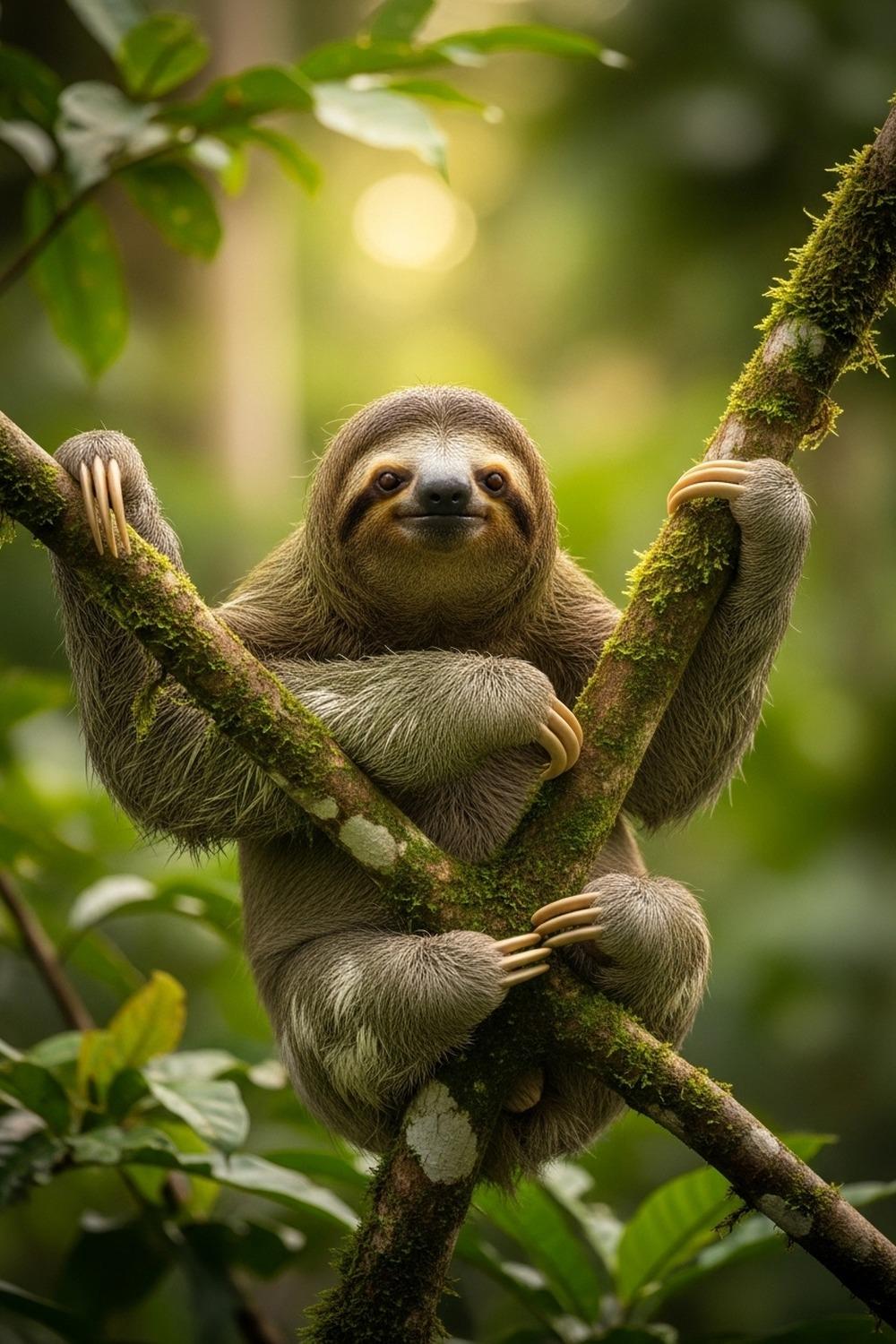
Sloth top speed on the ground: 0.03 miles per hour. Their fur isn’t just fur — it’s a ecosystem. Algae grows on it. Moths live in it. Beetles. Fungi that exist nowhere else on Earth. The algae might be camouflage, or it might be accidental. Either way, the sloth’s slow movement isn’t just energy-efficient — it’s actively protective. The fur’s a habitat. A living one. That’s the level of biological specificity we’re dealing with here, and that’s why Sloth World’s conservation mission isn’t marketing copy. It’s the actual structure of how the thing works.
If this succeeds — if 40 sloths can coexist with rotating streams of human visitors while staying genuinely well — it becomes proof that calm is a design choice, not a compromise.
By the Numbers
- Sloths spend up to 90% of their lives motionless — more than almost any other mammal that exists (Zoological Society of London, 2023).
- Digestion. A sloth’s digestive system takes 30 days to process one meal of leaves. Most similarly-sized mammals do it in 24 to 72 hours.
- Three-toed sloths have the lowest metabolic rate of any non-hibernating mammal ever recorded — approximately 74% lower than what their body size would predict.
- The 40-sloth population at Sloth World will be one of the largest single-site collections of sloths in human care anywhere when it opens.
Field Notes
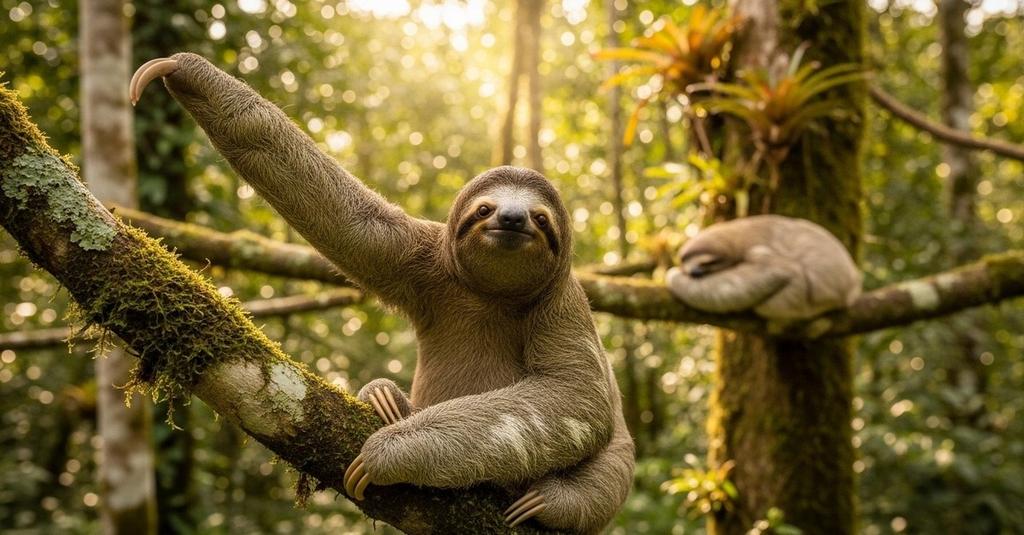
- Sloths swim three times faster than they move on land and will cross rivers voluntarily.
- Three-toed sloths have two extra neck vertebrae that let them rotate their heads nearly 270 degrees without moving their bodies — they can spot predators without twitch.
- Baby sloths learn which leaves are safe to eat by licking their mother’s lips during nursing. This knowledge transfer takes months. Orphaned sloths need specialized rehabilitation because they literally have to be taught what food is, and there’s no shortcut for that kind of learning.
Why This Matters Right Now
We’re in an era of sensory overload. Louder attractions. Faster rides. Bigger experiences. Theme parks compete on how much stimulation they can pack into an afternoon. Aquariums have projection mapping and DJ nights now. Against that, Sloth World Orlando is almost countercultural — a place where the main event is a 10-pound animal sleeping in a tree, and the entire point is to slow down enough to notice it’s happening.
The conservation model isn’t separate from the visitor experience. It is the experience.
If it works, it proves something bigger than “people will pay to watch animals live naturally.” It proves there’s actual hunger for calm in a world running out of it. That quiet is something worth seeking out. That maybe we’re more sloth than we want to admit.
Sloths have been alive for 64 million years. They survived ice ages. Mass extinctions. The entire existence of humans. They did it by being phenomenally good at one thing: not wasting energy on anything that doesn’t matter. Maybe that’s why people keep looking at them. Maybe that’s exactly what we need to see right now.
Sloth World opens in Orlando in February 2026. Forty sloths. Living freely. No performance required. No spectacle. Just the quiet proof that you can build something for a living creature and watch people show up to appreciate that instead of fighting against it. If you want more of these stories, check this-amazing-world.com.
Frequently Asked Questions
Q: What is Sloth World Orlando and when does it open?
Sloth World Orlando is the first slotharium on Earth, an immersive rainforest habitat opening in February 2026. It will house more than 40 three-toed and two-toed sloths sharing one space with visitors, with no cages, glass, or barriers between guests and animals. Unlike conventional attractions engineered for visitor convenience, its design is built entirely around what sloths need. Visitor headcounts are capped and noise is restricted, because sloths are far more sensitive to stress than their permanently sleepy faces suggest.
Q: Why is Sloth World designed around the animals instead of visitors?
Sloths run on an extreme energy-conservation strategy. They sleep 15 to 20 hours a day, descend from trees only about once a week, and have a metabolic rate so low their body temperature shifts with the surrounding air. Primatologist Dr. Rebecca Cliffe has documented how a stressed sloth’s digestion can essentially stop, with one animal spending up to a month processing a single meal. A stressed sloth doesn’t pace or vocalize; it quietly stops working internally, so the habitat minimizes disruption.
Q: How unusual are sloths biologically compared to other mammals?
Remarkably unusual. A sloth’s digestive system takes 30 days to process one meal of leaves, while similarly sized mammals manage it in 24 to 72 hours. Three-toed sloths have the lowest metabolic rate of any non-hibernating mammal ever recorded, roughly 74% lower than their body size would predict. According to the Zoological Society of London, they spend up to 90% of their lives motionless. Their fur is its own ecosystem, hosting algae, moths, beetles, and fungi found nowhere else on Earth.
Illustrations are AI-generated. Article fact-checked and human-edited. Our editorial standards.