The Kensington Runestone: What the Evidence Shows
Ask around west-central Minnesota and you will hear it stated as settled fact: the Kensington runestone proves Norse explorers stood in the middle of North America in 1362, more than a century before Columbus. It is carved in stone, after all — nine lines of runes across the face, three more along one edge, a date, a death toll. Turns out the real story is stranger than the legend, and a good deal more human. And almost nobody arguing about the stone online has heard the part that was quietly assembled in Sweden over the past twenty years, out of runes scratched into the ceiling of a farmhand’s bedroom in the 1870s.
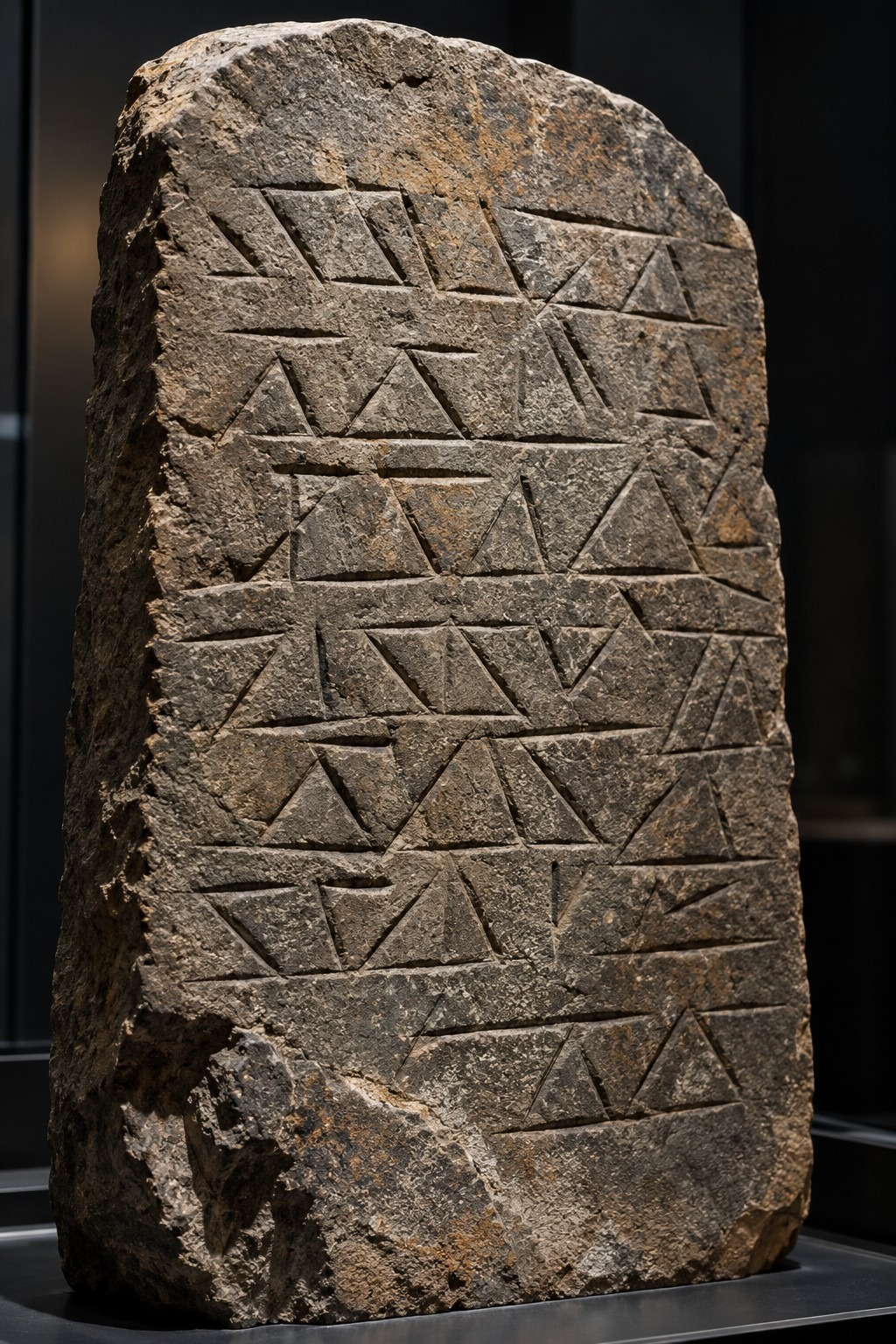
Key Facts
- Olof Öhman discovered the slab in autumn 1898 while clearing poplar stumps near Kensington, Minnesota
- The stone measures about 30 by 16 by 6 inches, weighs roughly 202 pounds, and is cut from greywacke
- The inscription gives the date 1362 and describes eight Geats and twenty-two Norwegians on an exploration journey from Vinland
- In 1910, geologist Newton Horace Winchell estimated the carving at about 500 years old, while Wisconsin state geologist William O. Hotchkiss put it at 50 to 100 years old
- A 1883 notebook by Edward Larsson, found in Sweden in 2004, contains a rune alphabet matching the stone’s unusual characters, and related inscriptions dated 1870 and 1877 were traced to a farmhand’s room at the Ersk-Mats farm in Kölsjön, Hälsingland
In short: The Kensington Runestone, found near Kensington, Minnesota in 1898 by farmer Olof Öhman, bears a runic inscription dated 1362 describing Norse explorers. Linguists including Olaus J. Breda and Henrik Williams identified it as a 19th-century forgery based on anachronistic language, and an 1883 Swedish notebook later matched its unusual rune forms.
What the stone actually says
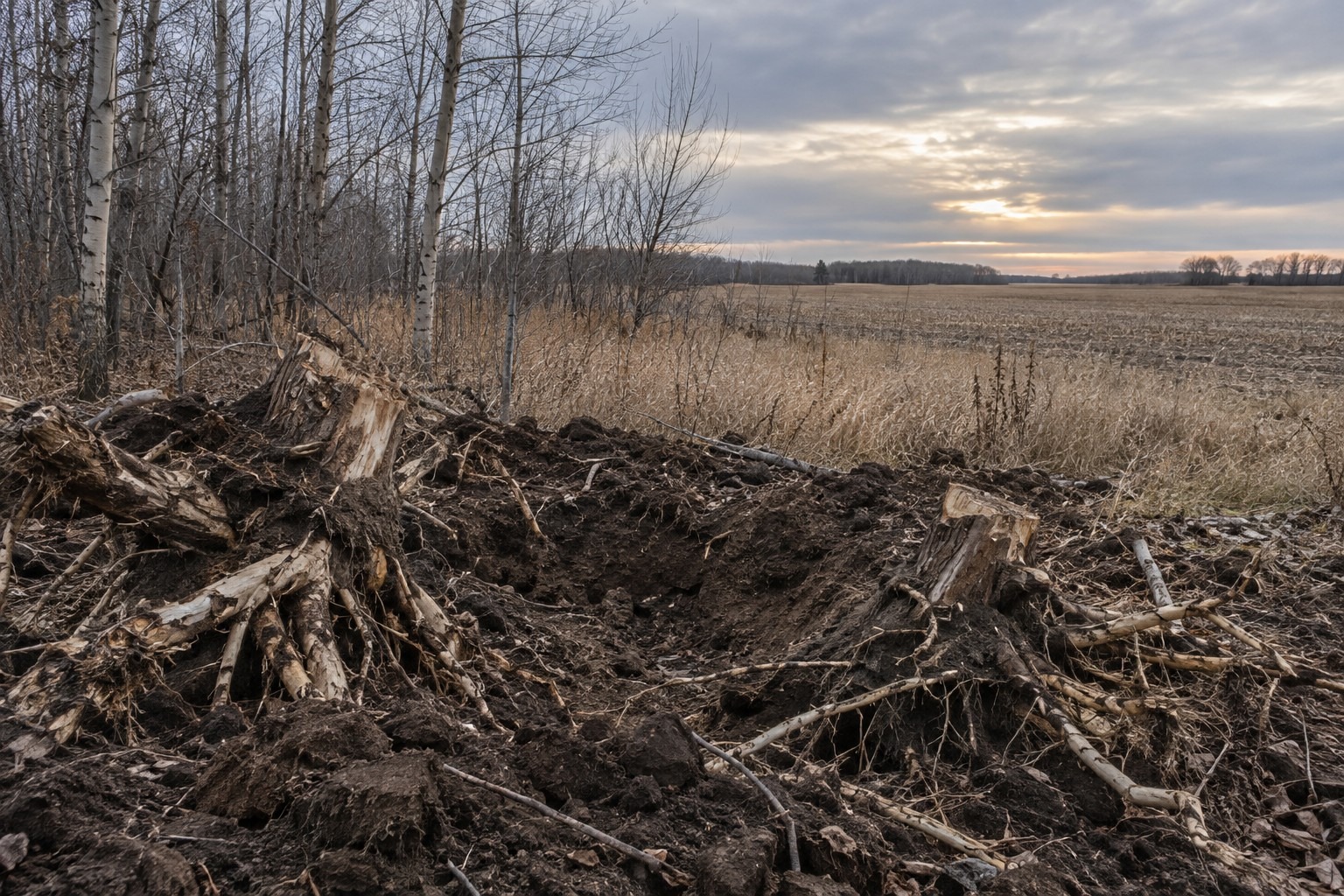
Olof Öhman, a Swedish immigrant farming near the hamlet of Kensington, was grubbing out poplar stumps on a wooded knoll in the autumn of 1898 when his plough-work turned up a slab lying face down, tangled in roots. His ten-year-old son Edward noticed the marks. The family first guessed they had found an “Indian almanac.”
It is a modest object: roughly 30 by 16 by 6 inches, about 202 pounds, cut from greywacke — a hard, grey, gritty sandstone. The inscription, in translation, reads: “Eight Geats and twenty-two Norwegians on an exploration journey from Vinland to the west. We had camp by two skerries one day’s journey north from this stone. We were out to fish one day. After we came home, found ten men red of blood and dead. AVM save from evil.” Along the edge: “Have ten men by the sea to look after our ships, fourteen days’ travel from this island. Year 1362.”
Thirty men, ten dead, a Latin prayer abbreviation, a precise year. For a hoax it is oddly unglamorous — no treasure, no king, no boast. That understated quality is exactly why the stone has held people for 128 years.
Does the carving look 600 years old?
Here the record gets genuinely messy, and the messiness matters. In 1910 the Minnesota Historical Society’s own geologist, Newton Horace Winchell, examined the slab and estimated the inscription at roughly 500 years old — a verdict the stone’s champions still quote. The same year William O. Hotchkiss, then Wisconsin’s state geologist, looked at the same surfaces and put the runes at 50 to 100 years.
Two geologists, one rock, a four-hundred-year gap. Weathering estimates on a carved surface are not a clock; they depend on grain, burial, drainage and how the stone sat.
Later physical analysis has been less forgiving. Geologist Harold Edwards, in a published study of the stone’s geological evidence, summed up the problem bluntly: the inscription “is about as sharp as the day it was carved,” with letters showing “virtually no weathering.” He also argued the slab’s rock type does not match the local glacial material it supposedly came from, and that the chisel impressions match nineteenth-century tool practice rather than fourteenth-century work.
{IMAGE_2}
The language is the real problem
Within months of the discovery a copy of the inscription reached Olaus J. Breda, professor of Scandinavian languages at the University of Minnesota. He called it a forgery almost immediately and laid out his reasoning in print in 1910. Scandinavian specialists in Norway and Sweden — Sophus Bugge, Magnus Olsen, Adolf Noreen among them — reached the same conclusion independently. George T. Flom of the University of Illinois added that the rune forms diverged sharply from documented fourteenth-century practice.
Why does a philologist’s objection outweigh a geologist’s? Because language leaves fingerprints a forger cannot see. The inscription uses opdagelsefard, “journey of discovery” — built on a word that belongs to modern Dano-Norwegian, not to the Old Swedish of the 1360s. It drops grammatical case endings that Early Old Swedish still required. It writes its numbers in pentadic numerals, tally-like symbols known mainly from recent centuries, where authenticated medieval runestones spell numbers out as words. And at least seven of its characters match no standard medieval rune at all.
Henrik Williams, professor of Scandinavian languages at Uppsala University and Sweden’s first professor of runology, has written extensively on the stone — including a 2012 essay in the Swedish-American Historical Quarterly separating fact from fiction. His assessment, like that of every runologist who has published on it, is that the inscription is modern. Notably, Williams has argued that being wrong about the stone is no indictment of the people who treasure it; the error is interesting, not shameful.
The clue that was sitting in a Swedish ceiling
In 2004 researchers found something unexpected in Sweden: the 1883 notebook of Edward Larsson, a sixteen-year-old journeyman tailor with a taste for folk music. Larsson had copied out two rune alphabets. The second — adapted to carry the Swedish vowels å, ä and ö — contains forms that correspond closely to the odd, “impossible” runes on the Kensington stone. Suddenly those seven anomalous characters had a documented nineteenth-century home.
Then the trail got shorter. Two brief inscriptions in the same rune style, dated 1870 and 1877, were identified in a farmhand’s room at the Ersk-Mats farm in Kölsjön, a hamlet in Hassela parish, Hälsingland. More turned up nearby. Working with a local teacher, Anna Björk, and her pupils, the Swedish archaeologist Mats G. Larsson tracked the family geography — and published it in English through the Minnesota Archaeological Society in 2022, translated by the Norse archaeologist Birgitta Wallace.
What he found: Öhman’s cousin and childhood friend Anna Ersdotter was working at a Kölsjön summer pasture in 1878. Öhman asked her to marry him in 1879, the year he emigrated. His uncle Erik Olsson’s family held the Kölsäga pasture there from 1878 to 1886, so relatives came and went.
Taken together, the Kölsjön inscriptions are the closest thing this long argument has to a smoking gun — and they point at a Swedish farmhand’s room in the 1870s, not a Norse war party in 1362.
The fake that confessed
There is one more case that deserves far more attention than it gets, because it is the only controlled experiment anyone has run on this question.
In 2001 a carving expert and her geologist father announced the discovery of another runic boulder near Kensington, and brought in the Minneapolis geologist Scott Wolter — a long-standing advocate for the Kensington stone’s authenticity — to help examine it. Lichen was cleared away, revealing more characters, including the date 1363 written in the same pentadic numerals as the Kensington slab. For a few weeks it looked like corroboration.
Then Kari Ellen Gade of Indiana University and Jana Schulman of Southeastern Louisiana University came forward with a sworn affidavit. As graduate students in Germanic philology at the University of Minnesota in 1985, they and three classmates had carved the thing themselves — a pagan charm, a Christian invocation and the year 1363 — into a 2,000-pound boulder, partly for fun and partly to make a point about the original. They spoke up, they said, when they saw the public being asked to fund scientific testing on their handiwork. The boulder is now known as the AVM Runestone.
What that episode shows is uncomfortable and useful at once: a sixteen-year-old fake, examined in good faith, produced exactly the signals believers read as authenticity.
So did the Norse reach America at all?
Yes — unambiguously, and this is the part the hoax arguments often bury. The Norse were in North America, and we now know the year.
At L’Anse aux Meadows on the northern tip of Newfoundland, a team led by Michael Dee of the University of Groningen, with Margot Kuitems as first author, published a result in Nature in 2021 that pinned the site to a single calendar year. A solar storm near the end of the tenth century left a sharp radiocarbon spike in tree rings worldwide; three pieces of Norse-worked wood from the site each show that spike with 29 growth rings after it. The trees were felled in AD 1021. Metal tools, cut by Europeans, in the Americas, exactly a thousand years before the paper appeared.
So the honest comparison is not “Vikings versus no Vikings.” It is a question of what authenticated Norse evidence actually looks like.
| Record | Date | How the date was established | Accepted as Norse? |
|---|---|---|---|
| L’Anse aux Meadows, Newfoundland | AD 1021 | Tree-ring counting from a global solar-storm radiocarbon marker; three independent timbers agree | Yes — settlement, structures, worked wood and metal |
| Kingittorsuaq Runestone, Greenland | around 1300 | Rune forms and language consistent with documented medieval Norse Greenland | Yes — undisputed by runologists |
| Kensington Runestone, Minnesota | claims 1362 | Self-dated by the inscription only; no site, no artefacts, no independent dating | No — unanimous runological rejection |
One line in that table does the heavy lifting. Genuine Norse records come with context: a camp, a hearth, a boat-nail, a landscape that makes sense. The Kensington slab arrives alone, 1,500 miles inland, with nothing around it.
Why the Kensington runestone still matters
Dismissing it as “just a hoax” misses what it is a document of. The 1890s were the high tide of Scandinavian National Romanticism; a replica Viking ship had sailed to the 1893 Chicago world’s fair; immigrant communities in Minnesota were being told daily that their history began at Ellis Island. A stone proving their ancestors got there first was not a lie anyone needed persuading to want.
And the central question is genuinely still open. Who carved it has never been proven. Öhman denied any part in it until his death in 1935. A second-hand claim of confession surfaced in 1927 and was never corroborated. Mats Larsson’s work establishes opportunity and a rune style, not a hand holding a chisel. Anyone who tells you the case is closed on authorship is going further than the evidence does.
The stone itself sits behind glass at the Runestone Museum in Alexandria, Minnesota, where the exhibit presents both sides of the argument. It is worth seeing for what it honestly is: not a Viking relic, but a remarkable nineteenth-century object, and one of the best-documented puzzles in American archaeology.
Common misconceptions
“Geologists proved it’s medieval.” One geologist in 1910 estimated 500 years; another, the same year, said 50 to 100. Surface weathering on carved stone is too variable to date an inscription, and later petrographic and tool-mark analysis has pointed to nineteenth-century work.
“The runes are so strange no 1890s farmer could have invented them.” Correct that they are strange — and that is now an argument against antiquity. Those same non-standard runes appear in Edward Larsson’s 1883 Swedish notebook and in inscriptions dated 1870 and 1877 at Kölsjön, a Swedish hamlet with direct family ties to Öhman.
“Scholars reject it out of academic snobbery.” The objections are specific and testable: a modern Dano-Norwegian word, missing Old Swedish case endings, pentadic numerals on a monument that should spell numbers out. No runologist who has published on the inscription has defended it as medieval.
“If it’s fake, then Vikings never reached North America.” They did. Wood from L’Anse aux Meadows was cut in AD 1021 — the most precisely dated European presence in the Americas before Columbus. The stone being modern takes nothing away from that.
The short answer: every independent line of evidence — language, rune forms, numerals, tool marks and now a documented Swedish rune tradition of the 1870s within Öhman’s own family circle — points to the Kensington runestone being carved shortly before it was found in 1898. Who exactly carved it, and why, is still genuinely unknown.
Sources and notes
- Minnesota Historical Society (MNopedia) — discovery, provenance and the Winchell and Hotchkiss examinations
- Swedish-American Historical Quarterly — Henrik Williams, Uppsala University, on the inscription’s language and rune forms
- Minnesota Archaeological Society — Mats G. Larsson’s account of the Kölsjön inscriptions, translated by Birgitta Wallace
- Nature — Kuitems, Dee et al. (2021) on the AD 1021 dating of L’Anse aux Meadows
- Archaeology Magazine — the 1985 AVM Runestone carving and the 2001 affidavit
A thousand years ago, Norse sailors really did drag a boat ashore in Newfoundland and cut down trees with iron axes — and we can name the year. The Kensington stone is a different kind of artefact: the record of how badly a community of homesick Swedes wanted that story to reach them, and of how carefully, over more than a century, people on two continents worked out what it really was. Both are worth knowing. Only one of them is a Viking.
Frequently Asked Questions
Q: Who discovered the Kensington Runestone, and how?
Swedish immigrant farmer Olof Öhman discovered the stone in autumn 1898 while clearing poplar stumps on a wooded knoll near Kensington, Minnesota. His ten-year-old son Edward noticed the carved marks on the slab, which had turned up tangled in tree roots during the plowing. The family initially thought they had found an “Indian almanac” before recognizing the markings as runic script.
Q: What does the inscription on the stone actually say?
Translated, the inscription describes eight Geats and twenty-two Norwegians on an exploration journey from Vinland who camped by two skerries, went out to fish, and returned to find ten companions dead, closing with a Latin prayer abbreviation. A separate inscription along the edge mentions ten men guarding ships fourteen days’ travel away and gives the date 1362.
Q: Why do most scholars consider the Kensington Runestone a forgery?
Scandinavian-language specialists, starting with Olaus J. Breda in 1910 and later Henrik Williams, found the inscription uses modern Dano-Norwegian vocabulary, drops grammatical case endings required in Old Swedish, and writes numbers as pentadic tally symbols rather than spelled-out words like authentic medieval runestones. Geologist Harold Edwards also found the carved letters show virtually no weathering and that the chisel marks resemble 19th-century rather than medieval tool practice.
Q: What evidence from Sweden linked the stone to a 19th-century origin?
In 2004 researchers examined an 1883 notebook kept by Edward Larsson, a young Swedish tailor, containing a rune alphabet closely matching the stone’s unusual characters. Nearby, two inscriptions dated 1870 and 1877 were found in a farmhand’s room at the Ersk-Mats farm in Kölsjön, Hälsingland — a place with documented family ties to Olof Öhman, the stone’s discoverer.
Illustrations are AI-generated. Article fact-checked and human-edited. Our editorial standards.