The Surgeon Who Operated for 18 Hours on an IV Drip
A neurosurgeon operates through hypoglycemia with an IV drip coiled into his foot — and his hands never leave the open skull. That’s not a metaphor for dedication. That’s what happened, in a surgical theater in Istanbul, when the system that should have protected both the patient and the doctor failed to provide a third option.
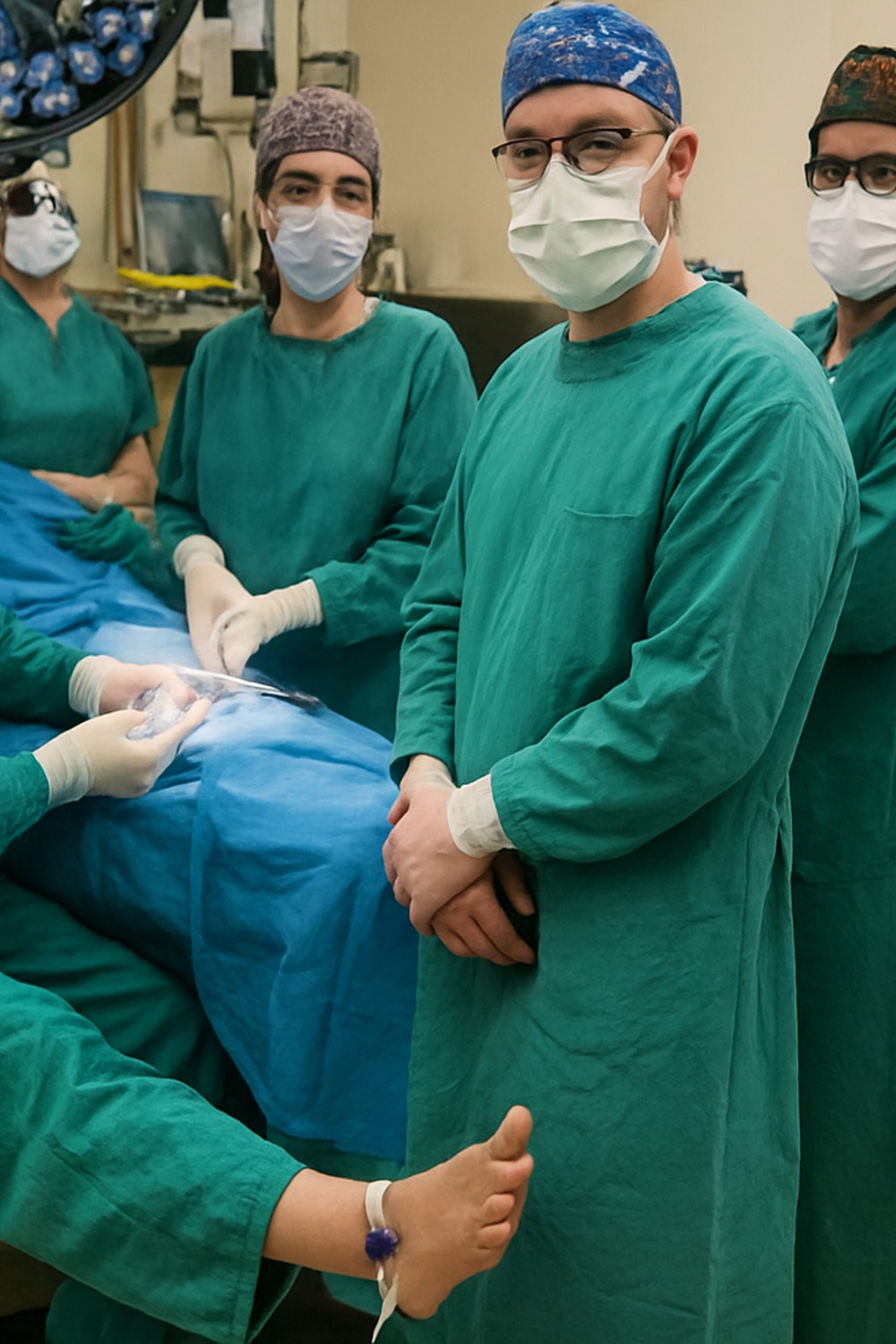
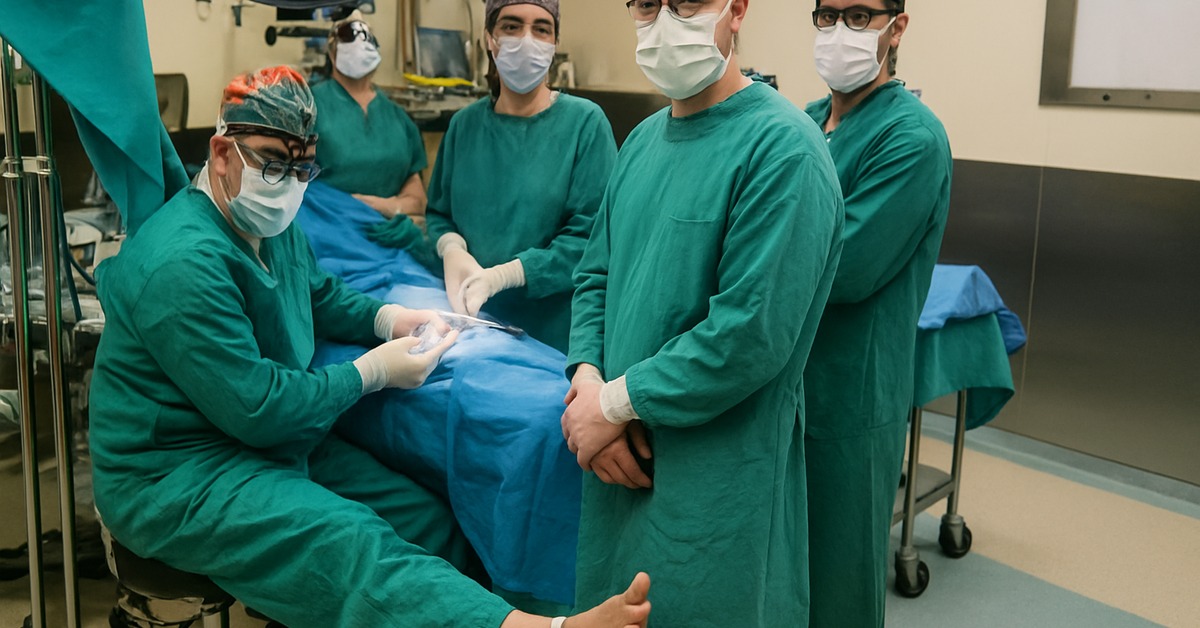
Dr. Yuksel Yilmaz was eighteen hours into a marathon cranial procedure when his blood sugar crashed. He collapsed beside the operating table he’d been standing at since morning. Nurses scrambled. But the patient’s skull was open, the procedure at a critical juncture, and Dr. Yilmaz raised one gloved, blood-streaked hand and refused to move. A glucose drip was prepared. Both hands occupied, the IV line went into a vein in his foot. The surgery continued.
Key Facts
- Dr. Yuksel Yilmaz collapsed from hypoglycemia eighteen hours into a cranial surgery at Istanbul’s Basaksehir Cam ve Sakura City Hospital and refused to stop.
- A glucose IV line was inserted into a vein in his foot because both his hands were gloved and in use, allowing the surgery to continue.
- Hypoglycemia is clinically defined as blood glucose below 70 mg/dL, according to the American Diabetes Association (2023).
- A 2022 study in Scientific Reports found surgical performance begins measurably declining after six consecutive hours, dropping to roughly 70 percent of baseline by hour eighteen.
- Turkey’s Ministry of Health reported a nationwide shortfall of approximately 26,000 specialist physicians in 2018, with neurosurgery among the hardest-hit disciplines.
In short: A neurosurgeon operated through hypoglycemia in Istanbul, taking a glucose IV in his foot rather than abandon an open craniotomy eighteen hours in. Dr. Yuksel Yilmaz’s case spotlights a global surgical workforce crisis: Turkey’s 26,000-physician shortfall and marathon procedures that push surgeons past the point where performance measurably degrades.
When the Surgeon’s Body Fails Before the Patient’s Does
Hypoglycemia — a dangerous drop in blood glucose below 70 milligrams per deciliter — is well understood in medical circles. What’s less discussed is what it looks like when it happens to the person holding the scalpel. According to the clinical definition established across decades of endocrinological research, the condition triggers a cascade: sweating, trembling, cognitive fog, and eventually, if untreated, loss of consciousness. Dr. Yilmaz had been standing since the early hours of the morning, refusing fluids and food in the disciplined way surgeons are trained to do when a procedure demands continuous focus. By hour eighteen, his system had simply run dry.
The Neurosurgery Department at Istanbul’s Başakşehir Çam ve Sakura City Hospital — one of Turkey’s largest and most resource-strained teaching hospitals — later confirmed the timeline in local media reports. The collapse wasn’t dramatic. It was quiet, which made it worse.
Nurses reacted immediately. The instinct, in any medical setting, is to treat the person nearest to the crisis. But Dr. Yilmaz refused to move. The patient’s skull was open. Any break in the surgical chain risked hemorrhage, infection, or worse. So the nurses improvised: a glucose drip prepared, IV line carefully inserted into a vein in his foot because both hands were gloved and in use.
That image — the coiled tube, the sterile foam padding, the surgeon hunched forward in a chair — was captured by someone in the theater and spread quietly through Turkish medical communities before reaching the world. It didn’t go viral the way outrage does. It traveled the way reverence does. Slowly. Person by person.
The Invisible Weight Surgeons Carry Into the Theater
Why does this matter beyond the individual story? Because the conditions that produced it are documented, widespread, and almost entirely ignored until a photograph surfaces.
Most people don’t think about the surgeon’s own body when they imagine neurosurgery. A craniotomy — the procedure during which a portion of the skull is removed to access the brain — can last anywhere from four to over twenty hours depending on the complexity of the tumor, aneurysm, or injury being addressed. Dr. Yilmaz’s eighteen-hour marathon wasn’t unusual by global surgical standards, but it sits at the extreme end of what human physiology is asked to sustain. This isn’t so different from what we’ve seen in other high-stakes specialties — consider the extraordinary demands of fetal surgery, where surgeons operate on patients who haven’t yet entered the world, as detailed in the story of baby Lynlee Hope, operated on before she was even born. In both cases, the surgeon’s needs become secondary — completely, uncomplicatedly secondary — to the patient’s.
Turkish hospitals have been under documented strain since at least 2018, when the country’s Ministry of Health reported a nationwide shortfall of approximately 26,000 specialist physicians. Neurosurgery is among the hardest-hit disciplines. Long surgeries in under-resourced environments mean fewer hands to rotate through, less backup, and more reliance on the principal surgeon’s endurance. Dr. Yilmaz wasn’t operating out of recklessness. He was operating out of necessity — a structural necessity that individual heroism can’t solve but sometimes has to absorb.
His colleagues have described him as the kind of surgeon who doesn’t talk about difficult cases after they’re over. He decompresses by going home. He eats. He sleeps. He comes back. That rhythm — mundane, almost monastic — is what sustains people who do this work across decades.
What Neurosurgery Demands That Nothing Else Does
No other surgical discipline operates in quite the same margins. Blood vessels in the cerebral cortex can be thinner than a human hair. A tremor of a millimeter in the wrong direction can mean paralysis, personality change, or death. According to a 2022 study published in Scientific Reports, surgical performance begins to measurably decline after six consecutive hours in the theater — reaction times slow, fine motor control degrades, decision-making shows increased error rates. By hour eighteen, the study’s models suggest performance has dropped to roughly 70 percent of baseline capacity.
Dr. Yilmaz was operating at the furthest edge of that curve. And yet the IV drip worked. Glucose entered his bloodstream. His hands steadied. The procedure continued.
Here’s the thing most people miss when they see the photograph: the neurosurgeon operating through hypoglycemia with an IV drip isn’t simply a story about one man’s will. It’s a story about training so deeply embedded that it operates almost independently of the body’s distress signals. Elite surgeons develop what neurologists at the University of Toronto’s surgical education program have called ‘procedural automaticity’ (researchers actually call this the encoding of surgical sequences so thoroughly into muscle memory that the hands continue even when the conscious mind is dimming at the edges). Dr. Yilmaz’s glucose drip didn’t restore his full cognitive function immediately. But it held the floor long enough for automaticity to do its work.
That distinction matters. It reframes the story from superhuman to deeply, specifically human. He didn’t defy biology. He survived inside it, barely, because of how completely he’d prepared.
A system that demands this kind of survival as a routine condition isn’t honoring its surgeons — it’s consuming them.
The Neurosurgeon Who Operates Through Hypoglycemia Joins a Long Line of Refusers
History is scattered with surgeons who refused to stop. During the London Blitz in 1940, surgeons at St. Bartholomew’s Hospital continued operating through air raids with the building shaking around them — not because protocol demanded it, but because leaving a patient open on the table was simply not an option they could hold in their minds. In 2010, Haitian surgeons performed emergency amputations in collapsed hospitals using headlamps and improvised tools for seventy-two hours after the earthquake struck Port-au-Prince. The World Health Organization’s 2021 global surgical workforce report estimated that 143 million additional surgical procedures are needed annually in low- and middle-income countries — a gap that places individual surgeons in impossible positions every day, in wards and theaters most of the world will never see.
Dr. Yilmaz’s story reached a global audience because a photograph survived. The vast majority of equivalent moments do not.
And yet the conditions that created it — understaffing, marathon procedures, inadequate surgical backup — are documented across dozens of countries. Turkey’s situation is acute, but it isn’t unique. In parts of sub-Saharan Africa, a single neurosurgeon may serve a catchment population of four million people. The mathematics of that ratio make eighteen-hour surgeries not exceptional, but routine. The neurosurgeon who operates through hypoglycemia with an IV drip is both singular and representative: singular because the image exists, representative because the structural failure behind it does not.
Dr. Yilmaz has not given interviews since the photograph circulated. His hospital issued a brief statement expressing pride in his dedication. He returned to the operating theater the following morning. That detail — quiet, almost boring — is the part that stays with you.
How It Unfolded
- 2018 — Turkey’s Ministry of Health published data confirming a deficit of over 26,000 specialist physicians, with neurosurgery among the most critically understaffed disciplines nationwide.
- 2022 — Research in Scientific Reports formally quantified surgical performance degradation over extended consecutive operating hours, establishing the six-hour threshold for measurable decline.
- 2024 — Dr. Yilmaz’s eighteen-hour cranial surgery at Istanbul’s Başakşehir Çam ve Sakura City Hospital results in hypoglycemic collapse; the improvised foot IV allows the procedure to continue to completion.
- 2024 — A photograph of Dr. Yilmaz seated with the IV line in his foot circulates through Turkish medical networks and reaches international media, sparking global conversation about surgical working conditions.
By the Numbers
- 70 mg/dL — the clinical threshold below which blood glucose is classified as hypoglycemic, according to the American Diabetes Association (2023).
- 18 hours — the duration of Dr. Yilmaz’s cranial procedure, placing it among the longest documented single-surgeon neurosurgical cases in recent Turkish medical history.
- 143 million — additional surgical procedures needed annually in low- and middle-income countries, per the WHO’s 2021 global surgical workforce report.
- ~70% — estimated surgical performance capacity at hour eighteen compared to baseline, modeled from 2022 Scientific Reports fatigue data.
- 1 in 4,000,000 — approximate neurosurgeon-to-population ratio in parts of sub-Saharan Africa, compared to roughly 1 in 100,000 in high-income countries (WHO, 2021).
Field Notes
- The IV insertion site — the dorsal vein of the foot — is rarely used in standard clinical practice because foot veins are thinner and less accessible than arm veins. Both of Dr. Yilmaz’s hands were gloved, sterile, and occupied. The choice was purely pragmatic. It worked.
- Craniotomies don’t pause gracefully. Once the skull is open and the dura mater is retracted, any interruption risks contamination of the surgical field or uncontrolled bleeding. The idea of “stepping away and coming back” is largely theoretical during active brain surgery.
- Procedural automaticity — the phenomenon that likely sustained Dr. Yilmaz through the final hours — is the same cognitive mechanism studied in elite musicians and competitive athletes. The University of Toronto’s surgical education program has incorporated automaticity training into resident programs since 2019.
- Researchers still can’t reliably predict which individual surgeons will maintain fine motor control under extreme fatigue and which will degrade fastest. Personal physiology, training depth, and psychological resilience all appear to interact — but no validated screening tool exists yet to measure combined surgical stamina before placing a surgeon in an eighteen-hour case.
Frequently Asked Questions
Q: What exactly happened when a neurosurgeon operated through hypoglycemia with an IV drip in Istanbul?
Dr. Yuksel Yilmaz was eighteen hours into a cranial surgery at Istanbul’s Başakşehir Çam ve Sakura City Hospital when he collapsed from hypoglycemia — dangerously low blood sugar. Unable to stop the procedure without risking the patient’s life, he refused to step away. Medical staff inserted a glucose IV line into a vein in his foot — both hands being gloved and in use — allowing him to continue operating until the surgery was complete.
Q: Is it medically safe for a surgeon to continue operating after collapsing from low blood sugar?
It depends entirely on how quickly glucose is restored and how severe the drop was. Mild to moderate hypoglycemia can be corrected within minutes of IV glucose administration, restoring cognitive function and motor control faster than oral intake. The risk window is real — impaired judgment or tremor during brain surgery can be catastrophic — but experienced surgical teams assess the surgeon’s functional capacity in real time. In Dr. Yilmaz’s case, the team made a collective judgment that continuation was safer than any alternative.
Q: Doesn’t the hospital have other surgeons who could have taken over?
This is the most important misconception to correct. Neurosurgery isn’t a relay race. Handing off an open craniotomy to another surgeon mid-procedure introduces significant risk: the incoming surgeon hasn’t seen the tissue planes, the bleeding patterns, or the decisions already made inside the skull. Additionally, Turkey’s documented physician shortage means that in many cases, no equally qualified backup is physically present. Dr. Yilmaz’s refusal to stop wasn’t ego — it was a medically reasoned call, made under pressure, in a system that gave him very few alternatives.
Editor’s Take — Dr. James Carter
What strikes me isn’t the heroism — it’s the structure that made heroism necessary. One photograph, one exhausted man, one IV line in a foot. That image does what policy reports cannot: it makes the global surgical workforce crisis legible in a single frame. We keep celebrating individual doctors for their superhuman endurance without asking why the system keeps requiring it. Dr. Yilmaz deserves admiration. He also deserves a hospital staffed well enough that he never has to do this again.
Every day, in operating theaters from Istanbul to Nairobi to Manila, surgeons are making quiet calculations most of us will never know about. They weigh their own bodies against someone else’s survival and keep choosing the stranger on the table. Dr. Yilmaz’s photograph traveled the world because it made visible something that is almost always invisible. But the real question it leaves behind isn’t about his endurance. It’s about ours — our collective willingness to keep accepting a world where individual sacrifice substitutes for structural change. What would it take to make that trade feel wrong?
Illustrations are AI-generated. Article fact-checked and human-edited. Our editorial standards.