The Pilot Who Flew His Mother Home After 25 Years
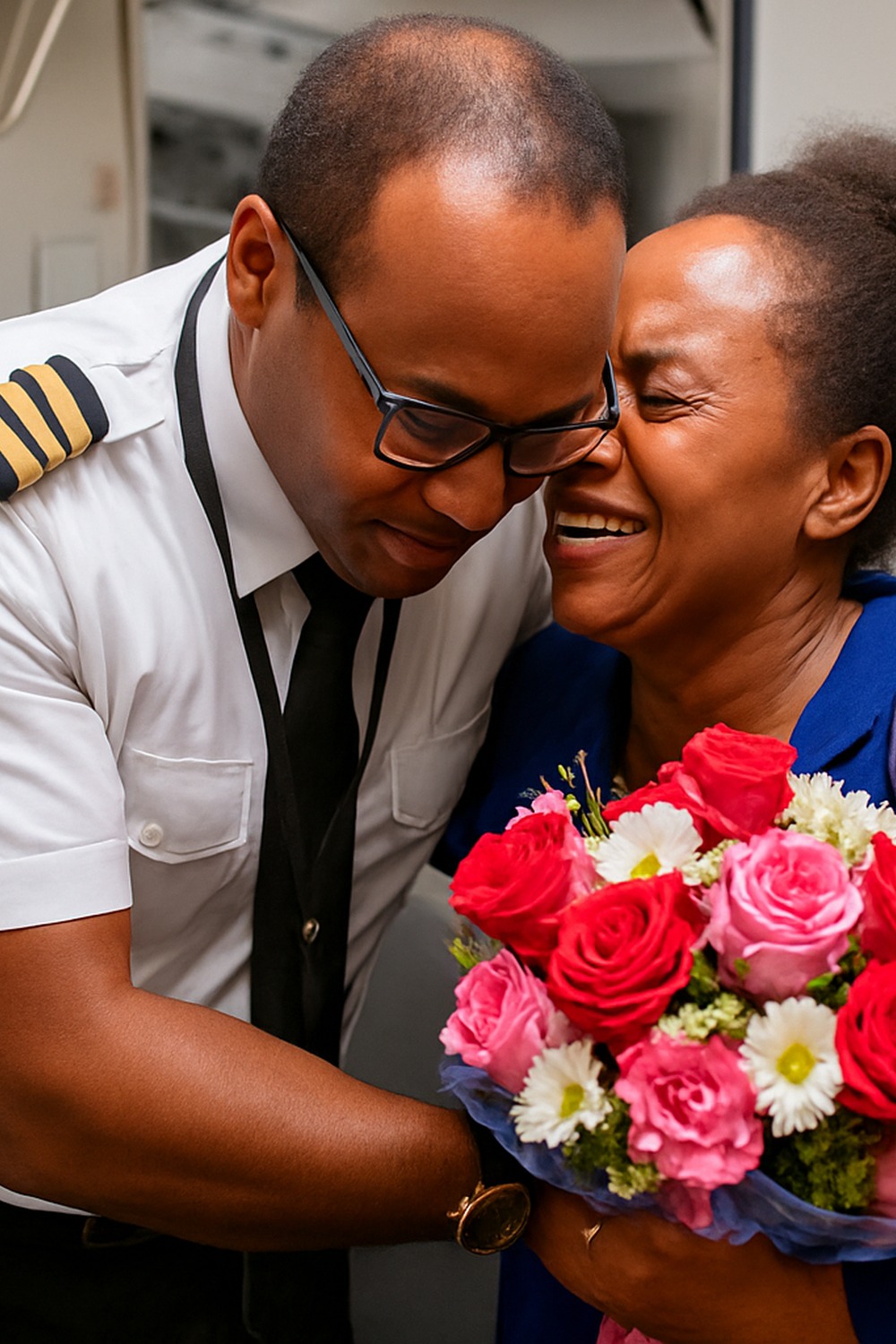
Here’s the thing about the moment an Ethiopian Airlines pilot reunites with his mother: it almost didn’t need to happen the way it did. Kirubel Salomon could have called ahead. He could have met her at arrivals, in civilian clothes, like any other son picking up his mother from a long journey. Instead, he stepped through the cockpit curtain in full uniform — and she was already weeping before he said a word. The surprise wasn’t the point. The 25 years behind it were.
Minalu Mergiya had spent those years in Lebanon as a domestic worker, cleaning houses, enduring two wars and multiple financial crises, sending money home to Addis Ababa so her sons’ futures could be paid for in installments she’d never fully collect on. She saw them roughly every five years, when the flights and the finances aligned. In October 2023, she finally boarded what she believed was an ordinary Ethiopian Airlines flight home — one-way, this time, for good. She had no idea who was flying the plane.
Key Facts
- Captain Kirubel Salomon flew his mother Minalu Mergiya home on an October 2023 Ethiopian Airlines flight after 25 years apart
- Minalu spent 25 years as a domestic worker in Lebanon, returning permanently to Addis Ababa
- The Ethiopian Airlines Aviation Academy was founded in 1956, making it 67 years old at Kirubel’s spring 2023 graduation
- Lebanon hosted an estimated 250,000 to 400,000 Ethiopian migrant workers before its 2019 economic collapse (Amnesty International)
- Ethiopian Airlines served more than 125 international destinations as of 2023, making it Africa’s most expansive carrier by route network
In short: Ethiopian Airlines pilot reunites mother: the surprise isn’t the point, the 25 years behind it are. Captain Kirubel Salomon flew Minalu Mergiya home in October 2023 after she spent a quarter century as a domestic worker in Lebanon funding his aviation training, an internal act of grace the airline quietly arranged in secret without cameras or press.
A Son Who Flew Toward His Mother’s Sacrifice
To understand what happened on that October flight, you have to go back further than the cockpit. Kirubel Salomon graduated from the Ethiopian Airlines Aviation Academy, founded in 1956 and widely regarded as one of the oldest and most rigorous aviation training institutions on the African continent. Its admissions process is demanding and the financial burden on families is real. For a young man whose mother was scrubbing floors in Beirut to keep his future alive, earning those wings wasn’t just a career milestone — it was the end of a debt that could never truly be repaid, and the beginning of something his mother didn’t yet know was coming.
Kirubel graduated in the spring of 2023. Ethiopian Airlines, aware of the family’s story, quietly arranged for him to captain the very flight his mother would take home that October. No cameras waiting at the gate, no press releases issued. It was an internal act of grace — institutional, yes, but genuinely felt. The airline’s crew coordinated the scheduling with discretion, ensuring Minalu had no warning. She boarded like any other passenger, found her seat, fastened her belt, listened to the safety announcement. Then the cockpit curtain parted.
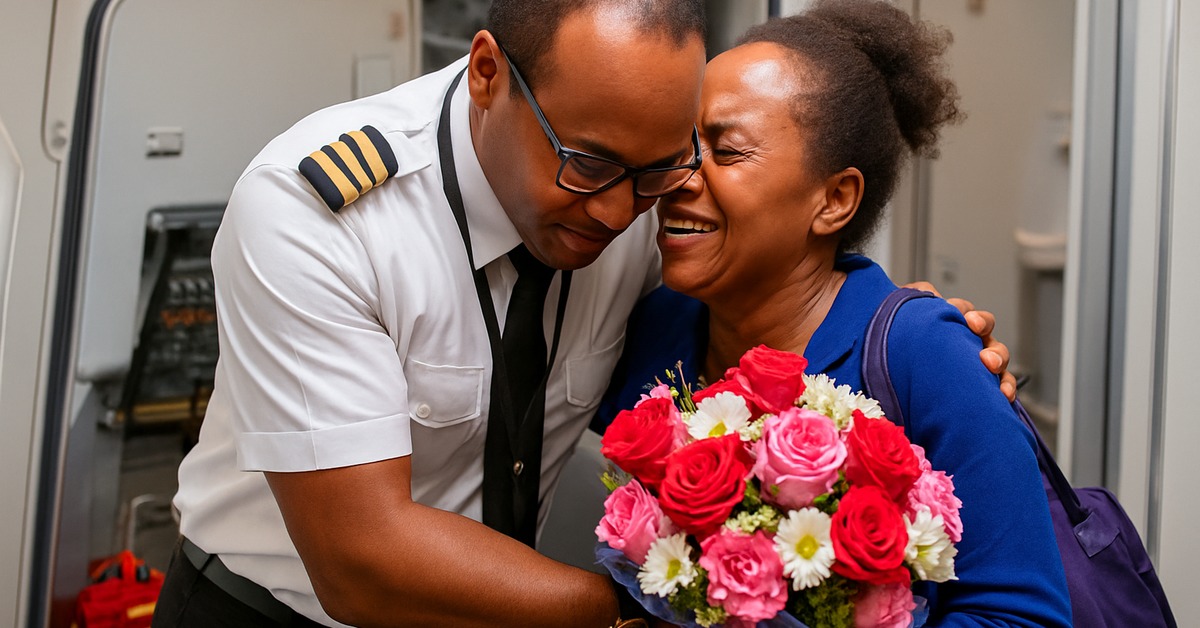
What followed was caught on video by other passengers. Minalu’s face moves through shock, recognition, and then a grief-soaked joy that has no clean name in any language. She’d crossed 25 years of distance in about four seconds.
Twenty-Five Years of Distance, Quietly Endured
Why does this matter beyond one family’s story? Because Minalu Mergiya’s situation is not unusual in the broader context of African labor migration — and that’s precisely what makes it devastating. Hundreds of thousands of Ethiopian women have taken domestic work in Lebanon, the Gulf states, and elsewhere across the Middle East over the past three decades, most of them sending remittances home to children and parents they can visit only rarely. The emotional mathematics of this arrangement — years of physical absence traded for years of funded futures — is a calculation that migrant mothers make in silence, rarely acknowledged by the economies that depend on their labor. It’s not unlike the bond explored in our piece on why a baby monkey clings to a stuffed toy for years — the need for connection persisting across the longest separations.
Lebanon’s 2019 economic collapse, one of the worst financial crises in modern history according to the World Bank, made conditions there even grimmer for migrant workers, many of whom found their savings wiped out in Lebanese pounds that had lost over 90 percent of their value by 2021. Minalu had visited Addis Ababa roughly every five years over those 25 years — five visits, five departures, five times she left before her heart had settled. That she endured and kept sending money home through that collapse says something about the ferocity of maternal commitment that statistics can’t fully hold.
She was finally coming home permanently in October 2023. Fate — and an airline’s scheduling department — decided she’d arrive on her son’s wings.
What Ethiopian Airlines Did, and Why It Mattered
And yet the most counterintuitive element of this reunion wasn’t the surprise itself — it was the deliberateness behind it. Ethiopian Airlines didn’t accidentally schedule Kirubel on his mother’s flight. Someone in operations knew the story, made the decision, and kept the secret. Airlines are, by necessity, machines of logistics. Moments of human choreography like this one require people inside those machines to care enough to act — and then to say nothing afterward. That kind of institutional intentionality is rare enough that it deserves to be named plainly: someone chose to do something kind, on company time, using company infrastructure, and asked for nothing in return.
Ethiopian Airlines is Africa’s largest and most profitable carrier, operating flights to more than 125 international destinations as of 2023, according to a BBC profile of the airline’s expansion. Its reach across the continent and into the Middle East makes it the primary artery for diaspora Ethiopians moving between home and work. For families like Minalu’s, it isn’t just a carrier — it’s the thread connecting fractured households across continents, the means by which a mother’s voice travels home. The moment an Ethiopian Airlines pilot reunites with his mother mid-journey lands differently when you understand that context. The airline has long positioned itself as a symbol of pan-African ambition, and the video trusted that context to do the explaining. It did. Shared millions of times across social media within days of the flight, it drew responses in dozens of languages from viewers carrying their own versions of that distance, that waiting, that eventual return.
Ethiopian Airlines Pilot Reunites With Mother: What the Moment Reveals
Kirubel Salomon’s story sits inside a larger transformation in Ethiopian civil aviation that began accelerating in the early 2000s. Ethiopian Airlines carried roughly 4.4 million passengers in 2010; by 2019, that number had risen to 12.1 million, according to the airline’s own annual reports. The Aviation Academy’s intake expanded alongside that growth, training not just Ethiopian nationals but pilots from across sub-Saharan Africa. By 2023, the Academy had graduated thousands of commercial pilots since its 1956 founding, making it one of the continent’s most consequential institutions for aerospace human capital. Kirubel’s graduation that spring placed him among a cohort of young Ethiopians for whom the cockpit represents not just a profession but a generational leap — often funded, as in his case, by someone far away and largely invisible to the industry that benefits from their sacrifice.
Turns out the data on Ethiopian labor migration to Lebanon paints a specific and sobering backdrop. Before the 2019 economic collapse, Lebanon hosted an estimated 250,000 to 400,000 Ethiopian migrant workers, the majority employed under the kafala sponsorship system — a contractual arrangement that human rights organizations including Amnesty International have documented as deeply exploitative, tying workers’ legal status to their employers and making it difficult to leave abusive situations. That Minalu persisted through 25 years of that system, and that her son emerged as a licensed commercial pilot at the end of it, is not a fairy tale. It’s a specific accounting of what certain families pay for upward mobility in a world that makes them pay more than most.
History has a way of treating the economists and policymakers who looked past the kafala system’s human cost as having made a choice, not an oversight.
Kirubel knew the cost. You can see it in the video — in the way he holds her, not with the lightness of a pleasant surprise but with the full weight of someone who has understood, for years, exactly what his wings were built on.
How It Unfolded
- 1956 — Ethiopian Airlines Aviation Academy is founded in Addis Ababa, establishing one of Africa’s first formal commercial pilot training programs.
- Late 1990s — Minalu Mergiya departs for Lebanon to work as a domestic worker, beginning what would become 25 years of separation from her sons in Ethiopia.
- Spring 2023 — Kirubel Salomon graduates from the Ethiopian Airlines Aviation Academy and receives his commercial pilot certification, his training funded in large part by his mother’s years of work abroad.
- October 2023 — Ethiopian Airlines schedules Kirubel to captain his mother’s final return flight to Addis Ababa; the reunion is captured on video and shared globally within days.
By the Numbers
- 25 — years Minalu Mergiya spent working in Lebanon before her permanent return to Ethiopia in October 2023.
- 250,000–400,000 — estimated Ethiopian migrant workers in Lebanon before the country’s 2019 economic collapse (Amnesty International).
- 90%+ — estimated loss in value of the Lebanese pound between 2019 and 2021, devastating the savings of migrant workers paid in local currency (World Bank, 2022).
- 125+ — international destinations served by Ethiopian Airlines as of 2023, making it Africa’s most expansive carrier by route network.
- 1956 — founding year of the Ethiopian Airlines Aviation Academy, making it 67 years old at the time of Kirubel’s graduation in spring 2023.
Field Notes
- Filmed by a fellow passenger who had no prior knowledge of the arrangement, the reunion video exists entirely because a stranger noticed something worth recording. That spontaneity is part of why it spread: no production gloss, no held shot, no narrative framing — just a woman recognizing her son in a uniform inside a plane, and falling apart in the best possible way.
- Ethiopian Airlines has historically maintained an unusually high proportion of African-born pilots compared to other continent-based carriers — a deliberate policy tied to its founding mission of building indigenous aerospace capacity rather than relying on foreign crew.
- Under the kafala system governing domestic labor in Lebanon, workers had no equivalent enforcement mechanism for their own protections — meaning that for most of Minalu’s 25 years, her legal right to leave her employer without losing her residency status was severely constrained.
- Researchers studying diaspora remittance patterns still can’t fully quantify the psychological cost to children raised by absent parents who are simultaneously present through financial support (researchers actually call this the “care deficit paradox”) — it remains one of the least-studied dimensions of global labor migration, and Kirubel’s story sits squarely inside that gap.
Frequently Asked Questions
Q: How did the Ethiopian Airlines pilot reunites with mother story come about — was it staged?
Real, and deliberately arranged — but not staged for public consumption. Ethiopian Airlines coordinated Kirubel Salomon’s assignment to his mother’s October 2023 flight after learning of their story. Minalu herself had no foreknowledge. The video was filmed by a fellow passenger, not by the airline’s communications team. Ethiopian Airlines confirmed the event but did not pre-announce it or set up cameras in advance.
Q: What is the Ethiopian Airlines Aviation Academy and how competitive is it?
Founded in 1956, the Ethiopian Airlines Aviation Academy in Addis Ababa is one of Africa’s oldest and most respected aviation training institutions. Entry is highly competitive — candidates must meet strict academic and medical criteria. It trains pilots, cabin crew, maintenance engineers, and aviation management professionals. The Academy has historically been central to Ethiopian Airlines’ strategy of building an African-led pilot workforce, and its graduates now fly routes across six continents.
Q: What is the kafala system, and how did it affect workers like Minalu?
Kafala is a sponsorship-based labor framework used in Lebanon and several Gulf states that legally ties a migrant worker’s residency status to their employer — meaning workers can’t change jobs or leave the country without employer permission, even in cases of abuse or non-payment. Human rights organizations including Amnesty International and Human Rights Watch have documented systematic exploitation under kafala. For Ethiopian domestic workers like Minalu, it created conditions of profound legal vulnerability across the full duration of their employment.
Editor’s Take — Sarah Blake
What stays with me isn’t the surprise — it’s the scheduling. Someone at Ethiopian Airlines looked at a roster, knew a mother’s story, and quietly moved a name into a slot. No press release. No campaign. Just a decision made inside a logistics system by someone who thought it mattered. That’s the part that’s hardest to manufacture and easiest to overlook. The video went viral because of Minalu’s face. But the reason that face exists on that flight is because an ordinary person in an office somewhere chose to do an extraordinary thing and then said nothing about it.
Minalu Mergiya scrubbed floors in Beirut for 25 years so her son could one day captain the sky. He did — and then he flew her home. It’s tempting to read this as a feel-good exception, a rare alignment of fate and logistics. But it’s also a precise portrait of what global labor migration extracts from families and what those families build in spite of it. How many other mothers are on those flights right now, seated in economy, heading home, with no one stepping through the curtain — and no less deserving of that moment?
Illustrations are AI-generated. Article fact-checked and human-edited. Our editorial standards.