Google Maps Knows Your City Better Than You Do
Nobody set out to build a machine that knows your city better than you do. That just happened to be a side effect.
Every time you tap that little blue arrow, something is happening that’s easy to miss. A system sifts through years of accumulated memory — billions of anonymous location signals, trillions of data points — and tells you not just what’s happening on the road right now, but what’s almost certainly about to happen next. Think of it like a doctor who’s seen so many patients that they can read the chart before you finish describing the symptom. The Google Maps traffic algorithm doesn’t navigate. It anticipates. And the gap between those two things is where it gets interesting.
Key Facts
- Google Maps covers over 220 countries and territories with more than 1 billion kilometers of roads mapped as of 2023, enough to circle Earth roughly 25,000 times.
- Approximately 1 billion people use Google Maps every month.
- Google acquired Waze in 2013 for $1.1 billion; Waze contributes real-time incident reports from over 140 million active users.
- Google’s DeepMind team reported in 2021 that AI-assisted traffic light optimization in cities like Hamburg and Jakarta reduced average intersection travel times by up to 30% during testing.
- Communities in Los Angeles and New Jersey lobbied city councils to install stop signs specifically to deter Google Maps from routing traffic through residential neighborhoods.
In short: The Google Maps traffic algorithm doesn’t just read current traffic, it anticipates it by aggregating years of anonymized location data from over a billion devices, Waze users, and road sensors. It predicts congestion before cars move, but routing millions of drivers down side streets can create the very jams it tries to avoid, forcing community-impact routing changes.
How the Google Maps Traffic Algorithm Actually Learns
Most people assume Google Maps reads traffic like a weather radar — snapshot in, route out. The reality is considerably weirder.
According to research on Google Maps’ data infrastructure, the system aggregates anonymized location data from Android devices, Waze users, and embedded road sensors to build what’s essentially a living memory of every major road on earth. Dr. Siân Lindley, a researcher who studies human-data relationships at Microsoft Research, has described systems like this as “ambient intelligence” — always watching, always learning. Which raises the obvious question: what exactly does it learn?
Not just “this road is busy.”
It learns that this road is busy on wet Thursday mornings after a school holiday. That the off-ramp near the stadium backs up exactly 90 minutes after kickoff. That the shortcut everyone uses on Fridays stops being a shortcut around 5:15 PM. Fine-grained, specific, and quietly astonishing in its precision — the kind of local knowledge that used to take a cab driver twenty years to accumulate.
Cities Have Rhythms. This Algorithm Reads Them.
São Paulo, Tokyo, San Francisco — every city has a pulse, and it turns out that pulse is remarkably consistent. The morning rush in São Paulo doesn’t just get busy; it gets busy in a particular way, on particular corridors, in a sequence that repeats week after week. Google’s systems have catalogued those sequences across thousands of cities simultaneously.
When you’re sitting in traffic wondering if it’ll clear, the algorithm already has a confident answer. Not because it’s psychic, but because it’s seen this exact scene play out thousands of times before. That last fact kept me reading for another hour.
There’s something almost intimate about it. A machine that has never walked a city block somehow understands the slow Sunday build on the Golden Gate Bridge — the brunch crowd folding into the pre-sunset rush — better than most people who’ve lived in San Francisco for years. Silicon doesn’t sleep. It just keeps filing things away.
Want to understand how cities shape human behavior at an even deeper level? This Amazing World has been exploring exactly that question in ways that’ll rearrange how you think about the spaces you move through every day.
The Data Behind One Single Red Line on Your Screen
When a red line appears on your route, it feels instantaneous.
It isn’t. The Google Maps traffic algorithm is working with a signal that’s already seconds old by the time it reaches your screen — but the pattern behind that signal is years in the making. Google processes location data from hundreds of millions of devices in near real-time, running it through machine learning models trained on historical traffic behavior to generate what engineers call “predictive ETAs.” These aren’t guesses. They’re statistical reconstructions of a future that, in a very real sense, has already happened before.
Think of it like a geologist reading rock strata — not predicting what the rock will do, but reading what it has already told you about time.
The gap between “this road is slow right now” and “this road will be slow in 12 minutes” is where the algorithm actually lives. And here’s where it gets strange: it doesn’t just predict congestion. It shapes it.
When the Map Starts Changing the Territory
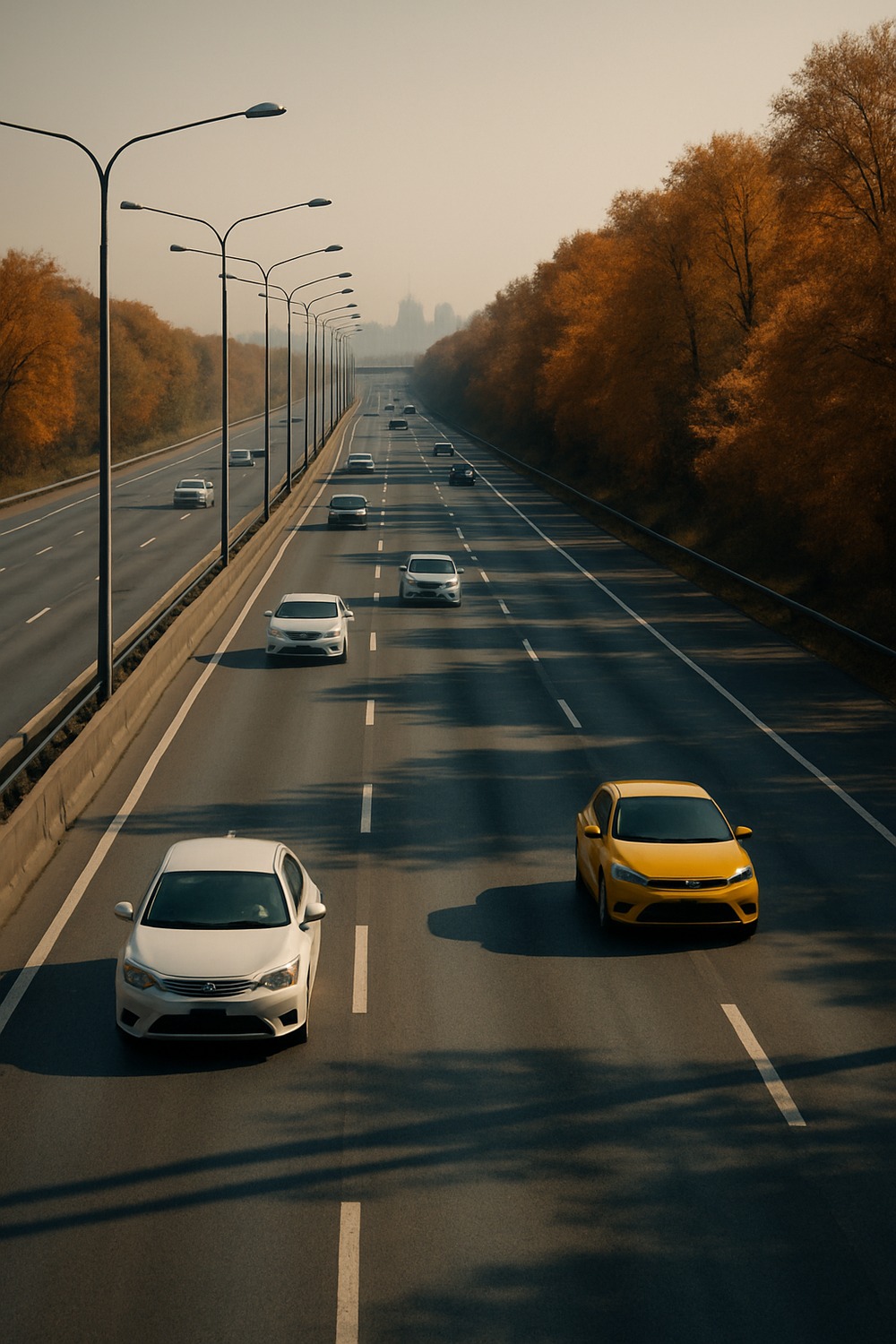
When Google Maps routes millions of drivers down a “faster” side street, that street immediately becomes slower. The algorithm creates the very problem it was trying to solve.
Researchers at MIT and UC Berkeley have studied this feedback loop extensively — it’s called “algorithmic routing externality,” and it’s one of the more philosophically thorny problems sitting quietly inside modern urban planning. Communities in Los Angeles and New Jersey have actually lobbied city councils to install stop signs specifically to deter Google Maps from routing traffic through residential neighborhoods. Not to slow drivers down. To fool the algorithm. The app changed the lived reality of those streets so thoroughly that residents had to fight back using infrastructure.
Google has had to adapt.
Its systems now factor in something called “community impact routing” — deliberately avoiding residential streets even when they’d technically be faster. The algorithm learned to consider the neighborhood, not just the road. That’s a genuinely meaningful shift. But it raises a question worth sitting with: who decides which neighborhoods get protected, and whose daily life gets optimized at whose expense? There isn’t a clean answer. There probably won’t be.
By the Numbers
- Google Maps covers over 220 countries and territories, with more than 1 billion kilometers of roads mapped as of 2023 — enough to circle the Earth roughly 25,000 times (Google, 2023).
- Approximately 1 billion people use it every month.
- Google’s DeepMind team reported in 2021 that AI-assisted traffic light optimization in cities like Hamburg and Jakarta reduced average travel times at intersections by up to 30% during testing — not by building new roads, but by adjusting the timing of lights using the same kind of predictive modeling that runs your commute.
- Waze, acquired by Google in 2013 for $1.1 billion, contributes real-time incident reports from over 140 million active users.
Field Notes
- Google Maps can distinguish between a bus, a car, and a pedestrian using only anonymized speed and movement patterns — no camera footage required. The way a vehicle moves through space is, apparently, signature enough.
- Historical models go back years for most major cities.
- Which is why the system can tell you what traffic will look like next Tuesday at 8 AM with surprising accuracy — before a single car has moved that morning. It’s not reading the future. It’s reading the past, very carefully.
- In some cities, Google Maps’ predicted travel times are statistically more accurate than local radio traffic reports, which still depend heavily on human spotters and self-reported incidents rather than continuous passive data streams.
What It Means When an Algorithm Knows Your City
The Google Maps traffic algorithm has done something that didn’t exist before. It’s taken the messy, organic, beautifully unpredictable rhythm of human movement through cities — all those millions of individual decisions about when to leave, which way to go, whether to stop for coffee — and compressed them into a model that anticipates what we’ll do next.
Not because it understands us. Because it has watched us, at scale, for long enough that the patterns stop being noise and start being signal.
The city’s habits become legible. And that matters well beyond your commute. Urban planners are beginning to use this data to redesign infrastructure before it fails. Emergency services use it to anticipate bottlenecks during evacuations. The algorithm’s memory of our cities is slowly becoming a tool for building the next version of them — which is either exciting or alarming depending on which side of the feedback loop you happen to live on.
We built the roads. We drive them every single day. But somewhere in Google’s servers, a quiet archive of our ordinary movements is assembling a portrait of our cities that none of us could have put together alone — not a planner, not a politician, not a lifelong resident. It’s not sinister. It’s not magic. It’s just what happens when you watch long enough, at large enough a scale, that the patterns write themselves. If this kind of story keeps you up at night, there’s more at this-amazing-world.com — and the next one is even stranger.
Frequently Asked Questions
Q: How does the Google Maps traffic algorithm work?
The Google Maps traffic algorithm aggregates anonymized location data from Android devices, Waze users, and embedded road sensors to build a living memory of major roads worldwide. It processes location data from hundreds of millions of devices in near real-time, running it through machine learning models trained on historical traffic behavior to generate predictive ETAs. Rather than just reading current conditions like a weather radar, it anticipates what will happen next based on years of accumulated patterns.
Q: Can Google Maps predict future traffic?
Yes. Because the system has historical models going back years for most major cities, it can tell you what traffic will look like next Tuesday at 8 AM with surprising accuracy, before a single car has moved that morning. It learns specific patterns, such as that a stadium off-ramp backs up exactly 90 minutes after kickoff. In some cities, its predicted travel times are statistically more accurate than local radio traffic reports.
Q: Does Google Maps make traffic worse?
Sometimes. When Google Maps routes millions of drivers down a faster side street, that street immediately becomes slower, creating the very problem it tried to solve. Researchers at MIT and UC Berkeley call this an algorithmic routing externality. Communities in Los Angeles and New Jersey have lobbied city councils to install stop signs specifically to deter the app from routing traffic through residential neighborhoods, essentially using infrastructure to fool the algorithm.
Q: How many people use Google Maps?
Approximately 1 billion people use Google Maps every month. The service covers over 220 countries and territories with more than 1 billion kilometers of roads mapped as of 2023, enough to circle the Earth roughly 25,000 times. Its real-time data is supplemented by Waze, which Google acquired in 2013 for $1.1 billion and which contributes incident reports from over 140 million active users, making the combined dataset enormous.
Illustrations are AI-generated. Article fact-checked and human-edited. Our editorial standards.